Tunnel Boring Machines Guide: Designs, Cutting Methods, Functions and Underground Construction
Tunnel boring machines (TBMs) are large underground construction machines designed to excavate tunnels through soil, rock, and mixed ground conditions. A Tunnel Boring Machines Guide explains their designs, cutting methods, operating functions, and role in modern underground construction. These machines are used in projects such as metro rail systems, railway tunnels, road tunnels, water supply networks, sewer systems, and underground utility corridors.
Context
Tunnel boring machines (TBMs) are large underground construction machines designed to excavate tunnels through soil, rock, and mixed ground conditions. A Tunnel Boring Machines Guide explains their designs, cutting methods, operating functions, and role in modern underground construction. These machines are used in projects such as metro rail systems, railway tunnels, road tunnels, water supply networks, sewer systems, and underground utility corridors.
The development of mechanized tunneling grew from the need to create underground passages more systematically than traditional hand excavation or drilling and blasting alone. Early tunneling methods required extensive manual work and exposed workers to difficult underground conditions. Modern TBMs combine mechanical cutting, excavation removal, ground support, and monitoring equipment to carry out these tasks within a coordinated system.
Understanding Tunnel Boring Machine Designs
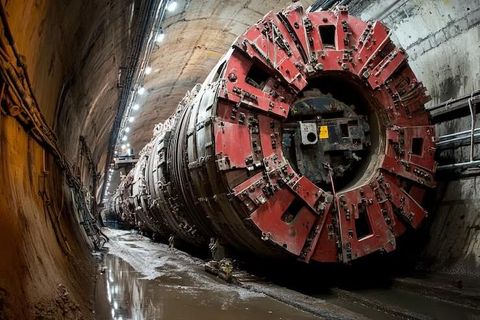
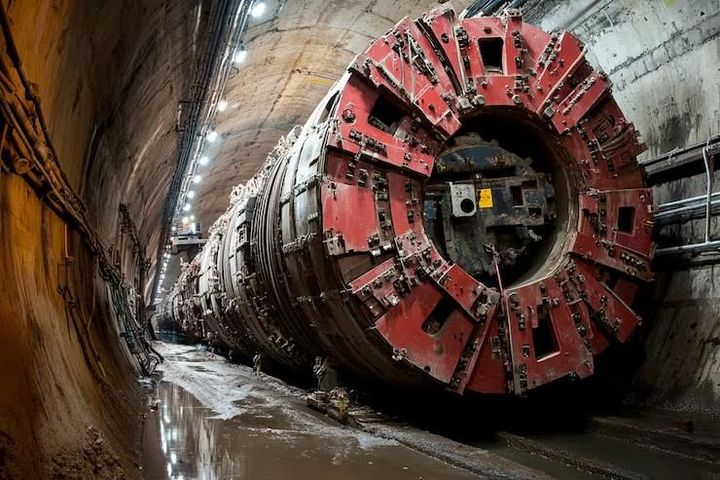
A tunnel boring machine generally consists of a cutting head, a main body, propulsion equipment, excavation removal systems, and supporting machinery. The cutting head breaks or loosens the ground, while conveyors or slurry pipelines carry excavated material away from the working face. Hydraulic cylinders or other thrust systems move the machine forward as excavation progresses.
The machine's design depends on ground strength, groundwater pressure, tunnel diameter, excavation length, and the required tunnel lining. Some machines operate mainly in stable rock, while others are designed to maintain support at the excavation face in loose or water-bearing ground.
Main Components and Functions
Several components work together during tunnel excavation:
Cutterhead: Rotating equipment fitted with disc cutters, cutting tools, or other ground-breaking elements.
Thrust system: Applies force to advance the machine through the ground.
Excavation removal system: Uses conveyors, buckets, or slurry circulation to transport excavated material.
Shield: A protective cylindrical structure used in many TBMs to support the excavation area and protect workers and equipment.
Tunnel lining system: Installs precast concrete segments or supports other lining arrangements where required.
Control and monitoring equipment: Measures operating conditions, machine position, pressure, and other important parameters.
Not every tunnel boring machine uses the same arrangement. Component selection depends on the excavation method and the conditions expected along the tunnel route.
Importance
Tunnel boring machines are important because underground infrastructure can reduce the need for extensive surface excavation in many locations. Cities use underground railways, drainage tunnels, water pipelines, and utility passages to manage growing transport and infrastructure requirements where surface space is limited.
Mechanized tunneling can provide a controlled excavation process and consistent tunnel geometry when the machine is appropriately designed and operated. It can also reduce some forms of surface disruption compared with open excavation, although noise, vibration, settlement, spoil transport, and construction access still require careful management.
Applications in Underground Construction
TBMs are used in several infrastructure sectors. Their applications depend on the tunnel's purpose, geology, length, and diameter.
Metro and railway tunnels: Create underground routes for passenger and freight transport.
Road tunnels: Provide vehicle passages through mountains, beneath urban areas, or under waterways.
Water supply tunnels: Carry water between reservoirs, treatment facilities, and distribution networks.
Sewer and drainage tunnels: Move wastewater or stormwater through underground networks.
Hydropower projects: Construct water conveyance passages and related underground structures.
Utility tunnels: House selected electrical, communication, heating, or other infrastructure networks.
For communities, these projects can support transport connections, water management, and essential infrastructure. Their effects depend on planning, construction quality, maintenance, and the surrounding environment.
Comparing Tunnel Boring Machine Types
Different TBM designs are suited to different ground conditions. The following table summarizes common categories.
| TBM type | Main cutting or excavation method | Typical application |
|---|---|---|
| Hard-rock TBM | Disc cutters fracture rock | Competent rock formations |
| Earth Pressure Balance TBM | Cutterhead excavation with controlled pressure from excavated soil | Soft ground with limited stability |
| Slurry TBM | Excavation face supported by pressurized slurry | Water-bearing or unstable ground |
| Open or gripper TBM | Cutterhead excavation with rock-wall gripping or support arrangements | Suitable stable rock |
| Double-shield TBM | Excavation with shielded propulsion and lining installation | Certain long rock tunnels |
| Single-shield TBM | Excavation within a shield, often advancing against installed lining | Rock conditions requiring shield protection |
The appropriate machine cannot be determined from the tunnel's purpose alone. Geotechnical investigations help engineers assess ground strength, fractures, groundwater, and changing geological conditions before selecting an excavation system.
Recent Updates
Tunnel boring technology continues to develop through improvements in automation, sensor systems, digital modeling, and excavation monitoring. Across the 2024–2026 period, the broader industry trend has been toward better integration of machine data with construction planning, maintenance, and ground-condition assessment. The availability of these features varies by manufacturer, machine generation, and project.
Automation and Digital Monitoring
Modern TBMs can use sensors to track thrust, cutterhead torque, rotation speed, ground pressure, temperature, vibration, and other operating conditions. Control systems help operators adjust machine settings to suit the material being excavated. Data from these systems can also support maintenance planning and help identify unusual operating patterns.
Digital models and building information modeling (BIM) can connect tunnel design information with construction progress. When combined with surveying and machine-position data, these tools help project teams monitor alignment, compare actual progress with planned work, and coordinate tunnel lining installation.
Automation does not remove the need for trained personnel. Operators and engineers must interpret sensor readings, respond to changing ground conditions, and follow project-specific safety procedures.
Energy Efficiency and Cutter Technology
Research and engineering development continue to focus on reducing unnecessary energy use, improving cutter durability, and handling excavated material more effectively. Cutting tools may be selected or arranged differently depending on rock abrasiveness, strength, and fracture patterns. Maintenance remains important because worn or damaged cutting equipment can affect excavation performance and require work in difficult underground conditions.
Projects also pay greater attention to the movement of excavated spoil, water management, equipment ventilation, and environmental monitoring. These factors can influence construction planning as much as the machine's cutting capacity.
Laws or Policies
Tunnel boring projects must comply with applicable construction, occupational safety, environmental, land-use, and infrastructure regulations. Requirements differ by country, project owner, tunnel purpose, and the conditions of the construction site. Large underground projects normally require engineering investigations, formal approvals, risk assessments, and construction supervision.
Tunnel Construction Rules in India
In India, underground infrastructure projects may involve central and state authorities, local bodies, railway or metro agencies, and specialized project organizations. The applicable framework depends on whether the tunnel is part of a metro railway, national highway, railway line, water system, hydropower project, or another infrastructure development.
Project planning may require environmental assessment or clearance where applicable, permissions for land use, groundwater management, disposal of excavated material, and compliance with relevant building and infrastructure standards. The exact approvals depend on the project and its location.
Worker Safety and Environmental Management
Tunnel construction presents hazards such as falling rock, flooding, dust, heat, equipment movement, electrical risks, and limited escape routes. Safety planning generally addresses ground support, ventilation, emergency communication, fire protection, equipment isolation, evacuation, and worker training.
Environmental management can include groundwater monitoring, settlement surveys, vibration measurement, noise control, and proper handling of excavated material. Project teams assess potential effects on nearby buildings, roads, water sources, and existing underground utilities. Applicable legal requirements and project-specific safety plans determine the controls used.
Tools and Resources
Technical tools help engineers plan tunnel alignment, select equipment, monitor excavation, and assess construction risks. General readers can also use public project resources to understand how tunneling systems work and where they are used.
Engineering and Planning Tools
Geotechnical investigation reports provide information about soil layers, rock strength, fractures, and groundwater. Tunnel alignment software and geological modeling tools help engineers assess route conditions, while structural analysis tools support the design of tunnel linings and related structures.
BIM platforms can coordinate design drawings, tunnel geometry, construction sequences, and project information. Surveying equipment, machine sensors, and monitoring systems help teams track excavation progress and identify changes that require further assessment.
Industry Information and Reference Materials
The International Tunnelling and Underground Space Association (ITA) publishes technical information about tunneling practices and underground construction. The Central Public Works Department (CPWD), Ministry of Road Transport and Highways, and relevant Indian railway or metro project authorities may provide applicable standards, manuals, and project documents.
Manufacturer technical documents can explain cutterhead configurations, machine dimensions, excavation systems, and operating requirements. These specifications should be interpreted in the context of geological investigations and the design requirements of a particular tunnel.
FAQs
What is a tunnel boring machine used for?
A tunnel boring machine excavates underground passages for railways, roads, water systems, sewers, hydropower facilities, and utilities. Its design depends on ground conditions and tunnel requirements.
What are the main types of tunnel boring machines?
Common types include hard-rock TBMs, Earth Pressure Balance machines, slurry TBMs, open or gripper TBMs, and single-shield or double-shield machines. Each is designed for particular excavation and ground-support conditions.
How does a tunnel boring machine cut through rock?
A hard-rock TBM typically uses rotating disc cutters that press against the rock and create fractures. The resulting fragments are collected and transported away from the cutting face.
How is an Earth Pressure Balance TBM different from a slurry TBM?
An Earth Pressure Balance TBM uses excavated soil within a controlled chamber to help support the excavation face. A slurry TBM uses pressurized slurry to provide face support and transport excavated material through a circulation system.
What factors affect tunnel boring machine selection?
Important factors include soil and rock conditions, groundwater pressure, tunnel diameter, alignment, excavation length, surface settlement limits, and the required lining system. Engineers evaluate these conditions before selecting a suitable machine.
Conclusion
Tunnel boring machines combine cutting equipment, propulsion systems, excavation removal, and ground-support methods to construct underground passages. Different designs address the challenges of hard rock, soft soil, and water-bearing ground. Advances in monitoring, automation, and digital planning continue to shape tunnel construction, while safety and environmental controls remain essential. Machine selection and operating methods depend on geological conditions, engineering requirements, and applicable regulations.