Power Distribution Equipment Explained: Types, Components, Functions, Benefits and Applications
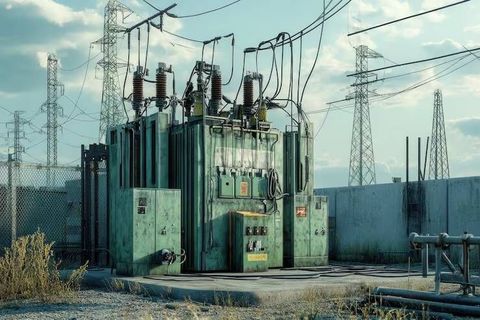
Power distribution equipment is a collection of electrical devices used to receive, control, protect, and distribute electricity from a supply source to buildings, industrial facilities, and other users. It forms an important part of an electrical power system, connecting incoming power supplies with the circuits and equipment that use electricity. Power distribution equipment includes transformers, switchgear, circuit breakers, distribution panels, busbars, fuses, and protective devices.
Context
Power distribution equipment is a collection of electrical devices used to receive, control, protect, and distribute electricity from a supply source to buildings, industrial facilities, and other users. It forms an important part of an electrical power system, connecting incoming power supplies with the circuits and equipment that use electricity. Power distribution equipment includes transformers, switchgear, circuit breakers, distribution panels, busbars, fuses, and protective devices.
Electricity is commonly generated at power stations and transported over transmission networks at high voltages. Substations then reduce voltage to levels suitable for regional and local distribution. Distribution equipment manages the flow of electricity through this network and helps deliver power to homes, offices, hospitals, commercial buildings, and manufacturing facilities.
Understanding Power Distribution Equipment
Power distribution equipment operates at different voltage levels depending on the application. Residential buildings generally use low-voltage distribution systems, while large industrial plants and utility networks may require medium-voltage or high-voltage equipment.
The main categories include:
Transformers: Change voltage levels to suit transmission, distribution, or equipment requirements.
Switchgear: Groups switching, isolation, and protection devices used to control electrical circuits.
Distribution panels: Divide incoming electrical power among several outgoing circuits.
Circuit breakers: Interrupt electrical current when specified fault conditions occur.
Busbars: Conduct electricity within panels, substations, and switchgear assemblies.
Fuses: Disconnect a circuit when excessive current causes the fuse element to operate.
Protective relays: Detect abnormal electrical conditions and initiate appropriate protective actions.
These components work together, but their functions are different. A transformer changes voltage, a circuit breaker interrupts a circuit, and a protective relay identifies certain abnormal conditions and signals a breaker to operate.
Main Types of Power Distribution Systems
Electrical distribution systems can be organized according to their network arrangement and operating voltage. Common arrangements include radial, ring, and interconnected networks.
A radial system supplies electricity through a primary path from the source to the loads. It is relatively straightforward to design and operate, although a fault along the supply path may interrupt downstream circuits. Ring and interconnected arrangements can provide alternative supply paths, depending on system design and switching arrangements.
Importance
Power distribution equipment matters because electricity must be delivered safely and reliably to the places where it is used. Homes depend on distribution panels and protective devices for everyday electrical needs, while industrial facilities rely on controlled power distribution for motors, production lines, pumps, computers, and automated machinery.
Without suitable distribution and protection, electrical faults may damage equipment, interrupt operations, or create fire and electric-shock hazards. Properly selected equipment helps manage current levels, isolate faulty circuits, and coordinate protection across an electrical installation.
Functions and Practical Benefits
Power distribution equipment performs several related functions:
Power distribution: Routes incoming electricity to different circuits and equipment.
Voltage management: Uses transformers to provide suitable voltage levels.
Fault protection: Detects or interrupts conditions such as short circuits and excessive current.
Circuit isolation: Allows designated equipment or sections of a network to be disconnected for inspection and maintenance.
Operational monitoring: Uses meters, sensors, and monitoring systems to show electrical conditions.
System control: Enables authorized operators to switch circuits and manage the distribution network.
The benefits depend on correct design, installation, maintenance, and operating conditions. Protective devices must be selected for the expected voltage, current, fault level, and coordination requirements. Equipment that is unsuitable for its electrical environment may not provide the intended protection.
Comparing Common Equipment Types
The following table summarizes the functions and typical applications of major power distribution components.
| Equipment | Main function | Typical application |
|---|---|---|
| Transformer | Changes voltage levels | Substations and industrial plants |
| Switchgear | Controls, isolates, and protects circuits | Utilities and large facilities |
| Distribution panel | Divides power among outgoing circuits | Homes and commercial buildings |
| Circuit breaker | Interrupts current under specified conditions | Panels and electrical networks |
| Busbar | Carries current within an assembly | Switchboards and substations |
| Fuse | Interrupts current when its element operates | Electrical circuits and equipment |
| Protective relay | Detects abnormal conditions and initiates protection | Switchgear and substations |
| Metering equipment | Measures electrical quantities | Buildings and distribution networks |
Equipment selection depends on the system's voltage, load requirements, installation environment, and safety standards. These devices are not interchangeable, even when they are installed together in one electrical assembly.
Applications Across Different Sectors
Power distribution equipment is used in a wide range of settings. Residential installations use distribution boards, circuit breakers, and protective devices to supply lighting, appliances, and other electrical loads. Commercial buildings require distribution panels and switchboards for offices, elevators, ventilation systems, lighting, and computer equipment.
Industrial facilities may use medium-voltage switchgear, transformers, motor control centers, and monitoring equipment to support production processes. Hospitals, data centers, airports, and water treatment facilities may require carefully designed distribution arrangements because interruptions can affect essential operations.
Renewable energy installations also use distribution equipment. Solar photovoltaic systems, wind power installations, and battery energy storage systems require suitable switching, protection, conversion, and connection equipment to integrate with local electrical systems or the wider grid.
Recent Updates
Power distribution equipment is evolving as electricity networks accommodate renewable energy, electric vehicles, digital monitoring, and changing patterns of demand. Developments across 2024–2026 have continued to emphasize grid modernization, equipment monitoring, energy efficiency, and improved management of distributed energy resources. The pace of adoption differs by country, utility, and facility.
Smart Monitoring and Digital Protection
Modern distribution systems increasingly use digital meters, sensors, communication networks, and monitoring software. These technologies can help operators observe voltage, current, temperature, equipment status, and selected fault indicators without relying entirely on manual inspection.
Digital protective relays can support more detailed fault detection and event recording than some conventional arrangements. Connected equipment may also provide data that helps maintenance teams identify unusual operating patterns. However, digital monitoring does not eliminate equipment failures or the need for physical inspection and testing.
Renewable Energy and Grid Modernization
The growing connection of rooftop solar systems, battery storage, and electric vehicle charging infrastructure creates new requirements for distribution networks. Electricity may flow in more than one direction in systems designed for distributed generation, which can affect voltage management and protective coordination.
Manufacturers and utilities are also developing equipment that supports more compact installations, improved energy performance, and reduced environmental impact. Some medium-voltage applications are moving toward alternatives to sulfur hexafluoride (SF₆), a potent greenhouse gas traditionally used as an insulating and arc-quenching medium in certain electrical equipment. The suitability of any alternative depends on the equipment rating, design, and applicable technical requirements.
Laws or Policies
Power distribution equipment is governed by electrical safety requirements, technical standards, installation rules, and regulations that vary by country and application. These rules address matters such as insulation, earthing, overcurrent protection, short-circuit ratings, equipment testing, and safe working procedures.
Electrical Standards and Regulations in India
In India, the Central Electricity Authority (CEA) establishes regulations relevant to electrical safety, including the CEA (Measures relating to Safety and Electric Supply) Regulations, 2023. These requirements address safety matters associated with electrical installations and the supply and use of electricity, with applicability depending on the installation and circumstances.
The Bureau of Indian Standards (BIS) publishes Indian Standards covering electrical equipment and installations. Relevant standards may address low-voltage switchgear, circuit breakers, transformers, protective devices, and testing procedures. The appropriate standard depends on the equipment type and its intended application.
Installation, Testing, and Maintenance
Electrical installations must comply with applicable legal requirements and technical specifications. Design and installation decisions may involve rated voltage, rated current, fault withstand capacity, insulation coordination, earthing, clearances, and protective-device settings.
Inspection and maintenance requirements depend on the type of installation and applicable rules. Qualified electrical professionals should carry out work involving hazardous electrical equipment using appropriate isolation procedures and protective measures. Switching off a control device alone does not necessarily establish that an installation is safe to work on.
For industrial and utility projects, project specifications may also refer to relevant IEC standards or other recognized technical standards. Applicable local regulations and approved engineering documents determine which requirements must be followed.
Tools and Resources
Several technical resources help engineers, facility managers, and learners understand power distribution equipment. The appropriate resource depends on whether the task involves basic learning, electrical calculations, equipment selection, or compliance checks.
Electrical Calculation and Design Tools
Electrical design software can help model distribution networks, estimate load requirements, examine voltage drop, and assess short-circuit conditions. Depending on the application, engineering tools may also support protective-device coordination, arc-flash analysis, and power-flow studies.
Common tools and references include:
Electrical load calculators: Estimate connected load and demand using relevant electrical inputs and assumptions.
Voltage-drop calculators: Estimate voltage reduction along a cable based on cable characteristics, current, length, and circuit conditions.
Single-line diagrams: Represent electrical distribution networks using standardized symbols.
Equipment datasheets: Provide rated voltage, current, breaking capacity, insulation ratings, and other technical specifications.
Maintenance records: Track inspections, tests, repairs, operating conditions, and equipment history.
Calculations depend on accurate input data and appropriate engineering methods. Online calculators are useful for preliminary understanding but do not replace a complete design assessment where safety and regulatory compliance are involved.
Standards and Technical Documentation
The CEA and BIS websites provide access to Indian regulatory and standards information. The International Electrotechnical Commission (IEC) publishes international electrical standards covering areas such as switchgear, transformers, and low-voltage installations.
Manufacturer documentation can help explain equipment ratings, wiring diagrams, maintenance intervals, and operating limitations. Technical documents should be checked against the exact equipment model and installation requirements rather than applied broadly to every product in a category.
FAQs
What is power distribution equipment?
Power distribution equipment consists of electrical devices that control, protect, and route electricity from a supply source to circuits and end users. Examples include transformers, switchgear, distribution panels, circuit breakers, and busbars.
What are the main types of power distribution equipment?
Common types include transformers, switchgear, circuit breakers, fuses, distribution boards, busbars, protective relays, and metering devices. Each performs a distinct role in managing electrical power.
What is the difference between switchgear and a distribution panel?
Switchgear generally includes equipment for switching, isolation, and protection, often in medium-voltage or higher-capacity applications. A distribution panel typically divides incoming power into multiple outgoing circuits, although panel assemblies can also include switching and protective devices.
Where is power distribution equipment used?
It is used in residential buildings, commercial properties, factories, hospitals, data centers, substations, renewable energy installations, and utility networks. Equipment ratings and configurations vary according to the electrical requirements of each application.
Which standards apply to power distribution equipment in India?
Applicable requirements may include CEA safety regulations, relevant BIS standards, and technical specifications associated with the installation. The exact requirements depend on the equipment, voltage level, location, and intended use.
Conclusion
Power distribution equipment connects electrical supplies to the circuits and systems that use electricity. Transformers, switchgear, breakers, panels, busbars, and protective relays perform different functions that contribute to electrical control and protection. Digital monitoring, renewable energy integration, and grid modernization are influencing equipment design and operation. Applicable safety regulations, technical standards, and correct engineering practices remain central to the design, installation, and maintenance of distribution systems.

You May Also Like