Cleanroom Air Handling Equipment Guide: Filtration Systems, Airflow Control and Key Features
A Cleanroom Air Handling Equipment Guide explains how filtration systems, airflow control, and environmental monitoring help maintain controlled indoor conditions. Cleanrooms are specialized spaces designed to limit airborne particles and, where required, manage temperature, humidity, pressure, and other environmental factors.
Context
A Cleanroom Air Handling Equipment Guide explains how filtration systems, airflow control, and environmental monitoring help maintain controlled indoor conditions. Cleanrooms are specialized spaces designed to limit airborne particles and, where required, manage temperature, humidity, pressure, and other environmental factors. They are used in industries where contamination can affect product quality, manufacturing processes, laboratory work, or sensitive equipment.
Cleanroom air handling equipment developed alongside industries that needed increasingly controlled production environments. Electronics manufacturing, pharmaceutical production, medical device manufacturing, aerospace activities, and scientific research all use controlled environments for specific purposes. The equipment varies according to the type of contaminants being controlled, the cleanliness level required, and the activities performed inside the room.
What Is Cleanroom Air Handling Equipment?
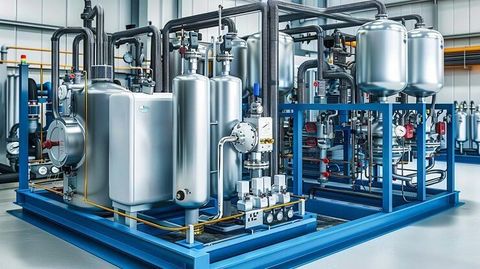
Cleanroom air handling equipment moves, filters, conditions, and distributes air within a controlled environment. A typical system may include an air handling unit, filters, fans, ducts, terminal filtration units, sensors, and airflow control devices. These components work together to manage airborne particles and maintain specified environmental conditions.
The main components include:
Air handling units: Equipment that circulates air and may regulate temperature and humidity.
High-efficiency filters: Filters designed to capture airborne particles, including HEPA filters used in many cleanroom applications.
Fans and blowers: Devices that move air through filters, ducts, and room outlets.
Air distribution components: Diffusers, grilles, and terminal units that direct air into occupied areas.
Pressure control devices: Systems that help maintain a specified pressure difference between adjoining spaces.
Monitoring instruments: Sensors that measure conditions such as temperature, humidity, pressure, and, where required, airborne particle levels.
Not every cleanroom uses an identical arrangement. Equipment selection depends on the cleanliness classification, room layout, process requirements, heat generation, occupancy, and applicable standards.
How Cleanroom Air Handling Systems Work
Outdoor air and recirculated indoor air may pass through different stages of filtration and conditioning. Fans move the air through the system, while filters capture particles according to their design and rated performance. The conditioned air then enters the cleanroom through designated outlets and returns through return grilles or other collection points.
Air movement also helps manage the distribution of particles. Depending on the design, a cleanroom may use unidirectional airflow, often called laminar airflow in common industry usage, or a non-unidirectional arrangement that mixes supplied air throughout the space. The selected pattern depends on the process and cleanliness requirements rather than a single universal design.
Importance
Cleanroom air handling equipment matters because airborne contamination can affect manufacturing consistency, laboratory results, sensitive components, and certain healthcare-related processes. Dust, fibers, skin particles, and other contaminants may enter a room through people, materials, equipment, or incoming air. Effective air handling helps control these sources within the limits established for a particular environment.
These systems also help maintain temperature and humidity conditions that can influence product behavior, equipment performance, and worker comfort. In electronics production, for example, airborne particles may interfere with delicate components, while excessive humidity changes can contribute to electrostatic concerns. In pharmaceutical and medical device environments, contamination controls form part of a wider system of quality and process management.
Filtration Systems and Their Functions
Filtration is a central part of cleanroom air handling, but filters differ in construction, efficiency, and intended application. A system may use multiple filtration stages to reduce the particle load reaching its final filter.
Pre-filters: Capture larger particles and help reduce the load on downstream filters.
Fine filters: Remove a higher proportion of smaller airborne particles than typical coarse pre-filters.
HEPA filters: High-efficiency particulate air filters used where stringent airborne particle control is required.
ULPA filters: Ultra-low penetration air filters used in certain applications with particularly demanding particle-control requirements.
Filter performance depends on the filter specification, installation quality, sealing, airflow, and operating condition. A highly efficient filter cannot perform as intended if air bypasses it through gaps or damaged seals.
Airflow Control and Pressure Management
Airflow control determines how much air enters a room, how it moves through the space, and how it leaves. Some cleanrooms use a unidirectional pattern to move particles away from critical work areas, while others rely on controlled mixing and sufficient air changes to maintain the required cleanliness.
Pressure differences can help prevent unwanted air movement between adjoining rooms. For example, a room may be maintained at a higher pressure than a neighboring area to limit the entry of less-clean air. Other processes may require negative pressure to contain potentially harmful airborne material. The correct pressure relationship depends on the contamination-control objective and the room's operational design.
Common Cleanroom Air Handling Applications
Cleanroom equipment is used across several sectors, although each application has distinct requirements.
Pharmaceutical manufacturing: Supports controlled production environments and contamination-management procedures.
Electronics and semiconductor production: Helps limit particles that can affect sensitive components and manufacturing steps.
Medical device manufacturing: Supports environmental controls during specified assembly and production activities.
Research laboratories: Helps maintain defined conditions for experiments and specialized equipment.
Aerospace manufacturing: Supports production and assembly processes involving sensitive parts or materials.
Cleanroom air handling is only one part of contamination control. Personnel procedures, cleaning methods, material transfer, protective clothing, and equipment maintenance also influence environmental performance.
Comparing Common Equipment Components
| Component | Primary function | Important consideration |
|---|---|---|
| Air handling unit | Conditions and circulates air | Capacity and environmental requirements |
| Pre-filter | Captures larger airborne particles | Dust-holding capacity and replacement schedule |
| HEPA filter | Captures fine airborne particles | Rated efficiency, sealing, and integrity |
| Fan or blower | Moves air through the system | Required airflow and pressure resistance |
| Air diffuser | Distributes supplied air | Airflow pattern and room layout |
| Pressure sensor | Measures pressure differences | Sensor location and calibration |
| Particle counter | Measures airborne particle concentrations | Sampling method and monitoring plan |
The exact configuration varies by cleanroom design. Component specifications should be considered together rather than assessed in isolation.
Recent Updates
Developments in cleanroom air handling during 2024–2026 have continued to emphasize energy management, monitoring, system automation, and more detailed environmental data. These developments reflect the need to maintain controlled conditions while managing electricity use, maintenance requirements, and production continuity. The extent of adoption differs between facilities and industries.
Smart Monitoring and Automated Controls
Modern cleanroom systems may connect temperature sensors, humidity sensors, differential pressure transmitters, airflow measurements, and particle-monitoring instruments to a central building management or environmental monitoring system. Software can display readings, record trends, and generate alerts when measured conditions move outside specified limits.
Automation can help operators identify changes in system performance, but it does not eliminate the need for verification or maintenance. Sensor accuracy, alarm settings, data records, and response procedures remain important. Some facilities also use predictive maintenance methods to identify developing equipment problems from operating data.
Energy Efficiency and Filter Management
Air handling systems can require substantial energy because fans must move air through filters and distribution networks. Current engineering approaches include efficient fan motors, variable-speed drives, improved duct design, and control strategies that adjust operation within validated limits.
Filter replacement also requires careful management. Replacing filters too early may waste usable filter life, while delayed replacement or excessive pressure drop may affect system operation. Differential pressure readings can help indicate filter loading, but replacement decisions should follow the equipment manufacturer's instructions and the facility's maintenance and qualification procedures.
Laws or Policies
Cleanroom air handling requirements depend on the industry, intended use, and country in which a facility operates. Standards may define cleanliness classifications, filter testing methods, environmental controls, or requirements for documenting and validating systems. A standard is not automatically a law; it may become mandatory through regulations, contracts, licensing conditions, or adopted industry requirements.
Cleanroom Standards and Guidelines
ISO 14644 is an important family of international standards covering cleanroom classification, testing, monitoring, and related topics. ISO 14644-1 addresses classification of air cleanliness by particle concentration, while other parts address matters such as testing methods and monitoring. The applicable edition and relevant parts depend on the facility's purpose and requirements.
HEPA and ULPA filters may be specified and tested using recognized filter standards, including applicable EN 1822 or ISO 29463 requirements. The relevant standard depends on the filter type, test method, and procurement specification. Correct installation and in-place testing may also be necessary to verify the integrity of a complete filtration system.
Requirements in India
In India, cleanroom facilities may be subject to requirements arising from pharmaceutical regulation, medical device regulation, workplace safety, building and fire rules, and other sector-specific provisions. Pharmaceutical manufacturing is regulated under the Drugs and Cosmetics Act and applicable rules, including relevant Good Manufacturing Practice requirements. The precise requirements depend on the product, manufacturing activity, and current regulatory framework.
Cleanroom operators should distinguish general engineering guidance from requirements applicable to a specific facility. Depending on the industry, qualification, validation, environmental monitoring, documentation, and periodic testing may form part of regulatory or quality-system obligations. Compliance should be assessed against the current rules and standards that apply to the facility.
Tools and Resources
Several technical resources can help engineers, facility managers, and general readers understand cleanroom air handling equipment. The appropriate tools depend on whether the task involves initial design, routine operation, filter selection, or performance verification.
Design and Monitoring Tools
Airflow calculators can estimate air volume from room dimensions and a selected air-change rate. For a simple calculation, room volume is multiplied by the number of air changes per hour to estimate the required volumetric airflow. This is only an initial estimate because actual design also depends on cleanliness targets, heat loads, airflow patterns, pressure relationships, and process conditions.
Differential pressure gauges, calibrated airflow instruments, temperature and humidity sensors, and airborne particle counters are used for different monitoring tasks. Their readings must be interpreted according to the instrument's range, calibration status, sampling method, and the facility's monitoring plan.
Technical Standards and Maintenance Records
Useful references include ISO publications for cleanroom classification and testing, applicable filter standards, equipment manuals, and relevant regulatory guidance from India's Central Drugs Standard Control Organisation where pharmaceutical or medical device requirements apply.
A maintenance record can document filter installation, inspection dates, pressure readings, airflow checks, sensor calibration, repairs, and integrity-test results. These records help establish whether the system is operating within its documented requirements and make changes easier to investigate.
FAQs
What is cleanroom air handling equipment?
Cleanroom air handling equipment circulates, filters, and conditions air to help maintain controlled environmental conditions. It may include air handling units, filters, fans, ducts, sensors, and airflow control devices.
Which filtration systems are used in cleanrooms?
Cleanrooms may use pre-filters, fine filters, HEPA filters, or ULPA filters. The required combination depends on the cleanliness classification, process risks, and applicable design specifications.
How does airflow control work in a cleanroom?
Airflow control regulates the quantity and direction of air supplied to and removed from a room. Pressure differences and suitable air distribution help limit unwanted movement of contaminants between spaces.
What standards apply to cleanroom air handling equipment in India?
Relevant requirements may include ISO 14644 standards, applicable filter-testing standards, and sector-specific Indian regulations. The exact requirements depend on the facility's industry and intended use.
How often should cleanroom air filters be replaced?
There is no single replacement interval for every cleanroom filter. Replacement depends on filter condition, pressure drop, operating hours, manufacturer guidance, test results, and the facility's documented maintenance procedures.
Conclusion
Cleanroom air handling equipment combines filtration, air distribution, pressure management, and environmental monitoring to maintain controlled conditions. System design depends on the cleanliness level, industrial process, room layout, and applicable standards. Automation and energy-management methods can support monitoring and operation, but maintenance, testing, and documentation remain essential. The relevant regulatory requirements vary by industry and location.