Industrial Carbon Capture Equipment Explained: Types, Components, Applications, Benefits and Selection Factors
Industrial carbon capture equipment refers to the machinery and systems used to separate carbon dioxide (CO₂) from industrial gas streams or, in some applications, directly from the air. The captured gas may be compressed, transported for permanent geological storage, or used in certain industrial processes.
Context
Industrial carbon capture equipment refers to the machinery and systems used to separate carbon dioxide (CO₂) from industrial gas streams or, in some applications, directly from the air. The captured gas may be compressed, transported for permanent geological storage, or used in certain industrial processes. Carbon capture technologies developed from established gas separation methods and have gained attention as industries seek ways to manage emissions from manufacturing, power generation, and chemical production.
Carbon dioxide is released when fossil fuels are burned and during certain chemical reactions, including cement production. Industrial carbon capture equipment is designed to collect some of these emissions before they enter the atmosphere. The amount captured depends on the process, equipment design, operating conditions, and composition of the gas stream.
Understanding Industrial Carbon Capture Systems
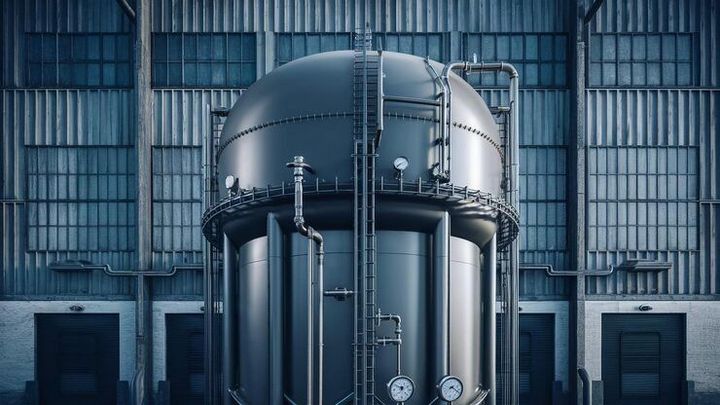
A carbon capture system usually includes several connected stages. Equipment separates CO₂ from other gases, prepares the captured stream for handling, and transfers it to storage or another approved destination.
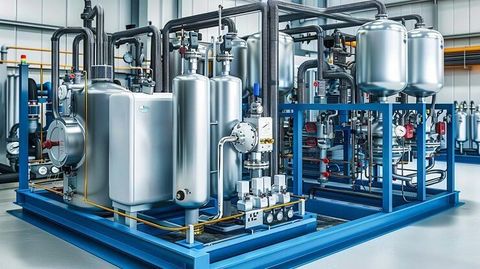
Common system components include:
Gas conditioning equipment: Removes particles, moisture, or substances that could interfere with separation.
Capture units: Separate carbon dioxide from nitrogen, water vapor, and other gases.
Regeneration equipment: Releases collected CO₂ from certain reusable capture materials.
Compression systems: Increase the pressure of captured carbon dioxide for transport or storage.
Monitoring and control equipment: Measures operating conditions, gas composition, flow rates, and system performance.
Not every installation uses all these components in the same arrangement. Equipment selection depends on the industrial process, the volume of gas, the concentration of carbon dioxide, and the intended destination of the captured gas.
Importance
Industrial carbon capture equipment matters because some industrial emissions are difficult to eliminate through energy efficiency or electrification alone. Cement production, steelmaking, chemical manufacturing, and certain refining processes can release carbon dioxide through both fuel use and chemical reactions.
Capturing emissions may form one part of a broader emissions-reduction strategy. Its contribution depends on how much CO₂ is captured, the energy required to operate the equipment, the source of that energy, and whether the captured gas remains securely stored or is released later.
Industrial Applications of Carbon Capture Equipment
Different industries use carbon capture systems for different purposes.
Cement manufacturing: Captures carbon dioxide released during limestone processing and, where applicable, fuel combustion.
Steel production: May capture emissions from selected production routes and associated gas streams.
Power generation: Separates CO₂ from exhaust gases produced by certain fossil-fuel power plants.
Chemical manufacturing: Handles carbon dioxide generated during processes such as hydrogen and ammonia production.
Natural gas processing: Separates carbon dioxide from raw natural gas to meet processing and product specifications.
Waste management: Some facilities capture CO₂ from combustion or other treatment processes, depending on their configuration.
The technical requirements differ substantially between applications. A concentrated CO₂ stream may require less separation work than a dilute exhaust stream, although additional purification and handling may still be necessary.
Potential Benefits and Practical Limitations
Carbon capture equipment can reduce the quantity of carbon dioxide released from a suitable industrial process. It may also help facilities manage emissions where alternative production methods are not yet practical at the required scale.
However, capture systems have limitations. They can require significant energy, space, maintenance, water, and supporting infrastructure. Some processes also use chemicals or specialized materials that need careful handling and replacement.
Capturing CO₂ does not automatically mean that emissions have been eliminated. The full environmental outcome depends on the entire system, including energy use, transport, storage integrity, and the final use of the captured gas.
Comparing Major Carbon Capture Technologies
| Technology | How it works | Common application |
|---|---|---|
| Chemical absorption | A liquid solvent binds CO₂ and releases it during regeneration | Industrial exhaust gases |
| Physical absorption | A liquid absorbs CO₂ under suitable pressure and temperature conditions | Certain high-pressure gas streams |
| Membrane separation | Selective membranes allow gases to pass at different rates | Gas processing and selected industrial streams |
| Adsorption | Solid materials selectively hold CO₂ on their surfaces | Gas separation and specialized capture systems |
| Cryogenic separation | Cooling separates gases based on their physical properties | Selected streams with suitable composition |
| Direct air capture | Equipment extracts CO₂ from ambient air | Atmospheric carbon removal |
These technologies are not interchangeable in every situation. Gas concentration, pressure, temperature, impurities, energy requirements, and the desired CO₂ purity influence which method is technically appropriate.
Recent Updates
Industrial carbon capture development has increasingly focused on improving energy efficiency, integrating capture equipment with existing facilities, and expanding transport and storage infrastructure. Across 2024–2026, projects have continued to explore applications in cement, power generation, hydrogen production, chemicals, and other emissions-intensive industries. Project status, commercial readiness, and actual capture performance vary by facility.
Equipment Efficiency and System Integration
Modern engineering work includes improvements to solvents, membranes, solid adsorbents, heat recovery, and process controls. These developments aim to reduce the energy required to separate carbon dioxide and improve the reliability of capture operations.
Retrofitting existing factories is another important area. Integrating equipment into an operating plant can involve changes to exhaust systems, steam supply, cooling equipment, electrical infrastructure, and site layout. Engineers must assess whether the facility has enough space and whether the additional energy demand can be met without disrupting production.
Carbon Transport and Storage Development
Captured CO₂ often requires a dedicated route to its final destination. Depending on the project, transport may involve pipelines, ships, rail, or road tankers designed for the relevant conditions. Geological storage generally requires suitable underground formations, site assessment, injection equipment, and long-term monitoring.
Some projects use captured carbon dioxide in industrial applications, including selected chemical processes and material production. The climate implications depend on how the CO₂ is used, how long it remains contained, and what energy and materials the process requires. Utilization does not necessarily result in permanent storage.
Laws or Policies
Industrial carbon capture equipment is affected by environmental regulations, industrial permitting requirements, workplace safety rules, and policies governing carbon transport and storage. The applicable requirements depend on the country, project type, location, and whether the captured gas is stored underground or used elsewhere.
Carbon Capture Policy in India
India's carbon management efforts are connected to its broader climate and industrial development objectives. Carbon capture, utilization, and storage (CCUS) has been examined as a potential approach for managing emissions in sectors such as cement, steel, power, and chemicals.
Implementation can involve environmental clearances, pollution-control requirements, industrial safety provisions, land-use permissions, and other approvals applicable to a specific project. Facilities must determine which central and state requirements apply to their operations rather than assuming that one approval covers the entire capture and storage chain.
Emissions Monitoring and Safety Requirements
Industrial facilities may need to monitor emissions under applicable environmental permissions and reporting rules. Equipment design and operation may also be affected by pressure-system requirements, chemical handling procedures, worker protection measures, and emergency planning.
Carbon dioxide is not flammable, but high concentrations can displace oxygen and create a serious asphyxiation hazard. Pressurized CO₂ systems can also present risks associated with leaks, cold temperatures during rapid expansion, and confined spaces. Appropriate detection, ventilation, pressure control, maintenance, and emergency procedures are therefore important.
Rules for geological storage, pipeline transport, and long-term liability differ across jurisdictions. Project developers must establish the relevant legal framework and monitoring obligations before operation. Policies and approval processes may change as national carbon management programs develop.
Tools and Resources
Technical resources help engineers, facility managers, researchers, and policymakers understand carbon capture equipment and assess project requirements. Useful sources include government publications, engineering references, emissions calculators, and process simulation tools.
Technical Information and Government Resources
The International Energy Agency (IEA) publishes analysis of carbon capture, utilization, and storage technologies, including industrial applications and infrastructure development. The Global CCS Institute provides information about carbon capture projects, storage systems, and sector developments.
In India, the Ministry of Environment, Forest and Climate Change and the Central Pollution Control Board publish environmental rules, guidance, and related regulatory information. Official publications should be checked for current requirements applicable to a particular facility.
Engineering and Assessment Tools
Process simulation software can help engineers model gas separation, solvent regeneration, heat requirements, and equipment performance. Computational models are useful for comparing possible designs, but their results depend on the accuracy of the input data and the assumptions used.
Emissions calculators and plant energy assessments can help estimate the quantity of carbon dioxide produced by an industrial process. A preliminary assessment may consider:
Gas flow rate and carbon dioxide concentration.
Expected capture rate and required gas purity.
Energy, cooling water, and other utility requirements.
Equipment footprint and integration with existing machinery.
CO₂ compression, transport, storage, and monitoring arrangements.
Maintenance needs, operating conditions, and safety controls.
These factors provide a structured starting point for evaluating a project. Detailed engineering studies are needed before equipment specifications or expected performance can be established.
FAQs
What is industrial carbon capture equipment?
Industrial carbon capture equipment separates carbon dioxide from industrial gas streams or, in direct air capture systems, from ambient air. The captured gas can then be prepared for transport, storage, or a suitable industrial use.
What are the main types of industrial carbon capture technology?
Major types include chemical absorption, physical absorption, membrane separation, adsorption, and cryogenic separation. Direct air capture is another approach that extracts carbon dioxide from the atmosphere rather than an industrial exhaust stream.
Which industries use carbon capture equipment?
Applications include cement manufacturing, steel production, power generation, chemical manufacturing, natural gas processing, and selected waste-treatment facilities. Suitability depends on emissions characteristics and available infrastructure.
What components are used in a carbon capture system?
Typical components include gas conditioning units, separation equipment, regeneration systems where required, compressors, pipelines or other transfer equipment, monitoring instruments, and control systems. The exact configuration depends on the capture technology.
What factors affect industrial carbon capture equipment selection?
Important factors include gas composition, flow rate, pressure, temperature, capture requirements, energy use, available space, maintenance needs, safety requirements, and access to transport and storage infrastructure.
Conclusion
Industrial carbon capture equipment separates carbon dioxide from industrial emissions or, in some systems, from ambient air. Different technologies serve different applications, and their suitability depends on gas composition, energy requirements, operating conditions, and the intended destination of the captured CO₂. Environmental rules, industrial safety measures, and transport and storage arrangements also influence system design. Evaluating the entire process provides a clearer understanding of the equipment's role and limitations in industrial emissions management.

You May Also Like