Tube Straightening Machines Guide With Automated Processing and Precision Engineering Solutions
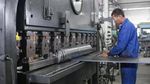
Tube straightening machines are industrial systems designed to correct bends, curves, and alignment deviations in metal tubes and pipes.
They are used in manufacturing environments where straightness, dimensional consistency, and reliable material handling are important. These machines support precision engineering by preparing tubes for subsequent operations such as cutting, welding, machining, forming, and assembly.
Metal tubes can become distorted during rolling, drawing, welding, transportation, storage, or other manufacturing processes. Even a small deviation from the required straightness can affect assembly accuracy, dimensional tolerances, and the performance of finished components. Tube straightening machines address these issues by applying controlled mechanical forces to selected areas of the material.
How Tube Straightening Technology Developed
Traditional tube straightening often relied on manual inspection and mechanical correction. Operators examined the material and adjusted it using presses, rollers, or other equipment. Although these methods remain relevant for certain applications, automated systems can provide more consistent processing for repetitive production requirements.
Modern tube straightening equipment may use multiple rollers, hydraulic mechanisms, servo-driven adjustments, sensors, and programmable controls. The configuration depends on tube diameter, wall thickness, material strength, initial curvature, and the required straightness tolerance.
Main Types of Tube Straightening Machines
Different machine designs address different materials and production conditions.
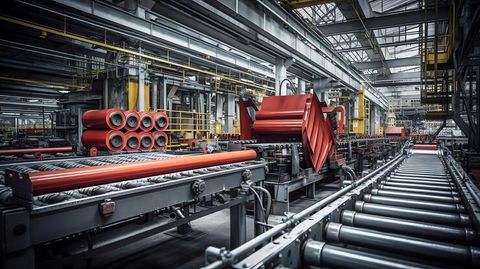
Roller straightening machines use a series of offset rollers to apply controlled bending forces as the tube passes through the system.
Rotary straightening machines use rotating or angled roller arrangements to correct deviations along the tube length.
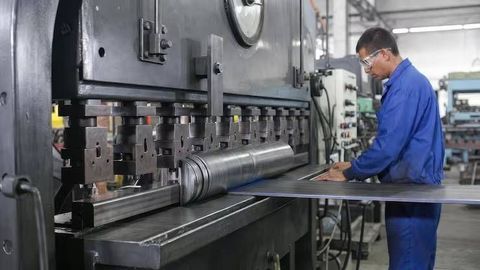
Hydraulic straightening presses apply force at selected points and are useful for certain larger or heavier components.
CNC-controlled straightening systems use programmable settings and automated adjustments to support repeatable processing.
Specialized wire and small-tube straighteners handle slender materials that require careful control to prevent surface damage or excessive deformation.
The appropriate design depends on the material's mechanical properties and the production process. A machine intended for small precision tubes may not be suitable for heavy structural pipes.
Importance
Improving Dimensional Accuracy
Straightness is an important characteristic in applications involving close-fitting components, rotating assemblies, fluid transport, and structural alignment. A bent tube may create assembly difficulties, increase adjustment requirements, or affect the geometry of a finished product.
Tube straightening machines help manufacturers bring material closer to specified dimensional requirements. The final result depends on machine capability, incoming material condition, measurement methods, and the properties of the tube.
Supporting Automated Production
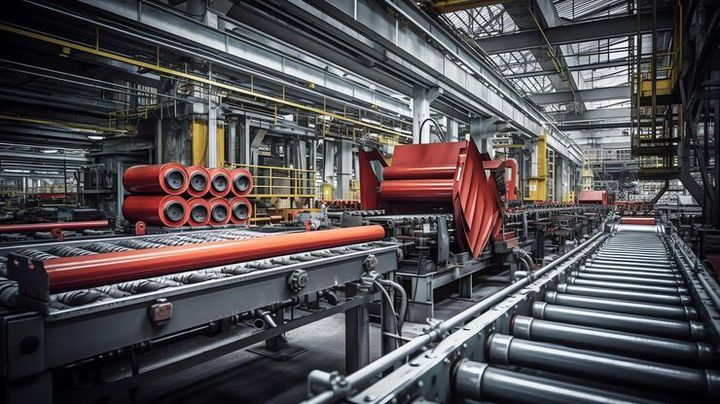
Manufacturing facilities often process tubes in repeated batches or continuous production lines. Automated tube straightening can reduce the amount of manual handling required between production stages and support more consistent material movement.
Integration with feeding systems, cutting equipment, inspection stations, and conveyors can create a coordinated production workflow. Operators can monitor settings and processing results while automation handles selected repetitive movements.
Industries That Use Tube Straightening Equipment
Tube straightening machines support several industrial sectors.
Automotive manufacturing uses straightened tubes in selected chassis components, fluid lines, and mechanical assemblies.
Aerospace manufacturing uses precision tubing where dimensional requirements and material traceability are important.
Construction and infrastructure production may require straight metal tubes for frameworks, supports, and structural applications.
Energy equipment manufacturing uses tubes in selected heat-transfer, fluid-handling, and mechanical systems.
Furniture and general engineering use straightened tubes in frames, supports, and fabricated products.
Medical equipment manufacturing may use precision tubing subject to specific material, cleanliness, and dimensional requirements.
Common Operational Challenges
Straightening requires a balance between correcting curvature and avoiding additional deformation. Excessive force can produce dents, surface marks, wall thinning, or unwanted residual stress.
Manufacturers must also account for differences in material hardness, tube diameter, wall thickness, and initial distortion. A suitable setup should consider these factors rather than applying identical roller pressure to every tube.
Recent Updates
Automation and Digital Controls
During 2024–2026, industrial equipment development has continued to emphasize automation, process monitoring, and data-based production management. In tube straightening, these approaches can include programmable recipes, electronic adjustment systems, digital operator interfaces, and integration with production-line controls.
Programmable settings allow operators to record parameters for different tube specifications. When a previously processed material type returns to production, stored settings can provide a starting point, although inspection and adjustment may still be necessary.
Sensor-Based Measurement
Sensors and measurement systems can help detect changes in tube position, dimensions, or straightness. Depending on the machine configuration, measurements may be taken before processing, during movement, or after straightening.
Feedback from these systems can support process adjustments and inspection records. However, sensor capability varies, and not every machine includes automatic measurement or closed-loop correction.
Integration With Smart Manufacturing
Industrial manufacturers increasingly connect production equipment with supervisory control systems and manufacturing data platforms. Tube straightening machines may be integrated with upstream tube mills, cutting systems, material tracking, and downstream inspection equipment.
This integration can help production teams identify interruptions, review processing parameters, and trace material batches. Practical benefits depend on the quality of system integration, data accuracy, operator training, and maintenance practices.
Comparing Straightening Technologies
Machine type | Operating method | Common application |
|---|---|---|
Roller straightener | Multiple rollers apply alternating bending forces | Continuous tube processing |
Hydraulic press | Controlled force applied at selected locations | Large or localized bends |
CNC straightener | Programmable settings and controlled adjustments | Repeatable precision production |
Small-tube straightener | Fine mechanical adjustments | Slender and precision tubing |
Integrated automated line | Straightening combined with feeding and inspection | Coordinated production workflows |
These categories can overlap. Some roller machines include CNC controls, while automated lines may combine several straightening and inspection technologies.
Laws or Policies
Machinery Safety Requirements
Tube straightening machines contain moving rollers, powered drives, pressure mechanisms, and material-feed systems. These components can create crushing, entanglement, and impact hazards if equipment is operated incorrectly or without suitable safeguards.
Manufacturers and operators must follow the machinery safety requirements applicable in their jurisdiction. Common safety measures include guarding, emergency stops, clearly marked controls, appropriate electrical protection, and procedures for isolating energy during maintenance.
Workplace Risk Management
Industrial facilities generally need procedures that address operator training, equipment inspection, safe material handling, and maintenance. Workers should understand the machine's operating limits and the hazards associated with feeding long or heavy tubes.
Safety arrangements may include:
Guarding around accessible moving components.
Emergency-stop controls in appropriate locations.
Lockout procedures during maintenance and cleaning.
Training on setup, adjustment, and abnormal operating conditions.
Inspection of rollers, bearings, drives, and hydraulic components.
Appropriate handling equipment for heavy or long materials.
Specific requirements depend on local occupational safety laws, machine design, and the workplace environment.
Product Quality and Technical Standards
Tube straightening processes may need to meet customer specifications, engineering drawings, or applicable material standards. These requirements can define dimensions, tolerances, surface condition, material properties, and inspection procedures.
Quality management systems can help document machine settings, inspection results, nonconformities, and corrective actions. The relevant standards depend on the tube's intended application and the industry involved; no single straightness tolerance applies to every tube.
Tools and Resources
Measurement and Inspection Equipment
Accurate measurement is necessary to verify whether a tube meets its required straightness specification. Depending on the application, manufacturers may use straightness gauges, precision measuring instruments, laser measurement systems, dial indicators, or coordinate measurement equipment.
A measurement method should match the tube's dimensions, geometry, and required tolerance. Measurement conditions also matter because support placement, tube rotation, surface irregularities, and instrument calibration can affect results.
Machine Selection Parameters
When evaluating tube straightening machines, production teams commonly examine several technical factors.
Material type, including carbon steel, stainless steel, aluminum, or other alloys.
Tube diameter and wall thickness.
Maximum tube length and incoming curvature.
Required straightness tolerance.
Production rate and feeding method.
Roller adjustment range and available control functions.
Surface-finish requirements.
Inspection and production-data integration.
A technical comparison should use consistent specifications so that different machine configurations can be assessed on the same basis.
Maintenance and Process Monitoring
Preventive maintenance helps maintain equipment condition and reduce unexpected interruptions. Inspection schedules may cover roller wear, alignment, lubrication, drive components, hydraulic systems, sensors, and electrical connections.
Production records can include the tube specification, machine settings, inspection readings, rejected material, and maintenance activity. Reviewing these records can help identify recurring deviations and determine whether adjustments to tooling or operating parameters are needed.
Straightness Measurement Reference Table
The following table explains common inspection concepts rather than prescribing universal acceptance limits.
Measurement concept | What it indicates | Typical use |
|---|---|---|
Total deviation | Maximum observed departure from a reference line | Overall straightness assessment |
Deviation per unit length | Straightness variation over a defined section | Comparing sections of a tube |
Outside diameter | Tube's external dimension | Setup and dimensional inspection |
Wall thickness | Thickness of the tube wall | Material verification |
Surface condition | Visible marks, dents, or damage | Post-processing inspection |
Repeatability | Consistency across repeated measurements | Process monitoring |
Acceptance criteria should come from the applicable engineering drawing, specification, or quality plan.
FAQs
What is a tube straightening machine used for?
A tube straightening machine corrects bends and alignment deviations in metal tubes. It prepares material for applications that require controlled straightness and dimensional accuracy.
How does an automated tube straightening machine work?
An automated system typically feeds a tube through rollers or another controlled mechanism that applies corrective forces. Programmable controls and sensors may help regulate settings and monitor processing, depending on the machine design.
Which factors affect tube straightening machine selection?
Important factors include tube material, diameter, wall thickness, initial curvature, production volume, surface-finish requirements, and the required straightness tolerance.
What safety precautions are necessary for tube straightening machines?
Suitable guarding, emergency stops, operator training, safe material handling, and energy-isolation procedures are important. The exact measures depend on the machine and applicable workplace regulations.
How is tube straightness checked after processing?
Straightness can be evaluated with gauges, indicators, laser measurement systems, or other suitable inspection equipment. The selected method and acceptance limits should match the engineering specification.
Conclusion
Tube straightening machines help manufacturers correct material curvature and achieve specified straightness in metal tubes. Automated controls, measurement systems, and production-line integration can support repeatable processing when properly configured. Machine selection depends on tube dimensions, material properties, production requirements, and inspection criteria. Safe operation, regular maintenance, and documented quality checks remain important parts of the overall process.