Edge AI Machinery Information With Intelligent Equipment and Manufacturing Technology
Edge AI machinery combines artificial intelligence with computing equipment located close to where industrial data is produced. Instead of sending every camera image, sensor reading, or machine signal to a distant data center, an edge AI system can process much of that information directly on or near the machinery.
The idea comes from the development of both industrial automation and artificial intelligence. Traditional manufacturing systems relied heavily on programmed instructions, sensors, programmable controllers, and centralized computers. As machine learning became more practical, manufacturers began adding AI capabilities to cameras, controllers, industrial computers, robots, and other equipment.
Edge AI extends this development by placing computing capabilities closer to physical machines. A production machine, robotic system, inspection camera, or industrial controller can analyze information locally and determine whether an event requires attention. This reduces dependence on continuous communication with remote computing infrastructure.
How Edge AI Machinery Works
An Edge AI machinery setup normally contains several connected components. Sensors collect information such as temperature, vibration, pressure, position, sound, speed, or electrical characteristics. Cameras may capture images for inspection, while controllers and industrial computers process the incoming information.
AI models then examine these inputs for patterns. Depending on the application, the system may identify an unusual vibration, recognize a visual defect, classify objects, estimate machine conditions, or detect changes in operating behavior.
A simplified Edge AI workflow can be described as:
- Data collection through sensors, cameras, and machine controls
- Local processing through an edge computer or embedded processor
- AI analysis using an appropriate machine learning model
- Decision generation based on predefined conditions
- Machine response, operator notification, or data storage
- Optional transfer of selected information to a central platform
This structure allows intelligent equipment to perform analysis without transferring every piece of raw information elsewhere.
Main Types of Edge AI Machinery
Edge AI can be integrated into many categories of industrial equipment. Robotic machinery can use AI for object recognition, movement analysis, and adaptive handling. Vision inspection equipment can analyze product images to identify visible differences.
Other examples include:
- CNC machinery with local condition monitoring
- Industrial robots with AI-based perception
- Automated inspection equipment
- Smart conveyor systems
- Packaging machinery
- Predictive maintenance equipment
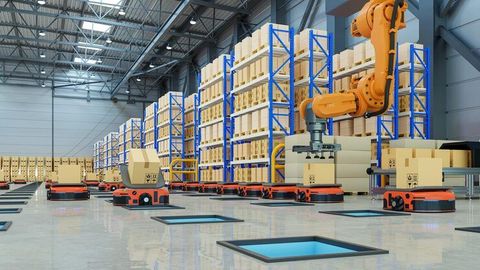
- Autonomous material-handling systems
- Industrial monitoring equipment
- Semiconductor manufacturing equipment
- Process-control machinery
The exact architecture depends on the machine, operating environment, available data, and required response time.
Importance
Edge AI machinery matters because modern production environments generate large amounts of information. A facility may contain thousands of sensors, cameras, controllers, motors, robots, and other devices. Processing all of this information centrally can create communication, storage, and response challenges.
Local AI processing can help address some of these challenges. When information is analyzed near the machine, the system does not necessarily need to transmit continuous raw data to another location. This can reduce network traffic and allow certain decisions to occur closer to the physical process.
Who Uses Intelligent Equipment
Edge AI is relevant to manufacturers, automation engineers, equipment designers, quality teams, plant operators, maintenance personnel, and technology developers. It also affects consumers indirectly because intelligent manufacturing systems can influence how products are inspected, assembled, packaged, and monitored.
The technology is particularly relevant where machines need to respond quickly to changing conditions. For example, a vision system inspecting products on a moving production line may need to analyze an image immediately rather than waiting for a remote computing system.
Common Industrial Applications
Machine monitoring is one important application. Sensors can continuously measure operating conditions, while an AI model evaluates patterns that may indicate abnormal behavior.
Quality inspection is another major area. Cameras connected to edge processors can analyze products during production. Instead of storing every image for later analysis, the system may identify relevant events locally and retain selected information.
Robotics also benefits from local intelligence. Robots equipped with cameras and AI processors can interpret their surroundings, recognize objects, and adjust certain movements according to the application.
| Application | Typical Data | Edge AI Function |
|---|---|---|
| Machine monitoring | Vibration, temperature, current | Pattern analysis |
| Visual inspection | Images and video | Defect classification |
| Robotics | Camera and position data | Object recognition |
| Packaging | Images, speed, sensor signals | Process monitoring |
| Material handling | Cameras and location data | Object identification |
| Process control | Pressure, flow, temperature | Local anomaly detection |
| Equipment monitoring | Motor and electrical signals | Condition analysis |
Challenges to Consider
Edge AI machinery also introduces technical challenges. AI models need suitable training data, and industrial environments can produce changing conditions that affect model accuracy. Dust, vibration, lighting differences, temperature changes, and equipment variations may influence sensor and camera information.
Hardware selection is another consideration. An edge processor must have enough computing capability for the intended AI workload while fitting within the machine's physical and electrical requirements.
Cybersecurity is also important because connected machinery can create additional digital access points. Industrial systems therefore need appropriate network controls, authentication, software management, and monitoring procedures.
Recent Updates
From 2024 through 2026, the general direction of Edge AI has been toward smaller AI models, more capable industrial processors, improved machine vision, and greater integration between AI and automation platforms.
One noticeable trend is the movement of AI inference from centralized computing environments toward industrial devices. Modern processors can perform increasingly complex AI calculations locally, making edge processing practical for more applications.
Smaller and More Efficient AI Models
AI models are increasingly being adapted for devices with limited computing resources. Techniques such as model compression, quantization, and specialized inference hardware can reduce the processing requirements of machine learning applications.
This development is important for machinery because industrial equipment does not always have the space, power capacity, or network conditions associated with large computing systems.
Growth of AI Vision
Machine vision continues to be an important area for intelligent manufacturing technology. AI-based vision can analyze shapes, surfaces, labels, assembly conditions, and other visual characteristics.
The broader trend is toward combining cameras, sensors, AI models, and industrial controllers into more integrated systems rather than treating each component as an isolated device.
Increasing Integration With Industrial Automation
Edge AI is also becoming more closely connected with programmable controllers, industrial computers, robotics platforms, digital twins, and manufacturing data systems. This creates a bridge between conventional automation and AI-based analysis.
Another trend is hybrid computing. Some information can be analyzed locally, while selected results or larger datasets can be transferred to centralized platforms for reporting, model development, or long-term analysis.
Laws or Policies
Rules governing Edge AI machinery depend on the country, industry, machine category, and type of information being processed. There is no single worldwide regulation covering every Edge AI application.
Industrial equipment may need to follow machinery safety requirements, electrical safety rules, electromagnetic compatibility requirements, cybersecurity expectations, and workplace protection regulations. Where cameras or connected systems process information that can identify individuals, privacy and data-protection rules may also apply.
Areas Commonly Covered by Regulation
Important policy areas can include:
- Machine and equipment safety
- Electrical and electromagnetic compatibility
- Industrial cybersecurity
- Data protection and privacy
- Product safety and conformity assessment
- Workplace monitoring requirements
- Artificial intelligence governance
- Software and connected-device security
Manufacturers and operators generally need to determine which requirements apply to their particular equipment and operating environment. The applicable rules can change according to whether an Edge AI system controls machinery directly, provides analysis only, or processes personal information.
Tools and Resources
Several types of tools help organizations understand, design, test, and manage Edge AI machinery. Industrial automation platforms can provide machine connectivity, controller integration, and equipment monitoring. Edge computing platforms provide local processing environments for AI applications.
AI development frameworks can be used to train and deploy machine learning models, while machine vision software supports image-based inspection. Simulation and digital-twin platforms can help evaluate machine behavior before changes are introduced into physical equipment.
Useful resources may include:
- Industrial automation documentation
- Edge computing development platforms
- Machine vision development environments
- AI model deployment tools
- Digital twin software
- Sensor configuration utilities
- Industrial cybersecurity frameworks
- Equipment maintenance records
- Manufacturing process templates
- Technical training materials
Data-quality tools are also important. An AI model is dependent on the information used for development and evaluation, so consistent sensor readings and properly labeled inspection data can have a major effect on the usefulness of an application.
FAQs
What is Edge AI machinery?
Edge AI machinery is industrial equipment that uses artificial intelligence close to the location where machine data is generated. It can analyze sensor, image, or equipment information locally and respond according to its programmed purpose.
How does intelligent equipment use Edge AI?
Intelligent equipment can use Edge AI to analyze machine conditions, recognize objects, inspect products, identify unusual patterns, or support automated decisions. The exact function depends on the equipment and AI model.
What is Edge AI manufacturing technology used for?
Edge AI manufacturing technology can support machine monitoring, visual inspection, robotics, process analysis, quality control, and equipment condition assessment. It is particularly useful when local data analysis is important.
Does Edge AI replace traditional industrial automation?
No. Edge AI generally works alongside traditional automation technologies. Programmable controllers, sensors, robots, industrial computers, and other control systems can continue performing their established functions while AI adds additional analysis capabilities.
What are the main challenges of Edge AI machinery?
Common challenges include selecting suitable hardware, preparing reliable data, maintaining AI models, protecting connected equipment, managing software updates, and validating system performance under changing industrial conditions.
Conclusion
Edge AI machinery brings artificial intelligence closer to physical equipment by processing information near the source of machine data. Intelligent equipment can use this approach for inspection, monitoring, robotics, and other manufacturing applications. Current manufacturing technology is moving toward greater integration between AI processors, sensors, machine vision, industrial controls, and centralized data systems. Successful implementation depends on suitable hardware, reliable data, appropriate cybersecurity measures, and compliance with applicable safety and data rules.