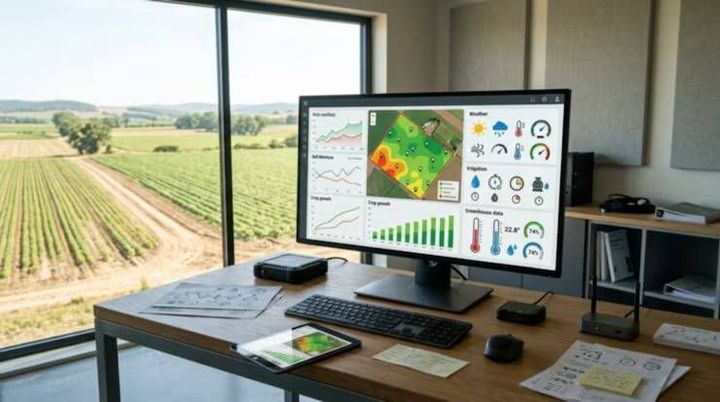
Yard Management Software Enterprise Tier Overview With Automation and Visibility Insights
Yard management software enterprise tier refers to advanced digital systems that coordinate the movement of trucks, trailers, containers, and goods within warehouses, distribution centers, manufacturing facilities, and logistics yards.
These platforms help organizations monitor vehicles entering and leaving a facility, manage loading and unloading activities, assign dock doors, and maintain accurate records of yard operations. Enterprise-tier solutions are generally designed for organizations with multiple facilities, high shipment volumes, complex workflows, or extensive technology requirements.
Traditional yard operations often depend on spreadsheets, telephone calls, paper records, and manual communication between security personnel, warehouse teams, and transport coordinators. These methods can become difficult to manage when several vehicles arrive simultaneously or when shipment priorities change unexpectedly. Yard management software introduces a centralized digital system that helps teams coordinate these activities and maintain a clearer operational picture.
How enterprise yard management developed
Yard management evolved from basic gate-recording systems into connected platforms that coordinate activities across the wider supply chain. Earlier systems primarily recorded vehicle arrivals and departures, while modern platforms can integrate appointment scheduling, dock management, trailer tracking, and warehouse applications.
Enterprise-tier software extends these capabilities through configurable workflows, detailed reporting, role-based access, and connections with other business systems. Its purpose is to support consistent processes across large facilities while providing managers with information about operational activity.
Core functions of enterprise platforms
Common capabilities include:
Gate management for recording vehicle arrivals, identity details, and departure information.
Dock scheduling for assigning loading and unloading locations.
Trailer tracking for identifying equipment locations and movement status.
Yard visibility for monitoring available spaces, occupied areas, and pending movements.
Workflow automation for coordinating routine tasks and notifications.
Reporting tools for reviewing delays, vehicle turnaround, dock utilization, and operational patterns.
The availability of individual functions varies by platform, subscription tier, configuration, and integration requirements.
Importance
Yard operations influence how efficiently goods move between transportation networks and warehouse facilities. When vehicles wait for long periods, dock assignments become unclear, or trailers cannot be located, the resulting disruption can affect warehouse productivity, transportation schedules, inventory accuracy, and delivery planning.
Enterprise yard management software helps address these challenges by bringing operational information into a shared environment. Instead of relying exclusively on individual employees to communicate every change, teams can use common status records, automated notifications, and coordinated workflows.
Who uses yard management software?
Several groups can benefit from structured yard coordination.
Warehouse managers monitor dock availability, loading progress, and yard capacity.
Transportation coordinators organize arrivals, departures, and trailer movements.
Security personnel record vehicle entry, verify appointments, and maintain access logs.
Logistics planners review delays and coordinate transportation schedules.
Manufacturing teams manage incoming materials and outgoing finished goods.
Information technology teams oversee system integrations, user permissions, and data quality.
The software is particularly relevant to organizations that operate several distribution centers, large manufacturing sites, retail distribution networks, or transportation hubs.
Operational challenges addressed
Manual processes can create duplicate records, inaccurate trailer locations, communication gaps, and inconsistent appointment information. A centralized platform can reduce these problems by standardizing how activities are recorded and updated.
Automation also helps teams identify exceptions, such as a vehicle arriving outside its scheduled window or a dock remaining occupied longer than expected. These alerts provide visibility into problems that might otherwise remain unnoticed until they affect subsequent operations.
Enterprise visibility and operational measurements
Enterprise systems can provide performance indicators that help managers understand how the yard operates. Common measurements include vehicle turnaround time, average waiting time, dock utilization, appointment adherence, and the frequency of unplanned movements.
Operational measurement | What it indicates | How it is used |
|---|---|---|
Vehicle turnaround time | Total time spent at the facility | Reviews overall yard flow |
Gate waiting time | Time before entry or exit processing | Identifies access bottlenecks |
Dock utilization | Share of available dock time in use | Supports capacity planning |
Appointment adherence | Whether arrivals match scheduled windows | Evaluates scheduling consistency |
Trailer search time | Time spent locating equipment | Highlights tracking problems |
Exception frequency | Number of deviations from normal workflows | Identifies recurring disruptions |
These measurements need consistent definitions and reliable data. For example, turnaround time may be calculated from gate entry to gate exit, while another organization might exclude specific waiting periods.
Recent Updates
Enterprise yard management has increasingly developed toward connected, data-driven operations. Recent industry trends emphasize real-time visibility, integration with warehouse and transportation systems, mobile access, and the use of automation to reduce repetitive coordination tasks. The extent of these capabilities depends on the software provider and the equipment installed at each facility.
Greater use of automation
Modern platforms can automate appointment confirmations, dock assignments, movement requests, and notifications when operational conditions change. Rules can be configured to route exceptions to the appropriate employee rather than requiring every activity to be monitored manually.
Automation does not eliminate the need for human oversight. Unexpected arrivals, equipment problems, safety concerns, and conflicting priorities may still require employees to make decisions.
Integration with connected business systems
Enterprise yard management software increasingly connects with warehouse management systems (WMS), transportation management systems (TMS), enterprise resource planning (ERP) platforms, and carrier applications.
These integrations help synchronize shipment information, appointment details, inventory movements, and transportation records. Application programming interfaces (APIs) and standardized data exchanges can support communication between systems, although compatibility varies.
Mobile tools and location technologies
Mobile applications allow authorized employees to record inspections, update trailer status, and receive task notifications while working across a facility. Depending on the implementation, tracking can use barcode scans, radio-frequency identification (RFID), GPS, or other location technologies.
Each approach has different requirements. GPS may be useful for outdoor tracking, while RFID and barcode systems can support identification at designated checkpoints. Accurate visibility depends on suitable hardware, network coverage, and timely data updates.
Artificial intelligence and predictive insights
Some enterprise platforms incorporate analytical models to identify recurring delays, estimate arrival patterns, or help prioritize yard movements. These capabilities can support planning when sufficient historical and operational data are available.
However, predictive results are estimates rather than certain outcomes. Data quality, changing traffic conditions, unusual shipment volumes, and incomplete records can affect their accuracy.
Laws or Policies
Yard management software is influenced by several categories of rules, including workplace safety, transportation requirements, privacy obligations, electronic recordkeeping, and information security. The exact requirements depend on the country, industry, type of facility, and information collected by the system.
Transportation and facility safety
Organizations must consider applicable rules governing vehicle movement, loading areas, pedestrian access, equipment operation, and workplace hazards. Software can help document inspections, coordinate vehicle movements, and maintain access records, but it does not replace required safety procedures or employee training.
Facilities handling hazardous materials, food products, pharmaceuticals, or other regulated goods may also face additional operational and documentation requirements.
Data privacy and cybersecurity
Enterprise platforms may process driver details, vehicle registration information, employee accounts, shipment records, and location data. Organizations need to assess applicable privacy laws and establish appropriate controls for collecting, accessing, retaining, and sharing these records.
Common safeguards include role-based permissions, secure authentication, encryption, audit logs, backup procedures, and defined data-retention policies. Vendors and customers may also need contractual arrangements covering data ownership, incident reporting, and access responsibilities.
Electronic records and system governance
Digital records can support operational reviews and internal audits, but organizations should determine which records must be retained and for how long. Electronic signatures, timestamps, and access histories may be relevant where specific legal or contractual requirements apply.
Enterprise software selection should therefore consider the facility's operating jurisdiction and industry requirements. Compliance depends on the complete operational process, not merely the presence of a digital platform.
Tools and Resources
Several types of tools support the evaluation, implementation, and ongoing use of enterprise yard management systems. Their usefulness depends on facility size, operational complexity, existing technology, and internal requirements.
Software evaluation tools
A structured comparison worksheet can help organizations assess platforms consistently. Useful evaluation categories include:
Yard visibility and trailer tracking capabilities.
Appointment scheduling and dock coordination.
Integration with existing WMS, TMS, and ERP systems.
Reporting flexibility and dashboard configuration.
User permissions, cybersecurity, and auditability.
Multi-site administration and workflow configuration.
Implementation requirements, support arrangements, and subscription terms.
An enterprise-tier comparison should distinguish between capabilities included in the standard subscription and those requiring separate modules, hardware, or integration work.
Operational planning resources
Process maps, yard layout diagrams, appointment schedules, and dock-capacity worksheets help teams understand existing workflows before introducing new software. These resources can reveal unnecessary handoffs, repeated data entry, unclear responsibilities, and poorly defined movement procedures.
A baseline measurement sheet can record average waiting time, turnaround time, appointment adherence, and trailer search duration. Comparing these measurements before and after implementation helps organizations evaluate operational changes without relying solely on software-generated summaries.
Integration and data management tools
API documentation, data dictionaries, integration testing environments, and access-control matrices help technical teams plan system connections. They also clarify how information is exchanged between yard management software and existing business applications.
Data validation procedures are important because inaccurate shipment identifiers, missing timestamps, and inconsistent status definitions can undermine reporting. Regular reviews help maintain more dependable operational information.
Implementation planning
A phased implementation can begin with one facility or a limited set of workflows before expanding to other locations. Testing should cover normal operations, delayed arrivals, incorrect records, system interruptions, and procedures for manual operation during outages.
Training is also important. Employees need to understand how to update records, handle exceptions, follow access controls, and report incorrect information. Clear responsibility assignments help maintain consistent use across departments and facilities.
FAQs
What is enterprise-tier yard management software?
Enterprise-tier yard management software is a platform designed to coordinate complex yard operations across large or multiple facilities. It typically supports vehicle tracking, dock scheduling, workflow automation, reporting, and integration with other business systems.
How does yard management software automation work?
Automation uses predefined rules, system events, and connected data to initiate routine actions. Examples include sending arrival notifications, updating vehicle status, assigning tasks, and alerting employees when a shipment deviates from its planned schedule.
Which features matter in an enterprise yard management system?
Important features often include real-time yard visibility, appointment scheduling, trailer tracking, dock coordination, configurable workflows, detailed analytics, access controls, and integration capabilities. The appropriate combination depends on the facility's operational requirements.
Can enterprise yard management software integrate with WMS and TMS platforms?
Yes, many enterprise platforms support integration with warehouse management systems and transportation management systems. Integration methods may include APIs, connectors, or structured data exchanges, depending on the products involved.
How is yard management software different from warehouse management software?
Yard management software focuses on vehicle arrivals, trailer locations, yard movements, and dock coordination. Warehouse management software focuses on inventory, storage locations, picking, packing, and internal warehouse processes. The two systems can exchange information to coordinate activities across facility operations.
Conclusion
Enterprise-tier yard management software provides digital tools for coordinating vehicles, trailers, docks, and yard activities across complex logistics operations. Automation, system integration, and operational reporting can improve visibility into delays, equipment locations, and facility performance. Successful implementation depends on reliable data, appropriate workflows, employee training, cybersecurity, and applicable regulatory requirements. The capabilities and operational results vary according to the platform, configuration, and facility environment.