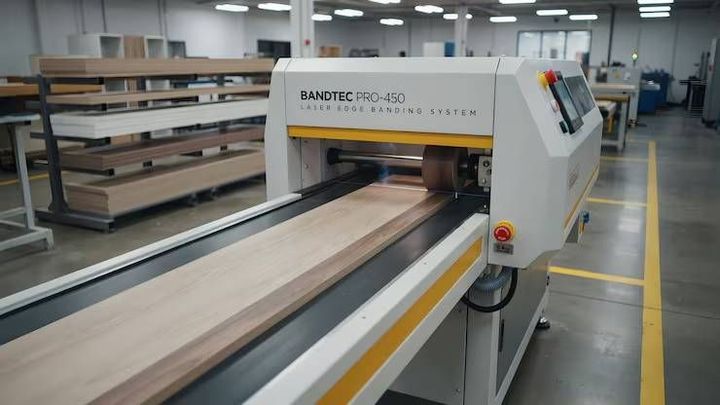
Veneer Slicing Machines Overview With Woodworking Technology and Engineering Information
Veneer slicing machines are specialized woodworking machines used to produce thin sheets of wood from logs, timber blocks, and prepared wood sections. These sheets, known as wood veneers, retain the natural grain patterns and visual characteristics of the original timber.
Veneer slicing machines are widely used in furniture manufacturing, interior decoration, cabinetry, doors, wall panels, and engineered wood products.
Wood veneer production developed as woodworkers sought ways to use valuable timber efficiently while maintaining its natural appearance. Instead of manufacturing an entire furniture panel from solid wood, manufacturers can apply thin veneer sheets to a supporting material such as plywood, fiberboard, or particleboard. This approach allows a relatively small quantity of decorative timber to cover a larger surface area.
Modern veneer slicing machines combine mechanical engineering, cutting tools, material handling systems, and electronic controls. Depending on the machine design, the timber block may remain stationary while a knife moves across it, or the cutting mechanism may follow another controlled arrangement. The objective is to produce sheets with consistent thickness, suitable surface quality, and minimal damage to the wood fibers.
What Is a Veneer Slicing Machine?
A veneer slicing machine is industrial equipment designed to cut thin layers from prepared wood blocks. The resulting veneer sheets may be used as decorative surfaces or as components in plywood and other wood-based products.
The machine typically includes a cutting knife, a holding mechanism, a supporting frame, adjustment controls, and systems for positioning the timber. More advanced models may incorporate automated feeding, thickness adjustment, programmable controls, and sheet handling equipment.
Main Types of Veneer Cutting Equipment
Different machines are selected according to timber characteristics, production requirements, and the intended veneer pattern.
Vertical veneer slicers: These machines use a vertically arranged cutting movement to slice prepared timber blocks into thin sheets.
Horizontal veneer slicers: These systems use a horizontal cutting arrangement, which can support particular block sizes and production layouts.
Rotary veneer peeling machines: A log rotates against a stationary knife, producing a continuous sheet of veneer. This process differs from slicing and is commonly used for plywood production.
Specialized decorative veneer slicers: These machines are configured to process selected timber species and create particular grain patterns for furniture and interior applications.
Veneer slicing and rotary peeling are related technologies, but they produce different grain appearances and are not interchangeable in every manufacturing situation.
Importance
Veneer slicing machines play an important role in modern woodworking because they help transform natural timber into thin, usable surface materials. Their operation affects material utilization, production consistency, product appearance, and the amount of additional finishing required.
Furniture manufacturers use veneer sheets to create coordinated surface designs across cabinets, tables, wardrobes, office furniture, and decorative panels. Construction and interior finishing industries also use wood veneer in doors, wall coverings, ceilings, and architectural features.
Benefits for Woodworking and Manufacturing
One significant advantage of veneer slicing is the ability to preserve the natural appearance of timber while reducing the quantity of solid wood required for a finished surface. The supporting panel provides structural stability, while the veneer contributes the visible wood grain.
Important manufacturing considerations include:
Material utilization: Thin slicing allows manufacturers to obtain multiple sheets from a prepared timber block.
Surface consistency: Accurate cutting helps produce sheets with relatively uniform thickness.
Design flexibility: Different slicing methods create distinctive grain patterns for decorative applications.
Production planning: Mechanized cutting supports repeatable operations across multiple timber blocks.
Finishing requirements: Smooth, consistent veneer surfaces can simplify later sanding, bonding, and coating operations.
Industries That Use Veneer Slicing Machines
The technology supports several sectors that depend on wood-based materials.
Industry | Typical application | Main requirement |
|---|---|---|
Furniture manufacturing | Tables, cabinets, wardrobes | Consistent decorative surfaces |
Interior design | Wall panels and ceilings | Selected grain patterns |
Door manufacturing | Decorative door skins | Uniform sheet thickness |
Plywood production | Wood veneer layers | Suitable sheet quality |
Musical instrument manufacturing | Decorative wood surfaces | Grain appearance and careful material selection |
Engineered wood production | Laminated surface materials | Reliable processing consistency |
Common Production Challenges
Wood is a natural material, so its properties vary with species, moisture content, grain direction, knots, and internal defects. These differences can influence how easily a block can be sliced and whether the resulting sheets remain intact.
Common problems include uneven thickness, torn grain, knife marks, sheet cracking, and variations in moisture. Blunt cutting tools, incorrect blade positioning, unstable timber blocks, and unsuitable processing conditions may contribute to these defects.
Manufacturers therefore need to consider timber preparation, blade maintenance, machine alignment, and environmental conditions together rather than treating cutting accuracy as an isolated factor.
Recent Updates
Recent developments in veneer slicing technology reflect broader changes in industrial woodworking, particularly automation, digital control, energy management, and material traceability. The general direction is toward more consistent processing, reduced manual handling, and improved visibility into production conditions.
Automation and Digital Controls
Modern industrial veneer slicing systems may incorporate programmable logic controllers, digital adjustment interfaces, position sensors, and automated material handling. These features help operators configure cutting parameters and repeat settings across production batches.
Depending on the equipment, sensors can monitor machine position, operating conditions, or selected production variables. Automated handling equipment can also reduce the amount of manual movement required between cutting, stacking, and inspection stages.
Precision Engineering and Blade Technology
Knife geometry, blade material, machine rigidity, and cutting speed all influence veneer quality. Improvements in tool manufacturing and precision machining support more controlled cutting operations, although actual results depend on timber characteristics and machine setup.
Manufacturers increasingly focus on maintaining stable blade positioning and reducing vibration. Proper knife sharpening and scheduled inspection remain important, even when advanced control systems are installed.
Digital Monitoring and Production Efficiency
Some woodworking facilities use production monitoring systems to record operating time, maintenance events, output quantities, and equipment interruptions. These records can help identify recurring problems and support maintenance planning.
Development | Purpose | Practical consideration |
|---|---|---|
Programmable controls | Repeatable machine settings | Requires suitable operator training |
Automated handling | Reduced manual movement | Needs compatible factory layouts |
Condition monitoring | Earlier identification of equipment issues | Sensor coverage varies by machine |
Improved cutting tools | More controlled cutting performance | Regular inspection remains necessary |
Production data systems | Process tracking and planning | Data accuracy depends on correct setup |
These developments do not mean that every veneer slicing machine includes advanced automation. Equipment capabilities differ according to design, production scale, and the complexity of the woodworking operation.
Laws or Policies
Rules governing veneer slicing machines depend on the country where the equipment is manufactured, installed, and operated. Since no specific target country has been identified, the following overview covers general regulatory considerations rather than country-specific legal requirements.
Machinery Safety and Workplace Requirements
Industrial woodworking equipment can expose operators to sharp blades, moving components, electrical hazards, noise, and airborne wood dust. Workplace safety frameworks commonly address machine guarding, emergency stopping, electrical protection, operator training, and safe maintenance procedures.
Relevant requirements may include:
Guards and protective arrangements around hazardous moving parts.
Safe procedures for blade replacement, sharpening, and machine adjustment.
Electrical installations that meet applicable safety requirements.
Appropriate personal protective equipment and workplace risk assessments.
Dust extraction and ventilation suited to the woodworking process.
Training and documented maintenance procedures.
The exact requirements depend on the applicable national legislation and the machine's intended use. Manufacturers and facility operators must determine which rules apply to their equipment and workplace.
Environmental and Timber Considerations
Wood processing may also be affected by environmental rules concerning dust emissions, waste handling, noise, and the use of timber from regulated sources. Requirements vary by jurisdiction and may depend on the type and scale of the facility.
Documentation concerning timber origin can be relevant when sourcing wood across international supply chains. Manufacturing facilities may also need to consider responsible material procurement, recycling of suitable wood residues, and the handling of adhesives or coatings used in later production stages.
Tools and Resources
Several practical tools help manufacturers, technicians, and woodworking learners understand veneer slicing processes and evaluate production requirements.
Machine Selection and Engineering Tools
Thickness measurement instruments: Micrometers, thickness gauges, and suitable precision measuring devices help assess veneer dimensions. Measurement methods should account for the thinness and flexibility of the material.
Moisture meters: Wood moisture meters help assess timber conditions before processing. Readings may require species-specific corrections, and different measurement methods have different limitations.
Blade inspection tools: Appropriate inspection equipment helps technicians assess knife condition, edge damage, and alignment. Sharpening and adjustment should follow the machine manufacturer's instructions.
Computer-aided design software: CAD tools support the planning of machine layouts, component arrangements, and production areas. Three-dimensional modeling can help assess access requirements and maintenance clearances.
Production monitoring software: Manufacturing execution systems and maintenance tracking applications can record output, downtime, inspections, and machine operating history.
Information and Planning Resources
Technical manuals, machine specifications, woodworking training materials, and engineering documentation provide useful background when comparing equipment configurations. Manufacturer documentation is particularly important for understanding supported timber dimensions, adjustment ranges, blade specifications, electrical requirements, and maintenance intervals.
A basic evaluation can use the following checklist:
Timber species and block dimensions.
Required veneer thickness and dimensional tolerance.
Desired grain pattern and surface quality.
Expected production volume and handling requirements.
Available factory space and electrical capacity.
Blade maintenance arrangements and dust extraction needs.
Operator training and applicable safety requirements.
These factors provide a structured basis for understanding how a veneer slicing machine fits into a woodworking production process.
FAQs
What Is a Veneer Slicing Machine Used For?
A veneer slicing machine cuts thin sheets from prepared wood blocks. These sheets are used in furniture, decorative panels, doors, cabinetry, and other wood-based products where natural wood grain is required.
How Does a Veneer Slicing Machine Work?
The machine holds a prepared timber block securely while a sharp knife cuts a thin layer from its surface. Controlled positioning and blade movement help maintain the required sheet thickness, while timber preparation influences the quality of the finished veneer.
What Is the Difference Between Veneer Slicing and Rotary Peeling?
Veneer slicing generally cuts individual sheets from a stationary or positioned timber block, producing characteristic grain patterns. Rotary peeling turns a log against a knife to produce a continuous veneer sheet, commonly used in plywood manufacturing.
Which Factors Affect Veneer Slicing Machine Performance?
Important factors include wood species, moisture content, grain direction, knife sharpness, blade alignment, cutting speed, and machine stability. Correct setup and routine maintenance help reduce defects and improve consistency.
What Safety Measures Are Important for Veneer Slicing Machines?
Important measures include appropriate blade guards, emergency stopping systems, safe isolation during maintenance, operator training, and effective dust extraction. Specific safeguards should match the machine design and applicable workplace regulations.
Conclusion
Veneer slicing machines are important woodworking systems that convert prepared timber into thin sheets for furniture, interior finishing, and engineered wood products. Their performance depends on cutting accuracy, blade condition, timber properties, machine stability, and suitable operating procedures. Automation and digital monitoring are increasingly relevant to production planning and process control, although equipment capabilities vary. Understanding these technical and safety considerations helps explain the role of veneer slicing technology in modern wood processing.