Sheet Leveling Machines Information With Leveling Technology, Features, and Manufacturing Applications
Sheet leveling machines are industrial systems designed to reduce unwanted bends, waves, and internal stresses in metal sheets and strips. They are used in manufacturing environments where flat, consistent metal surfaces are important for further processing.
Common materials include carbon steel, stainless steel, aluminum, and other metals used in fabrication and industrial production.
Metal sheets can develop uneven shapes during rolling, cutting, transportation, or storage. These irregularities can affect the accuracy of later manufacturing operations, including punching, laser cutting, welding, and forming. Sheet leveling technology addresses these issues by passing the material through a controlled arrangement of rollers that gradually correct its shape.
What Is a Sheet Leveling Machine?
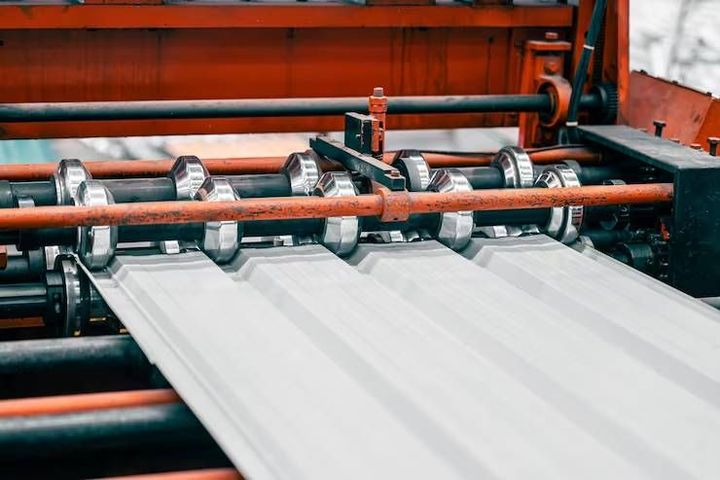
A sheet leveling machine is equipment that applies controlled mechanical pressure to metal sheets to improve their flatness. It typically contains a series of leveling rollers arranged above and below the material path. As the sheet passes through the rollers, it experiences alternating bending that helps reduce unevenness and residual stress.
The machine may operate independently or as part of an integrated production line. Its configuration depends on the material thickness, width, strength, and required flatness. Some systems process thin metal strips, while heavier-duty machines handle thick plates used in structural and industrial applications.
How Sheet Leveling Technology Works
Sheet leveling technology relies on controlled plastic deformation. The rollers bend the metal slightly beyond its initial shape in alternating directions, allowing differences in stress across the sheet to become more uniform. This process reduces visible waves, edge deformation, and other flatness problems.
The main operating stages include:
Material feeding: The sheet enters the machine through an entry guide or feeding system.
Roller engagement: Upper and lower rollers apply controlled pressure to the material.
Repeated bending: The sheet passes through successive rollers that gradually correct its uneven shape.
Flatness inspection: Operators examine the processed sheet to determine whether it meets the required specifications.
Roller spacing, penetration depth, machine speed, and material properties influence the outcome. Incorrect settings may leave residual waves or introduce additional deformation, making appropriate setup important.
Main Types of Sheet Leveling Machines
Different machine designs support different production requirements. Common types include precision sheet levelers, heavy-plate leveling machines, roller levelers for continuous strips, and compact systems for smaller fabrication operations.
Precision levelers are commonly used for thinner sheets that require consistent flatness. Heavy-plate levelers are designed for thicker and stronger materials, while continuous strip levelers can be integrated into coil-processing lines.
Importance
Sheet leveling machines matter because flat metal improves the consistency of many downstream manufacturing processes. Uneven material can shift during cutting, create gaps during assembly, and cause dimensional variations in finished components. Correcting these issues before subsequent operations helps manufacturers maintain predictable production quality.
Who Uses Sheet Leveling Equipment?
Several industrial sectors rely on metal leveling technology. Fabrication workshops use it to prepare sheets for cutting and forming, while automotive manufacturers use leveled material for body components and structural parts.
Other applications include electrical enclosures, industrial machinery, construction panels, metal furniture, agricultural equipment, and appliance manufacturing. Metal processors may also use leveling equipment when preparing sheets for distribution to fabrication facilities.
Problems Addressed by Sheet Leveling
Sheet leveling equipment helps address several common material problems:
Coil set: Curvature that remains after metal has been stored in a rolled form.
Crossbow: Curvature across the width of a metal strip.
Edge waves: Uneven edges caused by differences in material elongation.
Center buckle: A raised or wavy region around the middle of the sheet.
Residual stress: Internal stress that can contribute to distortion during cutting or machining.
Not every flatness defect can be corrected through leveling alone. Material damage, incorrect rolling conditions, severe thickness variations, and unsuitable processing parameters may require additional assessment.
Benefits for Manufacturing Operations
The main benefits of sheet leveling technology relate to process consistency and material handling. A flatter sheet can be easier to position accurately, clamp securely, and process through automated equipment.
Manufacturing factor | Contribution of sheet leveling |
|---|---|
Dimensional consistency | Helps maintain more predictable sheet geometry |
Laser cutting preparation | Reduces unevenness that may affect material positioning |
Welding preparation | Supports more consistent fit-up between components |
Material handling | Helps sheets sit more evenly on tables and fixtures |
Production inspection | Makes flatness assessment more systematic |
Process integration | Supports automated sheet and coil-processing lines |
The actual results depend on the original material condition, machine capability, operator settings, and production requirements. Leveling should therefore be treated as one part of a broader quality-control process.
Recent Updates
Sheet leveling technology continues to develop alongside manufacturing automation, digital monitoring, and more demanding requirements for material consistency. Current industry trends emphasize controlled roller adjustment, repeatable machine settings, and integration with connected production equipment rather than a single universal machine design.
Automation and Digital Control
Modern sheet leveling machines may incorporate programmable controls, digital displays, and motorized roller adjustment. These features help operators set processing parameters more consistently and reduce dependence on manual adjustments.
Some systems can store settings for different material types and thicknesses. When production requirements change, operators can retrieve suitable starting parameters and verify them through inspection. Stored settings do not eliminate the need to confirm actual material conditions.
Sensors and Process Monitoring
Sensors and monitoring systems can support the observation of roller position, motor load, operating speed, and other machine conditions. In more advanced installations, this information can help identify changes in operating behavior or indicate when inspection is necessary.
Manufacturers are also applying data analysis to maintenance planning. Monitoring vibration, temperature, and equipment load can help identify developing mechanical problems, although the capabilities available vary by machine model.
Integration With Automated Production Lines
Sheet leveling equipment is increasingly incorporated into production lines that include decoiling, feeding, cutting, stacking, and material transfer. Coordinating these stages can improve workflow consistency and reduce unnecessary manual handling.
Manufacturers also face demand for processing a wider variety of metals and thicknesses. As a result, equipment selection increasingly considers adjustment flexibility, repeatability, energy use, and compatibility with existing production systems. These are continuing industry trends rather than evidence that every machine includes advanced automation.
Laws or Policies
Sheet leveling machines are affected by industrial safety requirements, machinery standards, workplace regulations, and environmental rules applicable to their installation and operation. Because the intended country has not been specified, the following overview describes general considerations rather than the legal requirements of a particular jurisdiction.
Machinery Safety Requirements
Industrial equipment generally needs suitable safeguards to reduce the risk of injuries caused by moving rollers, rotating components, electrical systems, and material movement. Relevant safety measures may include fixed guards, interlocks, emergency-stop controls, and clearly identified operating procedures.
Employers and equipment operators should consider the rules applicable to machine guarding, electrical safety, maintenance, and worker training in their jurisdiction. Applicable technical standards may also address machinery design, risk assessment, and safe operation.
Worker Protection and Maintenance
Metal sheets can have sharp edges, substantial weight, and unpredictable movement. Safe operating procedures commonly address material lifting, suitable protective equipment, access restrictions, and safe methods for clearing jams.
Maintenance should be conducted using appropriate isolation procedures to prevent unexpected machine movement or electrical energization. Operators should not reach between rollers while equipment is running.
Environmental and Energy Considerations
Manufacturing facilities may need to comply with rules covering electrical installations, noise, waste management, and energy use. Hydraulic systems, where fitted, also require appropriate handling of fluids and management of leaks.
The precise requirements depend on the facility, machine design, and applicable local regulations. Equipment documentation and a formal workplace risk assessment can help establish which requirements apply.
Tools and Resources
Selecting and operating sheet leveling equipment involves several technical checks. Material specifications, flatness measurements, roller configuration, and production requirements all influence the suitability of a particular system.
Machine Selection Tools
Equipment specification sheets and manufacturer configuration guides help users compare working width, thickness range, roller diameter, roller count, adjustment mechanisms, and maximum material strength. These details provide a starting point for determining whether a machine matches a production requirement.
A practical evaluation should also consider the available floor space, feeding arrangements, electrical supply, maintenance access, and integration with existing equipment.
Flatness Measurement and Inspection
Straightedges, precision rulers, feeler gauges, and dedicated flatness measurement systems can help assess material geometry. For demanding applications, coordinate measurement equipment or specialized surface inspection systems may provide more detailed measurements.
Inspection procedures should define where measurements are taken, how the sheet is supported, and which tolerance applies. Consistent measurement methods make it easier to compare results between production batches.
Useful Technical Resources
The following resources support machine evaluation and process planning:
Material specification sheets: Provide information about thickness, strength, grade, and mechanical properties.
Machine operating manuals: Explain operating limits, setup procedures, lubrication, and maintenance requirements.
Flatness inspection templates: Help record measurement locations, deviations, and acceptance criteria.
Production planning software: Supports scheduling and coordination between leveling, cutting, forming, and other operations.
Maintenance checklists: Help track roller condition, alignment, lubrication, guards, and recurring equipment issues.
Example of a Machine Evaluation Checklist
Evaluation factor | Information to confirm |
|---|---|
Material type | Steel, stainless steel, aluminum, or another alloy |
Thickness range | Minimum and maximum sheet thickness |
Working width | Maximum material width supported |
Flatness tolerance | Required final flatness specification |
Production volume | Expected throughput and operating pattern |
Control system | Manual, motorized, or programmable adjustment |
Safety features | Guards, interlocks, and emergency-stop arrangements |
Maintenance needs | Roller inspection, lubrication, and component replacement |
This checklist provides a structured starting point, but final equipment suitability depends on technical testing and the actual material being processed.
FAQs
What Is a Sheet Leveling Machine Used For?
A sheet leveling machine reduces waves, bends, and other flatness defects in metal sheets and strips. It prepares material for operations such as laser cutting, punching, welding, and forming.
How Does Sheet Leveling Technology Work?
Sheet leveling technology uses a sequence of rollers to bend metal in alternating directions. Controlled deformation helps reduce differences in internal stress and improve overall flatness.
Which Materials Can Sheet Leveling Machines Process?
Depending on their design, sheet leveling machines can process carbon steel, stainless steel, aluminum, and other metals. Material thickness, strength, width, and the required flatness determine which machine configuration is suitable.
What Is the Difference Between Sheet Leveling and Straightening?
Sheet leveling focuses on improving flatness across the sheet or strip, including problems such as center buckle and edge waves. Straightening often focuses on correcting broader curvature or bending, although the terms can overlap depending on the equipment and application.
What Factors Affect Sheet Leveling Machine Performance?
Performance depends on material properties, thickness, roller arrangement, roller adjustment, operating speed, and initial flatness. Regular inspection and consistent operating procedures also influence the repeatability of the results.
Conclusion
Sheet leveling machines improve the flatness and consistency of metal sheets used across manufacturing and fabrication industries. Their roller-based technology helps reduce common defects and prepares materials for downstream processes such as cutting, welding, and forming. Automation, digital controls, and process monitoring are important developments in modern leveling equipment. Machine selection and operation depend on material characteristics, production requirements, safety measures, and the required flatness tolerance.