Vibratory Screen Separator Sorting Machine Guide With Quotes, Benefits, and Industrial Uses
A vibratory screen separator sorting machine is industrial equipment used to separate materials according to particle size, shape, and, in some applications, other physical characteristics.
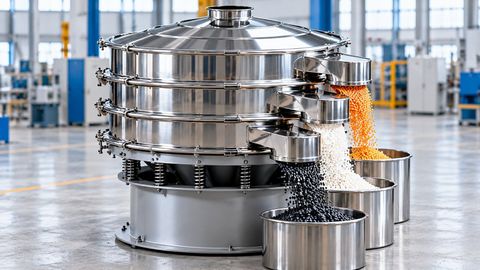
It uses controlled vibration to move materials across one or more mesh screens. Smaller particles pass through the openings, while larger particles remain on the screen or move toward a separate discharge point.
The basic idea of screening has existed for centuries, with manual sieves used in agriculture, food preparation, and mineral processing. Industrial development introduced powered screens that could process larger quantities of material with more consistent movement. Modern vibratory screen separator machines use electric motors, vibration mechanisms, replaceable screen meshes, and adjustable operating settings to suit different production requirements.
These machines are used in industries such as food processing, pharmaceuticals, chemicals, construction, mining, plastics, and recycling. Their main purpose is to classify materials into different size groups, remove unwanted particles, and maintain consistency during production.
How a Vibratory Screen Separator Works
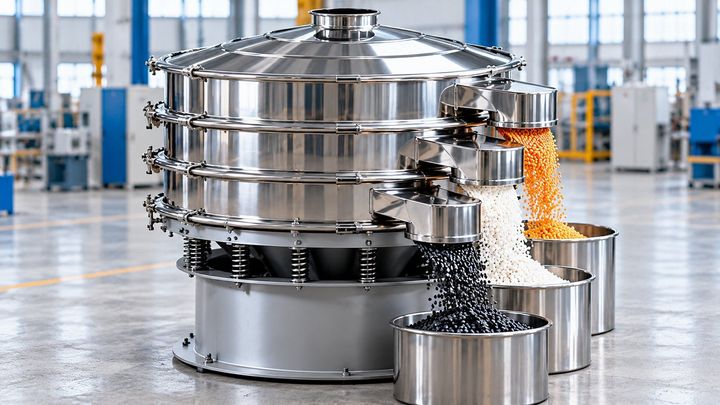
A typical machine consists of a screen deck, a supporting frame, a vibration mechanism, and one or more material outlets. Material enters through a feed opening, spreads across the vibrating screen, and separates as particles encounter mesh openings.
The vibration encourages particles to move across the screen surface. Smaller particles pass through the mesh, while larger particles travel toward the discharge outlet. Machines with multiple screen decks can separate a material into several size ranges during a single operation.
Common machine configurations include:
Circular vibratory screen separators, which use circular motion to distribute and classify materials.
Linear vibrating screens, which move materials along a relatively straight path.
Multi-deck screening machines, which use several screens with different opening sizes.
Ultrasonic screening systems, which apply high-frequency vibration to the mesh to help manage fine powders that may otherwise block the openings.
What Does a Vibratory Screen Separator Quote Include?
A vibratory screen separator quote is a written estimate describing the proposed equipment, its specifications, and the associated financial and installation requirements. The quoted amount can vary according to machine size, material compatibility, screening capacity, construction materials, and automation features.
A quote may include the following details:
Machine dimensions and number of screening decks.
Screen mesh material, opening size, and replacement requirements.
Motor specifications, electrical requirements, and vibration settings.
Construction materials, such as stainless steel or carbon steel.
Expected throughput under specified operating conditions.
Freight, installation, commissioning, operator training, and warranty terms, where applicable.
Comparing quotations requires checking whether the listed machines have similar specifications. A lower initial figure may exclude electrical integration, spare screens, installation, or other necessary components.
Importance
Industrial screening affects the quality, consistency, and handling of many everyday products. Food ingredients must have suitable particle sizes, construction aggregates need appropriate grading, and chemical powders may require separation before further processing. A vibratory screen separator helps manufacturers manage these requirements through a controlled mechanical process.
Problems Addressed by Screening Machines
Manual sieving can be practical for small quantities, but it becomes difficult when production volumes increase. Industrial screening equipment can process materials continuously or in batches, depending on the design and production arrangement.
Common challenges addressed by these machines include:
Particle size variation: Separating oversized and undersized particles helps maintain a defined size range.
Unwanted material: Screening can remove certain contaminants or foreign particles, provided their size and physical characteristics allow separation.
Production consistency: A controlled screening process helps reduce variation between batches.
Material handling: Automated feeding and discharge arrangements can reduce repetitive manual handling.
Downstream equipment protection: Removing oversized pieces may reduce blockages or interruptions in later processing stages.
Screening does not identify every type of contamination. Particles with similar dimensions but different chemical compositions, densities, or other properties may require additional separation methods.
Industries That Use Vibratory Screen Separators
The machine's configuration depends on the material being processed and the purpose of separation.
| Industry | Typical material | Main screening purpose |
|---|---|---|
| Food processing | Flour, sugar, spices | Size classification and removal of selected particles |
| Pharmaceuticals | Powdered ingredients | Particle size classification |
| Chemicals | Granules and dry powders | Separation by particle size |
| Construction | Sand and aggregates | Grading materials for different applications |
| Mining | Crushed stone and mineral ores | Separating particles into size ranges |
| Plastics | Pellets and regrind | Removing oversized pieces and classifying granules |
| Recycling | Shredded materials | Separating selected fractions by size |
The machine alone does not establish product safety or regulatory compliance. Additional inspection, cleaning, magnetic separation, filtration, or laboratory testing may be necessary, depending on the industry.
Benefits and Practical Limitations
A vibratory screen separator can improve material classification when the machine is correctly matched to the application. Multiple decks may allow several size fractions to be collected simultaneously, while replaceable mesh panels support maintenance and changes in production requirements.
However, performance depends on factors such as moisture, particle shape, feed rate, mesh opening size, and material flow. Damp or sticky materials can block screen openings, while excessive feeding may reduce separation accuracy. Fine powders can also generate airborne dust, requiring suitable enclosure and dust-control arrangements.
Recent Updates
Industrial screening technology is increasingly influenced by automation, energy management, digital monitoring, and more adaptable production systems. Rather than representing a complete change in screening principles, these developments focus on monitoring machine performance and reducing avoidable interruptions.
Automation and Digital Monitoring
Modern production lines may integrate vibratory screen separators with automated feeders, conveyors, programmable controllers, and production monitoring systems. Sensors can monitor vibration, motor temperature, or equipment condition, depending on the machine design.
These measurements help operators identify unusual operating conditions. However, sensor readings must be interpreted alongside physical inspections and process data because vibration changes can have several possible causes.
Screen Design and Material Compatibility
Manufacturers continue to develop screen assemblies for different particle sizes, material characteristics, and cleaning requirements. Stainless steel contact surfaces are commonly considered where corrosion resistance and hygienic cleaning are important.
Ultrasonic assistance is also used in some fine-powder screening applications. By applying high-frequency vibration to the screen mesh, these systems can reduce blinding in suitable applications, although their effectiveness depends on the material and operating conditions.
Energy and Maintenance Considerations
Industrial operators increasingly evaluate energy use, replacement parts, equipment availability, and maintenance requirements when selecting screening machinery. Condition monitoring and planned maintenance can help identify worn bearings, loose fasteners, damaged screens, and other developing problems.
There is no single machine design suitable for every application. Equipment selection still depends on testing the actual material and establishing acceptable throughput, separation accuracy, and operating conditions.
Laws or Policies
The regulations affecting vibratory screen separator sorting machines depend on the country, industry, workplace, and intended use. In India, relevant requirements may involve machinery safety, electrical systems, worker protection, environmental controls, and sector-specific product regulations.
Industrial Safety in India
The Occupational Safety, Health and Working Conditions Code, 2020, forms part of India's framework for workplace health and safety. Its application must be considered alongside the relevant commencement notifications, rules, and other applicable legal requirements.
Industrial operators should assess hazards associated with moving components, vibration, electrical connections, noise, dust, and maintenance activities. Appropriate guarding, emergency stops, lockout procedures, operator training, and personal protective equipment may be necessary according to the risk assessment and applicable rules.
Electrical and Machinery Requirements
Electrical installations and machine controls should be designed and maintained according to applicable Indian electrical requirements and relevant technical standards. The exact standards depend on the machine configuration, operating environment, and installation.
Where relevant, buyers and manufacturers may consult applicable Bureau of Indian Standards publications, including standards concerning electrical safety, machine guarding, and industrial equipment. The presence of a particular certification should not be assumed unless it is supported by the appropriate documentation.
Environmental and Industry-Specific Rules
Factories handling powders, minerals, chemicals, or bulk construction materials may need dust extraction, noise management, waste controls, or pollution-control approvals. Requirements can vary by state, process, production capacity, and the materials involved.
Food and pharmaceutical applications may also be subject to specific hygiene, material-contact, cleaning, and manufacturing requirements. Operators should verify the rules applicable to their sector rather than relying on general equipment descriptions.
Tools and Resources
Selecting a vibratory screen separator involves more than comparing machine dimensions. Practical tools and technical documents help buyers understand operating requirements, assess compatibility, and evaluate the details included in equipment quotations.
Equipment Selection Tools
Several resources can support the evaluation process:
Screen aperture and particle size charts: Help compare particle dimensions with the proposed mesh opening.
Throughput calculators: Estimate the required processing capacity using feed rate, operating hours, and production targets.
Motor and electrical specifications: Help determine power supply compatibility and expected operating requirements.
Material test reports: Provide information about particle size distribution, moisture content, and other properties affecting screening.
Maintenance checklists: Track screen wear, bearing condition, fasteners, vibration levels, and cleaning activities.
Calculations provide estimates rather than guaranteed production results. Actual performance should be confirmed through suitable material trials and operating tests.
Comparing Equipment Quotes
A structured comparison table helps distinguish equipment specifications from additional expenses and operating requirements.
| Evaluation factor | Questions to consider |
|---|---|
| Screening capacity | What throughput is expected for the actual material? |
| Mesh specification | Are the aperture size and mesh material appropriate? |
| Number of decks | How many separate size fractions are required? |
| Contact materials | Are surfaces compatible with the material and cleaning process? |
| Power requirements | Does the machine match the available electrical supply? |
| Maintenance | How accessible are screens, bearings, and vibration components? |
| Installation | Are supports, electrical integration, and commissioning included? |
| Documentation | Are operating instructions, safety details, and maintenance schedules provided? |
In India, the Bureau of Indian Standards website provides information about applicable Indian Standards, while the Ministry of Environment, Forest and Climate Change and the relevant State Pollution Control Board provide information about environmental requirements. Manufacturer documentation and material testing can provide additional application-specific details.
FAQs
What Is a Vibratory Screen Separator Sorting Machine?
It is a machine that uses vibration and mesh screens to separate materials according to particle size. Depending on its design, it can classify material into multiple fractions or remove selected oversized and undersized particles.
How Much Does a Vibratory Screen Separator Quote Include?
A quote may cover the machine, screen decks, mesh panels, motor, controls, and optional installation or commissioning. Freight, replacement parts, electrical integration, and other expenses should be checked separately because inclusions vary between quotations.
Which Industries Use Vibratory Screening Machines?
Food processing, chemical manufacturing, pharmaceuticals, mining, construction, plastics, and recycling are common applications. The appropriate configuration depends on material properties, required particle sizes, hygiene requirements, and processing capacity.
What Factors Affect Vibratory Screen Separator Performance?
Performance depends on feed rate, mesh opening size, particle shape, moisture, vibration settings, and screen area. Poorly matched settings or excessive feeding can reduce separation efficiency and increase screen blockage.
What Maintenance Does an Industrial Vibratory Screen Separator Need?
Routine maintenance may include inspecting the mesh, checking fasteners and bearings, monitoring vibration, cleaning material-contact surfaces, and following the manufacturer's lubrication schedule. Electrical isolation and appropriate safety procedures are essential before maintenance work.
Conclusion
A vibratory screen separator sorting machine separates industrial materials into different particle size ranges using controlled vibration and screening surfaces. Its applications span food processing, construction, chemicals, mining, plastics, and recycling, with equipment specifications varying according to the material and production process. Evaluating quotes involves examining capacity, mesh design, electrical requirements, installation details, maintenance, and applicable safety standards. Material testing and careful operating procedures help establish whether a particular machine is suitable for its intended application.