Industry Noise Monitoring Basics With Sound Levels, Testing Methods, and Industrial Applications
Industry noise monitoring is the process of measuring, recording, and evaluating sound produced by industrial activities, machinery, and manufacturing operations. It helps organizations understand how much noise equipment generates, how sound travels through workplaces, and whether noise levels may affect workers or nearby communities.
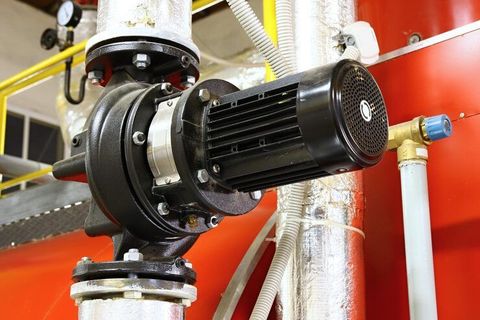
Common sources include motors, compressors, pumps, generators, conveyor systems, cutting equipment, and ventilation units.
Industrial noise has been a concern since mechanized manufacturing expanded the use of heavy equipment and powered tools. As factories introduced faster production processes and larger machines, the need to measure workplace sound became more important. Noise monitoring developed through the use of sound level meters, workplace exposure assessments, and standardized measurement procedures.
Today, industrial noise monitoring combines electronic instruments, digital recording systems, and data analysis methods. These approaches help identify noisy equipment, compare sound levels across different areas, and evaluate changes during machine operation. Understanding the fundamentals makes it easier for non-technical readers to recognize how industrial sound is measured and why consistent monitoring matters.
What Industrial Noise Monitoring Measures
Noise monitoring examines several characteristics of sound, including loudness, frequency, duration, and changes over time. Sound pressure levels are generally expressed in decibels (dB), while occupational noise assessments commonly use A-weighted decibels, written as dB(A), to reflect how human hearing responds to different frequencies.
A-weighted measurements are widely used when evaluating workplace noise exposure. Other measurements, such as peak sound pressure and frequency analysis, may be needed when investigating sudden impacts, tonal noise, or particular equipment problems.
Common Sources of Industrial Noise
Industrial sound can originate from several operating conditions.
Mechanical vibration from motors, gears, bearings, and rotating equipment.
Air movement from fans, ventilation systems, pneumatic tools, and exhaust outlets.
Material handling from conveyors, loading systems, and metal components striking one another.
Processing activities from cutting, grinding, stamping, crushing, and forming equipment.
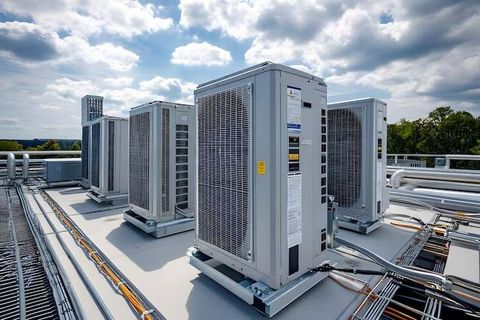
Building systems from cooling units, pumps, compressors, and industrial heating equipment.
Identifying the source is an important part of noise assessment because different sources require different measurement methods and control approaches.
Importance
Industrial noise monitoring matters because prolonged exposure to excessive sound can affect hearing, concentration, communication, and workplace safety. Noise may also make it difficult for workers to hear alarms, instructions, or warning signals. In industrial environments where equipment operates continuously, measuring sound levels provides information about exposure conditions that may not be obvious during a short visit.
The effects of industrial noise extend beyond manufacturing facilities. Warehouses, construction areas, processing plants, power generation facilities, and transport infrastructure can produce sound that reaches surrounding properties. Monitoring can help distinguish ordinary background sound from noise associated with particular operations.
Who Is Affected by Industrial Noise
Workers who spend extended periods near operating machinery may experience greater cumulative exposure than people who enter a facility briefly. Maintenance personnel, machine operators, production teams, and technicians may encounter different sound levels depending on their tasks and locations.
Nearby residents can also be affected by industrial noise, especially when facilities operate at night or use equipment that produces persistent low-frequency sound. The impact depends on factors such as distance, building design, operating schedules, surrounding terrain, and background noise.
Practical Problems Addressed by Monitoring
Noise monitoring can help organizations investigate several common concerns:
Unexpected increases in machinery noise that may indicate wear, imbalance, loose components, or changes in operating conditions.
Excessive workplace sound that requires an assessment of worker exposure.
Complaints about noise traveling beyond industrial property boundaries.
Differences in sound levels between production areas or operating shifts.
The effectiveness of acoustic enclosures, barriers, vibration isolation, and equipment maintenance.
Monitoring does not automatically identify the cause of a problem. Measurements need to be interpreted alongside operating conditions, equipment history, and the purpose of the assessment.
Understanding Industrial Sound Levels
Decibels use a logarithmic scale rather than a simple linear scale. This means that an increase of 10 dB represents ten times the sound intensity, although perceived loudness does not increase in the same proportion for every listener or sound.
The following table provides illustrative sound-level ranges for general understanding. Actual measurements vary with equipment, distance, operating conditions, and the surrounding environment.
Sound source or environment | Approximate sound level |
|---|---|
Quiet indoor environment | 30–40 dB(A) |
Ordinary conversation | 55–65 dB(A) |
Busy industrial workspace | 75–90 dB(A) |
Loud production machinery | 85–100 dB(A) |
Heavy equipment close to the source | 100–110 dB(A) |
These ranges are examples, not fixed limits for specific machines. A reliable assessment requires measurements taken under defined conditions using suitable instruments.
Recent Updates
Industrial noise monitoring continues to develop through digital measurement, connected sensors, automated data collection, and improved analysis software. Recent developments from 2024–2026 reflect a broader industrial shift toward continuous condition monitoring and data-supported workplace management. The extent of adoption varies according to facility size, equipment requirements, and local regulations.
Digital Noise Monitoring Systems
Traditional sound level meters remain useful for spot measurements and detailed investigations. However, connected monitoring systems can collect readings at repeated intervals and display changes through dashboards or reports. This can help users identify periods when equipment becomes noisier or when sound levels change with production activity.
Some systems combine acoustic measurements with machine operating data. Comparing noise readings with motor speed, vibration, temperature, or production load can help maintenance teams investigate unusual operating patterns. Noise alone is not sufficient to diagnose every mechanical fault, so additional evidence may be necessary.
Smart Sensors and Automated Analysis
Modern industrial sensors can support continuous or scheduled noise measurements in selected locations. Depending on the equipment, systems may generate alerts when configured thresholds are exceeded or when readings differ from an established baseline.
Automated analysis can also help organize large amounts of measurement data. However, microphone placement, calibration, background interference, and sensor limitations remain important. Automated readings should not be treated as a replacement for a properly designed occupational noise assessment when formal exposure evaluation is required.
Greater Attention to Acoustic Design
Industrial facilities increasingly consider sound control during equipment selection, building design, and production-line planning. Common approaches include acoustic enclosures, sound-absorbing materials, vibration isolation, equipment maintenance, and separation of noisy processes from quieter work areas.
Another continuing trend is the use of digital records to document measurements, maintenance activities, and control measures. Consistent records can help compare conditions over time and support internal reviews or regulatory assessments.
Laws or Policies
Industrial noise requirements depend on the country, the type of workplace, and whether the assessment concerns employee exposure or environmental noise. Regulations may establish exposure limits, require hearing conservation measures, specify environmental noise standards, or describe how measurements should be performed. The applicable limits and obligations should always be checked against the relevant jurisdiction.
Occupational Noise Requirements in India
In India, workplace noise may be addressed through occupational safety requirements, applicable factory rules, and relevant technical standards. The Factories Act, 1948, and associated state rules have historically provided an important framework for factory health and safety, while newer occupational safety legislation and its implementation affect the wider regulatory landscape.
The Occupational Safety, Health and Working Conditions Code, 2020, forms part of India's consolidated occupational safety framework. Its practical application depends on commencement notifications, applicable rules, and implementation arrangements. Specific requirements should therefore be verified against current official notifications and the rules that apply to the facility.
Environmental Noise Regulation
Environmental noise from industrial premises may fall under India's Noise Pollution (Regulation and Control) Rules, 2000. These rules establish ambient noise standards for designated areas, including industrial, commercial, residential, and silence zones.
The commonly specified ambient standards are:
Area category | Daytime limit | Nighttime limit |
|---|---|---|
Industrial | 75 dB(A) | 70 dB(A) |
Commercial | 65 dB(A) | 55 dB(A) |
Residential | 55 dB(A) | 45 dB(A) |
Silence zone | 50 dB(A) | 40 dB(A) |
Daytime is generally defined as 6 a.m. to 10 p.m., and nighttime as 10 p.m. to 6 a.m. These are ambient environmental noise standards, not direct occupational exposure limits for individual workers. The designated area, measurement method, and applicable legal provisions matter when interpreting them.
Measurement Standards and Documentation
Technical standards published by the International Organization for Standardization (ISO) and the International Electrotechnical Commission (IEC) describe methods for measuring sound, evaluating workplace exposure, and specifying instrument performance. For example, ISO 9612 addresses the determination of occupational noise exposure, while IEC 61672 covers sound level meter specifications.
Compliance assessments may require calibrated instruments, documented measurement positions, representative operating conditions, and records of exposure duration. A single reading is not necessarily sufficient to establish compliance.
Tools and Resources
Industrial noise monitoring depends on suitable measurement instruments, consistent procedures, and clear documentation. The appropriate tool depends on whether the objective is a quick screening measurement, a worker exposure assessment, a machinery investigation, or an environmental noise study.
Common Noise Measurement Instruments
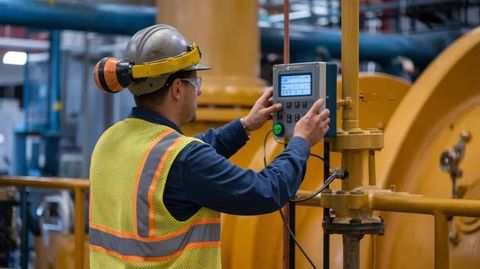
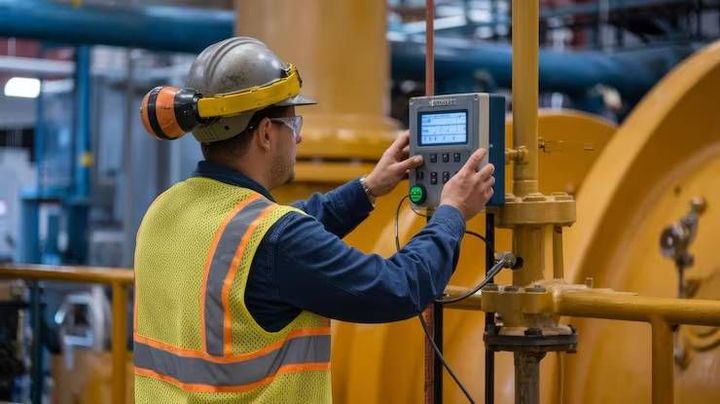
Sound level meter: Measures sound pressure levels at a particular location and time. Some models support A-weighting, peak measurements, and statistical sound-level calculations.
Noise dosimeter: Worn by a worker to estimate personal noise exposure over a defined period.
Acoustic calibrator: Provides a known sound level for checking measurement equipment before or after testing.
Frequency analyzer: Helps identify sound energy across different frequency bands, which can assist in investigating tonal or low-frequency noise.
Fixed acoustic sensor: Collects readings at selected locations over time, depending on the system's measurement capabilities.
Instrument selection should reflect the required accuracy, measurement range, environment, and relevant standard.
Software and Record-Keeping Resources
Noise analysis software can organize readings, produce charts, compare measurement periods, and generate reports. Spreadsheet templates can also record equipment identification, measurement locations, operating conditions, instrument details, calibration checks, and observed results.
Useful technical resources include ISO publications, IEC standards, national environmental authorities, occupational safety agencies, and equipment manufacturer documentation. These sources help explain measurement procedures and instrument specifications.
Basic Industrial Noise Testing Procedure
A typical assessment follows a consistent sequence:
Define the purpose of the measurement, such as workplace exposure, equipment troubleshooting, or boundary noise assessment.
Identify the sound sources, operating conditions, measurement locations, and relevant time periods.
Check the instrument's condition and calibration requirements.
Record readings using an appropriate measurement method.
Document background sound, equipment settings, weather conditions where relevant, and other factors that may influence results.
Compare the findings with the applicable technical criteria or regulatory requirements.
Record conclusions, uncertainties, and any further assessment needed.
Repeat measurements may be necessary when production conditions change or results vary considerably.
FAQs
What Is Industrial Noise Monitoring?
Industrial noise monitoring measures and evaluates sound from machinery, manufacturing processes, and industrial facilities. It supports workplace exposure assessments, equipment investigations, and environmental noise evaluations.
How Are Industrial Noise Levels Measured?
Industrial noise levels are measured using sound level meters, noise dosimeters, and other acoustic instruments. Results are commonly expressed in decibels, with A-weighted measurements used for many workplace and environmental assessments.
What Equipment Is Used for Industrial Noise Testing?
Common equipment includes sound level meters, personal noise dosimeters, acoustic calibrators, frequency analyzers, and fixed monitoring sensors. The choice depends on the purpose, duration, accuracy requirements, and measurement environment.
What Are the Industrial Noise Limits in India?
India's ambient noise rules specify daytime and nighttime limits according to area classification. Industrial areas generally have ambient limits of 75 dB(A) during daytime and 70 dB(A) at night, while workplace exposure requirements must be assessed separately.
How Does Continuous Noise Monitoring Help Industrial Facilities?
Continuous monitoring records sound levels over time and can reveal changes associated with equipment operation or production schedules. These records can support investigations and noise-control evaluations, although formal compliance assessments may require additional measurements.
Conclusion
Industry noise monitoring provides a structured way to measure sound, evaluate exposure, and understand noise from industrial equipment and processes. Sound level meters, dosimeters, digital sensors, and analysis software support different types of assessment. Occupational exposure requirements and environmental noise limits serve different purposes and must be interpreted separately. Consistent measurement procedures, suitable instruments, and accurate records are central to understanding industrial noise conditions.