Cooling Systems Information With Air Cooling, Water Cooling, and Thermal Management
Cooling systems are engineered arrangements that remove excess heat from equipment, buildings, industrial processes, and electronic devices.
They help maintain operating temperatures within specified limits, reduce the risk of overheating, and support reliable equipment performance. Cooling systems are used in manufacturing plants, data centers, vehicles, commercial buildings, power facilities, and electronic equipment.
Thermal management involves controlling how heat is generated, transferred, stored, and released. Depending on the application, a system may use air, water, refrigerants, heat exchangers, fans, pumps, or specialized cooling materials. The appropriate arrangement depends on heat generation, operating temperature, environmental conditions, and available space.
Modern cooling technology combines mechanical engineering, fluid dynamics, heat transfer, sensors, and automated controls. Understanding these principles helps explain why different cooling methods are selected for different applications.
Main Types of Cooling Systems
Cooling systems can be classified according to the medium used to transfer heat and the method used to release it.
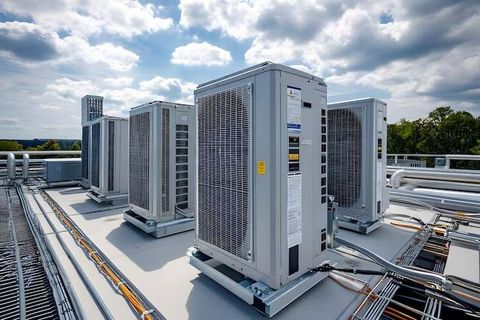
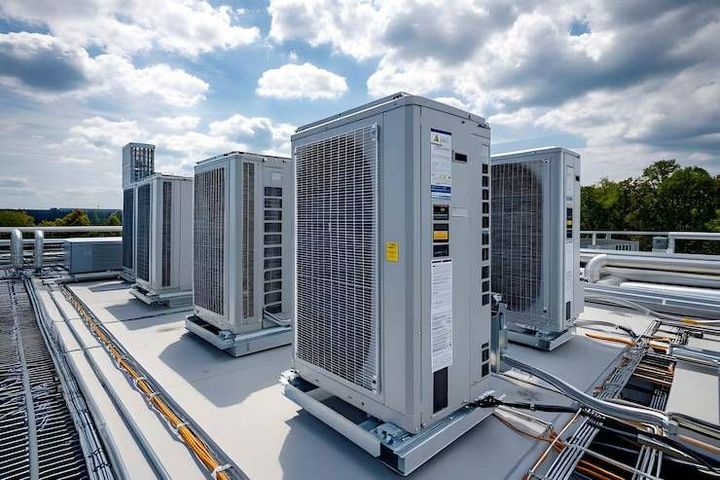
Air cooling uses moving air to carry heat away from equipment or surfaces.
Water cooling transfers heat into circulating water or a water-based coolant.
Refrigeration systems use a refrigerant cycle to transfer heat from a colder area to a warmer environment.
Evaporative cooling reduces air temperature through water evaporation under suitable environmental conditions.
Liquid cooling systems circulate specialized fluids through cold plates, channels, or heat exchangers.
Hybrid cooling combines two or more methods to meet changing thermal requirements.
Each method has distinct operating characteristics. Air cooling can be relatively simple, while liquid cooling can transfer substantial amounts of heat within a compact arrangement. Refrigeration systems can provide temperatures below ambient conditions, but they require additional components and controls.
How Heat Transfer Works
Heat moves through conduction, convection, and radiation. Conduction transfers heat through materials, convection transfers heat between a surface and a moving fluid, and radiation transfers energy through electromagnetic waves.
Cooling equipment often combines these mechanisms. For example, a water-cooled machine may transfer heat through a metal surface into circulating water, which then carries the heat to a heat exchanger. Air moving across the heat exchanger releases that energy into the surrounding environment.
The performance of a cooling system depends on the temperature difference, heat-transfer surface area, fluid flow rate, material properties, and resistance to heat transfer.
Importance
Why Thermal Management Matters
Effective thermal management helps equipment operate within its intended temperature range. Excessive heat can accelerate component wear, reduce efficiency, affect product quality, and trigger protective shutdowns.
In industrial facilities, cooling may be necessary for motors, hydraulic systems, compressors, furnaces, production machinery, and process fluids. In electronic equipment, temperature control helps protect processors, power electronics, batteries, and other heat-sensitive components.
Cooling systems also affect operating expenses and environmental performance through electricity consumption, water use, refrigerant selection, and heat rejection. Their design therefore involves balancing thermal requirements, reliability, maintenance, and resource use.
Air Cooling Versus Water Cooling
Air cooling and water cooling are widely used approaches, but their suitability varies by application.
Factor | Air cooling | Water cooling |
|---|---|---|
Heat transfer medium | Air | Water or water-based coolant |
Main components | Fans, fins, heat sinks | Pumps, pipes, heat exchangers |
System complexity | Often relatively simple | Usually requires additional fluid components |
Heat transfer capability | Depends on airflow and surface area | Often effective for high heat loads |
Maintenance needs | Dust and fan inspections | Fluid quality, leaks, pumps, and corrosion checks |
Common applications | Electronics, motors, radiators | Industrial machinery, process cooling, data centers |
Key limitation | Air has relatively low heat capacity per unit volume | Water quality and leak management require attention |
These are general comparisons. Actual performance depends on the design, operating conditions, coolant properties, and heat load.
Common Industrial Applications
Cooling systems support many technical and commercial activities.
Manufacturing: Removes heat from machinery, hydraulic equipment, and production processes.
Data centers: Controls temperatures around servers, networking equipment, and power systems.
Automotive engineering: Regulates engine, transmission, battery, and electronic component temperatures.
Commercial buildings: Maintains indoor conditions through HVAC and refrigeration systems.
Energy facilities: Removes heat from generators, electrical equipment, and industrial processes.
Food processing: Maintains specified temperatures during production, storage, and distribution.
Each application requires a cooling arrangement designed for its thermal load, operating environment, and safety requirements.
Recent Updates
Liquid Cooling and High-Density Computing
During 2024–2026, liquid cooling continued to receive attention in data centers and high-performance computing environments. Increasing computing power and concentrated heat loads have encouraged the use of cold plates, coolant distribution units, and other liquid-based thermal management technologies.
Direct-to-chip liquid cooling transfers heat from selected electronic components into a circulating coolant. The coolant then carries that heat to a heat exchanger or another heat-rejection system.
Liquid cooling does not eliminate the need for air movement throughout a facility. Room ventilation, residual heat removal, and equipment cooling requirements still depend on the complete system design.
Intelligent Cooling Controls
Sensors and digital control systems are increasingly used to monitor temperature, pressure, flow rate, humidity, and equipment condition. These measurements can help cooling equipment adjust its operation as thermal loads change.
Variable-speed fans and pumps can reduce unnecessary energy use when demand is lower than the system's maximum capacity. Performance depends on correct sensor placement, suitable control settings, equipment selection, and regular calibration.
Energy and Water Efficiency
Cooling system design increasingly considers both electricity consumption and water demand. Air-cooled equipment may reduce the need for cooling-tower water, while some water-based systems can achieve favorable heat-transfer performance under suitable conditions.
Evaporative cooling can reduce cooling demand in appropriate climates, but it consumes water and may require treatment to control scale, corrosion, and biological growth. The most appropriate design depends on local environmental conditions, resource availability, and the required operating temperature.
Waste Heat Recovery
Industrial cooling systems can sometimes recover heat that would otherwise be rejected to the environment. Heat exchangers and heat pumps may allow suitable waste heat to support water heating, building heating, or other processes.
Recovery depends on the temperature and consistency of the available heat source and the needs of the receiving process. Not every cooling system produces heat at a useful temperature or location for practical recovery.
Laws or Policies
Equipment Safety and Electrical Requirements
Cooling equipment may be subject to electrical safety rules, machinery requirements, building codes, pressure-system regulations, and workplace safety standards. The applicable requirements depend on the equipment type, installation location, and operating conditions.
Systems containing pressurized water, refrigerants, or other fluids require appropriate pressure ratings, protective devices, and installation practices. Fans, pumps, and compressors also need suitable electrical protection and mechanical safeguards.
Refrigerant and Environmental Rules
Refrigeration and air-conditioning systems may be governed by regulations concerning refrigerant handling, leakage prevention, emissions, recovery, and disposal. Requirements vary between jurisdictions and refrigerant types.
Some refrigerants are subject to restrictions because of their ozone-depletion potential or global-warming impact. Equipment selection should account for applicable environmental rules, manufacturer instructions, and the technical requirements of the installation.
Water Management and Workplace Safety
Water-cooled systems may require monitoring of water quality, corrosion, scale formation, and biological growth. Cooling towers can present additional risks if water treatment and maintenance are inadequate.
Facilities should establish appropriate inspection and maintenance procedures. Work involving electrical equipment, hot surfaces, pressurized fluids, rotating components, or chemical treatment products should follow relevant workplace safety requirements.
Tools and Resources
Cooling Load Calculations
A cooling load calculation estimates the amount of heat that a system must remove. The calculation may include heat generated by machinery, electronic components, lighting, people, solar radiation, and other sources.
For a water-based cooling system, a simplified heat-transfer calculation is:
Where:
\(Q\) is the rate of heat transfer.
\(\dot{m}\) is the mass flow rate of the coolant.
\(c_p\) is the coolant's specific heat capacity.
\(\Delta T\) is the temperature difference between the outlet and inlet.
For example, water flowing at 1 kilogram per second with a temperature increase of 5°C transfers approximately 20.9 kilowatts of heat under typical conditions. This calculation is illustrative and does not account for every system loss or operating variation.
Temperature and Flow Monitoring
Common instruments used to evaluate cooling performance include:
Temperature sensors for monitoring inlet and outlet temperatures.
Flow meters for measuring coolant circulation.
Pressure gauges for identifying pressure changes.
Differential pressure sensors for assessing restrictions across components.
Thermal imaging cameras for identifying temperature patterns.
Vibration sensors for monitoring pumps and fans.
Energy meters for tracking electrical consumption.
Measurements should be interpreted together. A temperature increase, for example, may reflect a higher heat load, reduced flow, a blocked heat exchanger, or a change in ambient conditions.
Maintenance and System Evaluation
Routine cooling system maintenance may include cleaning heat exchangers, inspecting fans and pumps, checking fluid levels, testing controls, and examining pipes and connections for leakage. Refrigeration equipment may also require checks appropriate to its refrigerant and operating conditions.
A maintenance record can include operating temperatures, pressure readings, flow rates, energy use, alarms, and completed inspections. Comparing these records over time can help identify performance changes before they develop into larger operational problems.
FAQs
What is the difference between air cooling and water cooling?
Air cooling transfers heat into moving air, while water cooling transfers heat into circulating water or another suitable liquid. Water-based systems can handle substantial heat loads, but they generally require additional fluid-handling components and leak management.
How do cooling systems improve equipment performance?
Cooling systems help maintain temperatures within the intended operating range. Appropriate thermal management can reduce overheating risks, support reliable operation, and help protect temperature-sensitive components.
Which cooling system is suitable for industrial machinery?
The appropriate system depends on the heat load, operating temperature, available space, environmental conditions, maintenance requirements, and resource availability. Air cooling, water cooling, refrigeration, or hybrid arrangements may be suitable for different applications.
How is cooling capacity calculated?
Cooling capacity can be estimated using heat-load calculations based on temperature differences, fluid flow rates, equipment heat generation, and environmental conditions. Detailed designs may require additional calculations and engineering assessment.
How can cooling system energy consumption be reduced?
Suitable approaches include maintaining clean heat exchangers, correcting airflow restrictions, optimizing pump and fan speeds, improving insulation where appropriate, and using controls that respond to actual cooling demand. Any changes should preserve the required operating temperatures and equipment safety.
Conclusion
Cooling systems use air, water, refrigerants, and other heat-transfer methods to manage temperatures in buildings, machinery, electronics, and industrial processes. The choice between air cooling, water cooling, and hybrid technologies depends on heat load, efficiency requirements, environmental conditions, and maintenance needs. Advances in liquid cooling, digital monitoring, and waste heat recovery continue to influence thermal engineering. Appropriate design, safe operation, and regular maintenance remain essential for dependable cooling performance.

You May Also Like