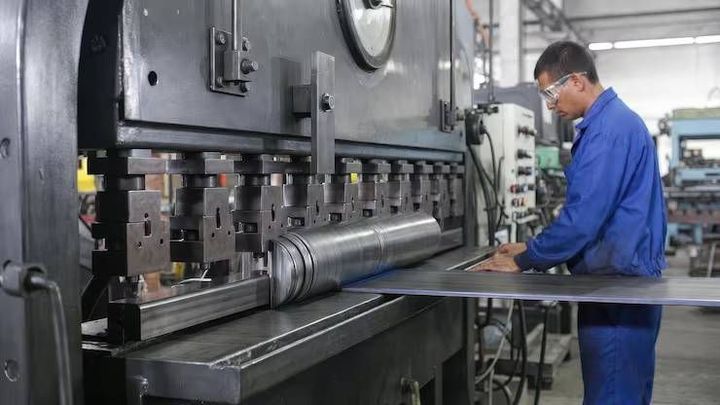
Cold Rolling Mill Machines Guide With Metal Processing and Manufacturing Insights
Cold Rolling Mill Machines are industrial systems used to reduce the thickness of metal sheets, strips, and coils by passing them between rotating rollers at temperatures below the metal's recrystallization temperature.
This process changes the material's thickness, surface finish, dimensional accuracy, and mechanical properties without requiring the metal to be heated to typical hot-rolling temperatures.
Cold rolling is widely used in steel, aluminum, and other metal processing industries. It supports the production of materials used in automotive components, household appliances, construction products, electrical equipment, packaging, and precision engineering applications.
The process developed as manufacturers needed greater control over sheet thickness, surface quality, and material consistency. Improvements in roller design, drive systems, measurement equipment, and automation have expanded the range of products that modern rolling mills can produce.
How a Cold Rolling Mill Works
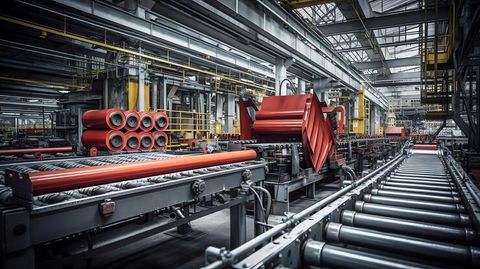
A cold rolling mill usually contains work rolls, supporting rolls where required, an electric drive, a frame, thickness measurement equipment, and systems for controlling strip movement. Metal enters the rolling gap, where pressure from the rotating rolls reduces its thickness. The material may pass through the same mill several times or move through multiple rolling stands to reach the required dimensions.
The process also changes the metal's internal structure. Cold deformation generally increases strength and hardness through work hardening, while reducing ductility. Depending on the intended application, the rolled metal may undergo annealing or another finishing process to restore selected properties.
Main Types of Cold Rolling Mill Machines
Different mill configurations serve different production requirements.
Two-high mills: Use two rolls and have a relatively simple arrangement. They can be used for particular rolling operations and smaller production setups.
Four-high mills: Use two smaller work rolls supported by two larger backup rolls. This arrangement helps control roll deflection during thin-strip production.
Six-high mills: Include intermediate rolls to improve control over strip shape and thickness.
Tandem rolling mills: Use several rolling stands arranged in sequence, allowing metal to be reduced progressively during continuous processing.
Cluster mills: Support small work rolls with multiple surrounding rolls, making them suitable for certain thin and hard materials.
The choice depends on the metal type, initial and final thickness, strip width, production volume, and required surface characteristics.
Importance
Role in Metal Processing and Manufacturing
Cold Rolling Mill Machines help manufacturers produce metal sheets with controlled thickness and consistent surface characteristics. These qualities are important when materials must fit precise dimensions or undergo additional operations such as stamping, bending, cutting, coating, or welding.
Automotive manufacturers use cold-rolled steel in selected body panels and structural components. Appliance producers use it for cabinets and housings, while electrical equipment manufacturers may use specialized rolled materials in magnetic components. Aluminum rolling also supports packaging, transport equipment, and industrial products.
Production Accuracy and Material Performance
Thickness variation can affect assembly, material use, forming behavior, and the quality of finished products. Cold rolling systems use roll adjustments, sensors, and feedback controls to keep dimensions within specified production tolerances.
However, thinner material does not automatically mean better performance. Excessive reduction can increase internal stress, reduce ductility, or create defects if rolling conditions are unsuitable. Manufacturers must balance thickness, strength, surface finish, flatness, and downstream processing requirements.
Challenges Addressed by Cold Rolling
The process addresses several manufacturing needs:
Producing thin metal strip with controlled dimensions.
Improving surface finish for coating, painting, or forming.
Increasing strength through controlled plastic deformation.
Maintaining consistency across coils and production batches.
Preparing material for precision manufacturing operations.
Cold rolling also introduces challenges, including roll wear, heat generation, strip tension control, edge cracking, and surface defects. Proper process monitoring is necessary to manage these factors.
Common Industrial Applications
Industry | Typical application | Relevant material characteristic |
|---|---|---|
Automotive | Body panels and formed components | Thickness control and formability |
Appliances | Cabinets and equipment housings | Surface finish and dimensional consistency |
Construction | Metal panels and selected components | Controlled thickness and strength |
Electrical equipment | Specialized steel strip | Controlled magnetic properties where required |
Packaging | Thin aluminum sheet and strip | Thickness consistency and formability |
Precision engineering | Fabricated metal components | Dimensional accuracy |
The actual material grade and rolling process depend on the design requirements of each application.
Recent Updates
Automation and Digital Process Control
During 2024–2026, industrial metal processing has continued to emphasize automation, production monitoring, and data-based process control. Cold Rolling Mill Machines increasingly use integrated sensors and control systems to monitor variables such as roll force, strip tension, speed, thickness, and temperature.
These systems can help operators identify process variation and adjust rolling conditions. Depending on the mill configuration, automatic gauge control can make small adjustments to maintain target thickness as operating conditions change.
Digital monitoring also supports production records, equipment condition analysis, and maintenance planning. The effectiveness of these systems depends on sensor quality, calibration, data integration, and operator training.
Energy Efficiency and Resource Management
Energy use remains an important consideration in metal manufacturing. Current improvement efforts include more efficient electric drives, optimized operating schedules, reduced unnecessary idling, and better management of lubrication and cooling systems.
Rolling generates heat through deformation and friction, even when the process is classified as cold rolling. Lubrication and cooling help control temperature, reduce friction, protect roll surfaces, and support consistent product quality.
Quality Inspection and Predictive Maintenance
Modern inspection systems may combine thickness gauges, flatness measurement, surface inspection cameras, and vibration monitoring. These tools can help identify defects or changes in machine behavior before they create extensive production problems.
Predictive maintenance uses equipment data to estimate when components may require inspection or replacement. It does not eliminate breakdowns, but it can support more informed maintenance planning when combined with physical inspections and maintenance records.
Laws or Policies
Industrial Machinery Safety
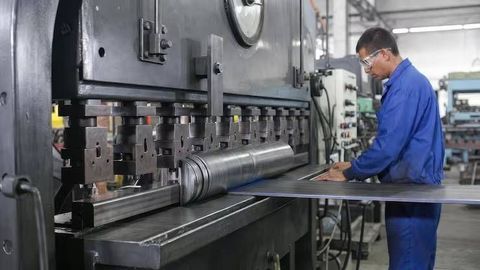
Cold Rolling Mill Machines involve heavy rotating equipment, high contact forces, electrical systems, and moving metal strips. Industrial facilities must follow applicable workplace safety laws and machinery requirements in their jurisdiction.
Common safety measures include fixed guards, interlocked access points, emergency stops, lockout procedures, and clear operating instructions. Workers should receive appropriate training before operating or maintaining rolling equipment.
Maintenance activities require particular attention because stored mechanical, hydraulic, pneumatic, or electrical energy may remain present after a machine stops. Isolation procedures should follow the equipment manufacturer's instructions and applicable workplace rules.
Environmental and Energy Requirements
Metal processing facilities may be subject to regulations concerning electricity use, industrial emissions, wastewater, waste handling, noise, and the storage or disposal of lubricants. The exact requirements depend on the facility, its location, its processes, and the materials being handled.
Cooling fluids and rolling oils require suitable handling to limit spills and contamination. Recycling metal scrap and managing used process fluids appropriately can also form part of a facility's environmental management program.
Product Quality and Technical Standards
Manufacturers may use recognized material specifications and quality management systems to define metal grades, dimensional tolerances, mechanical properties, and inspection procedures. Relevant requirements depend on the product's intended application and the standards specified by its customer or industry.
Documentation may include material certificates, thickness measurements, tensile test results, surface inspection records, and traceability information. Compliance should be assessed against the applicable specification rather than assumed from the mill type alone.
Tools and Resources
Thickness Measurement and Quality Control
Thickness gauges help monitor the metal strip as it passes through the mill. Depending on the application, systems may use contact measurement, laser-based methods, or other technologies suited to the material and operating conditions.
Flatness measurement systems examine variations across the width of the strip, while surface inspection equipment can identify scratches, pits, marks, and other visible defects. Calibration and verification are important because inaccurate measurements can lead to incorrect process adjustments.
Engineering Calculations and Production Planning
Manufacturing teams use several calculations when planning rolling operations. A basic thickness reduction percentage can be calculated as follows:
Reduction percentage = [(Initial thickness − Final thickness) ÷ Initial thickness] × 100
For example, reducing a metal strip from 2.0 mm to 1.5 mm gives a thickness reduction of 25%. This calculation describes the change in thickness, but it does not independently establish the appropriate rolling force, number of passes, or final material properties.
Production planning may also consider strip width, roll diameter, rolling speed, material grade, tension, lubrication, and the required finish. Engineering models are needed for more detailed force, power, and mill-capacity estimates.
Maintenance and Equipment Documentation
Useful technical resources include equipment manuals, roll inspection records, lubrication schedules, calibration logs, production reports, and maintenance checklists. These documents help teams track recurring issues and compare actual operating conditions with specified requirements.
A maintenance record can include the date of inspection, component condition, vibration observations, roll wear, corrective work, and follow-up checks. Keeping records consistent supports troubleshooting and helps distinguish isolated defects from recurring process problems.
FAQs
What are Cold Rolling Mill Machines used for?
Cold Rolling Mill Machines reduce the thickness of metal sheets, strips, and coils while improving dimensional control and surface finish. They are used in automotive manufacturing, appliances, packaging, construction, and precision engineering.
What is the difference between hot rolling and cold rolling?
Hot rolling processes metal above its recrystallization temperature, while cold rolling occurs below that temperature. Cold rolling generally provides greater thickness control and a smoother surface, but it can increase strength and hardness while reducing ductility.
Which types of Cold Rolling Mill Machines are available?
Common types include two-high, four-high, six-high, tandem, and cluster mills. Each configuration provides different levels of roll support, thickness control, and production capability.
How is thickness controlled in a cold rolling mill?
Thickness is controlled through roll positioning, rolling force, strip tension, and feedback from measurement systems. Automatic gauge control can adjust operating conditions to maintain the specified thickness within the system's capabilities.
What maintenance is required for cold rolling mill equipment?
Typical maintenance includes inspecting rolls and bearings, checking lubrication and cooling systems, verifying sensors, examining drive components, and testing safety devices. Maintenance intervals depend on equipment design, operating conditions, and manufacturer guidance.
Conclusion
Cold Rolling Mill Machines play an important role in producing metal sheets and strips with controlled thickness, surface quality, and mechanical properties. Their applications extend across automotive manufacturing, appliances, construction, packaging, and precision engineering. Automation, digital monitoring, energy management, and inspection technologies continue to influence modern rolling operations. Safe operation and consistent product quality depend on suitable equipment selection, process control, maintenance, and compliance with applicable technical and workplace requirements.