AI-Driven Manufacturing Cells Guide With Smart Automation and Industry Insights
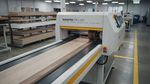
AI-driven manufacturing cells combine industrial machines, robotics, sensors, software, and artificial intelligence to perform production activities with greater coordination. A manufacturing cell is generally a defined area where several connected machines or automated systems carry out related production steps.
The concept developed from earlier forms of industrial automation. Traditional production cells relied heavily on programmed machines that followed predefined instructions. Modern systems can add machine learning, computer vision, industrial Internet of Things technologies, and data analytics to make production environments more adaptable.
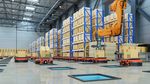
An AI manufacturing cell may include robotic arms, CNC machines, automated inspection equipment, conveyors, sensors, programmable logic controllers, industrial computers, and production management software. These components communicate through industrial networks so that information from one stage can be used by another stage.
How AI Manufacturing Cells Work
An AI-driven manufacturing cell usually begins by collecting information from equipment and production processes. Sensors can measure factors such as temperature, vibration, pressure, position, speed, electrical conditions, and machine operating status.
AI software can then process this information to identify patterns. For example, changes in vibration or temperature may indicate that a machine is operating differently from its normal condition. The system can flag the change for further inspection or adjust selected operating parameters when the equipment is designed to support automated adjustment.
Computer vision is another important component. Cameras can examine components for dimensions, surface conditions, positioning, assembly errors, or other defined characteristics. AI-based image analysis can classify visual information much faster than manual inspection in suitable applications.
Robots provide the physical movement within many automated cells. They can handle materials, load and unload machines, assemble components, transfer parts, or perform repetitive movements. Collaborative robots can also be configured for certain applications where people and robotic equipment work within the same production environment under appropriate safety controls.
Importance
AI-driven manufacturing cells matter because modern production environments must handle changing product designs, tighter quality requirements, equipment complexity, and increasing amounts of operational data. Automation alone can perform repetitive tasks, while AI can add analytical capabilities that help systems respond to changing conditions.
These technologies affect manufacturers, machine operators, maintenance teams, engineers, quality personnel, supply-chain planners, and consumers. The effects can also extend to industries that depend on consistent production, including automotive, electronics, aerospace, food processing, medical equipment, packaging, and industrial machinery.
Problems Addressed by Smart Manufacturing Cells
Traditional production environments can face several challenges:
- Unexpected equipment interruptions
- Manual inspection limitations
- Inconsistent process conditions
- Large volumes of machine data
- Repetitive material-handling activities
- Difficulty identifying early equipment changes
- Complex production scheduling
- Requirements for greater product traceability
AI can help organize large quantities of information and identify relationships that may be difficult to recognize manually. However, AI does not eliminate the need for engineering judgment, equipment maintenance, safety procedures, or human supervision.
Main Technologies Used
An AI-driven manufacturing cell can combine several technologies. Their specific configuration depends on the production process and the type of equipment being connected.
| Technology | Primary Role | Typical Application |
|---|---|---|
| Industrial Robots | Automated movement | Handling and assembly |
| Machine Vision | Visual analysis | Inspection and positioning |
| Industrial Sensors | Data collection | Process monitoring |
| AI and Machine Learning | Pattern analysis | Quality and predictive analysis |
| CNC Equipment | Precision machining | Component production |
| PLC Systems | Machine control | Automated sequences |
| Industrial IoT | Equipment connectivity | Data communication |
| Digital Twins | Process simulation | Planning and optimization |
| Edge Computing | Local data processing | Fast machine analysis |
| Manufacturing Software | Production coordination | Monitoring and reporting |
The combination of these technologies creates a connected production environment rather than a collection of isolated machines.
Benefits and Practical Limitations
AI manufacturing cells can improve process visibility by bringing equipment information into a common analytical environment. They can also support automated inspection, equipment monitoring, production tracking, and process analysis.
At the same time, implementation can be complicated. Older equipment may use different communication standards, data quality may vary between machines, and AI models require suitable information for meaningful analysis.
Other considerations include cybersecurity, workforce training, system integration, maintenance planning, and safety validation. A technically advanced system still requires appropriate configuration and ongoing oversight.
Recent Updates
From 2024 through 2026, manufacturing automation has increasingly focused on combining AI with existing industrial infrastructure rather than treating AI as a separate technology. Manufacturers are exploring machine vision, edge AI, digital twins, industrial data platforms, and AI-assisted production analysis within connected manufacturing environments.
AI at the Edge
Edge computing is becoming more important for manufacturing because some applications require rapid processing close to the machine. Instead of sending every piece of operational data to a remote system, selected information can be processed locally.
This approach can support applications such as visual inspection, machine-condition analysis, robotic guidance, and real-time process monitoring. It can also reduce dependence on continuous external network communication for certain functions.
Generative AI in Manufacturing
Generative AI is increasingly being examined for industrial documentation, equipment knowledge management, technical assistance, production analysis, and natural-language interaction with manufacturing data.
For example, an operator may be able to ask a connected system about a machine's recent operating patterns or retrieve relevant maintenance information using ordinary language. These applications require appropriate access controls and reliable underlying data.
Digital Twins and Simulation
Digital twins create digital representations of physical machines, production cells, or complete manufacturing processes. Engineers can use them to study production sequences, equipment interactions, capacity changes, and possible process adjustments before implementing changes on physical equipment.
The growing connection between digital twins, simulation software, sensor data, and AI is creating more detailed methods for studying manufacturing processes.
Human-Centered Automation
Another important trend is the development of systems designed to support people rather than completely remove human involvement. Operators can receive visual alerts, process information, inspection results, and machine-condition indicators through connected interfaces.
This approach places greater emphasis on human oversight, understandable AI outputs, training, and clear responsibility for production decisions.
Laws or Policies
AI-driven manufacturing cells are influenced by several categories of rules and policies. The exact requirements vary according to the country, industry, machine type, and intended application.
Machine and Workplace Safety
Industrial machinery generally needs to follow applicable safety requirements before it is placed into production. Automated cells may require risk assessment, guarding, emergency stopping systems, safe access procedures, and appropriate controls for interactions between people and machines.
Robotic systems require particular attention because movement can create physical hazards. Safety systems should be evaluated according to the equipment configuration and applicable standards.
Data and Cybersecurity
Connected manufacturing equipment creates additional cybersecurity considerations. Production systems may contain operational information, equipment configurations, production records, and network credentials.
Organizations commonly use access controls, network segmentation, authentication, monitoring, software updates, backups, and incident-response procedures to reduce cybersecurity risks. Applicable privacy and data-protection requirements may also apply when systems process information connected to identifiable individuals.
AI Governance
AI governance is becoming increasingly relevant as artificial intelligence moves into operational environments. Policies may address transparency, accountability, data management, risk assessment, system monitoring, and human oversight.
Manufacturers operating across multiple jurisdictions may need to consider different regulatory frameworks simultaneously. For this reason, compliance decisions should be based on the specific equipment, application, location, and industry requirements rather than on a general AI policy alone.
Tools and Resources
Several categories of tools can help organizations understand, design, monitor, and evaluate AI-driven manufacturing cells.
Engineering and Simulation Tools
Computer-aided design platforms can be used to create equipment layouts and cell configurations. Manufacturing simulation software can help examine robot movement, production sequences, material flow, and potential bottlenecks before physical implementation.
Digital twin platforms can connect simulation models with operational information, depending on the system architecture.
Data and Monitoring Platforms
Industrial IoT platforms collect information from connected equipment and make it available for analysis. Manufacturing execution systems can coordinate production information, while supervisory control systems can monitor industrial processes.
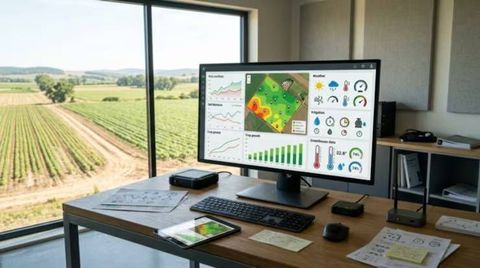
Analytics dashboards can present machine status, production quantities, inspection results, downtime patterns, and other operational indicators in a centralized interface.
AI Development and Inspection Tools
Machine-learning frameworks can be used to develop analytical models for suitable manufacturing applications. Computer vision platforms can process images from industrial cameras for inspection, identification, and positioning tasks.
Templates for data collection, maintenance records, equipment inventories, process maps, risk assessments, and AI model evaluation can also help organize implementation activities.
FAQs
What is an AI-driven manufacturing cell?
An AI-driven manufacturing cell is a connected production area that combines automated machinery, sensors, software, robotics, and artificial intelligence. It can collect production information, analyze patterns, and support selected automated or human-controlled decisions.
How does AI improve manufacturing automation?
AI can analyze large amounts of machine and production data to identify patterns, detect unusual conditions, classify inspection images, and support process analysis. Its usefulness depends on data quality, system design, and appropriate human oversight.
What equipment is used in smart manufacturing cells?
Common equipment includes industrial robots, CNC machines, machine vision cameras, sensors, PLCs, conveyors, inspection systems, industrial computers, and connected manufacturing software.
Are AI manufacturing cells fully autonomous?
Not necessarily. Many systems combine automated functions with human supervision. The level of autonomy depends on the production process, safety requirements, equipment capabilities, and system design.
What role does predictive maintenance play in AI manufacturing?
Predictive maintenance uses equipment information such as vibration, temperature, operating cycles, or other indicators to identify patterns associated with changing machine conditions. This can help maintenance teams investigate potential issues before they develop into larger production interruptions.
Conclusion
AI-driven manufacturing cells combine robotics, sensors, industrial software, machine vision, and artificial intelligence within connected production environments. Their applications include automated inspection, equipment monitoring, material handling, process analysis, and production coordination. Recent developments emphasize edge AI, digital twins, generative AI, and human-centered automation. Safety, cybersecurity, data governance, and applicable AI policies remain important considerations when these technologies are introduced into industrial environments.