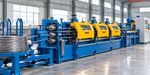
Steel Ball Skew Rolling Mill Machine Overview With Rolling Technology and Process Details
A Steel Ball Skew Rolling Mill Machine is an industrial metalworking system designed to produce steel balls through a continuous rolling process.
These balls are widely used in grinding mills, mineral processing plants, cement production, and other applications where materials must be crushed or ground into smaller particles.
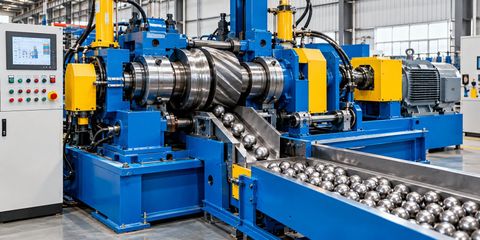
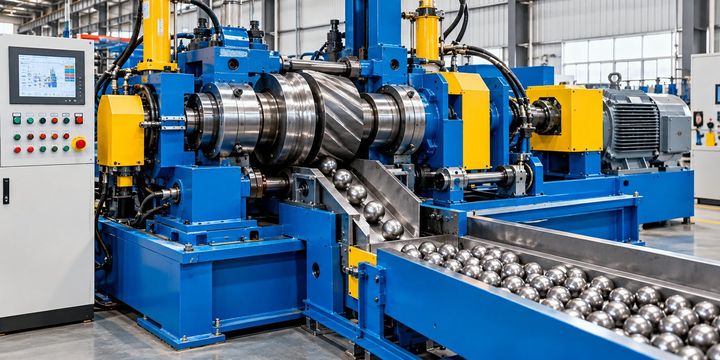
Unlike conventional machining, which removes material from a larger workpiece, skew rolling shapes heated or appropriately prepared steel bars through controlled deformation. The process uses rotating rolls arranged at an angle to the workpiece, causing the steel to rotate and move forward while its diameter is progressively reduced and individual balls are formed.
Skew rolling technology developed as manufacturers sought ways to produce large quantities of spherical steel components with consistent dimensions. Its industrial use depends on the required ball diameter, steel grade, production volume, equipment configuration, and quality specifications.
Main Components of the Machine
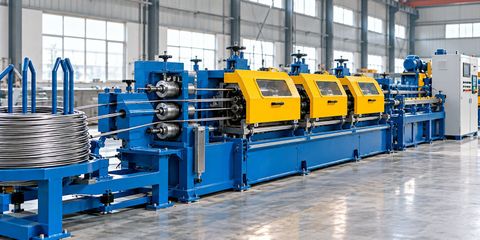
A Steel Ball Skew Rolling Mill Machine typically combines several mechanical and control systems. Their arrangement varies according to the machine design and the production requirements.
The principal components include:
Rolling rolls: Specially shaped rolls apply pressure to the steel and guide it through the forming process.
Roll drive system: Motors and transmission components provide the rotation needed for rolling.
Feeding mechanism: Guides or feeding devices introduce steel bars into the rolling zone at a controlled rate.
Cutting or separation system: Depending on the design, the equipment separates successive ball-shaped sections from the continuously formed material.
Heating equipment: Induction or other suitable heating systems may prepare steel bars for hot rolling.
Cooling arrangements: Controlled cooling equipment helps manage the temperature of formed balls.
Control panel: Operators use control systems to monitor operating parameters and coordinate the equipment.
Collection equipment: Conveyors, bins, or other handling systems move finished balls to subsequent processing stages.
The exact configuration depends on whether the production line uses hot skew rolling, integrated cutting arrangements, automated feeding, or separate downstream equipment.
How Skew Rolling Technology Works
Skew rolling relies on the coordinated movement of angled rolls. As the rolls rotate, friction causes the steel bar to rotate around its own axis while advancing through the forming area.
The roll profiles progressively shape the material into connected spherical sections or ball-like forms. Depending on the machine design, the formed sections are separated and transferred to subsequent stages for heat treatment, surface cleaning, inspection, or finishing.
This process differs from casting, in which molten metal solidifies inside a mold, and from conventional forging, in which dies apply compressive forces to shape individual workpieces. Skew rolling uses continuous or semi-continuous deformation to form successive steel balls.
Importance
Production Efficiency and Material Use
A Steel Ball Skew Rolling Mill Machine addresses the need for repeatable production of grinding media in industrial quantities. Its rolling action can reduce the need to machine each ball individually, while continuous feeding can support a consistent production flow when the process is properly controlled.
Material utilization depends on the steel grade, starting-bar dimensions, roll design, separation method, and process settings. Appropriate process design can limit unnecessary material removal, although trimming, scale formation, and other losses may still occur.
Applications Across Industrial Sectors
Steel grinding balls are used in equipment that reduces solid materials into smaller particles. Their operating conditions differ according to the industry, mill design, material being processed, and required particle size.
Common applications include:
Mining: Grinding ores during mineral processing.
Cement manufacturing: Grinding clinker and other materials used in cement production.
Power generation: Supporting grinding operations for certain fuel-processing systems.
Metallurgical processing: Reducing the size of ores and other solid materials.
Industrial minerals: Processing materials such as limestone and other minerals.
The required ball diameter, hardness, toughness, and wear resistance depend on the application. A ball designed for one grinding environment may not perform identically under different impact loads or abrasive conditions.
Product Consistency and Quality Control
The quality of steel balls affects grinding performance, equipment operation, and the frequency of replacement. Differences in diameter, roundness, internal structure, or hardness can influence how grinding media behave inside a mill.
Manufacturers therefore monitor dimensional accuracy, surface defects, material composition, and heat-treatment results. Consistent rolling conditions help reduce variation, but final quality also depends on steel preparation, equipment maintenance, cooling, and inspection procedures.
Recent Updates
Automation and Process Monitoring
During 2024–2026, industrial metal-forming operations have continued to adopt digital monitoring, automated material handling, and integrated production controls. These developments reflect a wider manufacturing trend rather than a single change applicable to every skew rolling mill.
In a modern steel ball production line, sensors may monitor roll speed, motor load, heating temperature, feeding rate, and other operating conditions. Control systems can use this information to help operators identify deviations and maintain stable production.
Automation can also coordinate feeding, collection, and transfer between processing stages. The level of automation depends on equipment design, plant requirements, and the availability of compatible control systems.
Energy Management and Material Monitoring
Energy use is an important consideration in hot rolling because steel must reach a suitable forming temperature. Induction heating systems, insulation improvements, temperature controls, and production scheduling may help manage energy consumption.
Manufacturers are also paying attention to material traceability and process records. Recording steel batches, heating conditions, rolling parameters, and inspection results can support quality investigations and production planning.
Equipment Maintenance and Digital Inspection
Predictive maintenance and condition monitoring are increasingly relevant to industrial equipment. Vibration readings, bearing temperatures, motor current, and lubrication records can help identify developing mechanical problems.
These methods do not eliminate breakdowns, and their usefulness depends on sensor quality, data interpretation, and maintenance practices. Regular physical inspection remains important for rolls, bearings, drive systems, guides, and safety equipment.
Laws or Policies
Industrial Machinery Safety in India
For manufacturers operating in India, a Steel Ball Skew Rolling Mill Machine must be considered within the country's applicable workplace safety, factory, electrical, and environmental requirements. The exact obligations depend on the facility, machinery configuration, workforce, and activities performed.
Relevant requirements may include applicable provisions of the Factories Act, 1948, state factory rules, and other workplace safety legislation in force. India's labour-law framework has also been undergoing changes, so businesses should verify which provisions and implementing rules apply to their location and operations.
Machine Guarding and Operator Safety
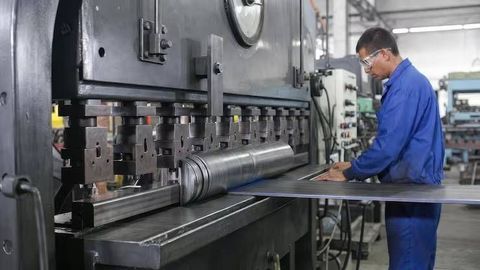
Rolling machinery contains moving rolls, transmission parts, feeding mechanisms, and hot materials that can cause serious injuries. Suitable guarding, emergency-stop arrangements, operator training, maintenance procedures, and controlled access are important parts of safe operation.
Industrial facilities should assess risks associated with entanglement, crushing, burns, electrical hazards, and material handling. Maintenance and cleaning should follow appropriate isolation procedures so that machinery cannot start unexpectedly during work.
Environmental and Energy Requirements
Heating systems, lubricants, scale, metal residues, and industrial emissions may fall under environmental or waste-management requirements. Depending on the facility and its processes, applicable permissions or compliance obligations may involve the relevant State Pollution Control Board and other authorities.
Energy efficiency and emissions management should be evaluated in relation to the actual equipment and fuel or electricity source. Applicable standards and approval requirements should be verified before installation or modification.
Tools and Resources
Engineering and Production Calculations
Production planning uses several calculations to estimate material flow and evaluate equipment performance. These calculations should be based on the actual machine specifications rather than general assumptions.
For example, theoretical steel-bar mass can be estimated using its diameter and length, along with the density of the steel grade. Production planning can then account for the number of balls formed, process losses, rejected products, and operating time.
Useful calculation areas include:
Steel-bar mass and material requirements.
Ball diameter and dimensional tolerances.
Production rate and operating time.
Heating energy consumption.
Material yield and rejection rates.
Cooling and heat-treatment records.
Quality Inspection Instruments
Several instruments help evaluate the dimensions and material characteristics of finished steel balls.
Instrument or tool | Main purpose | Typical measurement or use |
|---|---|---|
Vernier caliper | Dimensional inspection | Ball or bar dimensions |
Micrometer | Precision measurement | Diameter and dimensional variation |
Hardness tester | Material evaluation | Surface or bulk hardness, depending on method |
Metallographic microscope | Structure examination | Grain structure and internal features |
Temperature sensor | Process monitoring | Heating or cooling temperature |
Vibration analyzer | Equipment monitoring | Mechanical vibration patterns |
Data logging system | Production records | Process parameters and inspection history |
Instrument selection depends on the required accuracy, applicable testing method, material condition, and quality specification.
Technical Documents and Maintenance Records
Machine manuals, roll drawings, electrical diagrams, lubrication schedules, and operating instructions provide important information for installation and maintenance. Production records can also help connect process conditions with dimensional results and defect patterns.
A practical production record may contain the steel batch number, bar dimensions, heating temperature, roll settings, output quantity, inspection results, maintenance activity, and recorded downtime. Keeping these details organized supports process review and equipment planning.
FAQs
What is a Steel Ball Skew Rolling Mill Machine?
A Steel Ball Skew Rolling Mill Machine is industrial equipment that forms steel balls through controlled rolling. It uses angled rotating rolls to rotate, advance, and deform steel into successive spherical sections.
How does a steel ball skew rolling mill work?
Steel bars enter a rolling zone where angled rolls apply pressure and guide the material forward. The machine forms successive ball-shaped sections, which are separated as required and transferred for cooling, heat treatment, and inspection.
What are the main applications of skew rolled steel balls?
Skew rolled steel balls are commonly used as grinding media in mining, cement production, mineral processing, and other industries. Their dimensions, hardness, and composition depend on the operating conditions of the grinding equipment.
What factors affect steel ball rolling quality?
Important factors include steel composition, starting-bar dimensions, heating temperature, roll geometry, feeding speed, cooling conditions, and heat treatment. Regular dimensional and material inspections help identify defects and production variation.
What safety measures are important for a steel ball rolling mill?
Important measures include suitable machine guards, emergency stops, operator training, controlled access, safe handling of hot steel, and appropriate electrical and maintenance procedures. Equipment should be isolated before maintenance when required by the applicable safety procedure.
Conclusion
A Steel Ball Skew Rolling Mill Machine uses angled rotating rolls to form steel balls through controlled metal deformation. Production quality depends on the steel material, roll design, operating parameters, cooling methods, and downstream heat treatment. Automation, process monitoring, and organized inspection records are increasingly relevant to modern steel ball manufacturing. Safe operation also requires appropriate machine guarding, maintenance procedures, and compliance with applicable industrial regulations.