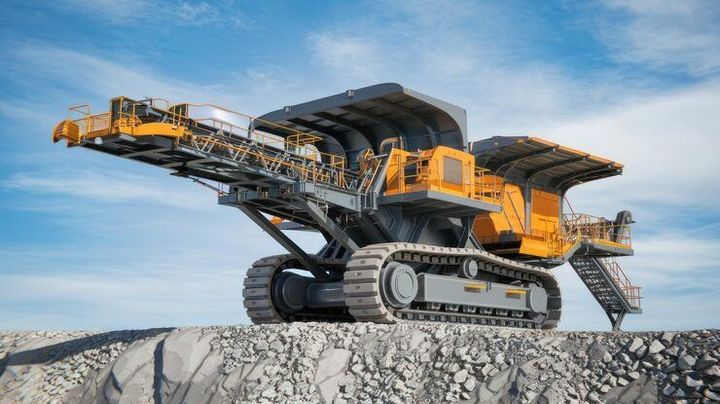
Industrial Rock Crushing Equipment Details: Jaw Crushers, Cone Crushers, Impact Crushers and Uses
Industrial rock crushing equipment is used to break large rocks, stones, and mineral-bearing materials into smaller pieces for construction, mining, road development, and industrial processing. Common machines include jaw crushers, cone crushers, and impact crushers. Each type uses a different crushing method, making it suitable for particular materials, particle sizes, and processing stages.
Context
Industrial rock crushing equipment is used to break large rocks, stones, and mineral-bearing materials into smaller pieces for construction, mining, road development, and industrial processing. Common machines include jaw crushers, cone crushers, and impact crushers. Each type uses a different crushing method, making it suitable for particular materials, particle sizes, and processing stages.
Rock crushing developed alongside mining and large-scale construction as demand increased for consistent aggregates and processed minerals. Before mechanized crushing became widespread, workers relied on manual tools and basic mechanical methods to reduce rock size. Modern crushing plants use powered machines, conveyors, screening systems, and monitoring equipment to process materials in a controlled sequence.
Understanding Industrial Rock Crushing Equipment
Rock crushers apply compressive force, impact, or a combination of mechanical actions to reduce material size. The selection of equipment depends on rock hardness, abrasiveness, moisture content, feed size, required output size, and the intended application.
A crushing plant may include several stages. Primary crushing reduces large incoming rocks, secondary crushing further reduces the material, and tertiary crushing may produce smaller aggregates or a more controlled particle shape. Not every operation requires all three stages.
Main Types of Rock Crushers
The three widely used crusher types have different operating principles.
Jaw crushers: Two crushing plates, called jaws, compress rock as one jaw moves toward the other. These machines commonly handle large rocks during primary crushing.
Cone crushers: A moving cone compresses material against a fixed outer surface. They are commonly used for secondary or tertiary crushing of hard and abrasive rock.
Impact crushers: A rotor, hammers, or blow bars strike the material, breaking it through impact. These machines are frequently used for materials such as limestone and for applications where particle shape is important.
The appropriate machine depends on the characteristics of the material and the required output. A crusher designed for hard, abrasive stone may not be suitable for every softer material or recycling application.
Importance
Industrial rock crushing equipment supports the production of aggregates used in roads, buildings, railways, drainage systems, and other infrastructure. Crushed stone is also used in concrete, asphalt, landscaping, and various industrial processes. Mining operations use crushing systems to reduce extracted material before screening, separation, or further processing.
The equipment also affects the consistency of processed materials. Incorrect machine selection or unsuitable operating settings can produce excessive fines, irregular particle sizes, unnecessary wear, or processing interruptions. Understanding crusher types helps operators and project planners assess these factors.
Practical Uses Across Industries
Rock crushing equipment serves several major applications:
Construction: Produces crushed stone for concrete, foundations, drainage layers, and road bases.
Mining: Reduces ore size before grinding, screening, or mineral separation.
Quarrying: Processes extracted rock into aggregate products with specified size ranges.
Recycling: Breaks suitable concrete, masonry, and other mineral-based construction debris into reusable material.
Industrial manufacturing: Supplies mineral feedstock for cement, lime, and other mineral-processing operations.
Different applications require different output specifications. Road construction may require aggregate grading that meets project standards, while mineral processing may require a particular feed size for the next stage.
Jaw Crushers, Cone Crushers, and Impact Crushers Compared
The following table summarizes general differences between the three main types.
| Feature | Jaw crusher | Cone crusher | Impact crusher |
|---|---|---|---|
| Main mechanism | Compression between jaws | Compression between cone surfaces | Impact from a rotor and striking components |
| Common stage | Primary | Secondary or tertiary | Primary, secondary, or recycling applications |
| Typical materials | Many hard rocks | Hard and abrasive rocks | Often softer to medium-hard rock |
| Output characteristics | Coarse crushed material | Relatively controlled, smaller material | Often more cubical particles |
| Main considerations | Feed size and jaw wear | Abrasiveness and operating settings | Wear, impact energy, and material properties |
These are general descriptions. Actual performance varies by machine design, feed conditions, maintenance, and operating configuration. Some impact crushers can process harder materials, but wear may increase when highly abrasive rock is used.
Recent Updates
Developments in industrial rock crushing equipment have focused on automation, energy use, operational monitoring, dust management, and maintenance planning. Across 2024–2026, the wider industrial equipment sector has continued to adopt digital monitoring and more integrated control systems. The availability of particular features depends on the manufacturer, model, and crushing plant configuration.
Automation and Digital Monitoring
Modern crushing plants may use sensors to monitor motor loads, vibration, temperature, feed levels, and other operating conditions. Control systems can adjust certain machine settings or regulate material flow to maintain stable operation. These features can help operators identify irregular conditions and reduce avoidable interruptions, although results depend on installation and operating practices.
Some systems also record production data, equipment utilization, and maintenance history. This information can support planning and help maintenance teams identify recurring problems. Automated controls do not remove the need for trained personnel, inspection, or compliance with operating procedures.
Energy Efficiency and Environmental Controls
Energy consumption depends on rock characteristics, crusher design, production requirements, and the number of processing stages. Plant designers may examine motor efficiency, conveyor arrangements, crushing settings, and material circulation to manage energy use.
Dust suppression and material containment are also important developments in quarry and crushing operations. Water sprays, enclosed transfer points, extraction systems, and dust collection equipment may reduce airborne particles when properly designed and maintained. Water availability, local environmental conditions, and the type of material influence the choice of controls.
Wear-resistant components and condition-monitoring tools can also help maintenance teams plan replacements. However, component life varies with material abrasiveness, feed consistency, operating load, and maintenance practices.
Laws or Policies
Industrial rock crushing equipment is subject to workplace safety, environmental, mining, and local operating requirements. The applicable rules depend on the country, site location, type of operation, and materials being processed.
Industrial Crusher Regulations in India
In India, quarrying and mining activities may fall under the Mines Act, 1952, the Mines and Minerals (Development and Regulation) Act, 1957, and applicable rules and regulations, depending on the operation and the legislation currently in force. The Directorate General of Mines Safety oversees mine-safety matters within its jurisdiction. Specific requirements vary according to the type of mine and the applicable regulatory framework.
Crusher installations outside mine premises may also be subject to relevant state factory and occupational safety requirements, local permissions, and other applicable laws. The Occupational Safety, Health and Working Conditions Code, 2020, forms part of India's evolving workplace safety framework, with applicability depending on commencement provisions and relevant rules.
Pollution Control and Worker Safety
Stone crushing can generate airborne dust, noise, vibration, and wastewater. Operators may need to comply with applicable requirements established by the Central Pollution Control Board, State Pollution Control Boards, and other competent authorities. Permissions, emission controls, and monitoring obligations depend on the location and nature of the operation.
Important workplace safety measures can include:
Machine guarding: Prevents access to dangerous moving components.
Lockout procedures: Isolates energy sources before maintenance or clearing blockages.
Dust control: Uses suitable suppression, extraction, and containment methods.
Hearing protection: Addresses noise exposure where required by risk assessments.
Training and access controls: Restricts hazardous tasks to authorized personnel.
Regulatory obligations can change, so operators must refer to current official requirements rather than relying solely on general equipment descriptions.
Tools and Resources
Several technical resources help engineers, operators, and project planners understand crusher performance, material requirements, and site conditions.
Equipment Manuals and Technical Documents
Manufacturer manuals provide machine-specific information about feed limits, adjustment procedures, lubrication, wear components, maintenance intervals, and safety requirements. Technical specifications can help compare crusher capacity, motor power, maximum feed size, and adjustment ranges. These figures should be interpreted in the context of the material being processed rather than as universal production estimates.
Crushing Calculators and Plant Planning
Crushing plant planning may use production calculators, aggregate grading tools, power estimates, and material-flow diagrams. Engineers can use these resources to estimate throughput, examine screen sizes, and understand how different crushing stages interact. Actual output depends on factors such as rock strength, feed distribution, moisture, machine settings, and downstream equipment.
A basic equipment comparison worksheet may include the following fields:
Rock type, hardness, and abrasiveness
Maximum incoming rock size
Required output size and grading
Estimated hourly throughput
Motor power and energy requirements
Wear-part replacement requirements
Dust, noise, and safety controls
These details help organize a technical assessment, but they do not replace a site-specific engineering review.
Industry and Regulatory Resources
Technical publications from equipment manufacturers, engineering associations, and mining research organizations explain crusher mechanisms and plant design. In India, official information from the Central Pollution Control Board, relevant State Pollution Control Boards, the Directorate General of Mines Safety, and the Ministry of Mines can help readers understand applicable environmental and mining requirements.
FAQs
What is industrial rock crushing equipment used for?
Industrial rock crushing equipment reduces rocks and mineral materials into smaller sizes for construction, quarrying, mining, recycling, and mineral processing. The output may be used in concrete, road construction, drainage, or further processing.
What is the difference between jaw crushers and cone crushers?
Jaw crushers generally use two plates to compress large rocks during primary crushing. Cone crushers compress material between cone-shaped surfaces and are commonly used to reduce material further during secondary or tertiary crushing.
When are impact crushers used in rock crushing?
Impact crushers break material through repeated strikes from a rotor or related components. They are often used for limestone, selected construction materials, and recycling applications where particle shape is important.
How is the correct rock crusher selected?
Selection depends on rock hardness, abrasiveness, feed size, desired output grading, production requirements, energy use, and maintenance needs. The complete crushing process should be considered rather than the machine alone.
What safety measures apply to industrial rock crushers?
Common measures include guarding moving parts, isolating energy before maintenance, controlling dust, managing noise exposure, and training workers. Applicable legal requirements depend on the site, equipment, and type of operation.
Conclusion
Industrial rock crushing equipment includes jaw crushers, cone crushers, and impact crushers, each using different methods to reduce material size. These machines support construction, quarrying, mining, recycling, and mineral processing, with selection influenced by rock properties and output requirements. Automation, monitoring, energy management, and dust control continue to shape modern crushing operations. Workplace safety and environmental compliance remain essential parts of equipment installation and operation.