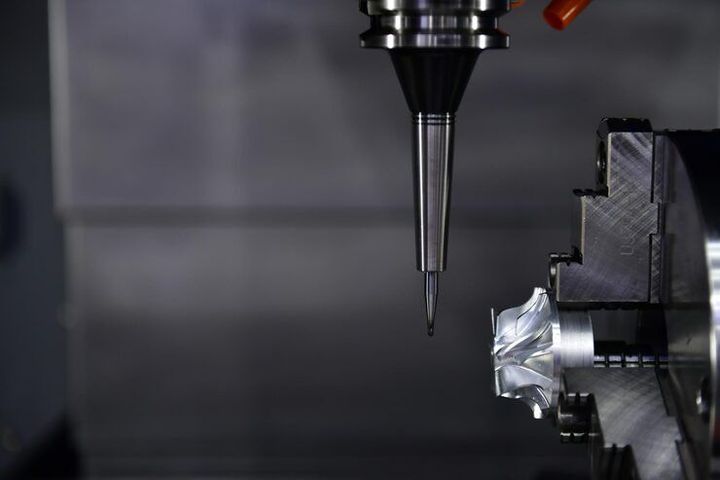
Five-Axis CNC Machining Machines Explained: Types, Components, Applications and Benefits
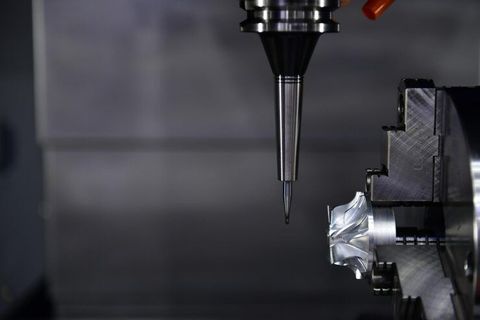
Five-axis CNC machining machines are computer-controlled manufacturing systems that shape metal, plastic, and other materials by moving a cutting tool or workpiece along five coordinated axes. The term CNC stands for Computer Numerical Control, which means that machine movements are directed by programmed instructions. Five-axis CNC machining extends conventional three-axis machining by adding two rotational movements, allowing tools to reach multiple surfaces and complex angles.
Context
Five-axis CNC machining machines are computer-controlled manufacturing systems that shape metal, plastic, and other materials by moving a cutting tool or workpiece along five coordinated axes. The term CNC stands for Computer Numerical Control, which means that machine movements are directed by programmed instructions. Five-axis CNC machining extends conventional three-axis machining by adding two rotational movements, allowing tools to reach multiple surfaces and complex angles.
The development of CNC machining grew from earlier numerical-control systems used in industrial manufacturing. As computer technology, cutting tools, and machine controls advanced, manufacturers gained the ability to produce more complicated components with greater control over tool movement. Today, five-axis CNC machining machines are used in aerospace manufacturing, automotive production, medical equipment manufacturing, energy systems, and precision engineering.
Understanding the Five Axes
A five-axis CNC machine generally uses three linear axes and two rotational axes. The linear axes are X, Y, and Z, which move along three directions. The rotational axes are commonly called A, B, and C, representing rotation around the X, Y, and Z axes respectively.
A machine normally uses two of these rotational axes in addition to X, Y, and Z. The exact arrangement depends on its design. These movements allow the cutting tool or workpiece to approach a component from different directions without requiring repeated manual repositioning.
Types of Five-Axis CNC Machines
Five-axis CNC machining machines are commonly classified by the way their rotational movements are produced.
Table-table machines: Both rotational movements are provided by the worktable. The workpiece rotates and tilts while the cutting tool moves along the linear axes.
Head-head machines: The cutting head provides the rotational movements, allowing the tool to change its orientation while the workpiece remains fixed.
Head-table machines: One rotational movement comes from the cutting head and the other from the table. This arrangement combines features of both designs.
Each configuration has different workpiece-size limits, access characteristics, and movement ranges. The appropriate design depends on component geometry, material, machining requirements, and production conditions.
Importance
Five-axis CNC machining is important because many industrial components have curved surfaces, angled holes, complex contours, or features on several sides. Producing these shapes with a conventional three-axis machine may require multiple setups, specialized fixtures, or additional machining operations.
A five-axis machine can often reach several surfaces in a single setup. This can reduce repositioning, improve alignment between features, and help maintain consistent dimensions. However, the actual result depends on machine capability, programming quality, tool selection, workholding, and inspection methods.
Main Components of a Five-Axis CNC Machine
A five-axis CNC machining system combines mechanical, electrical, and software components.
Machine frame: Supports the machine structure and helps maintain rigidity during cutting.
Spindle: Rotates the cutting tool at a controlled speed.
Cutting tools: Remove material to create the required shape and surface.
Linear axes: Move the tool or workpiece along X, Y, and Z directions.
Rotary axes: Provide the two additional rotational movements.
CNC controller: Interprets programmed instructions and coordinates machine movements.
Tool magazine and changer: Store and change tools automatically on machines equipped with these features.
Workholding system: Secures the material during machining.
Coolant and chip management systems: Help control cutting heat and remove machining debris where applicable.
Measurement and inspection equipment: Checks dimensions and verifies whether the finished component meets specifications.
The performance of the complete system depends on how these components work together. Machine calibration, spindle condition, thermal stability, and maintenance can influence accuracy and repeatability.
Common Applications
Five-axis CNC machining is used across industries that require detailed shapes or closely controlled dimensions.
In aerospace manufacturing, it can produce turbine components, structural parts, and complex housings. Automotive manufacturers use it for selected engine components, prototypes, molds, and specialized parts. Medical manufacturing may use five-axis machining to create instruments, implants, and components with complex contours, subject to applicable material and regulatory requirements.
Other applications include:
Energy equipment components, such as selected turbine and pump parts.
Mold and die manufacturing for shaped products.
Precision engineering components with angled features.
Marine equipment parts with curved or irregular surfaces.
Research and prototype components requiring complex geometry.
Not every component requires five-axis machining. Simpler parts may be produced efficiently using three-axis equipment or other manufacturing processes.
Comparing CNC Machining Configurations
| Feature | Three-axis CNC | Three-plus-two-axis machining | Simultaneous five-axis machining |
|---|---|---|---|
| Main movements | Three linear axes | Three linear and two indexed rotary axes | Five coordinated axes |
| Rotary movement during cutting | Usually not applicable | Typically fixed during cutting | Can change continuously |
| Typical geometry | Flat faces, pockets, and simpler contours | Angled faces and multiple surfaces | Complex curves and changing tool orientations |
| Setup requirements | May require repositioning | Often fewer setups | Can reduce setups for complex components |
| Programming needs | Depends on part complexity | Requires rotary positioning | Often requires advanced toolpath planning |
Three-plus-two-axis machining positions the workpiece or tool at a selected angle before cutting begins. Simultaneous five-axis machining coordinates all five axes during the cutting process. Both approaches use five-axis machine capabilities, but they serve different machining requirements.
Recent Updates
Developments in five-axis CNC machining from 2024 through 2026 have continued to focus on automation, digital manufacturing, process monitoring, and more advanced programming methods. These changes reflect a broader effort to improve production consistency and manage increasingly complex component designs. Their availability varies by machine manufacturer, software platform, and production environment.
Advanced Programming and Simulation
Computer-aided manufacturing software, commonly called CAM software, converts component designs into machining instructions. Modern CAM systems increasingly support advanced toolpath generation, collision checking, and machine simulation. These capabilities help programmers examine potential interference between the cutting tool, spindle, workpiece, and machine structure before production begins.
Digital simulation does not remove every machining risk. Actual results can still be affected by tool wear, material variation, setup errors, machine condition, and differences between the simulated environment and the physical machine.
Automation and Process Monitoring
Some five-axis machining systems integrate robotic loading, automatic tool measurement, workpiece probing, and production monitoring. These features can reduce manual handling and help detect certain setup or process problems. Sensors and machine data can also support maintenance planning and process analysis.
Artificial intelligence and data-analysis techniques are being explored for tool-wear monitoring, fault detection, and machining optimization. Their effectiveness depends on the quality of the data, the application, and the validation process. Automated monitoring complements rather than replaces appropriate inspection and operator oversight.
Hybrid Manufacturing
Hybrid manufacturing combines two or more production methods, such as additive manufacturing and CNC machining. A component may first be created through metal additive manufacturing and then machined to improve selected surfaces or achieve required dimensions. This approach is relevant to complex components, although material properties, design requirements, and process compatibility must be evaluated carefully.
Laws or Policies
Five-axis CNC machining machines are affected by workplace safety rules, machinery requirements, environmental regulations, and export controls where applicable. The precise requirements depend on the country, industry, machine specifications, and materials being processed.
Manufacturing Regulations in India
In India, manufacturing facilities must comply with applicable workplace safety and factory regulations. The Factories Act, 1948, and relevant state rules have historically governed areas such as machinery safety, worker protection, and factory operations, alongside subsequent legal developments and applicable occupational safety legislation. The provisions in force depend on the relevant implementation arrangements and the circumstances of the facility.
Employers may need to establish safe operating procedures, train machine operators, maintain equipment, and provide suitable protective measures. CNC machine guards, emergency stops, safe tool-changing procedures, and controls for metal chips or cutting fluids can be important parts of workplace risk management.
Environmental requirements may apply to cutting-fluid disposal, industrial waste, emissions, and noise, depending on the activity and local rules. Facilities should identify the requirements applicable to their location and production process.
Standards, Quality, and Export Controls
Technical standards can help manufacturers evaluate machine safety, dimensional measurement, and quality-management procedures. ISO standards may be relevant to machine tools, industrial quality systems, and measurement practices, although the applicable standard depends on the intended use.
Some advanced machine tools and related software may also be subject to export-control requirements when transferred across national borders. These controls depend on technical specifications, destination, end use, and applicable national regulations. Ordinary manufacturing use does not automatically mean that a machine is restricted.
Tools and Resources
Several digital tools and technical resources support the planning, programming, operation, and maintenance of five-axis CNC machining machines.
CAD and CAM Software
Computer-aided design (CAD) software is used to create component models and technical drawings. CAM software converts these designs into toolpaths and machine instructions. Examples of widely used platforms include Autodesk Fusion, Mastercam, and Siemens NX. Available functions vary by product version, configuration, and licensing arrangement.
Machine simulation tools help check tool movement, axis limits, and potential collisions. Accurate simulation requires a suitable machine model, correct setup information, and appropriate cutting-tool data.
Technical Documentation and Measurement Tools
Machine manuals provide information about axis travel, spindle limits, maintenance schedules, tool compatibility, and operating procedures. Manufacturer documentation should be matched to the exact machine model.
Common measurement resources include coordinate measuring machines, touch probes, tool setters, and precision gauges. These tools help verify component dimensions and support machine setup. Inspection methods should reflect the component's tolerances and intended application.
Basic Planning Checklist
Before machining a component, manufacturers commonly review:
Component drawings, dimensions, and material specifications.
Machine working envelope and rotary-axis limits.
Cutting-tool geometry, tool reach, and spindle requirements.
Workholding stability and potential collision areas.
CAM toolpaths, simulation results, and setup instructions.
Inspection requirements, maintenance status, and operator training.
These checks help organize the machining process and identify issues before production begins.
FAQs
What is a five-axis CNC machining machine?
A five-axis CNC machining machine uses three linear axes and two rotational axes to position a cutting tool or workpiece. This arrangement allows machining from multiple directions and supports complex component geometries.
What are the main types of five-axis CNC machines?
The main configurations are table-table, head-head, and head-table. They differ in how rotational movement is provided and in their workpiece capacity, access, and machining characteristics.
What are the applications of five-axis CNC machining?
Applications include aerospace components, automotive parts, turbine components, molds, medical components, and precision-engineered products. The method is particularly useful for parts with complex contours or features on several surfaces.
What is the difference between three-plus-two-axis and simultaneous five-axis machining?
Three-plus-two-axis machining uses rotary axes to position a component at an angle before cutting. Simultaneous five-axis machining can coordinate all five axes while the tool is cutting, allowing more complex toolpaths.
What factors affect five-axis CNC machining accuracy?
Accuracy can be influenced by machine calibration, thermal changes, tool condition, workholding, programming, material properties, and inspection methods. Regular maintenance and suitable process controls help manage these factors.
Conclusion
Five-axis CNC machining machines combine three linear movements with two rotational movements to produce components with complex shapes and multiple angled surfaces. Their configurations, components, and programming methods determine how they perform across different manufacturing applications. Recent developments in simulation, automation, and process monitoring continue to shape their use in modern production. Safety requirements, technical standards, operator training, and quality inspection remain important parts of the machining process.