Industrial Cable Manufacturing Machines Explained: Types, Components, Functions and Applications
Industrial cable manufacturing machines are specialized systems used to produce electrical cables, communication cables, and other insulated conductors. These machines process materials such as copper, aluminum, polymers, and protective metals through a series of operations, including wire drawing, stranding, insulation, cabling, and final testing. The complete production process depends on the cable's intended purpose, required dimensions, electrical characteristics, and environmental conditions.
Context
Industrial cable manufacturing machines are specialized systems used to produce electrical cables, communication cables, and other insulated conductors. These machines process materials such as copper, aluminum, polymers, and protective metals through a series of operations, including wire drawing, stranding, insulation, cabling, and final testing. The complete production process depends on the cable's intended purpose, required dimensions, electrical characteristics, and environmental conditions.
Cable manufacturing developed alongside the expansion of electrical power networks, telecommunications, transportation, and industrial equipment. Early production methods relied heavily on manual handling and relatively simple machinery. Modern manufacturing lines use controlled motors, automated feeding systems, temperature regulation, and electronic monitoring to maintain consistent production.
Understanding Industrial Cable Manufacturing Machines
Industrial cable manufacturing machines are not a single type of machine. They are a collection of equipment designed to perform different stages of production, from reducing metal wire to applying insulation and protective coverings.
A manufacturer may use separate machines for individual processes or integrate several stages into a continuous production line. The equipment selected depends on cable construction, production volume, material specifications, and the required level of automation.
Importance
Industrial cable manufacturing machines support the production of cables used in homes, factories, hospitals, vehicles, communication networks, and renewable energy installations. Electrical cables carry power, while communication cables transmit information between electronic devices and network equipment. Specialized cables may also withstand heat, moisture, vibration, chemicals, or mechanical stress.
The quality of the manufacturing process affects conductor dimensions, insulation thickness, electrical performance, and physical durability. Inconsistent processing can create defects such as uneven insulation, damaged conductors, incorrect cable diameter, or weak connections between cable layers. These problems may affect installation, equipment operation, and long-term reliability.
Main Types of Cable Manufacturing Machines
Different machines perform distinct functions within a cable production facility.
Wire drawing machines: Reduce copper or aluminum rod into thinner wire by pulling it through progressively smaller dies. Lubrication and cooling help control friction and temperature.
Wire annealing machines: Apply controlled heat to metal wire to adjust its softness and mechanical properties after drawing.
Wire stranding machines: Combine several individual wires into a strand or conductor. The arrangement may be compact, concentric, or designed for a particular flexibility requirement.
Cable extrusion machines: Melt polymer material and apply it around a conductor to form insulation or an outer sheath.
Cable bunching machines: Twist multiple small wires together, commonly for flexible conductors and certain communication cables.
Cabling machines: Combine insulated conductors or cable cores into a larger assembly.
Armoring machines: Apply protective metal wires or tapes around a cable where mechanical protection is required.
Cable winding and coiling machines: Wind finished cable onto reels or into coils for storage, transport, and further processing.
Cable testing equipment: Measure selected electrical and physical properties to check whether the finished cable meets its specification.
Not every cable requires every machine. A simple single-core electrical wire may need drawing, insulation, and testing, while a multi-core armored power cable requires additional processing stages.
Key Components and Their Functions
Although machine designs vary, many industrial cable manufacturing systems share several important components.
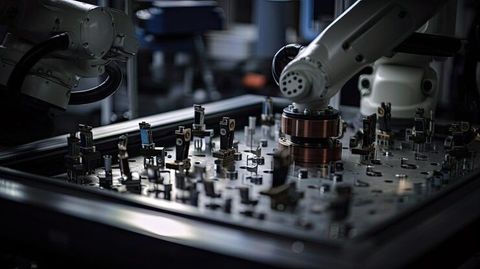
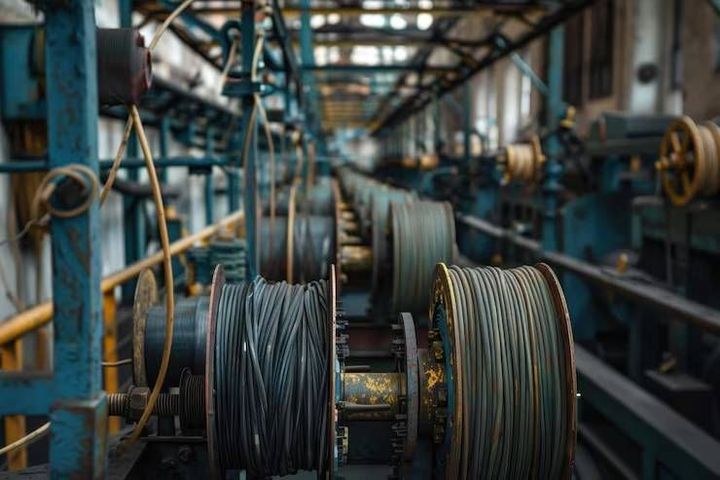
Pay-off and take-up systems control the movement of wire, conductor, or finished cable from reels. Drive motors and gear systems provide the movement needed for drawing, twisting, extrusion, and winding. Control panels and programmable logic controllers coordinate machine speed, temperature, tension, and operating sequences.
Other important components include dies, extrusion screws, heating elements, cooling tanks, tension sensors, guiding rollers, and cutting mechanisms. Their arrangement depends on the manufacturing process. Correct alignment and coordination help reduce material damage and maintain consistent cable dimensions.
Recent Updates
Industrial cable manufacturing has increasingly incorporated automation, digital monitoring, energy management, and more precise process controls. These developments are relevant to production lines used for power distribution, telecommunications, electric vehicles, and renewable energy infrastructure. The specific capabilities available vary according to machine design, factory requirements, and investment decisions.
Automation and Digital Monitoring
Modern cable manufacturing equipment may use sensors to monitor line speed, conductor tension, extrusion temperature, and material flow. Operators can review process information through human-machine interfaces, while programmable controllers coordinate connected equipment.
Some production systems also use machine-vision technology to inspect surfaces and identify visible defects. Digital production records can help manufacturers trace batches, review operating conditions, and investigate quality problems. However, automated monitoring does not replace the need for appropriate testing, maintenance, and operator oversight.
Material Efficiency and Specialized Cables
Manufacturers increasingly need equipment capable of handling different conductor sizes, insulation materials, and cable constructions. Applications involving renewable energy, charging infrastructure, industrial automation, and high-speed data transmission create varied technical requirements.
Modern extrusion and winding systems may incorporate more precise temperature control, tension regulation, and material monitoring to reduce process variation. Energy-efficient motors and improved drive controls can also support more controlled operation. Actual energy use and material savings depend on equipment design, production conditions, and maintenance practices.
Comparing Major Machine Types
| Machine type | Main function | Typical output or result |
|---|---|---|
| Wire drawing machine | Reduces conductor diameter | Thin metal wire |
| Annealing machine | Adjusts metal properties through heat | Treated conductor wire |
| Stranding machine | Combines individual wires | Stranded conductor |
| Extrusion machine | Applies polymer insulation or sheath | Insulated wire or cable |
| Cabling machine | Combines cable cores | Multi-core cable assembly |
| Armoring machine | Adds mechanical protection | Armored cable |
| Testing equipment | Checks specified properties | Recorded test results |
These categories describe common functions rather than a fixed production sequence. Some factories use combined equipment, while others arrange independent machines according to product requirements.
Laws or Policies
Industrial cable manufacturing in India is influenced by product standards, electrical safety requirements, factory regulations, environmental rules, and applicable quality-control orders. Requirements differ according to the type of cable, its intended use, the manufacturing facility, and whether mandatory certification applies.
Indian Standards and Product Compliance
The Bureau of Indian Standards (BIS) develops Indian Standards for many electrical products and related materials. Relevant cable standards specify requirements that may include conductor dimensions, insulation properties, voltage ratings, construction, and testing procedures.
For example, IS 694 addresses PVC-insulated cables and cords for specified working voltages, while other standards cover different cable categories and applications. The applicable standard depends on the particular product. Manufacturers should verify the current edition, scope, and any applicable Quality Control Order before producing or placing a regulated cable on the market.
Factory Safety and Environmental Requirements
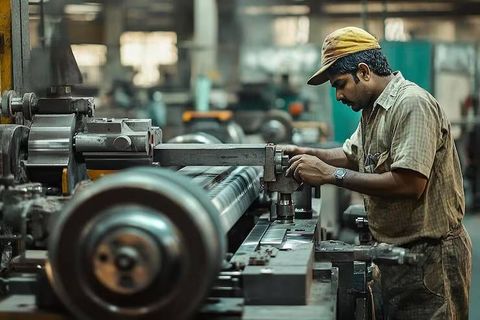
Cable manufacturing facilities may be subject to the Factories Act, 1948, or the occupational safety and working-condition legislation applicable to the facility and the relevant implementation framework. Requirements can cover machinery guarding, electrical safety, ventilation, worker protection, and safe operating procedures.
Environmental obligations may apply to emissions, industrial wastewater, waste handling, and the use of particular materials. The applicable requirements depend on the production process and the relevant central or state authorities. Facilities must also consider fire precautions, equipment maintenance, and safe storage of polymers, lubricants, and metal materials.
Tools and Resources
Technical resources help manufacturers understand machine specifications, process requirements, and product-testing procedures. The appropriate resource depends on whether the purpose is equipment selection, production planning, quality control, or regulatory compliance.
Engineering and Production Tools
Computer-aided design software can help engineers prepare cable layouts, equipment arrangements, and production-line drawings. Manufacturing execution systems and production spreadsheets can record material usage, output quantities, machine downtime, maintenance activities, and batch information.
Cable dimension calculators can help estimate conductor area, approximate finished diameter, or material quantities when the necessary specifications are available. Such calculations depend on assumptions about conductor geometry, insulation thickness, and manufacturing tolerances. They do not replace formal product testing.
Standards and Technical References
The Bureau of Indian Standards website provides information about Indian Standards and applicable certification processes. The Ministry of Labour and Employment and relevant state authorities publish information about workplace requirements, while the Central Pollution Control Board provides environmental guidance and regulatory information.
Machine manuals, electrical drawings, maintenance schedules, and calibration records are also important resources. They document operating limits, inspection intervals, safety procedures, and the requirements for individual equipment models.
FAQs
What are industrial cable manufacturing machines?
Industrial cable manufacturing machines are equipment systems used to draw metal wire, combine conductors, apply insulation, assemble cable cores, add protective layers, and test finished cables. The required equipment depends on the cable design.
How does a cable extrusion machine work?
A cable extrusion machine heats polymer material until it can flow through a die and applies it around a moving conductor or cable core. The material is then cooled and controlled to achieve the specified insulation or outer sheath dimensions.
Which machines are used for electrical cable manufacturing?
Common equipment includes wire drawing machines, annealing systems, stranding machines, extrusion lines, cabling machines, winding equipment, and electrical testing instruments. A particular production line may use only some of these machines.
What factors matter when selecting cable manufacturing equipment?
Important factors include conductor material, wire diameter, cable construction, insulation type, production speed, automation requirements, available floor space, maintenance needs, and applicable product standards.
Which standards apply to cable manufacturing in India?
Applicable requirements depend on cable type, voltage rating, intended application, and current regulations. BIS standards and relevant Quality Control Orders should be checked to determine the specific product requirements.
Conclusion
Industrial cable manufacturing machines perform the connected operations needed to produce electrical, communication, and specialized industrial cables. Wire drawing, stranding, extrusion, cabling, armoring, winding, and testing equipment each serve distinct purposes. Automation and digital monitoring are changing how manufacturers control production, while Indian standards and workplace regulations shape product quality and operational safety. The required machinery and compliance procedures depend on cable construction, intended application, and current regulatory requirements.

You May Also Like