Industrial Robotics Details: Robot Types, Controllers, Applications, Functions and Benefits
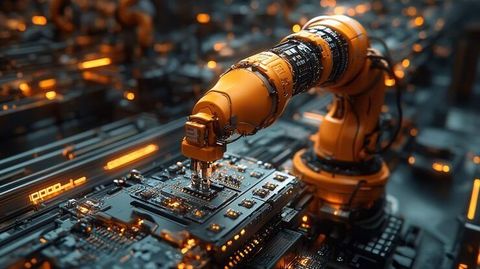
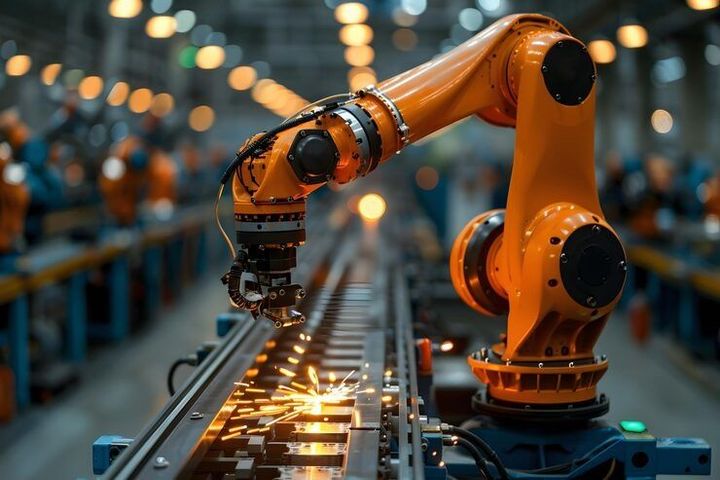
Industrial robotics refers to programmable machines designed to perform physical tasks in manufacturing, production, material handling, inspection, and related industrial environments. An industrial robot can be programmed to move through multiple axes and perform specific operations repeatedly. Modern systems combine mechanical arms or mobile platforms with controllers, sensors, motors, software, and specialized tools.
The development of industrial robotics is closely connected with the growth of factory automation. Early industrial robots were introduced for repetitive manufacturing tasks, while modern systems can perform more complex operations involving machine vision, force sensing, automated movement, and digital communication. Today, robotics is used across automotive, electronics, metalworking, food processing, packaging, logistics, plastics, and other industries.
An industrial robot is generally part of a larger robotic system rather than an independent machine. The complete system can include the robot arm, controller, end-of-arm tooling, sensors, safety equipment, programming interface, workholding equipment, and connections to other factory machines.
Main Components of Industrial Robotics
An industrial robotic system normally contains several interconnected components. The manipulator provides physical movement, while motors and drives move the individual joints or axes. Encoders and other sensors provide information about position, movement, and operating conditions.
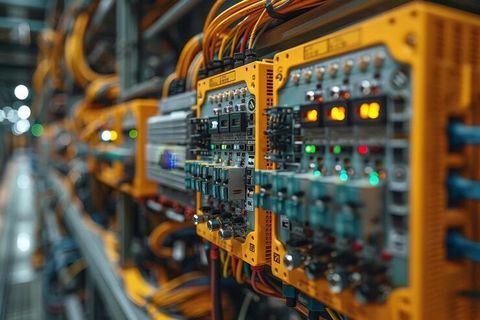
The robot controller processes programmed instructions and coordinates movement. A teach pendant or software interface allows operators and engineers to create, modify, test, and monitor programs. The end effector is the tool attached to the robot, such as a gripper, welding torch, suction device, drill, dispensing tool, or inspection camera.
Importance
Industrial robotics has become important because many manufacturing processes involve repetitive, physically demanding, hazardous, or highly consistent activities. Robots can repeat programmed movements while maintaining defined operating parameters, making them suitable for processes where consistent motion is required.
Robotics also allows manufacturers to automate tasks that may involve heat, chemicals, sharp materials, heavy components, or difficult working positions. Depending on the application, this can reduce direct human exposure to particular workplace hazards while allowing workers to focus on supervision, programming, quality control, maintenance, and other activities.
Functions of Industrial Robots
Industrial robots can perform many different functions depending on their mechanical design and attached tooling. Common functions include:
- Material handling and component movement.
- Pick-and-place operations.
- Welding and joining.
- Painting and coating.
- Assembly and fastening.
- Machine tending.
- Packaging and palletizing.
- Cutting, grinding, and polishing.
- Inspection and quality checking.
- Dispensing adhesives, sealants, or other materials.
The same basic robot structure can sometimes perform different functions when its tooling and programming are changed. This flexibility is one reason programmable robotics is used across different production environments.
Important Robot Specifications
Selecting an industrial robot involves considering several technical characteristics. Payload indicates the amount of mass the robot is designed to handle under specified conditions, while reach describes how far the robot can access its workspace.
Other important specifications include the number of axes, repeatability, movement speed, work envelope, mounting arrangement, environmental protection, controller capabilities, and compatibility with tooling.
| Specification | General Meaning | Why It Matters |
|---|---|---|
| Payload | Load the robot can handle | Determines suitable components and tools |
| Reach | Maximum working distance | Helps determine workspace coverage |
| Axes | Independent movement directions | Influences flexibility |
| Repeatability | Ability to return to programmed positions | Important for consistent operations |
| Work envelope | Three-dimensional operating area | Defines usable workspace |
| Controller | Computerized motion-control unit | Coordinates robot movements |
| End effector | Tool attached to the robot | Determines the physical task |
Recent Updates
Greater Use of AI and Machine Vision
Modern industrial robotics increasingly incorporates machine vision, advanced sensing, and artificial intelligence. Cameras and vision software can help identify components, determine their positions, inspect surfaces, and support robotic guidance.
AI-based systems can also help robots interpret changing production conditions. However, the capabilities of an individual system depend on its sensors, software, computing hardware, programming, and integration with other factory equipment.
Collaborative Robotics
Collaborative robots, commonly called cobots, are designed for applications where people and robots may work in closer proximity under controlled conditions. They commonly incorporate safety functions such as monitored stopping, speed limitations, separation monitoring, or force-related safeguards.
Collaborative operation does not automatically mean that a robot can be placed beside workers without a safety assessment. The complete application, tooling, materials, movement, workspace, and operating conditions need to be evaluated.
Mobile Industrial Robotics
Mobile robots are increasingly used for internal transportation and material movement. Autonomous mobile robots can navigate through environments using sensors and software, while automated guided vehicles generally follow defined routes or guidance systems.
Mobile robots can be combined with robotic arms to create systems capable of moving between locations and manipulating objects. This combination is relevant to warehouses, production facilities, and other controlled industrial environments.
Digital Simulation and Monitoring
Simulation software allows engineers to model robotic work cells before physical installation. These systems can help evaluate robot reach, movement paths, collision risks, cycle sequences, and workspace arrangements.
Industrial robots are also increasingly connected to factory information systems. Operational data can be used for monitoring, maintenance planning, process analysis, and production management.
Laws or Policies
Industrial robotics is affected by workplace safety requirements, machinery regulations, electrical standards, and robot-specific safety standards. The exact requirements depend on the country, industry, robot design, and application.
Robot Safety
Robot systems can create hazards involving movement, crushing, impact, cutting, heat, electricity, or unexpected machine operation. Safety measures may include physical guarding, interlocked gates, emergency stops, light curtains, safety scanners, protective devices, and safety-rated control functions.
A risk assessment is an important part of designing and operating an industrial robotic cell. The assessment considers the robot, tooling, materials, surrounding machinery, workers, maintenance activities, and foreseeable operating conditions.
Programming and Operator Training
Workers responsible for programming, operation, maintenance, or troubleshooting may require appropriate training based on their responsibilities. Procedures can also be required for setup, inspection, maintenance, and safe intervention.
In collaborative applications, additional assessment is necessary because the robot and human may share a workspace. The safety approach depends on the specific robot application rather than the robot's label alone.
International Standards
International robotics standards provide terminology and safety guidance for industrial robot systems. ISO 10218 is an important standard series covering industrial robot safety, while ISO/TS 15066 provides guidance related to collaborative robot applications.
Local regulations may also apply alongside international standards. Organizations should therefore consider the requirements applicable to their specific country and workplace.
Tools and Resources
Several tools help organizations understand, program, simulate, and maintain industrial robotic systems.
Robot Simulation Software
Simulation platforms allow engineers to create virtual representations of robots and work cells. They can be used to study movement paths, tooling positions, workspace requirements, and potential interference before physical deployment.
Teach Pendants
A teach pendant is a handheld programming interface used with many industrial robots. Operators can manually move robot axes, record positions, adjust programs, and perform controlled testing.
Machine Vision Systems
Machine vision combines cameras, lighting, image-processing software, and communication systems. In robotic applications, vision can assist with part identification, position detection, inspection, and process guidance.
Force and Torque Sensors
Force and torque sensors can measure physical interaction between a robot tool and an object. They are useful in applications such as precision assembly, polishing, insertion, and inspection where contact information can influence robot movement.
Maintenance and Monitoring Software
Monitoring systems can collect information about operating hours, alarms, motion conditions, and maintenance requirements. Such information can support maintenance planning and help identify unusual operating patterns.
FAQs
What are the main types of industrial robots?
Common industrial robot types include articulated robots, SCARA robots, Cartesian or gantry robots, delta or parallel robots, cylindrical robots, and collaborative robots. Each design has different movement characteristics and is suited to different applications.
What does an industrial robot controller do?
An industrial robot controller processes the robot program and coordinates the movement of its motors and axes. It manages programmed positions, movement sequences, speed parameters, inputs, outputs, and communication with other equipment.
What are industrial robots used for?
Industrial robots are used for welding, assembly, material handling, machine tending, painting, packaging, palletizing, inspection, cutting, dispensing, polishing, and other manufacturing activities.
What are the main benefits of industrial robotics?
Industrial robotics can provide repeatable movement, consistent process execution, support for hazardous operations, automated material handling, and the ability to operate programmed processes for extended production periods. The actual results depend on system design, programming, maintenance, and application requirements.
Are collaborative robots the same as traditional industrial robots?
Collaborative robots are a category of industrial robots designed with functions intended to support controlled human-robot interaction. They are not automatically suitable for every shared workspace, and the complete application must be assessed for safety.
Conclusion
Industrial robotics combines programmable mechanical systems, controllers, sensors, software, and specialized tools to perform manufacturing and material-handling tasks. Robot types such as articulated, SCARA, Cartesian, delta, and collaborative systems serve different movement and application requirements. Controllers coordinate robot motion, while sensors, vision systems, and end effectors expand what a robot can perform. Current developments in AI, machine vision, mobile robotics, simulation, and collaborative operation are continuing to influence industrial automation.