Industrial Production Equipment Guide: Machinery Types, Manufacturing Processes and Uses
An Industrial Production Equipment Guide explains the machinery, tools, and systems used to transform raw materials into finished products. Industrial production equipment includes machines for cutting, shaping, assembling, heating, mixing, packaging, and inspecting materials. These systems are used in manufacturing plants, food processing facilities, automotive factories, electronics production, construction materials, and many other industrial sectors.
Context
An Industrial Production Equipment Guide explains the machinery, tools, and systems used to transform raw materials into finished products. Industrial production equipment includes machines for cutting, shaping, assembling, heating, mixing, packaging, and inspecting materials. These systems are used in manufacturing plants, food processing facilities, automotive factories, electronics production, construction materials, and many other industrial sectors.
Industrial machinery developed alongside the growth of mechanized manufacturing. Early factories relied heavily on manual work and basic mechanical tools, while later developments introduced electric motors, powered machines, programmable controls, and automated production lines. Modern industrial production equipment combines mechanical components, electrical systems, sensors, and computer controls to perform specific manufacturing tasks.
Understanding Industrial Production Equipment
Industrial production equipment varies according to the material being processed and the final product. A metal fabrication plant may use cutting machines and presses, while a food processing facility may require mixers, conveyors, filling machines, and temperature-control equipment.
Common equipment categories include:
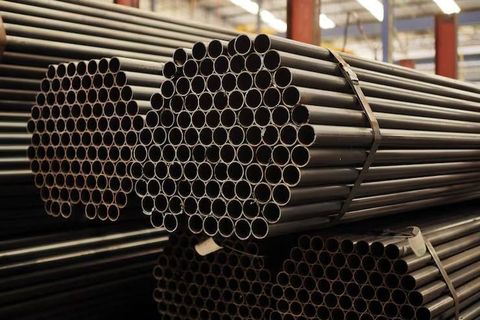
Material processing machines: Equipment used to cut, grind, melt, mix, or shape raw materials.
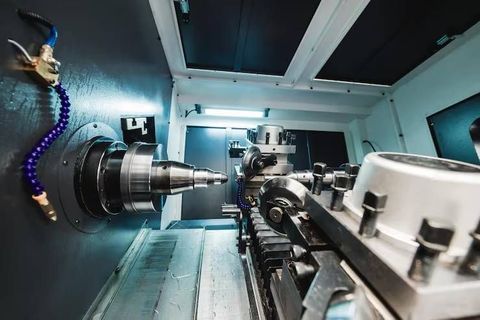
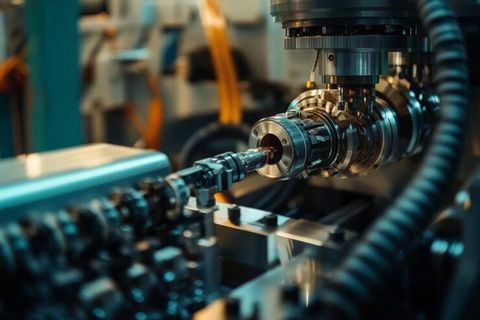
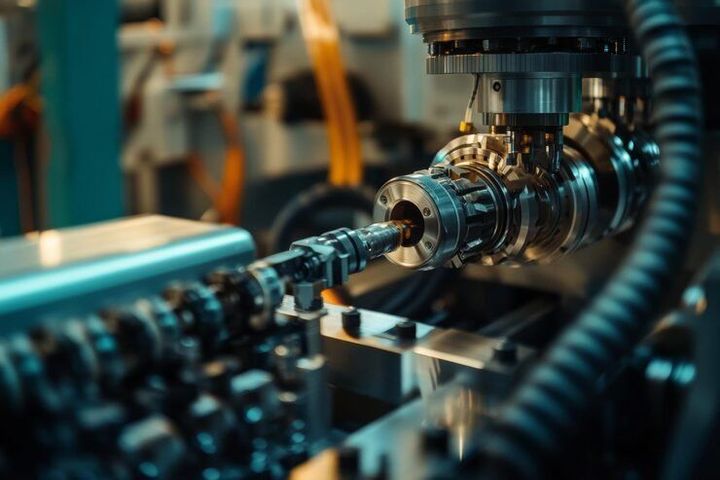
Manufacturing machinery: Machines such as CNC systems, presses, lathes, and milling machines that form or modify components.
Assembly equipment: Systems that connect individual parts using fastening, welding, bonding, or robotic handling.
Material handling equipment: Conveyors, forklifts, hoists, and automated guided vehicles that move materials through production areas.
Inspection equipment: Measuring instruments, machine vision systems, and testing devices that check product dimensions and quality.
Packaging machinery: Equipment that fills containers, seals packages, labels products, and prepares goods for distribution.
Each category supports a different stage of production. A factory may use several types together to create a continuous manufacturing process.
Importance
Industrial production equipment plays an important role in producing everyday goods, including vehicles, furniture, appliances, packaging materials, electronics, and building components. Machinery allows manufacturers to perform repetitive tasks, process large quantities of material, and maintain consistent production methods.
Equipment selection also affects workplace safety, product quality, energy consumption, maintenance requirements, and production schedules. An unsuitable machine may create bottlenecks, increase material waste, or struggle to meet the required dimensions and output levels. Understanding equipment capabilities helps manufacturers identify the machinery needed for particular processes.
How Production Equipment Supports Manufacturing
Industrial equipment contributes to manufacturing in several ways. Automated cutting systems can repeat programmed movements, while temperature-controlled equipment helps maintain specific conditions during processes such as molding or heat treatment.
Material handling systems reduce the need to move heavy items manually. Inspection equipment can identify dimensional differences or visible defects before products move to the next stage. These functions are particularly relevant when manufacturing involves multiple operations that must follow a defined sequence.
Factors Affecting Equipment Selection
The suitability of industrial production equipment depends on the production task and the environment in which it operates. Important factors include:
Material compatibility: Whether the machine can process metals, plastics, wood, food ingredients, or other materials.
Production capacity: The quantity of material or number of components that can be processed within a specified period.
Accuracy requirements: The level of dimensional precision or consistency needed for the product.
Operating conditions: Temperature, humidity, dust, vibration, and exposure to chemicals.
Energy requirements: Electrical supply, compressed air, fuel, cooling, or hydraulic power.
Maintenance needs: Inspection intervals, replacement parts, lubrication, and operator training.
Safety features: Guards, emergency stops, interlocks, and protective systems appropriate to the machine.
Manufacturers also consider available floor space, integration with existing production lines, and the skills required to operate the equipment.
Comparing Industrial Machinery Types
The table summarizes common machinery types and their typical industrial uses.
| Equipment type | Main function | Common applications |
|---|---|---|
| CNC machine | Computer-controlled cutting or shaping | Metal parts, molds, precision components |
| Hydraulic press | Applies force to shape or compress materials | Metal forming, molding, component production |
| Industrial robot | Performs programmed movements and tasks | Welding, assembly, material handling |
| Conveyor system | Moves materials between production stages | Warehouses, factories, packaging lines |
| Injection molding machine | Forms parts by injecting material into a mold | Plastic housings, containers, components |
| Industrial mixer | Combines ingredients or materials | Food, chemicals, coatings |
| Packaging machine | Fills, seals, or labels products | Consumer goods, food, pharmaceuticals |
| Inspection system | Measures or examines product characteristics | Electronics, automotive, general manufacturing |
Actual machine capabilities vary by model, configuration, material, and operating conditions. Equipment descriptions should therefore be interpreted alongside the manufacturer's technical documentation.
Recent Updates
Industrial production equipment is increasingly incorporating digital monitoring, connected sensors, robotics, and software-based process control. Across 2024–2026, manufacturers have continued exploring ways to improve equipment visibility, reduce unplanned downtime, monitor energy use, and coordinate production activities. Adoption differs according to industry, factory size, technical requirements, and available investment.
Smart Manufacturing and Industrial Automation
Smart manufacturing uses connected machinery, sensors, industrial networks, and data analysis to monitor production processes. Sensors can record variables such as temperature, vibration, pressure, motor current, and operating speed. This information helps operators identify unusual operating conditions and investigate possible equipment problems.
Programmable logic controllers (PLCs) coordinate machine operations, while supervisory control and data acquisition (SCADA) systems can display process conditions across production facilities. Manufacturing execution systems (MES) help coordinate production orders, track progress, and record manufacturing information.
These technologies do not eliminate the need for human supervision. Data quality, sensor placement, system compatibility, and employee training all influence how effectively digital monitoring works.
Robotics and Artificial Intelligence
Industrial robots are used for welding, painting, assembly, palletizing, and repetitive material handling. Collaborative robots, often called cobots, are designed for certain tasks involving work near people, although a risk assessment and suitable protective measures remain necessary.
Artificial intelligence is also being applied to visual inspection, production scheduling, equipment monitoring, and analysis of machine data. AI-based inspection systems may identify patterns in images, while predictive maintenance models can estimate when equipment requires attention. Their accuracy depends on the available data, operating conditions, and model validation.
Energy Efficiency and Equipment Modernization
Manufacturers are examining energy consumption through efficient motors, variable-frequency drives, improved compressed-air systems, and process optimization. Retrofitting selected equipment with sensors or modern controls can provide operational information without replacing an entire production line.
However, upgrades must account for compatibility, cybersecurity, maintenance support, and production requirements. New technology may introduce additional complexity if operators lack appropriate training or if connected systems are not adequately secured.
Laws or Policies
Industrial production equipment is subject to safety, environmental, electrical, and workplace requirements that depend on the country, industry, and type of machinery. In India, several legal frameworks and technical standards may apply to equipment manufacturers, factory operators, importers, and employers.
Industrial Safety Requirements in India
The Factories Act, 1948, has historically provided a framework for factory health, safety, and welfare requirements, alongside applicable state rules. India's labour-law framework has been undergoing changes, including the Occupational Safety, Health and Working Conditions Code, 2020. The provisions and commencement arrangements applicable to a particular workplace should be checked against current official government information.
Depending on the equipment and facility, relevant safety considerations may include machine guarding, electrical protection, safe lifting arrangements, emergency stops, ventilation, worker training, and maintenance procedures. Requirements can differ for pressure equipment, lifting appliances, hazardous processes, and other specialized machinery.
Standards, Environmental Rules, and Electrical Safety
The Bureau of Indian Standards (BIS) develops Indian Standards covering various products, materials, and industrial equipment. Whether a particular standard or certification requirement is mandatory depends on the applicable regulation, product category, and current government notifications.
Industrial facilities may also need to comply with applicable pollution-control requirements administered by central or state authorities. These can concern emissions, wastewater, hazardous materials, noise, and industrial waste. Electrical installations and machinery must be assessed against the relevant electrical safety requirements and technical standards.
Manufacturers and factory operators should consult current official notifications, applicable state authorities, and qualified safety professionals to determine which requirements apply to a specific installation.
Tools and Resources
Several technical resources help manufacturers understand equipment capabilities, plan production, and manage maintenance. Their usefulness depends on the machinery involved and the level of detail required.
Equipment Planning and Design Tools
Computer-aided design (CAD) software supports the design of components, machine layouts, and production facilities. Computer-aided manufacturing (CAM) software translates selected design information into manufacturing instructions for compatible equipment, including many CNC machines.
Simulation and digital-twin platforms can model equipment behavior or production-line layouts before physical changes are made. These tools may help evaluate material flow, machine capacity, and possible bottlenecks, although their results depend on the accuracy of the model.
Maintenance and Production Monitoring
Computerized maintenance management systems (CMMS) help organize inspections, maintenance schedules, work records, and spare-parts information. Equipment manuals and maintenance logs provide essential details about lubrication, operating limits, replacement components, and safe shutdown procedures.
Production dashboards can display output, downtime, machine utilization, and defect rates. Manufacturers may use these indicators to investigate recurring delays and compare performance across production shifts.
Technical Information Sources
Useful resources include the Bureau of Indian Standards website, the Ministry of Labour and Employment website, the Central Pollution Control Board website, and technical documentation published by equipment manufacturers. These sources provide different types of information, including regulations, standards, environmental guidance, operating instructions, and technical specifications.
Equipment records should identify the machine model, installation details, inspection history, safety controls, and relevant operating procedures. Accurate documentation supports maintenance planning and helps operators understand the limits of each machine.
FAQs
What is industrial production equipment?
Industrial production equipment includes machinery and supporting systems used to process materials, manufacture components, assemble products, inspect quality, and prepare goods for distribution. Examples include CNC machines, industrial robots, presses, conveyors, and packaging systems.
What are the main types of industrial manufacturing machinery?
Common types include material processing machines, metalworking equipment, assembly systems, material handling machinery, inspection devices, and packaging equipment. The required combination depends on the product and manufacturing process.
How does industrial automation equipment work?
Industrial automation equipment uses controllers, sensors, software, and mechanical systems to perform or coordinate production tasks. Some systems operate independently within defined limits, while others require regular operator supervision and adjustment.
What factors affect industrial production equipment selection?
Important factors include material compatibility, production capacity, accuracy, energy requirements, floor space, maintenance needs, worker safety, and integration with existing machinery. Environmental conditions and applicable regulations also influence equipment suitability.
What safety rules apply to industrial machinery in India?
Applicable requirements may cover machine guarding, electrical safety, worker training, maintenance, lifting equipment, and workplace conditions. The relevant legal provisions depend on the facility, equipment type, industry, and current regulatory framework.
Conclusion
Industrial production equipment supports manufacturing through material processing, shaping, assembly, handling, inspection, and packaging. Digital monitoring, robotics, and AI-based analysis are expanding the ways manufacturers operate and maintain machinery. Equipment selection also involves production requirements, energy use, maintenance planning, and worker protection. Applicable Indian laws, standards, and environmental rules depend on the machinery and industrial setting.