Urban Smart Farming Guide: Systems, Growing Techniques, Applications and Essential Features
Urban smart farming is an approach to growing crops in cities using modern growing systems, efficient resource management, and digital technologies. It combines traditional gardening and agriculture with methods such as hydroponics, vertical farming, aquaponics, and automated irrigation. These approaches allow vegetables, herbs, and certain fruits to grow in locations where conventional farmland is limited.
Context
Urban smart farming is an approach to growing crops in cities using modern growing systems, efficient resource management, and digital technologies. It combines traditional gardening and agriculture with methods such as hydroponics, vertical farming, aquaponics, and automated irrigation. These approaches allow vegetables, herbs, and certain fruits to grow in locations where conventional farmland is limited.
Urban agriculture has existed for generations through household gardens, community plots, and rooftop cultivation. Urban smart farming builds on these practices by using sensors, controlled environments, artificial lighting, and data monitoring to manage growing conditions. Its purpose is to make productive use of available urban spaces while managing water, nutrients, energy, and growing time.
Understanding Urban Smart Farming Systems
Urban smart farming systems vary according to available space, climate, budget, and crop requirements. Some use soil and natural sunlight, while others rely on nutrient solutions, indoor lighting, or controlled growing environments.
Common systems include:
Vertical farming: Crops grow in stacked layers, making use of vertical space inside buildings or dedicated growing facilities.
Hydroponics: Plants grow without soil, receiving essential nutrients through a water-based solution.
Aquaponics: Fish cultivation is combined with plant growing in a managed system that circulates water and nutrients.
Rooftop farming: Vegetables, herbs, and other suitable crops grow on structurally appropriate rooftops.
Smart greenhouse farming: Sensors and automated equipment help manage temperature, humidity, ventilation, irrigation, and lighting.
Container farming: Crops grow in adapted containers or modular indoor spaces with controlled environmental conditions.
Each system has different requirements. A soil-based rooftop garden may rely on sunlight and manual watering, while an indoor vertical farm may need pumps, artificial lights, ventilation, and environmental monitoring equipment.
Importance
Urban smart farming matters because cities face challenges involving land availability, food transportation, water management, and changing weather conditions. Growing selected crops within urban areas can bring some food production closer to consumers and create opportunities for households, community groups, educational institutions, and agricultural businesses.
The approach can also support practical learning about plant biology, nutrition, resource use, and environmental management. However, urban farming does not replace conventional agriculture, which remains important for supplying staple crops such as rice, wheat, maize, and other foods that require extensive growing areas.
Benefits and Practical Challenges
Urban smart farming can make productive use of spaces that might otherwise remain underused. Rooftops, balconies, vacant plots, and suitable indoor areas can support cultivation when structural, environmental, and local regulatory requirements are met.
Potential benefits include:
Space efficiency: Vertical systems can grow crops across several levels within a limited footprint.
Water management: Recirculating systems can reduce water loss when properly designed and maintained.
Local production: Shorter distances between growing locations and consumers may reduce some transportation requirements.
Crop monitoring: Sensors can help identify changes in moisture, temperature, and nutrient conditions.
Educational value: Schools and community groups can use growing systems to demonstrate agricultural and environmental principles.
Challenges also need consideration. Indoor systems may require substantial electricity for lighting, pumps, cooling, and ventilation. Equipment maintenance, crop diseases, nutrient imbalances, food safety, and limited growing space can affect productivity. Results depend on crop selection, climate, system design, and the skills of the people managing the farm.
Comparing Urban Smart Farming Methods
| Farming method | Growing approach | Common applications | Main consideration |
|---|---|---|---|
| Vertical farming | Stacked growing layers | Leafy greens and herbs | Lighting and energy use |
| Hydroponics | Nutrient-rich water | Lettuce, herbs, selected vegetables | Water chemistry and nutrients |
| Aquaponics | Fish and plant production | Selected vegetables and herbs | Managing fish and plant health together |
| Rooftop farming | Soil, containers, or raised beds | Herbs and seasonal vegetables | Structural strength and weather exposure |
| Smart greenhouse | Controlled growing environment | Vegetables, seedlings, and herbs | Climate management |
| Container farming | Adapted indoor or modular space | Selected crops throughout the year | Ventilation and equipment requirements |
The suitability of each method depends on local conditions. Leafy vegetables and herbs are common choices for compact systems because many varieties can grow in relatively small spaces, although their needs differ by species and cultivar.
Recent Updates
Urban smart farming has increasingly incorporated automation, connected sensors, artificial intelligence, and resource-efficient growing techniques. Developments across 2024–2026 reflect broader interest in controlled-environment agriculture, improved monitoring, and more precise management of water, nutrients, and energy. Adoption varies according to local infrastructure, technical skills, electricity availability, and investment requirements.
Smart Sensors and Automated Growing
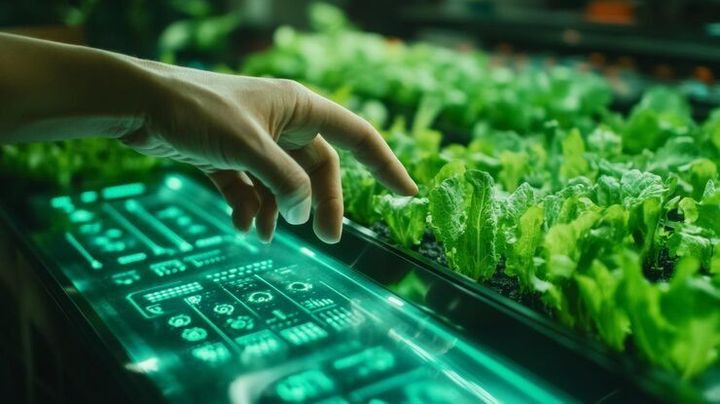
Sensors can monitor temperature, humidity, light intensity, water levels, and growing-medium moisture. In hydroponic systems, pH and electrical conductivity measurements help growers assess the acidity and approximate nutrient concentration of the solution.
Connected controllers can use sensor readings to operate irrigation pumps, ventilation equipment, and lighting schedules. These systems may reduce the need for repeated manual adjustments, but they still require maintenance and human oversight. Incorrect sensor readings or equipment failures can affect several plants if the problem is not identified promptly.
Artificial intelligence is also being explored for plant-image analysis, growth monitoring, disease identification, and environmental control. The accuracy of these applications depends on image quality, training data, crop variety, and growing conditions. Automated predictions should therefore be treated as decision-support information rather than definitive diagnoses.
Energy Efficiency and Circular Resource Use
Energy use is an important consideration for indoor vertical farming. Growers are examining efficient LED lighting, improved insulation, heat management, and automated light schedules to reduce unnecessary electricity consumption.
Other approaches focus on water recirculation, composting suitable plant waste, rainwater collection where permitted, and reuse of certain materials. These practices require attention to hygiene, contamination risks, and local regulations. A system's environmental performance depends on its complete operation, including energy sources, equipment, inputs, and crop output.
Laws or Policies
Urban smart farming is shaped by local land-use rules, building requirements, water regulations, food safety standards, and environmental policies. The applicable rules depend on whether cultivation takes place in a private home, a community garden, a commercial greenhouse, a rooftop, or an indoor facility.
Urban Farming Regulations in India
In India, urban agriculture may be affected by municipal development plans, zoning rules, building permissions, rooftop load limits, fire safety requirements, and local water-management provisions. Before installing heavy containers, water tanks, or large growing structures on a roof, the building's structural suitability and relevant permissions need to be considered.
The Ministry of Agriculture and Farmers Welfare administers agricultural programs, while the Ministry of Housing and Urban Affairs addresses urban development and related policy areas. The relevance of individual programs to an urban farming project depends on current eligibility criteria, implementation arrangements, and location.
Food safety rules are also relevant when crops are grown for distribution or commercial use. The Food Safety and Standards Authority of India establishes food safety requirements under India's food regulatory framework. Applicable registration or licensing obligations depend on the nature and scale of the activity.
Water, Waste, and Food Safety
Urban farms need to manage irrigation water, nutrient solutions, plant waste, and any other materials used in cultivation. Water intended for crop production should be suitable for the intended use, particularly when edible plant parts may contact the water. Reused water and aquaponic systems require careful management to prevent contamination.
The use of pesticides and other agricultural inputs is subject to relevant Indian laws and product-specific requirements. Growers should follow applicable instructions and food safety practices rather than assuming that an indoor or soil-free system is automatically free from contamination risks.
Tools and Resources
Urban smart farming uses a combination of physical equipment, digital monitoring tools, planning templates, and agricultural information resources. The appropriate tools depend on the chosen growing method and the scale of cultivation.
Monitoring and Growing Equipment
Useful equipment may include temperature and humidity sensors, pH meters, electrical conductivity meters, moisture sensors, timers, water pumps, and automated irrigation controllers. Indoor systems may also need LED grow lights, ventilation fans, and environmental controls.
A basic monitoring record can include crop variety, planting date, water changes, nutrient readings, temperature, light schedule, observed growth, and signs of pests or disease. Keeping consistent records helps growers identify patterns and understand how environmental changes affect plant development.
Digital Resources and Planning Tools
Several resources can support research and farm planning:
Indian Council of Agricultural Research (ICAR): Agricultural research and technical information relevant to crop production and farming practices.
Indian Institute of Horticultural Research (IIHR): Information on horticultural crops and cultivation methods.
Food Safety and Standards Authority of India (FSSAI): Food safety guidance and regulatory information.
Weather applications: Local temperature, rainfall, humidity, and forecast information for outdoor and rooftop growing.
Spreadsheets: Records for seed purchases, water use, electricity consumption, crop growth, and harvest quantities.
Planning tools can also help estimate growing area, planting density, irrigation needs, and expected electricity consumption. Such estimates are only as reliable as the assumptions and measurements used, and actual results may vary with weather, equipment, and crop performance.
FAQs
What is urban smart farming?
Urban smart farming is the cultivation of crops in cities using methods such as vertical farming, hydroponics, automated irrigation, and sensor-based monitoring. It combines urban agriculture with technologies that help manage growing conditions.
Which urban smart farming systems are suitable for small spaces?
Balcony containers, compact hydroponic units, vertical planters, and suitable rooftop gardens can work in limited spaces. The choice depends on sunlight, structural capacity, water access, ventilation, and the crops being grown.
How does hydroponic urban farming work?
Hydroponic farming grows plants without soil by delivering essential nutrients through water. Roots may be suspended in the nutrient solution or supported by materials such as coco coir or expanded clay, depending on the system design.
Is vertical farming environmentally sustainable?
Vertical farming can use space efficiently and may reduce water use through recirculation. However, electricity consumption, equipment production, nutrient inputs, and cooling requirements affect its overall environmental impact.
What tools are needed for urban smart farming?
Common tools include growing containers, irrigation equipment, suitable lighting, pH meters, moisture sensors, and temperature monitors. More advanced systems may use automated controllers and connected monitoring platforms.
Conclusion
Urban smart farming combines urban agriculture with growing systems and technologies that help manage limited space and agricultural resources. Methods such as vertical farming, hydroponics, aquaponics, and smart greenhouses suit different crops and environments. Automation and sensor-based monitoring can improve control, although energy use, maintenance, food safety, and local regulations remain important considerations. Understanding these factors provides a foundation for evaluating urban farming systems and their practical applications.