Industrial Conveyor Belts Guide: Designs, Working Principles, Components and Industrial Uses
Industrial conveyor belts are mechanical systems used to move materials, products, and components from one location to another. An Industrial Conveyor Belts Guide explains their designs, working principles, major components, and industrial uses. These systems developed alongside industrial manufacturing and material-handling operations, where moving heavy or bulky items manually could require substantial time and physical effort.
Context
Industrial conveyor belts are mechanical systems used to move materials, products, and components from one location to another. An Industrial Conveyor Belts Guide explains their designs, working principles, major components, and industrial uses. These systems developed alongside industrial manufacturing and material-handling operations, where moving heavy or bulky items manually could require substantial time and physical effort.
Modern conveyor systems are used in factories, warehouses, mines, food-processing facilities, airports, and distribution centers. They can transport materials over short distances within a production line or across larger industrial areas. Depending on the application, a conveyor belt may carry packaged goods, raw materials, machine parts, agricultural products, or bulk materials such as coal and stone.
Understanding Industrial Conveyor Belt Designs
Industrial conveyor belts are designed according to the type of material being transported, operating conditions, required capacity, and available space. Belt material, width, surface texture, operating speed, and load capacity influence how a system performs.
Common industrial conveyor belt designs include:
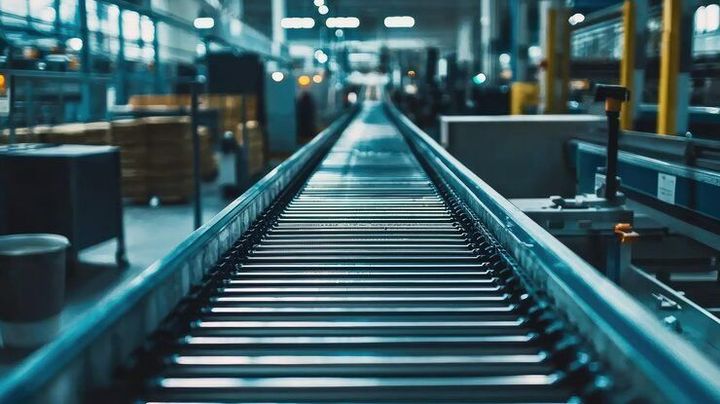
Flat belt conveyors: Use a level belt to transport boxes, packages, components, and other items with relatively stable bases.
Inclined belt conveyors: Move materials between different elevations, often using textured surfaces or cleats to reduce sliding.
Modular belt conveyors: Use connected plastic modules that form a continuous conveying surface, making them suitable for certain processing and packaging environments.
Roller-supported belt conveyors: Use rollers beneath the belt to support loads and reduce resistance during movement.
Cleated belt conveyors: Feature raised sections that help retain materials when transporting products along an incline.
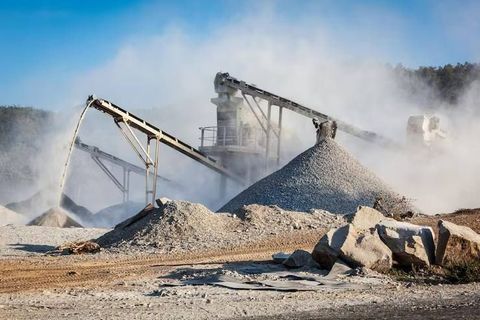
Heavy-duty belt conveyors: Carry substantial loads in applications such as mining, quarrying, and bulk-material handling.
Each design has particular operating requirements. A belt intended for small packaged products may not be appropriate for sharp rocks, hot materials, corrosive substances, or heavy industrial loads.
Importance
Industrial conveyor belts play an important role in modern material handling because they support the continuous movement of items between different stages of a process. Manufacturing plants use them to connect production equipment, while warehouses use them to move packages between receiving, sorting, storage, and dispatch areas.
The systems can also reduce repetitive manual handling and help maintain a consistent flow of materials. However, their performance depends on correct design, suitable installation, regular inspection, and coordination with other equipment. Poorly selected belts or inadequate maintenance can contribute to material spills, production interruptions, equipment damage, and workplace hazards.
Major Industrial Applications
Industrial conveyor belts serve different purposes across industries.
Manufacturing: Transport machine components, workpieces, and assembled products between production stages.
Mining and quarrying: Move extracted materials, crushed stone, sand, and minerals.
Warehousing and logistics: Carry cartons, parcels, and containers through sorting and distribution processes.
Food processing: Move ingredients and packaged products using belts selected for the relevant hygiene and temperature requirements.
Agriculture: Handle grain, seeds, harvested crops, and other agricultural materials.
Construction: Transport cement-related materials, aggregates, and other bulk substances.
Airports: Move passenger baggage through check-in, sorting, and collection systems.
The specific belt design depends on the material's weight, dimensions, moisture content, temperature, and surface characteristics. Operating speed and the required throughput also influence system selection.
Comparing Common Conveyor Belt Materials
Belt materials differ in strength, flexibility, resistance to environmental conditions, and suitability for particular products.
| Belt material | Common characteristics | Typical applications |
|---|---|---|
| Rubber | Flexible and available in durable heavy-duty constructions | Mining, aggregates, bulk materials |
| PVC | Suitable for many general material-handling tasks | Packaging, warehouses, light manufacturing |
| Polyurethane (PU) | Used where particular wear and hygiene characteristics are required | Food processing, packaging |
| Metal mesh | Allows airflow, drainage, or heat transfer through openings | Certain food-processing and thermal processes |
| Modular plastic | Consists of connected sections that can be configured for specific layouts | Packaging, processing, production lines |
| Fabric-reinforced belt | Combines flexible reinforcement with a protective outer layer | General industrial conveying |
Material names alone do not establish suitability. The belt's complete construction, temperature limits, chemical compatibility, food-contact requirements, and load rating must be considered for the intended environment.
Main Conveyor Belt Components
A typical industrial conveyor belt system includes several interconnected components. Their arrangement varies according to conveyor length, load, operating conditions, and design.
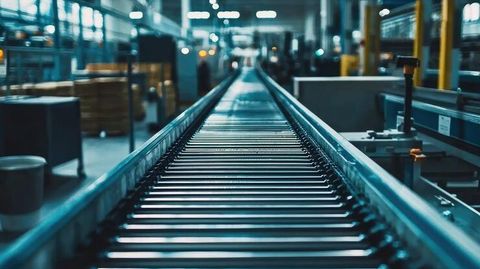
The belt forms the moving surface that carries the material. The drive pulley transfers motion from the drive system to the belt, while the tail pulley supports the return path at the opposite end. Idler rollers support the belt and help maintain its intended shape.
The motor and gearbox provide the mechanical power needed to move the belt at the required speed. A conveyor frame supports the equipment, and belt tensioning mechanisms help maintain suitable tension. Some systems also use tracking devices, scrapers, sensors, emergency stops, and protective guards.
Recent Updates
Industrial conveyor technology continues to develop through automation, condition monitoring, energy management, and improved belt materials. Across 2024–2026, these developments reflect wider industrial interest in equipment reliability, production visibility, worker safety, and reduced operational interruptions. Adoption varies according to the industry, system size, operating environment, and available infrastructure.
Smart Monitoring and Industrial Automation
Some modern conveyor installations use sensors to monitor belt speed, temperature, vibration, alignment, motor load, and other operating conditions. The information can be displayed through industrial control systems, allowing operators to identify unusual changes and investigate potential faults.
Predictive maintenance methods use equipment data and historical operating information to estimate when maintenance may be needed. These systems can support maintenance planning, but their accuracy depends on sensor quality, suitable analysis, and the conditions under which the conveyor operates. They do not eliminate the need for physical inspections.
Energy Efficiency and Material Improvements
Energy management is another area of development in conveyor engineering. Variable-frequency drives can adjust motor speed to match operating requirements, while suitable belt construction, pulley alignment, and roller condition can influence resistance and power consumption.
Manufacturers also develop belt compounds and reinforcement structures for particular applications, including abrasion resistance, oil exposure, temperature variation, and demanding bulk-material handling. In some settings, modular designs and improved monitoring systems can help identify worn components before a failure interrupts production.
These technologies do not produce identical results in every installation. Energy use and reliability depend on factors such as conveyor length, loading patterns, operating hours, maintenance practices, and system design.
Laws or Policies
Industrial conveyor belts are subject to workplace safety requirements, machinery standards, and environmental rules applicable to the country and industry in which they operate. Regulations may address moving machinery, guarding, emergency stopping, electrical safety, maintenance, worker training, and the handling of particular materials.
Industrial Conveyor Safety in India
In India, applicable workplace requirements depend on the type of establishment, its location, the activities performed, and the legislation and rules in force. Relevant frameworks can include occupational safety legislation, state-level factory rules where applicable, electrical safety requirements, and standards relating to machinery design and operation.
The Occupational Safety, Health and Working Conditions Code, 2020, forms part of India's occupational safety and health legislative framework. Its applicability must be considered alongside commencement notifications, implementing rules, and other relevant legal provisions in force at the time. Industrial operators should not assume that a single standard covers every conveyor installation.
Machine Guarding and Safe Operation
Conveyor systems can present hazards involving entanglement, crushing, falling materials, unexpected movement, and access to moving pulleys or rollers. Appropriate protective measures may include guards, emergency-stop devices, safe access routes, warning signs, and documented operating procedures.
Maintenance work requires particular attention because equipment may start unexpectedly or retain stored mechanical energy. Isolation procedures and lockout arrangements should follow the applicable safety requirements and the equipment manufacturer's instructions.
Food-processing conveyors may also be subject to relevant food-safety and hygiene requirements. Mining, construction, and other specialized environments can involve additional rules. The exact obligations depend on the location, material handled, and operating conditions.
Tools and Resources
Technical resources help engineers, maintenance teams, and facility operators understand conveyor performance and plan equipment requirements. The appropriate resource depends on whether the task involves selecting a belt, designing a system, diagnosing a fault, or checking regulatory requirements.
Conveyor Design and Calculation Tools
Conveyor design calculations can help estimate belt speed, material throughput, motor power, tension, and loading requirements. For a simple belt conveyor, approximate material throughput may be estimated using the material's cross-sectional area on the belt, belt speed, and bulk density.
However, actual capacity depends on factors such as material distribution, belt inclination, loading conditions, and the geometry of the conveyor. Engineering calculations should account for the full operating conditions rather than relying on a single formula.
Computer-aided design (CAD) software can help create conveyor layouts, examine clearances, and coordinate equipment with existing production lines. Industrial automation software can support monitoring and control where the conveyor is integrated with a larger manufacturing system.
Technical Standards and Maintenance Records
Organizations such as the International Organization for Standardization (ISO) and relevant national standards bodies publish standards relating to machinery, safety, and conveyor equipment. The Conveyor Equipment Manufacturers Association (CEMA) also publishes technical material relevant to conveyor engineering and bulk-material handling.
Maintenance records can track belt inspections, splice condition, pulley alignment, roller wear, motor temperature, and repair history. A structured inspection log helps teams identify recurring problems and document maintenance activities.
FAQs
What are industrial conveyor belts used for?
Industrial conveyor belts move materials and products through manufacturing, mining, warehousing, agriculture, food processing, and other industrial operations. Their purpose is to provide controlled material movement between work areas or production stages.
What are the main types of industrial conveyor belts?
Common types include flat belt conveyors, inclined conveyors, modular plastic belts, cleated belts, and heavy-duty rubber conveyors. The suitable design depends on material properties, load, operating environment, and conveyor layout.
How do industrial conveyor belts work?
A motor and drive mechanism rotate a pulley, causing the belt to circulate around the conveyor structure. Supporting rollers carry the belt and its load, while tensioning and tracking components help maintain correct operation.
Which materials are used in industrial conveyor belts?
Common materials include rubber, PVC, polyurethane, metal mesh, and modular plastic. The selection depends on load requirements, abrasion, temperature, chemical exposure, hygiene, and the type of material being transported.
How are industrial conveyor belts maintained?
Maintenance typically involves checking belt alignment, tension, surface wear, joints, pulleys, rollers, guards, and drive components. Inspection frequency and maintenance procedures depend on the manufacturer's guidance, operating conditions, and applicable safety requirements.
Conclusion
Industrial conveyor belts support material movement across manufacturing, mining, logistics, agriculture, and processing operations. Their designs, materials, and components vary according to the load, environment, and required production capacity. Automation, monitoring, and energy-management technologies are influencing how conveyor systems are operated and maintained. Suitable engineering, regular inspection, and compliance with applicable safety requirements remain important aspects of reliable conveyor operation.