Mining Dump Trucks Guide: Designs, Load Capacities, Engine Types and Operating Principles
Mining dump trucks are heavy-duty vehicles designed to transport large quantities of rock, soil, ore, coal, and other materials within mining operations. A mining dump trucks guide explains their designs, load capacities, engine types, and operating principles, helping readers understand how these machines support surface mining and related earthmoving activities.
Context
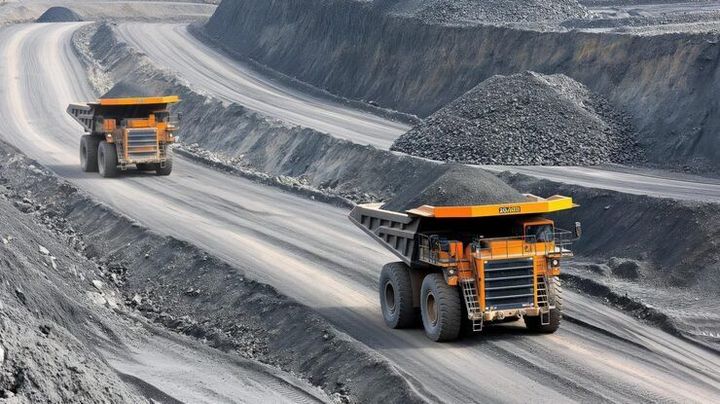
Mining dump trucks are heavy-duty vehicles designed to transport large quantities of rock, soil, ore, coal, and other materials within mining operations. A mining dump trucks guide explains their designs, load capacities, engine types, and operating principles, helping readers understand how these machines support surface mining and related earthmoving activities. Unlike ordinary road dump trucks, many mining trucks are built to operate on rugged haul roads, steep gradients, and uneven ground under demanding working conditions.
The development of mining dump trucks followed the expansion of large-scale mining and the need to move increasing volumes of material between excavation areas, loading points, and processing facilities. Early hauling methods relied on manual labor, animal-drawn vehicles, and smaller mechanical equipment. As mines grew, larger engines, stronger frames, improved braking systems, and specialized hauling designs made it possible to move heavier loads over repeated operating cycles.
Main Mining Dump Truck Designs
Mining dump trucks come in several designs, depending on the terrain, material, haul distance, and operating environment.
Rigid-frame haul trucks: These have a fixed chassis and large wheels. They are commonly used in large open-pit mines with established haul roads.
Articulated dump trucks: These use a joint between the front and rear sections, allowing the vehicle to turn and travel across uneven or muddy ground.
Underground mining trucks: These are designed for confined tunnels, with dimensions and turning arrangements suited to underground access routes.
Electric-drive haul trucks: These use an electric traction system to drive the wheels, often with electricity generated onboard by an engine-generator arrangement.
Battery-electric mining trucks: These use rechargeable batteries for propulsion, although availability and practical suitability vary by vehicle size and mine infrastructure.
Each design involves trade-offs. A large rigid truck can carry substantial loads on suitable roads, while an articulated truck may handle rougher terrain and tighter routes more effectively.
Main Components and Operating Principles
A mining dump truck combines structural, mechanical, hydraulic, and electrical systems. Its frame supports the engine or power source, cab, suspension, axles, wheels, and load body. The load body is shaped to hold material and discharge it when raised.
The basic operating cycle involves traveling to a loading point, receiving material from an excavator or loading machine, transporting the load, and tipping it at a designated location. The truck then returns for another cycle. Cycle time depends on loading speed, haul distance, road conditions, traffic, dumping arrangements, and vehicle performance.
Importance
Mining dump trucks are important because the movement of extracted material is a major part of surface mining and quarry operations. They transport ore to processing areas and move waste rock or overburden away from excavation zones. Their capacity and operating patterns influence mine planning, road design, equipment coordination, and material handling.
These vehicles also affect fuel use, emissions, tire demand, road maintenance, and worker safety. A truck that is poorly matched to the loading equipment or haul route may create delays, increase wear, or complicate traffic management. Understanding load limits and operating requirements is therefore relevant to mine operators, equipment planners, maintenance teams, and students studying industrial machinery.
Understanding Load Capacity
Mining dump truck load capacity is generally expressed in metric tonnes or short tons. The rated payload indicates how much material the truck is designed to carry under specified conditions. It is different from the truck's total operating weight, which includes the vehicle itself, fuel, equipment, and payload.
Actual material volume depends on density. For example, a cubic metre of loose soil weighs less than a cubic metre of many dense rocks, so a truck body that appears only partly full can still approach its payload limit. Operators must consider both body volume and weight restrictions.
Typical Mining Truck Categories
The following ranges are illustrative categories rather than specifications for every model. Manufacturer ratings, local operating conditions, and vehicle configurations differ.
| Truck category | Approximate payload range | Common application |
|---|---|---|
| Small articulated dump truck | 20–40 tonnes | Smaller mines and uneven terrain |
| Medium rigid haul truck | 40–100 tonnes | Quarries and medium-scale mining |
| Large rigid haul truck | 100–250 tonnes | Large surface mines |
| Ultra-class haul truck | 250 tonnes and above | High-volume open-pit operations |
| Underground mining truck | Varies by design | Confined underground haulage |
Payload alone does not determine productivity. The loading tool, road layout, travel speed, unloading area, maintenance condition, and time spent waiting all affect how much material a truck can move during a shift.
Engine Types and Power Systems
Mining dump trucks use different power systems to match their size and operating conditions.
Diesel engines: Common in conventional mining trucks because they provide high power and can operate for long periods when fuel and maintenance facilities are available.
Diesel-electric systems: A diesel engine drives a generator, which supplies electricity to traction motors. This arrangement can provide controlled wheel torque for heavy hauling.
Battery-electric systems: Rechargeable batteries supply electrical energy to the traction system. Their operation depends on battery capacity, charging arrangements, temperature, and the work cycle.
Hybrid systems: These combine more than one energy source or energy-storage method. Their configuration and capabilities vary by design.
Power ratings are commonly expressed in kilowatts (kW) or horsepower (hp). Engine power is only one part of performance: torque, transmission design, traction, braking capacity, cooling, and the gradient of the haul road also influence how a loaded truck operates.
Recent Updates
Mining truck technology has continued to develop through automation, electric propulsion, digital monitoring, and improved energy management. During 2024–2026, the broader industry trend has been toward more connected equipment, detailed operational data, and efforts to reduce fuel consumption and exposure to hazardous working conditions. Adoption varies by mine size, geography, infrastructure, and the economics of each operation.
Automation and Digital Monitoring
Some mining operations use autonomous or remotely supervised haul trucks. These vehicles combine sensors, positioning technology, communication networks, onboard computers, and control systems to navigate designated routes and coordinate with other equipment. Deployment generally requires carefully mapped roads, traffic controls, trained personnel, and procedures for handling unexpected conditions.
Fleet management software can record payload, location, fuel use, engine status, idle time, and maintenance alerts. These records help operators study truck utilization and identify recurring delays. Data quality, connectivity, and integration with existing mine systems influence the usefulness of such tools.
Electrification and Emissions Management
Battery-electric and other electrified mining truck designs are receiving attention as mining companies examine energy use and emissions. However, replacing diesel equipment involves more than changing the vehicle. Charging or power infrastructure, grid capacity, battery performance, maintenance arrangements, and operating schedules all affect feasibility.
Manufacturers and mine operators are also examining engine efficiency, regenerative energy systems where applicable, tire performance, and improved haul-road management. No single technology suits every site, and performance should be assessed against the mine's actual operating conditions.
Laws or Policies
Mining dump truck operations are shaped by occupational safety requirements, mining regulations, environmental rules, vehicle standards, and site-specific procedures. The precise requirements depend on the country, type of mine, and whether the vehicle operates on public roads or within a restricted mining area.
Mining Safety Rules in India
In India, mines are subject to applicable provisions of the Mines Act, 1952, the Mines Rules, 1955, and the Mines Regulations, 1961, alongside other relevant legislation and amendments. The Directorate General of Mines Safety (DGMS) oversees mine-safety matters and issues applicable guidance and regulatory requirements.
Requirements can cover equipment inspection, safe working procedures, operator competence, traffic management, maintenance, and precautions around moving machinery. The rules applicable to a specific operation depend on the type of mine and the provisions currently in force.
Environmental and Operating Requirements
Mining activities may be subject to environmental clearances, pollution-control requirements, and permissions applicable to the site. Diesel-powered trucks produce exhaust emissions, while vehicle movement can contribute to dust and noise. Mines may manage these effects through road watering, speed controls, equipment maintenance, monitoring, and other site-specific measures.
Haul trucks used on public roads may also need to comply with relevant motor vehicle requirements. Large mining trucks designed for off-highway use are not automatically suitable for ordinary roads. Operators must follow applicable site rules, load limits, traffic procedures, and manufacturer instructions.
Tools and Resources
Technical resources help readers understand mining dump truck specifications, compare vehicle designs, and examine operational performance. Information should be interpreted in the context of the vehicle model and the conditions in which it operates.
Specifications and Payload Calculators
Manufacturer specification sheets commonly list payload, operating weight, engine power, body capacity, dimensions, tire configuration, braking arrangements, and turning radius. Comparing these details helps explain differences between truck classes.
A basic payload calculation uses material density and the volume loaded:
Material weight = Material volume × Material density
For example, 20 cubic metres of material with a bulk density of 1.8 tonnes per cubic metre would weigh approximately 36 tonnes. This is a simplified calculation; moisture, compaction, loading variation, and the truck's rated payload must also be considered.
Equipment and Safety Resources
Useful resources include:
Manufacturer technical documents: Specifications, operating manuals, maintenance intervals, and safety instructions.
DGMS publications: Indian mining safety regulations, circulars, and guidance.
Mine planning software: Tools for modeling haul roads, truck cycles, gradients, and fleet requirements.
Fleet monitoring systems: Platforms that track location, utilization, payload, and equipment condition.
Environmental monitoring tools: Instruments and systems for measuring dust, emissions, and noise where required.
These resources provide different types of information. Manufacturer documents explain equipment-specific limits, while regulatory publications describe the legal or safety requirements that may apply to mining operations.
FAQs
What are mining dump trucks used for?
Mining dump trucks transport ore, waste rock, soil, and other materials between excavation areas, stockpiles, dumping locations, and processing facilities. Their design depends on the mine layout and operating conditions.
What is the load capacity of a mining dump truck?
Mining dump truck payloads range from tens of tonnes for smaller vehicles to several hundred tonnes for ultra-class haul trucks. The rated capacity depends on the model, and actual loading must remain within specified limits.
Which engine types are used in mining dump trucks?
Common systems include diesel engines, diesel-electric drives, battery-electric propulsion, and hybrid configurations. The suitable system depends on power requirements, haul routes, energy infrastructure, and operating conditions.
How do mining dump trucks operate?
A truck receives material from loading equipment, transports it along a designated haul route, and raises its body to discharge the load. It then returns to the loading area for another cycle.
What safety rules apply to mining dump trucks in India?
Applicable requirements may include Indian mining legislation, DGMS regulations and guidance, equipment inspection procedures, traffic controls, and operator competency rules. The precise obligations depend on the mine and the regulations currently in force.
Conclusion
Mining dump trucks are specialized vehicles that support the movement of material in surface and underground mining operations. Their designs, payload capacities, and engine systems vary according to terrain, haul distance, energy requirements, and site conditions. Automation, digital monitoring, and electrification are influencing equipment development, although adoption differs between operations. Understanding specifications, operating principles, and applicable safety requirements provides a foundation for evaluating these vehicles.

You May Also Like