Turret Milling Machines Guide: Working Principles, Designs, Functions and Industrial Uses
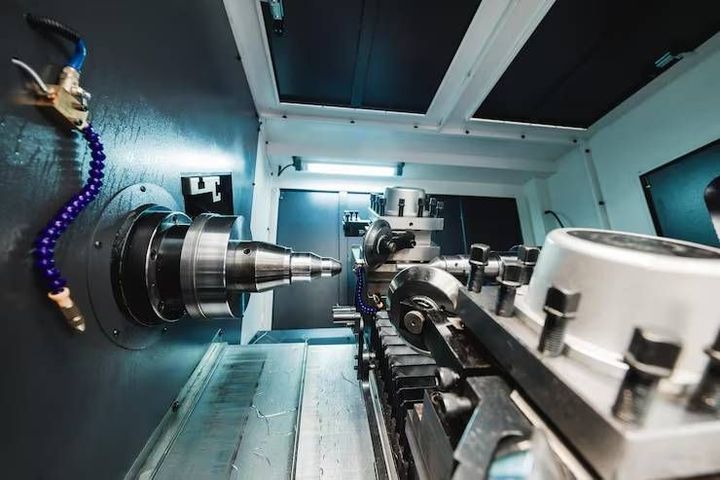
Turret milling machines are machine tools used to cut, shape, drill, and finish metal components. They are a type of vertical milling machine in which a spindle head is mounted on a turret assembly, allowing the head to be adjusted to different positions. This arrangement makes turret milling machines useful for manufacturing parts that require several machining operations without repeatedly repositioning the entire workpiece.
Context
Turret milling machines are machine tools used to cut, shape, drill, and finish metal components. They are a type of vertical milling machine in which a spindle head is mounted on a turret assembly, allowing the head to be adjusted to different positions. This arrangement makes turret milling machines useful for manufacturing parts that require several machining operations without repeatedly repositioning the entire workpiece.
Milling technology developed alongside industrial manufacturing, as factories needed reliable methods for producing components with accurate dimensions and consistent shapes. Turret milling machines became widely used in machine shops, maintenance workshops, toolrooms, and small-scale manufacturing environments because their adjustable head and movable worktable support a range of machining tasks.
What Is a Turret Milling Machine?
A turret milling machine removes material from a workpiece using a rotating cutting tool. The workpiece is secured to a table, while the cutter rotates at a selected speed and moves across the material to create the required shape. The operator controls the movement of the table, spindle head, and cutting tool according to the operation being performed.
Unlike some milling machines with a fixed spindle head, a turret milling machine allows the head to swivel or tilt within its designed range. This adjustment supports machining at different angles and helps operators perform drilling, slotting, facing, and other operations on a single machine.
Main Components and Their Functions
The main components work together to support cutting accuracy and controlled movement.
Base: Supports the machine and helps absorb vibration during machining.
Column: Provides the main vertical structure and supports the moving assemblies.
Turret: Allows the milling head to be repositioned or angled within the machine's design limits.
Spindle: Holds and rotates the cutting tool, usually through a suitable tool holder.
Quill: Allows controlled vertical movement of the spindle in machines equipped with this feature.
Worktable: Holds the workpiece or fixture and moves it along the required axes.
Saddle and knee: Support and position the table, depending on the machine's configuration.
Feed controls: Regulate table or spindle movement during machining.
Control panel: Provides operating controls on machines fitted with powered feeds or digital readouts.
The exact arrangement differs between manufacturers and machine models. Understanding these components helps operators identify which adjustments are available for a particular task.
Importance
Turret milling machines remain relevant because many manufacturing tasks involve small batches, customized parts, repair work, and components that require several machining operations. Their adjustable head and manually controlled movements allow operators to work on different shapes without needing a separate machine for every operation.
These machines are used by machinists, maintenance technicians, engineering workshops, educational institutions, and manufacturers of metal components. They can support work involving steel, aluminum, brass, and other materials when the machine, cutter, and cutting parameters are appropriate.
Common Industrial Applications
Turret milling machines are used across several areas of manufacturing and maintenance.
Component manufacturing: Producing brackets, plates, housings, and machine parts with flat surfaces or slots.
Toolroom operations: Preparing fixtures, jigs, molds, and specialized tools.
Equipment repair: Reworking damaged or worn components when their dimensions and condition permit machining.
Prototype development: Producing sample components before a design moves into larger-scale production.
Training and education: Teaching milling operations, workholding, measurement, and basic machining principles.
Small-batch production: Making limited quantities of components that may require different dimensions or machining features.
The suitability of a turret milling machine depends on the component's size, material, tolerance requirements, and production volume. Highly complex parts or large production runs may require CNC machining centers or specialized production equipment.
Advantages and Practical Limitations
The machine's adjustable head supports different cutting orientations, while its worktable can position a component for a variety of operations. Manual control also allows operators to make adjustments during setup and machining.
However, manual turret milling requires skill, careful measurement, and consistent operating practices. Production speed and repeatability may be limited when compared with automated CNC equipment, particularly for intricate components or large batches. Machine rigidity, spindle power, travel limits, and tooling compatibility also affect the range of possible operations.
Recent Updates
Developments in milling technology from 2024 through 2026 have continued to focus on digital measurement, improved machine monitoring, automation, and more consistent machining processes. Turret milling machines themselves remain established equipment, so many changes involve upgrades to measurement systems, accessories, tooling, and workshop practices rather than a completely different machine design.
Digital Readouts and Measurement Technology
Digital readout systems display the position of a machine axis using measurements from installed scales or encoders. When correctly installed and calibrated, these systems help operators position the worktable more precisely and reduce reliance on reading mechanical scales alone.
Some workshops also use electronic measuring tools, tool-setting equipment, and inspection systems to check dimensions during and after machining. These technologies can improve the consistency of manual operations, but they do not eliminate the need for proper setup, calibration, and operator judgment.
Tooling and Process Improvements
Modern cutting tools and tool-holder designs support a wide range of materials and machining conditions. Appropriate carbide cutters, coated tools, and improved geometries can help manage heat, cutting forces, and tool wear when matched to the application.
Manufacturers and workshops also use improved workholding systems, documented setup procedures, and condition-monitoring practices to support reliable operation. Digital manufacturing and CNC integration continue to influence the wider milling industry, although not every development is directly applicable to a conventional turret milling machine.
Laws or Policies
Turret milling machines are subject to workplace safety requirements, equipment standards, and environmental rules applicable to the country and industry in which they are operated. These requirements may cover machine guarding, operator training, electrical safety, maintenance, noise exposure, and the handling of metalworking fluids.
Machinery Safety in India
In India, workplace safety obligations depend on the type of establishment, applicable central and state legislation, and the rules in force for the particular operation. The Occupational Safety, Health and Working Conditions Code, 2020, forms part of India's occupational safety framework, with implementation and applicable provisions depending on the relevant commencement and regulatory arrangements.
Factories and workshops must assess applicable requirements for safe machinery operation, worker protection, and workplace conditions. Businesses should consult the current requirements of the relevant state authorities and other applicable regulators rather than assuming that one rule covers every facility.
Machine Guarding and Operator Protection
Common safety practices include keeping appropriate guards in place, securing the workpiece, selecting suitable cutters, and ensuring that the spindle and tool holder are correctly installed. Loose clothing, jewelry, and unsecured hair can become entangled in rotating machinery, so appropriate workwear and protective procedures are important.
Operators should stop the machine before measuring a workpiece, removing chips by hand, or making adjustments that require access near moving components. Suitable eye protection, safe chip-removal tools, and clearly defined emergency-stop procedures are also important. Gloves should not be worn near rotating spindles or cutters where they could become entangled.
Environmental and Maintenance Considerations
Machining can produce metal chips, cutting-fluid waste, noise, and airborne particles. Workshops should handle these materials according to applicable environmental and occupational safety requirements. Regular inspection of electrical systems, lubrication points, spindle condition, and mechanical components helps identify problems before they affect safe operation.
Tools and Resources
Several technical resources help operators understand turret milling machines, select tooling, plan operations, and check finished components. The appropriate resource depends on the machine model, material, cutter type, and required dimensions.
Machine Manuals and Technical References
The manufacturer's operating manual provides model-specific information about spindle speeds, feed settings, lubrication, travel limits, tool installation, and maintenance. It should be used alongside workplace operating procedures because machine designs and safety features vary.
Engineering handbooks and machining references explain cutting forces, tool geometry, workholding, surface finish, and dimensional measurement. Technical documentation from cutting-tool manufacturers can also help operators understand the intended use of different cutter types.
Milling Calculators and Measurement Tools
Machining calculators can estimate spindle speed and table feed based on cutter diameter, cutting speed, tooth count, and feed per tooth. These values are starting points rather than universal settings, since machine rigidity, material condition, cutter design, and tool overhang can affect the actual operating range.
A commonly used spindle-speed formula is:
Spindle speed (RPM) = (Cutting speed × 1,000) ÷ (π × cutter diameter)
This form uses cutting speed in metres per minute and cutter diameter in millimetres. For example, a cutting speed of 100 metres per minute with a 20-millimetre cutter gives a theoretical spindle speed of approximately 1,592 RPM. The selected machine setting must remain within the cutter manufacturer's limits and the machine's rated operating range.
Other useful tools include:
Digital calipers: Measuring external dimensions, internal dimensions, and step features.
Micrometers: Measuring dimensions where finer resolution is required.
Dial indicators: Checking alignment, runout, and workpiece positioning.
Machining tables: Looking up initial cutting parameters for specific materials and tools.
Inspection checklists: Recording setup checks, tool condition, measurements, and maintenance activities.
Selecting a Turret Milling Machine
Machine selection depends on the intended work rather than spindle power alone. Relevant specifications include table dimensions, longitudinal and cross travel, spindle taper, speed range, quill travel, head adjustment, machine rigidity, and available tooling.
| Selection factor | Why it matters |
|---|---|
| Table size | Determines the workpiece area that can be supported |
| Spindle speed range | Affects compatibility with cutters and materials |
| Spindle taper | Determines suitable tool holders |
| Axis travel | Limits the dimensions and positions that can be machined |
| Machine rigidity | Influences vibration and dimensional consistency |
| Digital readout | Helps monitor axis position |
| Power feed | Reduces manual effort during suitable operations |
| Maintenance access | Affects inspection and routine upkeep |
The specifications should be evaluated together because one feature cannot compensate for every limitation in another part of the machine.
FAQs
What is a turret milling machine used for?
A turret milling machine is used to machine flat surfaces, slots, holes, steps, and angled features in metal components. It is common in machine shops, toolrooms, repair workshops, and small-batch manufacturing.
How does a turret milling machine work?
A rotating cutter removes material from a workpiece secured to the table. The operator positions the workpiece by moving the table and adjusts the spindle head or quill as required by the machining operation.
What is the difference between a turret milling machine and a CNC milling machine?
A conventional turret milling machine commonly relies on manual controls and operator-guided movements. A CNC milling machine uses programmed instructions to control machine movements, supporting automated machining and repeatable production when properly set up.
Which materials can a turret milling machine machine?
Depending on its capacity and tooling, a turret milling machine can process materials such as aluminum, brass, steel, and certain engineering alloys. Cutter selection, spindle speed, feed rate, workholding, and machine rigidity must suit the material.
What safety precautions are important when operating a turret milling machine?
The workpiece and cutter must be secured, guards should remain in place, and suitable eye protection should be used. Operators should keep hands away from rotating parts, stop the machine before making measurements or adjustments near the cutter, and follow the manufacturer's instructions.
Conclusion
Turret milling machines are versatile machine tools used to produce and modify metal components through controlled cutting operations. Their adjustable spindle head, movable worktable, and range of compatible cutters support different machining tasks in manufacturing, repair, and training environments. Digital readouts and modern tooling can improve measurement and process control, although safe operation still depends on proper setup and operator skill. Machine capabilities, maintenance requirements, and applicable workplace regulations determine how the equipment should be used.