PLC Systems Explained: Types, Components, Working Principles, Applications and Benefits
PLC systems, or Programmable Logic Controller systems, are industrial control systems used to operate machines, production lines, and automated equipment. A PLC receives information from connected devices, processes that information according to programmed instructions, and sends commands to equipment such as motors, valves, pumps, and conveyor belts.
Context
PLC systems, or Programmable Logic Controller systems, are industrial control systems used to operate machines, production lines, and automated equipment. A PLC receives information from connected devices, processes that information according to programmed instructions, and sends commands to equipment such as motors, valves, pumps, and conveyor belts. These systems are widely used in manufacturing, packaging, water treatment, building operations, and other industrial environments.
PLC technology developed as an alternative to large relay-based control panels. Traditional relay systems used electrical switches and extensive wiring to control machine operations. Changing their behavior often required physical rewiring, whereas programmable controllers made it possible to modify control logic through software.
Understanding PLC System Components
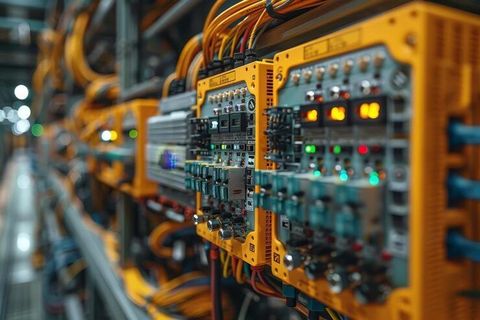
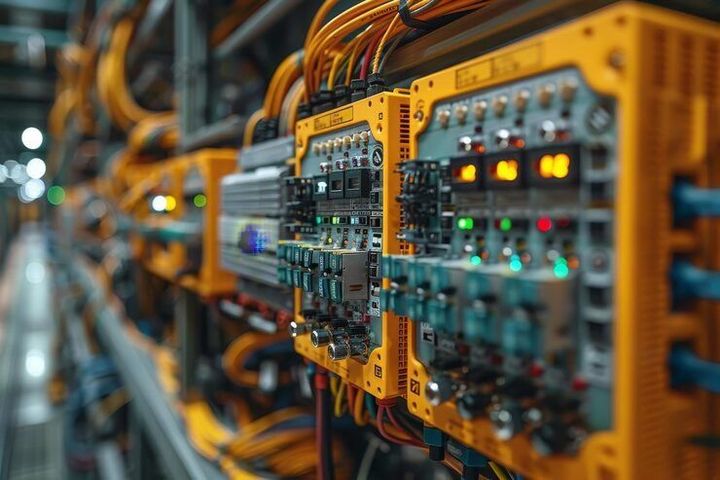
A PLC system contains several connected components that work together to control equipment. The exact arrangement depends on the application, the number of signals, and the operating environment.
The main components include:
Central processing unit (CPU): Executes the control program, processes input information, and manages system operations.
Power supply: Provides the electrical power required by the controller and its modules.
Input modules: Receive signals from sensors, push buttons, switches, and other input devices.
Output modules: Send control signals to equipment such as relays, indicator lights, motors, and valves.
Memory: Stores the control program, configuration information, and relevant operating data.
Communication interfaces: Allow the PLC to exchange information with other controllers, computers, operator panels, and industrial networks.
Programming device: A computer or compatible device used to develop, test, and transfer the control program.
Some PLC systems also include expansion modules, remote input/output units, and specialized communication or motion-control modules. These additions allow a controller to manage more complex equipment and larger installations.
Importance
PLC systems are important because industrial equipment often needs to perform repeated operations in a precise sequence. A packaging machine, for example, may need to detect an item, move it into position, activate a filling mechanism, close a container, and transfer the finished package. A PLC coordinates these actions using input signals, programmed conditions, and output commands.
Without suitable control systems, these operations may require extensive manual supervision or complicated electrical circuits. PLC technology helps organize machine behavior, supports repeatable processes, and makes it easier to identify certain operational faults. However, actual performance depends on correct programming, suitable equipment, maintenance, and the surrounding process design.
Common Types of PLC Systems
PLC systems are available in several configurations. Each type is intended for different control requirements.
Compact PLC: Combines essential processing, power, and input/output functions in a relatively small unit. It is often used for individual machines and smaller automation tasks.
Modular PLC: Uses separate modules that can be selected or expanded according to the application. It is suitable for installations with changing or larger control requirements.
Rack-mounted PLC: Holds multiple modules in a shared rack or chassis. This arrangement is commonly found in larger industrial control systems.
Safety PLC: Provides specialized functions for implementing defined safety-related control tasks. Its use requires appropriate safety design and validation.
Soft PLC: Runs PLC-style control software on an industrial computer or compatible computing platform rather than relying solely on a conventional dedicated controller.
The choice depends on the number of input and output points, processing needs, communication requirements, environmental conditions, and expansion plans.
Working Principles of a PLC
A PLC generally operates through a repeating control cycle. Although details vary by controller and configuration, the process usually follows a recognizable sequence.
First, the controller reads input information from connected devices. A sensor might indicate that a container has reached a filling station, or a switch might indicate that a machine guard is closed.
Next, the CPU executes the programmed logic using the current input values and relevant internal data. The program determines which actions are permitted under the defined conditions. The controller then updates its outputs, sending commands to the connected equipment.
This sequence repeats continuously while the controller is operating. The speed of the cycle depends on the controller, program complexity, communication tasks, and system configuration. Some applications also use event-driven processing, scheduled tasks, or specialized control functions.
PLC Programming Languages
The IEC 61131-3 standard defines programming languages and elements commonly used for programmable controllers. The principal languages include:
Ladder Diagram (LD): Uses graphical symbols resembling electrical relay circuits.
Structured Text (ST): Uses text-based instructions and is useful for calculations, conditions, and complex logic.
Function Block Diagram (FBD): Represents control operations through connected functional blocks.
Sequential Function Chart (SFC): Organizes operations into steps and transitions for sequential processes.
The language selected depends on the task, development environment, maintenance requirements, and the experience of the engineering team.
PLC Input and Output Examples
| Device or signal | PLC role | Example |
|---|---|---|
| Proximity sensor | Input | Detecting a metal part |
| Push button | Input | Starting a permitted machine cycle |
| Temperature sensor | Input | Monitoring a heating process |
| Motor starter | Output | Controlling motor operation |
| Solenoid valve | Output | Directing fluid flow |
| Indicator light | Output | Showing a machine status |
Actual wiring and signal compatibility must match the controller specifications and the connected equipment.
Recent Updates
PLC technology continues to develop alongside industrial automation, connected manufacturing, and digital monitoring. Trends from 2024 through 2026 include wider interest in industrial networking, integration with supervisory systems, improved diagnostic tools, and the use of industrial computing platforms for selected control tasks. The extent of adoption varies across industries and facilities.
Industrial Connectivity and Data Monitoring
Modern PLC installations may communicate through industrial Ethernet and other industrial communication protocols. Depending on the equipment, they can exchange information with supervisory control and data acquisition systems (SCADA), human-machine interfaces (HMIs), manufacturing execution systems, and data collection platforms.
This connectivity can help operators monitor machine status, review alarms, and identify recurring interruptions. It also creates cybersecurity considerations because connected controllers may become exposed to risks originating from poorly protected networks, remote access, or outdated software.
Integration with Data Analytics and Digital Systems
Some manufacturers connect PLC data to analytical tools to examine production patterns, equipment performance, energy use, and maintenance needs. Edge computing can process selected information near the equipment, while centralized platforms can combine data from multiple machines.
Artificial intelligence may support tasks such as analyzing operational data or identifying unusual patterns, but it does not replace the need for validated control logic. Critical machine actions should remain subject to suitable engineering controls, testing, and safety requirements.
Modernization is also a continuing concern. Older PLCs may remain operational for many years, but replacement parts, software compatibility, cybersecurity support, and communication limitations can influence upgrade planning.
Laws or Policies
PLC systems are affected by industrial safety regulations, electrical requirements, machinery rules, cybersecurity policies, and standards applicable to their intended use. Requirements differ by country, industry, machine type, and whether the equipment is installed in a new or existing facility.
Industrial Automation Standards
Several international standards provide guidance for PLC design, programming, and safety-related control systems.
IEC 61131-3 addresses PLC programming languages and related software elements. IEC 61508 provides a general framework for the functional safety of electrical, electronic, and programmable electronic safety-related systems. ISO 13849-1 addresses safety-related parts of machinery control systems.
These standards have different purposes and are not interchangeable. Their legal status depends on the applicable jurisdiction, regulations, contractual requirements, and whether a particular standard has been adopted or referenced.
Electrical Safety and Requirements in India
In India, industrial PLC installations may need to comply with applicable electrical safety requirements, workplace safety rules, machinery requirements, and relevant provisions of the Electricity Act, 2003, and associated regulations. The applicable Central Electricity Authority regulations, state requirements, and sector-specific rules depend on the installation and its use.
Facilities should also consider machine guarding, emergency-stop arrangements, electrical isolation, grounding, and safe maintenance procedures. A PLC alone does not make a machine safe; the complete system must be assessed, including sensors, actuators, protective devices, and operating procedures.
Industrial Cybersecurity
Connected PLC systems require appropriate cybersecurity measures. Common considerations include restricting access, separating industrial networks from general business networks, managing software updates, maintaining backups, and monitoring remote connections.
Standards such as the IEC 62443 series address cybersecurity for industrial automation and control systems. Their application should reflect the risks, operational requirements, and relevant obligations of the facility.
Tools and Resources
Several resources support PLC learning, development, troubleshooting, and system planning. The appropriate tools depend on the controller manufacturer, application, programming language, and level of technical experience.
PLC Programming and Simulation Tools
PLC engineering software is used to create programs, configure modules, monitor variables, and diagnose faults. Examples include Siemens TIA Portal, Rockwell Automation Studio 5000, CODESYS, and Mitsubishi Electric GX Works. Compatibility differs by controller family and software version.
Simulation environments allow users to test selected control logic without operating the physical machine. However, simulated results may not reproduce every electrical, mechanical, timing, or safety condition present in a real installation.
Documentation and Learning Resources
Manufacturer manuals and technical documentation explain wiring, supported communication protocols, module specifications, programming instructions, and diagnostic codes. The official IEC website provides information about relevant international standards, while training materials from controller manufacturers can introduce basic programming concepts.
A PLC project worksheet can record important details such as input and output addresses, signal descriptions, operating sequences, alarm conditions, network connections, and software versions. Keeping this information organized supports maintenance and troubleshooting.
Basic PLC Troubleshooting Checklist
When a PLC-controlled machine does not operate as expected, technicians may review:
Power supply status and controller diagnostic indicators.
Input signals from sensors, switches, and other devices.
Program conditions and active fault messages.
Output status and connected equipment.
Communication links and network settings.
Recent program, wiring, or configuration changes.
Troubleshooting should follow approved safety procedures. Electrical isolation and verification are necessary where required, and only appropriately qualified personnel should work on hazardous equipment.
FAQs
What is a PLC system and how does it work?
A PLC system is an industrial controller that reads input signals, executes programmed logic, and updates outputs to control equipment. It repeats this process according to its configuration and operating conditions.
What are the main types of PLC systems?
Common types include compact, modular, rack-mounted, safety, and soft PLC systems. They differ in physical design, expansion capabilities, processing arrangements, and intended applications.
What are the main components of a PLC system?
The main components are the CPU, power supply, input modules, output modules, memory, communication interfaces, and programming device. Additional modules may support specialized functions.
Where are PLC systems used in industry?
PLC systems are used in manufacturing lines, packaging machines, conveyor systems, water treatment plants, material handling equipment, and building automation. Their specific functions depend on the process being controlled.
Which PLC programming tools are commonly used?
Examples include Siemens TIA Portal, Rockwell Automation Studio 5000, CODESYS, and Mitsubishi Electric GX Works. The correct tool depends on the controller model and supported software environment.
Conclusion
PLC systems control industrial equipment by processing input signals and executing programmed instructions to manage outputs. Different PLC types, programming languages, and communication methods support applications ranging from individual machines to larger automated processes. Industrial standards, electrical safety requirements, and cybersecurity measures are important parts of system design and operation. Understanding these fundamentals provides a useful foundation for learning about modern industrial automation.