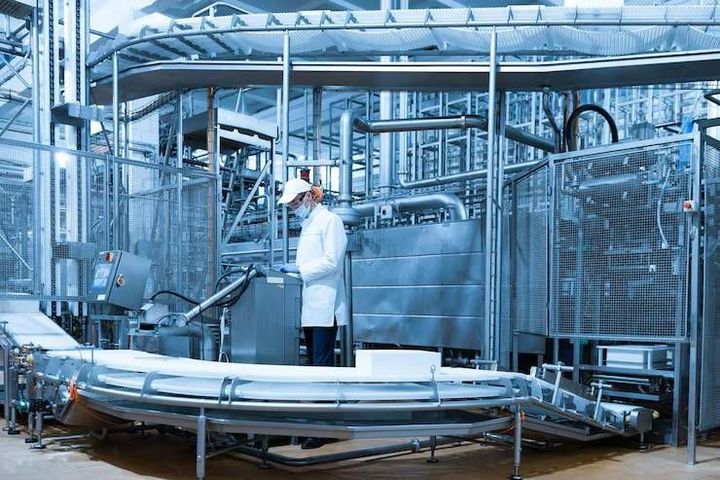
Commercial Ice Manufacturing Systems Guide With Automated Production and Refrigeration Technology
Commercial ice manufacturing systems are industrial setups designed to produce, freeze, store, and distribute ice in large quantities.
These systems use automated production equipment, refrigeration technology, water treatment units, and material-handling equipment to support continuous ice production. They are commonly used in food processing, hospitality, healthcare, fisheries, supermarkets, beverage preparation, and cold-chain operations.
The development of commercial ice manufacturing began with traditional freezing methods that relied on natural ice and basic mechanical refrigeration. As demand increased across different industries, manufacturers developed specialized equipment capable of producing consistent quantities of ice in different shapes and sizes. Modern commercial ice manufacturing systems now combine automated controls, refrigeration circuits, and monitored production processes.
Ice production generally begins with water treatment, followed by freezing, harvesting, collection, and storage. Depending on the application, facilities may produce ice cubes, flakes, nuggets, blocks, or tube-shaped ice. Each variety has different freezing characteristics and applications.
Commercial ice manufacturing systems are designed around production capacity, water quality, refrigeration performance, storage requirements, and operational conditions. Understanding these elements helps explain how modern ice production facilities operate.
Importance
Commercial ice manufacturing plays an important role in industries that require controlled cooling, food preservation, and temperature management. Restaurants, hotels, hospitals, seafood processors, and beverage manufacturers depend on consistent ice availability for their daily activities.
One important application is food preservation. Ice helps maintain lower temperatures during the transportation and temporary storage of seafood, meat, vegetables, and other temperature-sensitive products. It can also support cooling processes in food manufacturing environments.
Another important application involves hospitality and beverage preparation. Hotels, restaurants, catering facilities, and entertainment venues use different ice varieties according to their equipment and operational requirements.
Industrial ice manufacturing also addresses several practical challenges:
Production consistency: Automated equipment helps maintain uniform ice dimensions and production cycles.
Temperature management: Refrigeration systems support controlled freezing and storage conditions.
Production capacity: Industrial equipment can accommodate different output requirements.
Food hygiene: Enclosed production areas and controlled handling help reduce contamination risks.
Operational monitoring: Digital controls help operators identify temperature changes and equipment irregularities.
Storage management: Automated ice collection and storage systems help organize finished production.
The technology also affects equipment manufacturers, food distributors, cold-storage operators, and businesses that depend on reliable cooling processes.
Recent Updates
Commercial ice manufacturing systems are gradually incorporating more automation, energy management, and connected monitoring technologies. Developments across industrial refrigeration and food processing are influencing how modern ice production facilities are designed and operated.
Automated Ice Production Technology
Automated ice manufacturing equipment can coordinate several production stages, including water supply, freezing, ice harvesting, and collection. Programmable logic controllers (PLCs) allow operators to monitor production cycles and adjust operating parameters.
Modern systems may also include automatic cleaning cycles, water-level monitoring, production alarms, and electronic controls. These features help reduce repetitive manual activities and improve process visibility.
Refrigeration Efficiency Improvements
Industrial refrigeration technology continues to develop around energy efficiency, temperature control, and improved equipment performance. Variable-speed compressors, electronic expansion valves, and advanced heat exchangers can help refrigeration systems respond to changing operating conditions.
The selection of refrigerants is also receiving attention. Refrigeration manufacturers are evaluating lower-global-warming-potential refrigerants and natural refrigerant technologies, including ammonia and carbon dioxide, according to application requirements and safety considerations.
Digital Monitoring and Smart Controls
Connected monitoring systems allow operators to observe important production information through digital control panels. Depending on the installation, these systems can track:
Water temperature and supply levels.
Refrigeration pressure and operating conditions.
Ice production cycles.
Storage-bin capacity.
Compressor performance.
Equipment alarms and maintenance indicators.
Remote monitoring can also help identify irregular operating conditions before they interrupt normal production.
Water Management and Sustainable Production
Water management is another important development in commercial ice production. Filtration, sediment removal, controlled water circulation, and improved equipment design can help manage water consumption.
Manufacturers are also examining insulation improvements, heat recovery opportunities, and more efficient refrigeration arrangements. These developments reflect a broader industrial trend toward reducing energy consumption and improving resource management.
Laws or Policies
Commercial ice manufacturing is influenced by food safety requirements, drinking-water standards, industrial refrigeration rules, workplace safety provisions, and environmental regulations. Exact requirements depend on the country, production facility, equipment type, and intended application of the ice.
Food Safety and Water Quality
Ice intended for human consumption or direct contact with food generally needs to be manufactured using potable water. Water treatment and storage arrangements should prevent contamination before the freezing process begins.
Food hygiene frameworks commonly address:
Drinking-water quality and testing.
Cleaning and sanitation of production equipment.
Hygienic storage and transportation.
Protection against physical and chemical contamination.
Documentation of relevant production controls.
The Codex General Principles of Food Hygiene provide an international framework for food safety practices, including requirements concerning water and ice handling.
Refrigeration and Environmental Regulations
Industrial refrigeration installations may be subject to regulations concerning refrigerant selection, equipment pressure, leak prevention, ventilation, and worker protection.
Some jurisdictions also regulate refrigerants according to their ozone-depletion potential and global-warming impact. Facilities using ammonia refrigeration may require additional safety arrangements because ammonia presents toxicity and exposure hazards.
Business and Manufacturing Compliance
Commercial ice manufacturing facilities may need to meet applicable food production registration, factory operation, building safety, wastewater management, and environmental requirements.
Businesses should also maintain appropriate equipment inspection records, sanitation documentation, water-quality reports, and refrigeration maintenance records. The specific licensing and compliance requirements must be checked against the rules applicable to the facility's location.
Tools and Resources
Several technical tools and resources help operators understand, monitor, and manage commercial ice manufacturing systems. Their usefulness depends on production capacity, refrigeration design, and the type of ice being manufactured.
Production Capacity Calculator
An ice production capacity calculator estimates the quantity of ice required for a particular operation. Calculations may consider daily demand, peak consumption, operating hours, storage capacity, and production interruptions.
For example, a hotel and a seafood processing facility may have different daily requirements even when both operate commercial ice production equipment.
Refrigeration Load Calculator
A refrigeration load calculator estimates the cooling capacity required to freeze water and maintain the required operating temperature. Important inputs include water temperature, ambient conditions, ice production volume, equipment insulation, and heat entering the system.
These calculations help engineers assess refrigeration requirements during facility planning.
Water Quality Testing Equipment
Water testing instruments help monitor important characteristics of the water used in ice production. Common measurements include:
pH levels.
Total dissolved solids (TDS).
Water hardness.
Turbidity.
Microbiological quality through appropriate laboratory testing.
Regular monitoring helps identify water-quality changes that may affect ice clarity, equipment performance, and food hygiene.
Industrial Automation Controls
PLCs, temperature sensors, pressure sensors, and digital control panels support automated production monitoring. These tools help operators observe equipment conditions and manage different stages of the freezing process.
Equipment Planning Resources
The following table summarizes important equipment used in commercial ice manufacturing facilities.
| Equipment | Primary Function |
|---|---|
| Water filtration unit | Removes selected impurities from incoming water |
| Ice-making machine | Produces ice through controlled freezing |
| Industrial compressor | Circulates refrigerant through the refrigeration system |
| Condenser | Releases heat from the refrigerant |
| Evaporator | Absorbs heat during the freezing process |
| Ice storage bin | Holds finished ice under controlled conditions |
| Automatic ice conveyor | Transfers ice between production and storage areas |
| PLC control panel | Monitors and coordinates production operations |
| Packaging equipment | Prepares ice for distribution and handling |
FAQs
What Are Commercial Ice Manufacturing Systems?
Commercial ice manufacturing systems are industrial arrangements that produce ice in large quantities using water treatment, freezing equipment, refrigeration technology, and automated handling systems. They support food processing, hospitality, healthcare, and cold-chain applications.
How Does an Automated Ice Manufacturing System Work?
An automated ice manufacturing system supplies treated water to a freezing unit, where refrigeration technology removes heat and forms ice. The equipment then harvests the finished ice and transfers it into a storage or handling system. Electronic controls monitor important production conditions.
What Types of Ice Do Commercial Ice Machines Produce?
Commercial ice machines can produce several varieties, including:
Cube ice for beverages and hospitality.
Flake ice for seafood and food processing.
Nugget ice for beverage preparation.
Block ice for industrial cooling and preservation.
Tube ice for commercial distribution and selected cooling applications.
The appropriate type depends on the intended application and storage requirements.
Which Refrigeration Technology Is Used in Industrial Ice Manufacturing?
Industrial ice manufacturing commonly uses vapor-compression refrigeration systems. These systems contain compressors, condensers, expansion devices, and evaporators. Ammonia, carbon dioxide, and other refrigerants may be used depending on system design, capacity, safety requirements, and applicable environmental regulations.
What Factors Affect Commercial Ice Production Capacity?
Commercial ice production capacity depends on several factors, including incoming water temperature, ambient temperature, refrigeration capacity, machine design, operating conditions, and maintenance. Storage capacity and daily demand also influence the overall production arrangement.
Conclusion
Commercial ice manufacturing systems combine automated production equipment, water treatment, and industrial refrigeration technology to support different commercial applications. Developments in digital monitoring, energy efficiency, and refrigeration controls are influencing modern production facilities. Food hygiene, water quality, equipment safety, and environmental compliance remain important considerations. Understanding these elements provides a useful overview of how commercial ice production operates across different industries.