Industrial Dust Separation Equipment Overview With Dust Collection Technology and Process Details
Industrial Dust Separation Equipment plays an important role in controlling airborne particles generated during manufacturing, material processing, construction, and other industrial activities.
These systems remove unwanted dust from air streams before the cleaned air is released or returned to an indoor working environment. They are commonly used in facilities where cutting, grinding, crushing, mixing, polishing, and material transportation generate fine particles.
Industrial dust develops from different materials, including wood, metal, plastic, cement, minerals, chemicals, and agricultural products. When these materials are processed, small particles can become suspended in the surrounding air. Without appropriate dust collection technology, these particles may spread throughout production areas and accumulate on equipment, floors, and ventilation systems.
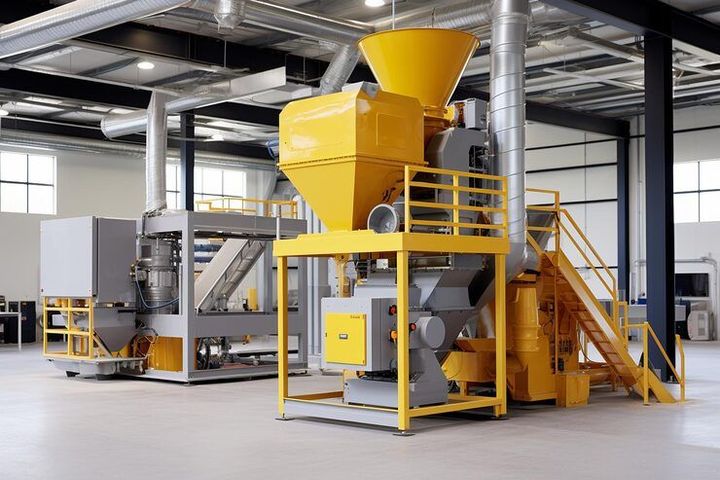
Industrial dust separation equipment includes several technologies designed to capture, separate, and collect airborne particles. Depending on the material and particle characteristics, facilities may use dust collectors, cyclone separators, cartridge filters, baghouse systems, or wet scrubbers.
How Industrial Dust Separation Works
The basic purpose of an industrial dust separation system is to separate solid particles from moving air or gas. The process generally involves several connected stages.
Dust generation: Industrial operations produce airborne particles during material handling and processing.
Air movement: Extraction hoods and ductwork direct contaminated air toward the collection equipment.
Particle separation: Mechanical or filtration technology removes dust from the air stream.
Dust collection: Separated particles enter a storage container, hopper, or collection bin.
Air discharge: Filtered air passes through an outlet or returns to the facility, depending on system design.
The equipment configuration depends on particle size, airflow requirements, material characteristics, temperature, and operating conditions.
Main Types of Industrial Dust Separation Equipment
Different separation technologies address different industrial requirements.
Equipment Type | Operating Principle | Common Applications |
|---|---|---|
Cyclone Separator | Uses centrifugal force to separate particles | Woodworking, grain processing |
Baghouse Dust Collector | Captures particles through fabric filters | Cement, steel, mining |
Cartridge Dust Collector | Uses pleated filter cartridges | Metalworking, manufacturing |
Wet Scrubber | Uses liquid to capture airborne particles | Chemical and industrial processing |
Electrostatic Precipitator | Uses electrical charges to collect particles | Power generation, industrial exhaust |
Portable Dust Collector | Extracts dust near individual operations | Workshops and smaller production areas |
Each technology has different operating characteristics. Some systems are suitable for larger particles, while others are designed to capture fine airborne dust.
Importance
Industrial dust separation equipment matters because airborne particles can affect workplace conditions, production quality, equipment performance, and environmental conditions. Manufacturing facilities often operate continuously, making effective dust management an important part of industrial operations.
Dust accumulation can create several practical challenges. Fine particles may enter machinery, interfere with moving components, contaminate finished materials, or reduce the effectiveness of ventilation systems.
Workplace Air Quality and Employee Safety
Airborne dust can affect the breathing environment of workers, particularly in facilities handling silica-containing materials, metals, wood, and other industrial substances. Exposure levels depend on particle characteristics, concentration, duration, and workplace conditions.
Industrial dust collection systems help control airborne contaminants at their source. Properly designed extraction points can reduce the movement of particles into surrounding work areas.
Equipment Protection and Production Efficiency
Dust can accumulate inside motors, electrical enclosures, bearings, control panels, and mechanical assemblies. This accumulation may contribute to overheating, equipment wear, and interruptions in production.
Industrial dust removal systems help maintain cleaner operating environments. Regular inspection and filter maintenance also support consistent airflow and equipment operation.
Environmental Dust Management
Industrial exhaust may contain particles that require treatment before air is discharged into the surrounding environment. Dust collectors and industrial filtration systems help capture these materials.
Effective particle separation also supports cleaner production areas and reduces unwanted dust accumulation around manufacturing facilities.
Industries That Use Dust Collection Technology
Industrial dust separation equipment is used across several sectors:
Cement manufacturing: Controls dust generated during crushing, grinding, mixing, and material transportation.
Metal processing: Captures particles produced by welding, cutting, polishing, and grinding.
Woodworking: Collects sawdust and fine wood particles from cutting and sanding operations.
Food processing: Manages flour, grain, sugar, and other powdered materials.
Mining operations: Controls airborne particles generated during drilling, crushing, and mineral handling.
Chemical manufacturing: Separates process-related powders and airborne particulate matter.
The equipment selection differs according to the materials processed and the specific operating environment.
Recent Updates
Industrial dust separation technology continues to develop through improvements in filtration materials, monitoring systems, automation, and energy management. Recent industry developments during 2024–2026 reflect greater attention to workplace air quality, operational monitoring, and efficient industrial ventilation.
Advanced Filtration Materials
Modern dust collection systems increasingly use improved filter media designed to capture smaller particles while maintaining suitable airflow. Pleated cartridge filters, specialized fabric materials, and surface-treated filter media are examples of technologies used in industrial filtration.
Filter design considers particle characteristics, operating temperature, moisture levels, and pressure conditions. These factors influence filtration performance and maintenance requirements.
Automated Dust Collection Systems
Automation is becoming more common in industrial dust collection equipment. Electronic controls can coordinate fan operation, cleaning cycles, dampers, and other system components.
Automatic pulse-jet cleaning is used in many baghouse and cartridge dust collectors. Compressed air pulses remove accumulated dust from filter surfaces, allowing the filtration process to continue.
Smart Monitoring and Sensor Technology
Industrial facilities are increasingly integrating sensors into dust collection systems. These devices can monitor operating conditions and provide information about equipment performance.
Common monitoring features include:
Differential pressure measurement across filters.
Airflow monitoring in extraction ducts.
Temperature monitoring in selected applications.
Filter condition alerts.
Fan and motor performance monitoring.
These technologies help operators identify unusual operating conditions and plan maintenance activities.
Energy Management and System Optimization
Industrial dust collectors require electrical power to operate fans, motors, and cleaning equipment. Newer system designs increasingly consider energy consumption during equipment selection and operation.
Variable frequency drives can adjust fan speed according to airflow requirements. Improved duct layouts and appropriately selected filters can also support more efficient system operation.
Laws or Policies
Industrial dust separation equipment is influenced by workplace health and safety requirements, environmental protection rules, and industrial emission standards. The exact requirements vary between countries and industries.
Many regulatory frameworks address airborne particulate matter, worker exposure, ventilation, equipment maintenance, and industrial exhaust emissions.
Workplace Health and Safety Requirements
Occupational safety authorities establish requirements for controlling hazardous airborne substances. These rules may include exposure limits, workplace monitoring, engineering controls, and respiratory protection.
In the United States, the Occupational Safety and Health Administration (OSHA) addresses workplace exposure to substances such as respirable crystalline silica. Its requirements include exposure assessment and appropriate engineering controls for covered activities.
The National Institute for Occupational Safety and Health (NIOSH) also provides technical guidance concerning workplace exposure and industrial ventilation.
Environmental Emission Standards
Environmental authorities establish limits and operating requirements for particulate emissions from industrial facilities.
The United States Environmental Protection Agency (EPA) regulates certain industrial emission sources through applicable air pollution standards. Other countries have their own environmental protection frameworks addressing industrial dust and particulate matter.
Facilities may need to consider:
Permitted particulate emission levels.
Exhaust filtration requirements.
Air quality monitoring.
Equipment inspection and maintenance.
Proper handling of collected industrial dust.
Combustible Dust Considerations
Some materials, including fine wood, grain, sugar, and certain metal powders, can create combustible dust hazards under particular conditions.
Industrial facilities may need to follow applicable fire prevention, explosion protection, electrical equipment, and dust handling requirements.
Equipment design should account for material characteristics, ignition sources, dust accumulation, and appropriate protective measures.
Tools and Resources
Several technical tools and resources help industrial operators understand dust separation equipment, evaluate system requirements, and monitor filtration performance.
Industrial Airflow Calculators
Airflow calculators help estimate the volume of air required for extraction systems. Measurements are commonly expressed in cubic feet per minute (CFM) or cubic metres per hour (m³/h).
These calculations consider duct dimensions, air velocity, extraction openings, and the number of connected collection points.
Dust Collector Sizing Tools
Dust collector sizing tools help estimate filtration capacity based on airflow and filter surface area. One important measurement is the air-to-cloth ratio, which compares the airflow volume with the available filter area.
For example, a lower air-to-cloth ratio generally indicates more filter area relative to airflow, although the appropriate value depends on the dust material and system design.
Differential Pressure Instruments
Differential pressure gauges measure the pressure difference across filter elements. Increasing pressure differences may indicate dust accumulation or restricted airflow.
These instruments help operators understand filter loading and identify when cleaning or inspection may be necessary.
Industrial Standards and Technical Documentation
Technical standards and manufacturer documentation provide information about filtration performance, industrial ventilation, equipment installation, and maintenance.
Useful resources include:
OSHA technical guidance for workplace dust exposure.
NIOSH publications on industrial ventilation.
EPA information on industrial air emissions.
NFPA standards addressing combustible dust hazards.
Equipment manuals and filtration performance specifications.
These resources help explain technical requirements and support informed industrial planning.
FAQs
What Is Industrial Dust Separation Equipment?
Industrial dust separation equipment removes airborne particles from air or gas streams. It includes cyclone separators, baghouse collectors, cartridge filters, wet scrubbers, and electrostatic precipitators.
How Does an Industrial Dust Collection System Work?
An industrial dust collection system captures contaminated air through extraction hoods and ductwork. The air passes through separation or filtration equipment, where particles are removed and collected before the cleaned air is discharged or recirculated.
What Is the Difference Between a Cyclone Separator and a Baghouse Dust Collector?
A cyclone separator uses centrifugal force to separate particles from moving air, while a baghouse dust collector uses fabric filter bags to capture airborne dust. Cyclones are commonly used for larger particles, whereas baghouses can capture finer particulate matter when appropriately designed.
Which Industries Require Industrial Dust Collection Systems?
Cement, mining, metalworking, woodworking, food processing, chemical manufacturing, and pharmaceutical production are among the industries that use dust collection systems. Requirements depend on the materials processed and the level of airborne particle generation.
How Is Industrial Dust Collector Performance Monitored?
Performance can be monitored through airflow measurements, differential pressure gauges, filter inspection, temperature sensors, and automated control systems. Regular monitoring helps identify filtration problems and changes in operating conditions.
Conclusion
Industrial Dust Separation Equipment supports cleaner manufacturing environments by capturing and separating airborne particles from industrial processes. Different technologies, including cyclone separators, baghouse collectors, cartridge filters, and wet scrubbers, address different filtration requirements. Developments in automation, advanced filtration materials, and sensor monitoring are influencing modern dust collection technology. Workplace safety requirements and environmental emission regulations also remain important factors in industrial dust management.