Industrial Fluid Control Technologies for Modern Manufacturing and Processing Plants
Industrial fluid control technologies play an important role in modern manufacturing and processing plants. These technologies manage the movement, pressure, temperature, and quantity of liquids and gases within industrial systems.
They are used in industries such as chemical processing, pharmaceuticals, food production, oil and gas, water treatment, power generation, and automotive manufacturing.
Fluid control systems help ensure that materials move through pipelines, tanks, pumps, and processing equipment under controlled conditions. They combine mechanical components, electronic instruments, and automated control systems to regulate industrial operations.
The development of industrial fluid control is closely connected to the growth of modern manufacturing. Early industrial facilities relied mainly on manual valves, mechanical pumps, and basic pressure instruments. As production systems became more complex, industries introduced automated valves, flow meters, pressure regulators, and digital monitoring technologies.
What Is Industrial Fluid Control?
Industrial fluid control refers to the management of liquids, gases, and other flowing materials within industrial equipment and pipelines. The main objective is to maintain suitable flow rates, pressure levels, and operating conditions throughout a process.
A typical industrial fluid control system includes several components:
Control valves: Regulate or stop the movement of liquids and gases.
Pumps: Move fluids through pipelines and processing equipment.
Flow meters: Measure the quantity of fluid passing through a system.
Pressure regulators: Maintain pressure within specified operating limits.
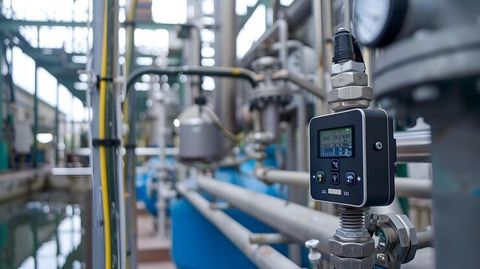
Sensors: Monitor temperature, pressure, flow, and other operating conditions.
Control panels: Allow operators to monitor equipment and adjust operating settings.
Pipelines and fittings: Transport fluids between different processing stages.
These components work together to maintain controlled fluid movement and support consistent industrial operations.
Main Types of Industrial Fluid Control Technologies
Different fluid control technologies are used depending on the nature of the process, fluid characteristics, and operating requirements.
Manual fluid control: Uses hand-operated valves and mechanical adjustments. It is commonly found in smaller systems and applications where frequent automatic changes are unnecessary.
Pneumatic fluid control: Uses compressed air to operate valves and other control mechanisms. It is widely used in industrial environments where pneumatic actuators are suitable.
Hydraulic fluid control: Uses pressurised liquid to transmit force and control mechanical movement. Hydraulic systems are commonly used in heavy machinery, manufacturing equipment, and industrial presses.
Electronic fluid control: Uses electronic sensors, actuators, and controllers to monitor and regulate fluid movement. These systems can support precise adjustments and automated operation.
Automated fluid control: Combines sensors, programmable logic controllers (PLCs), control valves, and software to manage fluid processes with limited manual intervention.
Importance of Industrial Fluid Control in Modern Manufacturing
Industrial fluid control technologies are important because many manufacturing operations depend on the controlled movement of liquids and gases. Incorrect pressure, inconsistent flow, or unexpected temperature changes can affect product quality, equipment performance, and workplace safety.
These systems help industries manage raw materials, cooling fluids, cleaning liquids, compressed gases, and process chemicals. They also support the reliable operation of production equipment and industrial infrastructure.
Industrial Applications of Fluid Control Systems
Fluid control technologies are used across several industrial sectors.
Chemical processing: Controls the movement and mixing of liquids, gases, and chemical ingredients during production.
Food and beverage manufacturing: Regulates water, liquid ingredients, cleaning fluids, and temperature-controlled processing systems.
Pharmaceutical manufacturing: Supports controlled fluid transfer, cleaning operations, and specialised processing environments.
Oil and gas: Manages fluid movement through pipelines, storage facilities, and processing equipment.
Water treatment: Controls filtration, chemical dosing, pumping, and water distribution.
Power generation: Regulates cooling water, steam, fuel movement, and other operating fluids.
Automotive manufacturing: Supports hydraulic equipment, lubrication systems, cooling arrangements, and production machinery.
Problems Addressed by Industrial Fluid Control
Industrial fluid control systems help address several common manufacturing challenges.
First, they regulate pressure and flow to reduce variations during production. This is important in processes where the quantity of a liquid or gas directly affects the finished product.
Second, automated monitoring can help identify unusual operating conditions. For example, a sudden pressure change may indicate a blockage, leakage, or equipment malfunction.
Other important functions include:
Maintaining consistent material movement.
Reducing the likelihood of uncontrolled fluid discharge.
Supporting equipment protection through pressure regulation.
Improving process monitoring and operational coordination.
Managing fluid distribution across multiple production stages.
Common Industrial Fluid Control Equipment
| Equipment | Main Function | Common Application |
|---|---|---|
| Control valve | Regulates fluid flow | Chemical processing |
| Pressure regulator | Controls pressure levels | Gas distribution |
| Flow meter | Measures fluid movement | Water treatment |
| Hydraulic pump | Moves pressurised liquid | Industrial machinery |
| Solenoid valve | Controls flow electrically | Automated production |
| Pressure sensor | Monitors system pressure | Pipeline networks |
| Temperature sensor | Measures fluid temperature | Heating and cooling systems |
Recent Developments in Industrial Fluid Control Technologies
Industrial fluid control is evolving through automation, digital monitoring, smart sensors, and improved equipment design. Current developments across the 2024–2026 period reflect increasing attention to process accuracy, energy management, equipment reliability, and connected manufacturing systems.
Smart Sensors and Digital Monitoring
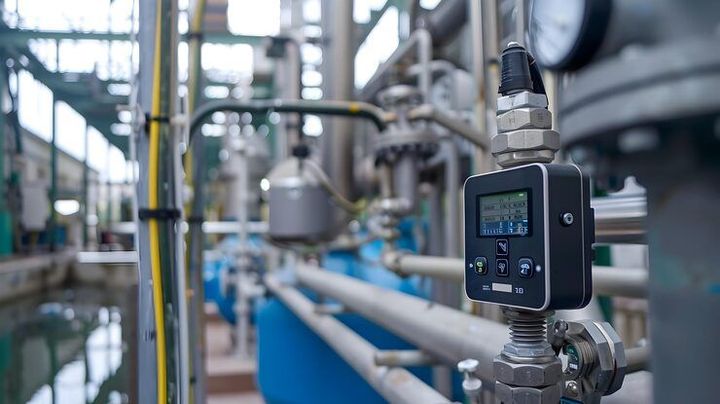
Modern industrial systems increasingly use smart sensors to collect information about fluid pressure, temperature, flow rate, and equipment condition. These sensors transmit information to central monitoring platforms or industrial controllers.
Operators can use this information to identify process variations and respond to abnormal operating conditions. Digital monitoring also helps maintain records of operating parameters for production analysis.
Integration With Industrial Automation
Programmable logic controllers and supervisory control and data acquisition (SCADA) systems are widely used to manage industrial fluid operations.
These technologies allow different components to communicate with each other. For example, a flow sensor can detect a change in fluid movement and send information to a controller, which can adjust a connected control valve.
Automation is particularly useful in manufacturing facilities where fluid movement must remain within specified operating ranges.
Predictive Maintenance Technologies
Traditional maintenance often depends on fixed inspection schedules or equipment failures. Predictive maintenance uses operating information to identify possible equipment problems before they interrupt production.
In fluid control systems, monitoring may include:
Pump vibration and operating temperature.
Pressure fluctuations in pipelines.
Changes in valve response.
Flow rate variations.
Unusual energy consumption.
These observations can help maintenance teams investigate developing equipment problems.
Energy-Efficient Pumping and Control Systems
Pumping and fluid transportation can account for a significant part of industrial energy consumption, depending on the facility and process. Manufacturers are therefore adopting variable frequency drives, efficient pump designs, and improved flow regulation.
Variable frequency drives adjust motor speed according to operating requirements. This can help avoid unnecessary pumping activity when a system does not require maximum flow.
Digitalisation and Connected Industrial Systems
Industrial Internet of Things (IIoT) technology connects sensors, controllers, and monitoring platforms. This allows manufacturing facilities to collect operating information from different areas of a plant.
Some systems also use data analysis to identify unusual patterns and support maintenance planning. However, cybersecurity, system compatibility, and reliable data management remain important considerations.
Laws and Policies Affecting Industrial Fluid Control in India
Industrial fluid control systems in India are influenced by environmental regulations, factory safety requirements, pressure equipment standards, and sector-specific operating rules. The applicable requirements depend on the type of industry, equipment, fluid, and manufacturing activity.
Environmental Regulations
Industrial facilities that handle wastewater, process chemicals, or other liquid discharges must consider India's environmental regulations.
The Water (Prevention and Control of Pollution) Act, 1974, provides a framework for preventing and controlling water pollution. The Environment (Protection) Act, 1986, also supports environmental regulation across industrial activities.
Relevant compliance areas may include:
Treatment of industrial wastewater.
Monitoring of permitted discharge parameters.
Proper handling of hazardous industrial materials.
Prevention of pipeline leaks and uncontrolled discharge.
Compliance with applicable pollution control permissions.
The Central Pollution Control Board and State Pollution Control Boards oversee relevant environmental requirements.
Workplace and Equipment Safety
Industrial fluid systems may involve high pressure, hot liquids, compressed gases, and hazardous process materials. Proper equipment installation, inspection, pressure protection, and operator training are important for reducing workplace risks.
India's occupational safety framework includes the Occupational Safety, Health and Working Conditions Code, 2020. Applicable requirements depend on the establishment and relevant implementation provisions.
Pressure Equipment and Technical Standards
Industrial pressure systems may need to comply with applicable technical standards and regulatory requirements. The Indian Boilers Act and relevant boiler regulations apply to equipment falling within their scope.
The Bureau of Indian Standards (BIS) also develops standards covering industrial equipment, materials, valves, piping components, and testing procedures.
Manufacturers and facility operators must identify the standards relevant to their specific equipment and applications.
Tools and Resources for Industrial Fluid Control
Engineering tools and digital platforms help industrial teams design, operate, and monitor fluid control systems. These resources support equipment selection, system calculations, and process evaluation.
Flow Rate and Pressure Calculators
Fluid flow calculators help estimate important operating parameters, including:
Flow rate through pipelines.
Pressure drop across valves and fittings.
Pump head requirements.
Pipe diameter relationships.
Fluid velocity.
Hydraulic power requirements.
These calculations depend on fluid density, viscosity, pipe dimensions, and system configuration.
Fluid System Design Software
Engineering software helps designers develop pipeline layouts and evaluate fluid movement. Hydraulic modelling and process simulation platforms can analyse pressure distribution, flow behaviour, and equipment requirements.
Computer-aided design tools are also used to prepare piping layouts, equipment drawings, and process diagrams.
Industrial Monitoring Platforms
SCADA and industrial automation platforms help operators monitor fluid control equipment from central control rooms. They can display pressure readings, temperature values, flow rates, equipment status, and system alarms.
These platforms are particularly useful in large processing plants with multiple connected pipelines and pumping systems.
Inspection and Testing Instruments
Common instruments used for fluid control inspection include:
Digital pressure gauges.
Ultrasonic flow meters.
Temperature measurement devices.
Valve position indicators.
Vibration monitoring instruments.
Pipeline leak detection equipment.
Regular inspection helps identify operating variations and supports equipment maintenance planning.
Frequently Asked Questions About Industrial Fluid Control Technologies
What Are Industrial Fluid Control Technologies?
Industrial fluid control technologies are systems and equipment used to regulate the movement, pressure, temperature, and quantity of liquids and gases in manufacturing facilities. They include valves, pumps, sensors, flow meters, and automated controllers.
What Are the Main Types of Industrial Fluid Control Systems?
The main types include manual, pneumatic, hydraulic, electronic, and automated fluid control systems. Each type uses different operating mechanisms depending on the process requirements and equipment configuration.
How Do Automated Fluid Control Systems Work?
Automated fluid control systems use sensors to monitor operating conditions such as pressure, temperature, and flow rate. Controllers process this information and adjust connected valves, pumps, or actuators to maintain specified operating conditions.
Which Industries Use Industrial Fluid Control Technologies?
Chemical processing, food production, pharmaceuticals, oil and gas, water treatment, power generation, and automotive manufacturing commonly use fluid control technologies. These systems support fluid transportation, processing, cooling, and distribution.
What Factors Affect the Performance of Industrial Fluid Control Systems?
Performance depends on fluid properties, pressure requirements, pipeline dimensions, equipment capacity, valve selection, sensor accuracy, and maintenance practices. System design and operating conditions also influence overall performance.
Conclusion
Industrial fluid control technologies are essential for managing liquids and gases across modern manufacturing and processing plants. Valves, pumps, sensors, regulators, and automated controllers work together to maintain suitable operating conditions and support production consistency. Recent developments in digital monitoring, predictive maintenance, and energy-efficient pumping are influencing industrial system design. In India, environmental regulations, workplace safety requirements, and applicable equipment standards shape how these systems are installed and operated.