Automated Bending Systems Overview With CNC Controls and Precision Bending Solutions
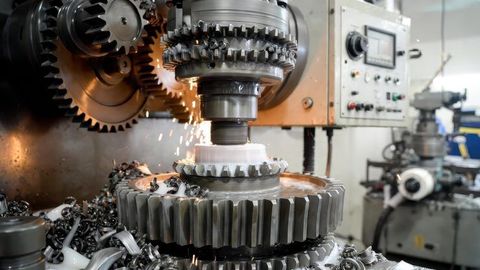
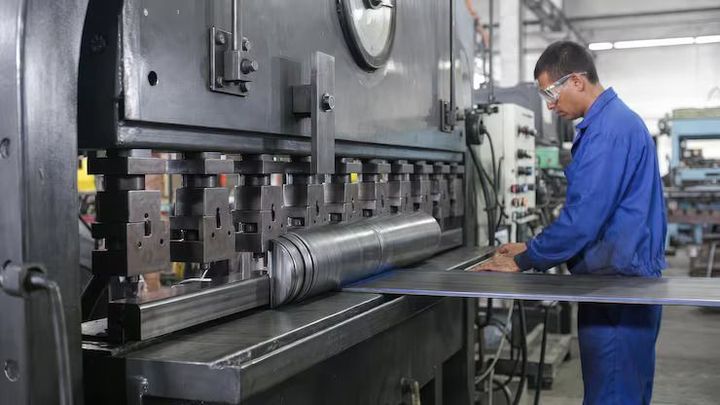
Automated bending systems are modern metalworking solutions designed to shape sheet metal, metal plates, and profiles into specific angles and forms using controlled mechanical force. These systems combine bending machines, computer numerical control (CNC), programmable settings, and automated material handling to produce components with consistent dimensions.
Automated bending systems are widely used in automotive manufacturing, construction, electrical equipment, aerospace, furniture production, and industrial machinery.
Traditional metal bending often required manual adjustments and considerable operator involvement. As manufacturing requirements became more complex, industries introduced hydraulic press brakes, programmable controls, and automated positioning systems to improve production accuracy and repeatability.
Today, CNC bending technology combines mechanical engineering, digital programming, precision tooling, and automated movement. It allows manufacturers to process different metal materials while maintaining control over bending angles, dimensions, and production sequences.
What Are Automated Bending Systems?
An automated bending system is a machine arrangement that uses programmed instructions and mechanical force to bend metal into a required shape. The system generally includes a press brake, CNC controller, bending tools, backgauge, and material positioning arrangements.
Depending on its configuration, the equipment may also include robotic arms that load, position, rotate, and unload metal components. This reduces the need for repeated manual handling during production.
The main components include:
CNC controller: Stores bending programs and controls machine movements and operating parameters.
Press brake: Applies force through a punch and die to bend the metal sheet.
Backgauge system: Positions the material accurately before each bending operation.
Punch and die tooling: Determines the bending shape, angle, and radius.
Hydraulic or electric drive system: Generates and controls the force required for bending.
Material support system: Helps position and stabilise metal sheets during processing.
Robotic handling equipment: Automates material loading, repositioning, and unloading in integrated systems.
These components work together to produce metal parts according to engineering drawings and manufacturing specifications.
How CNC Bending Technology Works
CNC bending technology uses digital instructions to control the movements of a bending machine. An operator or engineer enters the required dimensions, material information, bending angles, and production sequence into the controller.
The machine then positions the sheet metal using its backgauge and applies force through the punch and die. The metal bends around the die opening, forming the required angle.
A typical automated bending process involves:
Design preparation: A component drawing is created using computer-aided design software.
Program development: Bending dimensions, angles, and sequences are entered into the CNC controller.
Material positioning: The metal sheet is placed against the backgauge.
Bending operation: The punch applies controlled force to form the required angle.
Component repositioning: The sheet is moved or rotated for additional bends.
Inspection: The finished component is checked for dimensional accuracy and shape consistency.
The actual sequence depends on component geometry, machine configuration, and the level of automation.
Importance of Automated Bending Systems in Modern Manufacturing
Automated bending systems are important because many industrial products contain metal components with multiple bends and specific dimensional requirements. Electrical cabinets, vehicle panels, machine enclosures, structural brackets, and ventilation ducts are common examples.
Manufacturers use these systems to manage repetitive bending operations, reduce manual adjustments, and maintain consistency between production batches. They also support more complex component designs that require several bending steps.
Industrial Applications of Precision Bending Solutions
Automated bending technology is used across different manufacturing sectors.
Automotive manufacturing: Produces brackets, body components, structural supports, and metal enclosures.
Construction: Manufactures metal frames, roofing components, structural profiles, and architectural panels.
Electrical manufacturing: Produces switchgear cabinets, control panels, electrical enclosures, and equipment housings.
Aerospace: Supports the production of selected structural panels, brackets, and lightweight metal components.
Furniture manufacturing: Creates metal frames, supports, brackets, and furniture structures.
Industrial machinery: Produces protective covers, machine housings, support structures, and fabricated components.
Problems Addressed by Automated Bending Technology
Manual bending operations can involve repeated measurements, material repositioning, and individual machine adjustments. These activities may introduce variations, particularly when manufacturing components with multiple bends.
Automated bending systems address several production challenges:
Dimensional consistency: Programmable settings help maintain similar bending dimensions across repeated components.
Reduced manual handling: Automated positioning systems can minimise repeated material movement.
Complex bending sequences: CNC controls can manage multiple operations within one programmed sequence.
Production planning: Stored programs allow manufacturers to organise recurring component designs.
Process monitoring: Digital controls provide information about machine settings and operating conditions.
However, the actual bending result still depends on material properties, tooling condition, machine capacity, and correct program settings.
Comparison of Automated Bending Systems
| Equipment Type | Main Feature | Common Application |
|---|---|---|
| Manual press brake | Operator-controlled bending | Basic fabrication |
| Hydraulic CNC press brake | Programmable hydraulic movement | Industrial sheet metal parts |
| Electric CNC press brake | Electrically driven bending movement | Precision sheet processing |
| Hybrid press brake | Combined hydraulic and electric technology | Flexible industrial production |
| Robotic bending cell | Automated material handling | Repetitive component production |
Factors Affecting Bending Accuracy
Precision bending depends on several engineering and operating conditions. Even when a machine uses advanced CNC controls, incorrect material information or tooling selection can affect the finished component.
Important factors include:
Metal thickness and material grade.
Material tensile strength and ductility.
Bending angle and internal radius.
Punch and die dimensions.
Backgauge positioning accuracy.
Machine force capacity.
Springback after bending.
Springback occurs when metal partially returns toward its original shape after the bending force is removed. CNC systems may compensate for this behaviour through programmed adjustments, depending on machine capabilities and material characteristics.
Recent Developments in Automated Bending Systems
Automated bending technology continues to develop through robotics, digital engineering, machine connectivity, and improved drive systems. Current industry developments across 2024–2026 show increasing attention to production flexibility, precision control, energy management, and automation.
Advanced CNC Controls
Modern CNC bending controllers include digital interfaces, programmable bending sequences, and tools for managing machine positioning. Some systems also integrate three-dimensional visualisation to help operators understand the bending sequence before production.
These features support program preparation and reduce the need for repeated manual adjustments. Certain systems can also store component programs for recurring manufacturing requirements.
Robotic Bending Automation
Robotic bending cells combine industrial robots with CNC press brakes. The robot handles metal sheets and positions them between bending operations according to programmed instructions.
These arrangements are particularly relevant for repetitive production involving several bends. Depending on the installation, robotic systems may include automatic tool changing, material stacking, and finished-component handling.
Digital Simulation and Smart Manufacturing
Engineering simulation tools help manufacturers evaluate bending sequences before processing actual materials. These tools can identify possible collisions, incorrect positioning, and problems related to component geometry.
Digital monitoring systems also collect information about machine movements, operating conditions, production cycles, and equipment alarms. This information supports production analysis and maintenance planning.
Energy-Efficient Bending Technology
Manufacturers are paying greater attention to energy consumption in metalworking operations. Developments include electric press brakes, variable-speed hydraulic systems, improved drive controls, and energy management arrangements.
Electric bending systems use motor-driven mechanisms rather than conventional hydraulic power arrangements. Their operating characteristics differ according to machine design, capacity, and application.
Laws and Policies Affecting Automated Bending Systems in India
Automated bending operations in India are influenced by workplace safety regulations, industrial standards, environmental requirements, and factory compliance provisions. These frameworks address machine operation, employee protection, industrial waste, and manufacturing practices.
Workplace Safety Regulations
Automated bending machines involve high mechanical forces, moving tooling, electrical systems, and heavy metal sheets. Appropriate protective arrangements are important to reduce the risk of crushing, cutting, and other workplace injuries.
India's Occupational Safety, Health and Working Conditions Code, 2020, forms part of the country's occupational safety framework. Applicable requirements depend on the establishment, relevant notifications, and implementation provisions.
Manufacturing facilities should consider:
Machine guards and protective barriers.
Emergency stopping systems.
Light curtains and monitored safety controls where applicable.
Electrical and hydraulic safety inspections.
Operator training and safe working procedures.
Appropriate personal protective equipment.
Safe material loading and unloading arrangements.
Robotic bending systems also require suitable safety zones and controls to manage interaction between workers and automated equipment.
Environmental Regulations
Metalworking facilities may generate metal scrap, used lubricants, hydraulic oil, and industrial waste. Applicable environmental requirements address waste handling, pollution prevention, and industrial discharge management.
The Central Pollution Control Board and State Pollution Control Boards oversee relevant environmental requirements under India's pollution control framework. Specific obligations depend on the manufacturing activity and regulatory classification.
Technical Standards and Machine Compliance
The Bureau of Indian Standards develops standards covering industrial products, engineering materials, and selected equipment requirements. Manufacturers and machine operators may need to consider applicable standards relating to electrical safety, machinery design, and material specifications.
International standards such as ISO 12100 also provide general principles for machinery risk assessment and risk reduction. Their applicability depends on the equipment, operating environment, and relevant compliance framework.
Tools and Resources for Automated Bending Operations
Engineering tools and digital platforms help manufacturers plan bending sequences, develop component designs, calculate forming requirements, and inspect finished products.
CAD and Sheet Metal Design Software
Computer-aided design software helps engineers prepare sheet metal drawings and three-dimensional component models. These platforms support flat pattern development, bend allowances, tooling selection, and manufacturing documentation.
Common capabilities include:
Three-dimensional sheet metal modelling.
Bend allowance and bend deduction calculations.
Flat pattern generation.
Bending sequence planning.
Technical drawing preparation.
Assembly design and interference checking.
Bending Force and Calculation Tools
Bending calculators help estimate the force required to form metal sheets. They generally use information such as material thickness, tensile strength, bending length, and die opening.
Other useful calculations include bend radius, springback, material weight, and flat pattern dimensions. These estimates must be checked against the machine manufacturer's specifications and actual material characteristics.
Simulation and Programming Platforms
Bending simulation software helps engineers evaluate forming sequences and identify potential production problems. It can also support robotic movement planning and collision detection in automated bending cells.
CNC programming platforms translate engineering designs into machine instructions, including bending angles, backgauge positions, and operating sequences.
Inspection and Measurement Equipment
Measurement instruments help verify the dimensions and angles of finished components. Common equipment includes digital callipers, micrometers, angle gauges, height gauges, and coordinate measuring machines.
These instruments help determine whether manufactured components meet the dimensions specified in engineering drawings.
Frequently Asked Questions About Automated Bending Systems
What Are Automated Bending Systems Used For?
Automated bending systems are used to shape metal sheets and plates into specific angles and profiles. Common applications include automotive components, electrical enclosures, construction parts, industrial machinery, and metal furniture.
How Do CNC Controls Improve Precision Bending?
CNC controls manage machine movements, backgauge positions, bending angles, and programmed sequences. They help maintain repeatable settings across production batches and reduce variations caused by manual adjustments.
What Is the Difference Between Hydraulic and Electric CNC Bending Systems?
Hydraulic CNC press brakes use pressurised fluid to generate bending force, while electric press brakes use motor-driven mechanisms. Their operating characteristics, energy requirements, and suitable applications depend on machine design and production needs.
Which Materials Can Automated Bending Systems Process?
Common materials include mild steel, stainless steel, aluminium, and copper. The suitable material thickness and forming capacity depend on machine force, tooling configuration, and the material's mechanical properties.
What Factors Affect Precision in Automated Bending?
Bending accuracy depends on material thickness, strength, tooling geometry, bending angle, backgauge positioning, and springback. Correct CNC programming, machine calibration, and regular inspection also influence the finished component.
Conclusion
Automated bending systems combine CNC controls, mechanical engineering, precision tooling, and material handling to shape metal components according to specified dimensions. Their applications extend across automotive, construction, aerospace, electrical, and industrial machinery manufacturing. Developments in robotics, digital simulation, and energy management continue to influence modern bending operations. Production accuracy depends on material characteristics, machine configuration, tooling selection, programming, and workplace safety.