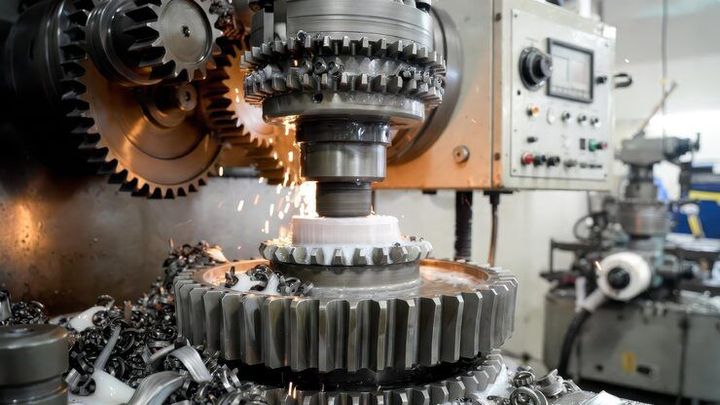
Explore the Benefits of Industrial Gear Hobbing Machines in Automotive and Machinery Manufacturing
Industrial gear hobbing machines play an important role in manufacturing gears used in automotive systems, industrial machinery, agricultural equipment, and mechanical power transmission.
These machines use a specialised cutting tool called a hob to produce gear teeth on cylindrical metal workpieces. Gear hobbing is a continuous machining process that helps manufacturers create gears with consistent tooth spacing, profiles, and dimensions.
The development of gear hobbing technology is closely connected to the expansion of mechanical engineering and industrial manufacturing. As machinery became more complex, industries required gears that could transmit rotational movement smoothly and operate under different loads. Traditional gear cutting methods involved several manual and mechanical operations, while gear hobbing introduced a coordinated cutting process that improved production consistency.
Modern industrial gear hobbing machines combine precision mechanical components, electronic controls, automated workpiece handling, and specialised cutting tools. These systems support the production of different gear types according to engineering specifications and application requirements.
What Is an Industrial Gear Hobbing Machine?
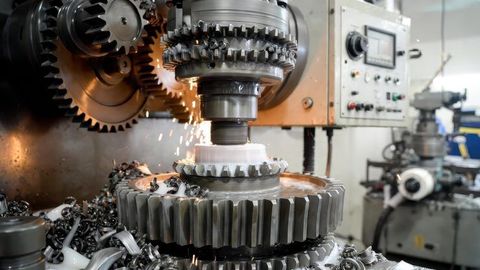
An industrial gear hobbing machine is a specialised metal-cutting machine used to produce gear teeth through a process known as hobbing. The workpiece rotates in coordination with a rotating cutting tool called a hob. As both components move in a controlled relationship, the hob gradually cuts the required tooth profile into the metal.
The machine generally includes several important components:
Hob cutter: A rotating cutting tool with multiple cutting edges that forms the gear teeth.
Workpiece spindle: Holds and rotates the metal component during machining.
Machine bed: Provides structural support for the machine and its moving assemblies.
Hob head: Holds the cutting tool and controls its position and movement.
Feed mechanism: Controls the movement of the hob across the workpiece.
Control system: Regulates spindle movement, cutting speed, feed rate, and machining sequences.
Coolant system: Helps manage heat and remove metal chips during machining.
The interaction between the hob and workpiece determines the geometry and accuracy of the finished gear.
How the Gear Hobbing Process Works
Gear hobbing is based on the principle of coordinated rotational movement. The hob and workpiece rotate at synchronised speeds, allowing the cutting edges to gradually generate the gear teeth.
The general process includes:
Workpiece preparation: A cylindrical metal blank is prepared according to the required gear dimensions.
Workpiece positioning: The blank is secured on the machine spindle.
Hob installation: The appropriate cutting tool is mounted and aligned.
Machine setting: Cutting speed, feed rate, and tool position are configured.
Cutting operation: The hob rotates while the workpiece moves in synchronisation, gradually forming the teeth.
Inspection: The finished gear is checked for tooth dimensions, spacing, surface condition, and accuracy.
This continuous cutting method is particularly suitable for producing external cylindrical gears in industrial manufacturing.
Importance of Gear Hobbing Machines in Automotive and Machinery Manufacturing
Gear hobbing machines are important because gears are essential components in systems that transfer movement and mechanical power. They are found in vehicle transmissions, industrial gearboxes, machine tools, agricultural equipment, conveyors, and various mechanical assemblies.
Accurate gear teeth help maintain suitable contact between meshing gears. This affects noise, vibration, load distribution, transmission efficiency, and component durability.
Applications in the Automotive Industry
Automotive manufacturing depends on gears for transmitting power between different mechanical components. Gear hobbing machines are used to produce several gear components according to vehicle design requirements.
Common applications include:
Transmission gears: Transfer engine power through different gear ratios.
Differential gears: Distribute rotational movement between vehicle wheels.
Steering system components: Support selected mechanical steering arrangements.
Gearbox components: Help control rotational speed and torque.
Automotive actuators: Include selected toothed components used in mechanical movement systems.
The dimensions and tooth profiles of these components influence their operation within vehicle assemblies.
Applications in Industrial Machinery
Industrial machinery uses gears to control speed, torque, and rotational movement. Gear hobbing supports the production of components used in equipment across different manufacturing sectors.
Examples include:
Industrial gearboxes: Used in conveyors, mixers, pumps, and production machinery.
Agricultural equipment: Produces gears for tractors and selected farming machines.
Construction machinery: Supports transmission components in equipment such as lifting and material-handling systems.
Machine tools: Manufactures gears used in mechanical drive assemblies.
Material handling equipment: Produces gear components for industrial movement systems.
Main Benefits of Industrial Gear Hobbing Machines
Gear hobbing provides several manufacturing advantages when the process is suitable for the required gear design.
Continuous cutting operation: The coordinated movement of the hob and workpiece allows several gear teeth to be generated during one continuous machining sequence.
Consistent tooth geometry: Controlled machine movements help maintain uniform tooth spacing and dimensions across production batches.
Production flexibility: Different hob cutters and machine configurations can accommodate various gear dimensions and tooth specifications.
Automation compatibility: CNC controls and automated handling systems can reduce manual adjustments and support repeatable production.
Material versatility: Gear hobbing machines can process suitable grades of steel, cast iron, and other machinable metals, depending on tool and machine specifications.
Common Types of Gear Hobbing Machines
| Machine Type | Main Characteristic | Common Application |
|---|---|---|
| Manual gear hobber | Operator-controlled settings | Basic gear production |
| Semi-automatic hobber | Partial automation | Repeated machining operations |
| CNC gear hobbing machine | Programmable movement and controls | Precision gear manufacturing |
| Vertical gear hobber | Vertical workpiece arrangement | Selected industrial gears |
| Horizontal gear hobber | Horizontal workpiece arrangement | Cylindrical gear production |
Recent Developments in Industrial Gear Hobbing Technology
Gear manufacturing continues to evolve through CNC automation, advanced cutting tools, digital monitoring, and improved machining strategies. Current developments across 2024–2026 reflect increasing attention to precision, production flexibility, tool performance, and manufacturing efficiency.
CNC Automation and Digital Controls
Modern CNC gear hobbing machines use computer-controlled systems to coordinate tool rotation, workpiece rotation, feed movement, and machining parameters.
These controls help manufacturers produce complex gear geometries and maintain consistent machining sequences. Some systems also support automatic tool positioning, programmable production settings, and integration with automated workpiece handling equipment.
Advanced Cutting Tools and Coatings
Developments in cutting tool materials and surface coatings are influencing gear hobbing operations. Carbide tools and specialised coated high-speed steel cutters are used for particular machining conditions.
Tool selection depends on workpiece material, cutting speed, tooth geometry, and production requirements. Appropriate cutting fluids and tool maintenance also influence machining conditions and surface quality.
Dry and Minimum-Quantity Lubrication Machining
Manufacturers are examining machining methods that reduce the amount of cutting fluid used during production. Dry machining and minimum-quantity lubrication are applied in selected gear cutting operations where the tool, material, and process conditions allow.
These methods require suitable thermal management and chip removal arrangements because cutting generates heat and metal particles.
Digital Monitoring and Predictive Maintenance
Modern manufacturing systems increasingly use sensors to monitor machine vibration, temperature, spindle conditions, and operating performance.
Collected information can help identify unusual operating patterns and support maintenance planning. Digital monitoring also allows manufacturing teams to review machine utilisation and production consistency.
Laws and Policies Affecting Gear Manufacturing in India
Industrial gear manufacturing in India is influenced by workplace safety requirements, environmental regulations, factory compliance provisions, and applicable engineering standards. These frameworks address machinery operation, employee protection, industrial waste, and product quality.
Industrial Safety Regulations
Gear hobbing machines contain rotating cutters, moving components, electrical systems, and mechanical clamping arrangements. Suitable safety measures are important to reduce the risk of contact with moving machinery and exposure to metal chips.
India's Occupational Safety, Health and Working Conditions Code, 2020, forms part of the country's occupational safety framework. Applicable provisions depend on the establishment and relevant implementation requirements.
Manufacturing facilities should consider:
Machine guards and protective enclosures.
Emergency stopping mechanisms.
Safe workpiece clamping procedures.
Electrical and mechanical inspections.
Operator training and supervision.
Appropriate eye and hand protection.
Safe procedures for cleaning and maintenance.
Environmental Regulations
Gear manufacturing can generate metal chips, used cutting fluids, lubricants, and other industrial waste. Environmental requirements address appropriate waste handling, pollution prevention, and industrial discharge management.
The Central Pollution Control Board and State Pollution Control Boards oversee relevant environmental requirements in India. Specific obligations depend on the manufacturing activity and applicable regulatory classification.
Engineering Standards and Product Quality
The Bureau of Indian Standards develops technical standards for engineering materials, mechanical products, and industrial applications. Gear manufacturers may also work with recognised international standards relating to gear geometry, measurement, accuracy, and testing.
Applicable requirements depend on the gear type, operating conditions, and intended industrial application.
Tools and Resources for Gear Hobbing Operations
Engineering tools and digital platforms help manufacturers design gears, calculate machining parameters, and inspect finished components.
Gear Design and Calculation Software
Gear design software helps engineers determine important geometric parameters before manufacturing. Common calculations include:
Module and pitch diameter.
Number of teeth.
Pressure angle.
Addendum and dedendum.
Helix angle for helical gears.
Gear ratio and centre distance.
These calculations help establish the required gear geometry and machining specifications.
CAD and CAM Platforms
Computer-aided design (CAD) software supports the development of gear drawings and mechanical assemblies. Computer-aided manufacturing (CAM) platforms help translate engineering designs into machining instructions for compatible CNC equipment.
These tools can support production planning, machine configuration, and manufacturing documentation.
Gear Inspection and Measurement Equipment
Gear inspection is necessary to verify whether finished components meet their engineering specifications.
Common inspection equipment includes:
Gear measuring centres for checking tooth geometry.
Profile measuring instruments for evaluating tooth profiles.
Micrometers for dimensional measurements.
Surface roughness testers for checking surface finish.
Coordinate Measuring Machines for selected complex measurements.
Machine Monitoring Systems
Industrial monitoring platforms collect information about spindle operation, machine vibration, temperature, production cycles, and maintenance conditions. These systems help manufacturing teams review equipment performance and identify potential operating issues.
Frequently Asked Questions About Industrial Gear Hobbing Machines
What Are Industrial Gear Hobbing Machines Used For?
Industrial gear hobbing machines are used to manufacture gear teeth on cylindrical metal workpieces. They are commonly used in automotive transmissions, industrial gearboxes, agricultural machinery, and mechanical power transmission systems.
How Does a Gear Hobbing Machine Work?
A gear hobbing machine rotates a specialised cutting tool and the metal workpiece in a coordinated relationship. The hob gradually removes material to form the required gear teeth and tooth spacing.
What Types of Gears Can Gear Hobbing Machines Produce?
Depending on the machine and tooling configuration, gear hobbing machines can produce spur gears, helical gears, splines, and selected sprockets. External cylindrical gear forms are common applications.
What Are the Benefits of CNC Gear Hobbing Machines?
CNC gear hobbing machines provide programmable control over cutting movements and machining parameters. They support repeatable production, complex gear configurations, and integration with automated manufacturing systems.
Which Materials Are Used in Industrial Gear Hobbing?
Common workpiece materials include carbon steel, alloy steel, stainless steel, and cast iron. The selected material depends on the gear's required strength, hardness, wear resistance, and operating conditions.
Conclusion
Industrial gear hobbing machines are important manufacturing systems used to produce gears for automotive applications and industrial machinery. Their continuous cutting process supports consistent tooth geometry and the production of different cylindrical gear types. CNC automation, advanced cutting tools, and digital monitoring are shaping developments in modern gear manufacturing. Finished gear quality depends on material properties, machine configuration, cutting parameters, tooling condition, and appropriate inspection procedures.