Warehouse Electric Forklift Guide: Capacity, Battery Types, Components and Operating Principles
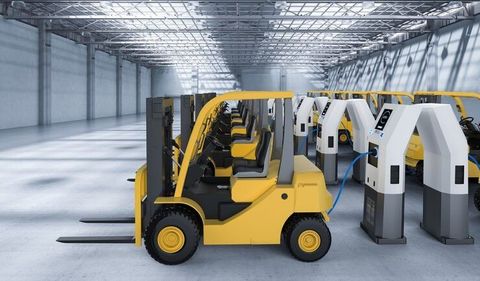
A warehouse electric forklift is a battery-powered industrial vehicle designed to lift, carry, and position materials within warehouses, distribution centers, manufacturing facilities, and storage areas. Unlike internal combustion forklifts that use fuels such as diesel or liquefied petroleum gas, an electric forklift uses electrical energy to operate its drive motors and lifting system. Its main purpose is to move palletized goods and other loads efficiently while supporting organized material handling.
Context
A warehouse electric forklift is a battery-powered industrial vehicle designed to lift, carry, and position materials within warehouses, distribution centers, manufacturing facilities, and storage areas. Unlike internal combustion forklifts that use fuels such as diesel or liquefied petroleum gas, an electric forklift uses electrical energy to operate its drive motors and lifting system. Its main purpose is to move palletized goods and other loads efficiently while supporting organized material handling.
Electric forklifts developed alongside advances in battery technology, electric motors, and warehouse equipment. Their use has expanded as businesses have adopted indoor material-handling equipment that produces no exhaust emissions at the point of operation. Modern models vary in size, lifting capacity, battery chemistry, and design, making it important to understand their operating principles before selecting or using them.
Main Types of Warehouse Electric Forklifts
Different forklift designs suit different storage environments and load-handling requirements. Common types include:
Counterbalance forklifts: Use a rear counterweight to balance loads carried on front forks. They are commonly used for moving pallets and loading or unloading vehicles.
Reach trucks: Extend their forks forward to retrieve or position pallets in storage racks, particularly in narrow warehouse aisles.
Electric pallet stackers: Lift and move pallets over relatively short distances and are often used in smaller storage areas.
Electric pallet trucks: Transport pallets at floor level, with powered movement reducing the physical effort required from operators.
Order-picking trucks: Allow trained operators to access goods stored at different rack levels, depending on the equipment design.
Each design has specific operating limits. A forklift suitable for smooth indoor floors may not be appropriate for uneven outdoor surfaces, while a reach truck generally requires carefully planned aisle dimensions.
Importance
Warehouse electric forklifts play an important role in logistics, manufacturing, retail distribution, and inventory management. They help move heavy materials between receiving areas, storage racks, production lines, and dispatch zones. Their use can reduce manual handling demands, although safe operation still requires training, appropriate equipment, and well-organized traffic routes.
Electric models are particularly relevant in indoor environments where exhaust emissions from combustion-powered equipment could affect air quality. They can also operate with comparatively low noise levels, depending on the model and working conditions. However, electricity consumption, battery charging, maintenance, and workplace safety remain important operational considerations.
Understanding Forklift Capacity
Forklift capacity describes the maximum load an equipment model is rated to lift under specified conditions. It is usually stated in kilograms or pounds and depends on factors such as load center, lift height, mast configuration, attachments, and equipment design.
The load center is the horizontal distance from the vertical face of the forks to the load's center of gravity. If a load is longer than the load assumed in the rated capacity, its center of gravity may move forward, reducing the forklift's lifting capability.
Operators should consult the equipment data plate and applicable load-capacity chart rather than relying on a general capacity figure. Attachments such as clamps or extended forks can also affect the rated capacity.
Factors Affecting Warehouse Performance
Several practical factors influence forklift suitability and operation:
Load weight and dimensions: The load must remain within the rated capacity and be stable on the forks.
Lift height: Raising a load can change the equipment's stability and permitted capacity.
Aisle width: The truck must have sufficient space to turn and position pallets safely.
Floor condition: Smoothness, gradients, debris, and floor strength affect movement and stability.
Operating hours: Battery capacity and charging arrangements must match the work schedule.
Environmental conditions: Temperature, moisture, dust, and ventilation requirements can influence equipment and battery performance.
These factors should be considered together because a forklift's rated capacity alone does not establish whether it is appropriate for a particular warehouse.
Recent Updates
Warehouse electric forklift technology continues to develop through improvements in battery chemistry, motor controls, energy management, and equipment monitoring. Recent industry trends from 2024 through 2026 include broader attention to lithium-ion batteries, connected fleet monitoring, automated material movement, and energy-efficient warehouse operations. Adoption varies according to operational needs, infrastructure, and regional conditions.
Battery Technology and Charging Systems
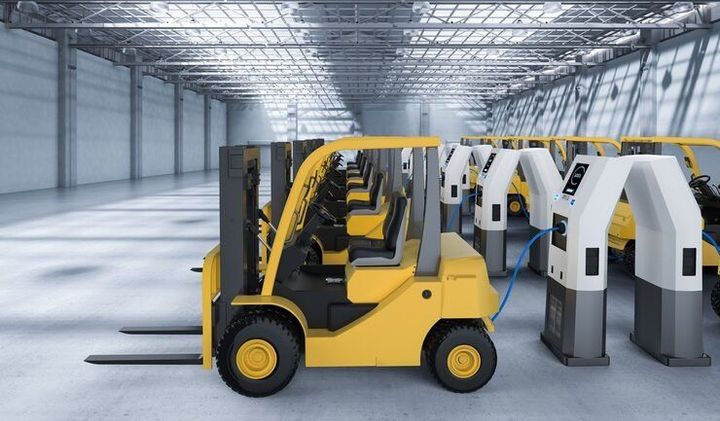
Lead-acid and lithium-ion batteries remain important options in electric material-handling equipment. Lead-acid systems have established charging and maintenance procedures, while lithium-ion batteries can support opportunity charging during suitable breaks and may require less routine battery maintenance, depending on their design.
Lithium-ion systems commonly incorporate battery management systems that monitor conditions such as temperature, voltage, and charge status. Charging equipment must be compatible with the battery chemistry and specifications. Battery selection also involves evaluating purchase expenditure, charging infrastructure, operating schedules, replacement requirements, and end-of-life handling.
Automation and Connected Equipment
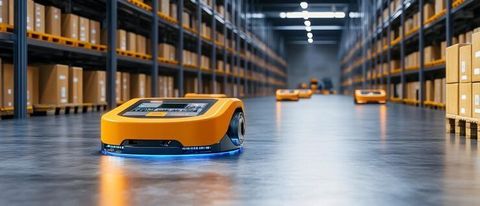
Some warehouses use automated guided vehicles or autonomous mobile robots to transport materials along defined routes. Certain forklift platforms also incorporate navigation assistance, fleet-management software, telematics, or sensors that record equipment use and identify operational issues.
These technologies can provide information about operating hours, battery condition, movement patterns, and maintenance requirements. Automated equipment still requires suitable infrastructure, risk assessment, and procedures for interaction with workers and conventional vehicles. Automation does not remove the need for hazard controls or appropriate supervision.
Energy Efficiency and Emissions
Electric forklifts do not produce exhaust emissions during normal operation, although electricity generation and battery production have environmental impacts. Their overall environmental performance depends on energy sources, equipment lifespan, battery manufacturing, charging efficiency, and recycling arrangements.
Warehouses increasingly consider energy consumption as part of equipment planning. Efficient driving, suitable charging schedules, preventive maintenance, and correct battery sizing can influence energy use and equipment availability.
Laws or Policies
Electric forklift operation is governed by workplace safety requirements, equipment standards, operator training rules, battery-handling procedures, and environmental regulations. The exact requirements depend on the country, industry, equipment type, and work environment.
Workplace Safety Requirements in India
In India, workplace safety requirements may arise under applicable occupational safety legislation, state rules, factory regulations, and relevant standards. The Occupational Safety, Health and Working Conditions Code, 2020, forms part of India's occupational safety framework, with implementation and applicable provisions depending on commencement notifications and related rules.
Employers and warehouse operators need to identify the legal requirements applicable to their facilities. Relevant safety measures commonly include operator training, equipment inspections, safe load limits, pedestrian separation, traffic management, and suitable maintenance arrangements.
Equipment Inspection and Battery Safety
Forklifts should be inspected and maintained according to manufacturer instructions and applicable workplace requirements. Checks may cover tyres, forks, mast components, brakes, steering, warning devices, lights, hydraulic systems, and battery connections.
Battery charging areas require controls appropriate to the battery chemistry. Lead-acid batteries may release hydrogen during charging and can involve corrosive electrolyte, requiring suitable ventilation and handling precautions. Lithium-ion batteries require compatible chargers, protection against physical damage, and procedures for responding to overheating or battery faults.
Operators should follow established procedures for parking, charging, reporting defects, and removing unsafe equipment from use. Training should cover stability, load handling, visibility, pedestrian awareness, and emergency procedures.
Tools and Resources
Several technical resources help warehouse managers, operators, and maintenance teams understand forklift specifications and operating requirements.
Capacity and Battery Calculators
Load-capacity charts and manufacturer specifications help determine whether a forklift can safely handle a particular load at the required height and configuration. Battery runtime calculators may estimate operating time using battery capacity, voltage, energy consumption, and expected workload. Actual runtime varies with driving conditions, load weight, temperature, battery age, and charging practices.
A warehouse planning spreadsheet can record equipment identification numbers, rated capacities, battery types, inspection dates, charging records, operating hours, and maintenance history.
Manufacturer Documentation and Safety Resources
Forklift manuals and technical data sheets explain equipment controls, capacity limits, battery specifications, charging requirements, and maintenance procedures. The Occupational Safety and Health Administration (OSHA) website provides forklift safety information, including training and safe-operation guidance that may be useful as a general reference. OSHA requirements are specific to the United States and do not replace applicable Indian rules.
In India, relevant government occupational safety resources and applicable Bureau of Indian Standards publications can help users identify regulatory and technical guidance. The exact standard or legal provision should be verified for the equipment and workplace concerned.
Comparing Battery Types
| Feature | Lead-acid battery | Lithium-ion battery |
|---|---|---|
| Charging pattern | Often uses scheduled charging periods | May support opportunity charging if permitted |
| Routine maintenance | Some types require electrolyte checks | Often requires less routine battery maintenance |
| Charging considerations | Ventilation and electrolyte precautions may apply | Compatible charging and battery monitoring are important |
| Energy performance | Depends on battery design and operating conditions | Often has higher charging efficiency, depending on the system |
| Initial expenditure | Depends on capacity and battery configuration | Often higher, depending on chemistry and system |
| End-of-life handling | Requires appropriate battery recycling | Requires appropriate battery recycling |
These are general comparisons. Individual battery designs differ, and selection depends on operating hours, infrastructure, environmental conditions, and the manufacturer's requirements.
FAQs
What is the typical capacity of a warehouse electric forklift?
Capacity varies by forklift type and model. Many warehouse counterbalance models are designed for loads measured in tonnes, while smaller pallet trucks and stackers handle lighter loads. The equipment data plate determines the applicable rated capacity.
Which battery types are used in warehouse electric forklifts?
Lead-acid and lithium-ion batteries are common options. Their differences include charging patterns, maintenance requirements, energy efficiency, initial expenditure, and battery-handling procedures.
How does an electric forklift lifting system work?
An electric motor powers a hydraulic pump in many forklift designs. The hydraulic system moves cylinders that raise or tilt the mast, allowing the forks to lift and position loads. Some equipment designs use different arrangements for particular functions.
What safety checks are important before operating an electric forklift?
Checks commonly include the forks, tyres, brakes, steering, mast, hydraulic system, warning devices, and battery condition. Operators should also verify the load weight, route conditions, and applicable capacity limits.
How long can a warehouse electric forklift operate on one charge?
Operating time depends on battery capacity, workload, travel distance, lifting frequency, temperature, and battery condition. Manufacturer specifications and workplace usage records provide a more reliable estimate than a single general runtime figure.
Conclusion
Warehouse electric forklifts support material movement through electrically powered travel and lifting systems. Their suitability depends on rated capacity, load dimensions, warehouse layout, battery technology, and operating conditions. Recent developments in lithium-ion batteries, monitoring systems, and automation are changing how some warehouses manage equipment and energy use. Safe operation continues to depend on appropriate training, inspections, maintenance, and compliance with applicable workplace requirements.