Industrial Sensors Explained: Types, Components, Applications, Benefits and Selection
Industrial sensors are devices that detect physical or chemical conditions and convert them into signals that industrial control systems can interpret. An Industrial Sensors Explained guide helps readers understand the main sensor types, components, applications, benefits, and selection factors used in manufacturing and other industrial environments.
Sensors are a fundamental part of industrial automation because machines need information about their surroundings and operating conditions. Temperature, pressure, vibration, position, flow, level, proximity, light, humidity, and chemical conditions can all be measured using different sensor technologies.
In a typical industrial system, a sensor collects information from a process and sends a signal to a controller, monitoring platform, or other equipment. The resulting information can support process control, equipment monitoring, quality inspection, safety functions, and maintenance activities.
How Industrial Sensors Work
The basic operating process can be described in several stages:
- Detection: The sensing element responds to a physical or chemical condition.
- Conversion: The detected condition is converted into an electrical or digital signal.
- Processing: Signal-conditioning electronics may filter, amplify, or convert the signal.
- Transmission: The information is sent to a control or monitoring system.
- Interpretation: Software or control equipment uses the information for monitoring or automated operation.
The exact process depends on the sensor technology and industrial application.
Importance
Industrial sensors are important because modern production systems depend on accurate information about machines and processes. Without suitable measurements, automated equipment may have limited visibility into operating conditions.
Sensors can also help identify changes before they develop into larger operational problems. For example, vibration measurements can reveal changes in rotating machinery, while temperature sensors can identify abnormal thermal conditions.
Common Types of Industrial Sensors
Industrial sensors can be grouped according to what they measure and how they operate.
Temperature sensors measure thermal conditions in equipment, processes, pipes, tanks, and production environments. Thermocouples, resistance temperature detectors, and thermistors are common examples.
Pressure sensors measure pressure in gases or liquids. They are used in hydraulic systems, pneumatic equipment, process plants, pumps, compressors, and storage systems.
Proximity sensors detect whether an object is present without necessarily making physical contact. Inductive sensors are commonly used for metal objects, while capacitive and other technologies can detect different materials.
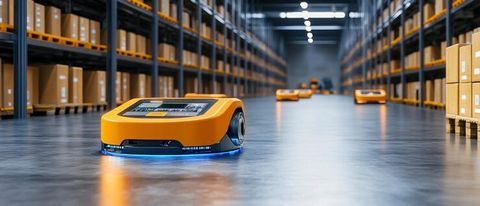
Photoelectric sensors use light to detect objects, changes in position, or interruptions in a production process. They are frequently used in automated material handling and packaging systems.
Flow sensors measure the movement of liquids or gases through pipes and process equipment. Different technologies can be selected according to the fluid, flow range, pressure, temperature, and installation conditions.
Level sensors determine the amount or position of material in tanks, containers, and process vessels. They may measure liquids, powders, or granular materials.
Vibration sensors monitor mechanical movement and vibration in rotating equipment such as motors, pumps, fans, and gear systems.
Humidity sensors measure moisture levels in air or controlled environments. They can be relevant to manufacturing, storage, electronics, agriculture, and environmental monitoring.
Position and displacement sensors determine the location or movement of mechanical components. They can be used in automated machinery, robotics, machine tools, and control systems.
Sensor Type Comparison
| Sensor Type | Main Measurement | Common Applications |
|---|---|---|
| Temperature | Heat or temperature | Furnaces, motors, process equipment |
| Pressure | Fluid or gas pressure | Pumps, compressors, hydraulics |
| Proximity | Object presence | Automation, assembly lines |
| Photoelectric | Object/light interruption | Packaging, sorting |
| Flow | Liquid or gas movement | Pipes, process systems |
| Level | Material level | Tanks, silos, vessels |
| Vibration | Mechanical movement | Motors, pumps, rotating machinery |
| Humidity | Moisture in air | Storage, manufacturing |
| Position | Location or movement | Robotics, machine tools |
Components
An industrial sensor generally contains several functional parts. The exact construction depends on the measurement technology and operating environment.
Sensing Element
The sensing element is the part that responds to the physical or chemical quantity being measured. For example, a thermocouple responds to temperature, while a piezoelectric element can respond to vibration.
Signal Conditioning
The initial sensor signal may require amplification, filtering, linearization, or other processing. Signal-conditioning circuits help prepare the measurement for transmission or interpretation.
Output Interface
Sensors can communicate measurements through different output formats. Common options include analog signals, switching outputs, pulse signals, and digital communication protocols.
Housing and Protection
The housing protects internal components from environmental conditions such as dust, moisture, vibration, chemicals, and mechanical impact. The appropriate protection level depends on where the sensor will be installed.
Power Supply
Some sensors require an external electrical supply, while certain sensor arrangements can generate signals through their operating principle. Industrial installations commonly specify supply voltage and electrical connection requirements.
Applications
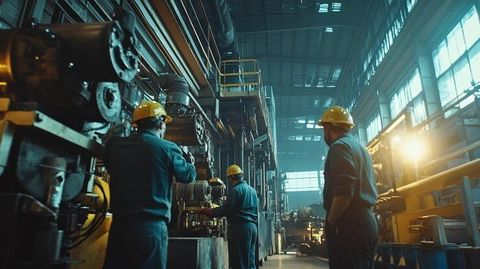
Industrial sensors are used across manufacturing, energy, transportation, water treatment, food processing, chemical production, pharmaceuticals, mining, logistics, and many other sectors.
Manufacturing and Automation
Production lines use sensors to identify objects, monitor machine positions, measure process variables, and coordinate automated operations. Proximity and photoelectric sensors can help detect components as they move through production stages.
Predictive Maintenance
Vibration, temperature, current, pressure, and other measurements can provide information about equipment condition. When collected consistently, this data can support maintenance analysis and help identify unusual operating patterns.
Recent industrial automation developments increasingly connect sensor data with analytics and artificial intelligence. Industry discussions in 2025 highlighted AI-assisted predictive maintenance and more connected manufacturing systems as important areas of development.
Environmental Monitoring
Sensors can measure air conditions, emissions, water characteristics, noise, temperature, and other environmental parameters. In India, the Central Pollution Control Board maintains frameworks and technical guidance for online monitoring of industrial emissions and effluents.
Robotics
Robotic systems use position, proximity, force, vision, and other sensing technologies to understand their operating environment. Sensor information can help robots detect objects, determine movement, and interact with automated production equipment.
Energy Management
Temperature, pressure, flow, electrical, and other sensors can provide information about energy-consuming equipment. Monitoring these variables can help organizations analyze equipment operation and identify unusual patterns.
Benefits
Industrial sensors provide several practical benefits when correctly selected, installed, and maintained.
Process Monitoring
Continuous measurements provide information about production conditions. Operators and control systems can use this information to observe whether a process is operating within defined parameters.
Automation
Sensors provide input to programmable logic controllers, industrial computers, robots, and other control systems. This allows machines to respond to measured conditions instead of relying entirely on manual observation.
Equipment Condition Monitoring
Measurements such as vibration, temperature, and pressure can provide information about equipment behavior. Comparing current measurements with historical patterns can support maintenance planning.
Quality Control
Sensors can monitor dimensions, temperature, position, pressure, flow, and other characteristics during production. The appropriate technology depends on the material and quality parameter being evaluated.
Safety Monitoring
Certain sensor systems can detect unsafe conditions or provide inputs to protective systems. Machine safeguarding can involve sensors, switches, scanners, and other devices designed according to the applicable safety requirements.
Recent Updates
From 2024 through 2026, industrial sensing has increasingly developed around connectivity, edge computing, artificial intelligence, and data analysis. Instead of functioning only as individual measuring devices, sensors are increasingly integrated into connected industrial architectures.
Smart and Connected Sensors
Modern sensors may include onboard processing, digital communication, diagnostic information, and configuration features. These capabilities can provide more information than a simple measurement signal.
Edge Processing and AI
Processing information closer to the machine can reduce the need to send every raw measurement to a central system. AI and machine-learning techniques are also being explored for anomaly detection, predictive maintenance, quality analysis, and process optimization.
Wireless Industrial Monitoring
Wireless technologies are becoming more relevant where conventional cabling is difficult or where additional monitoring points are needed. Industrial wireless systems can include specialized protocols as well as private cellular networks, depending on application requirements.
Cybersecurity Considerations
As sensors become more connected, cybersecurity becomes increasingly relevant. Network-connected sensing equipment can form part of an industrial control environment, so organizations need to consider authentication, access control, software updates, network segmentation, and data protection.
Laws or Policies
Industrial sensor requirements in India depend on the equipment, industry, location, measurement purpose, and applicable technical standards. There is not one general law that applies identically to every industrial sensor.
Indian Standards and BIS
The Bureau of Indian Standards provides access to Indian Standards and information about conformity assessment. Some products are subject to mandatory requirements through government-issued Quality Control Orders, while BIS certification is voluntary for other products.
The BIS “Know Your Standard” platform allows users to search standards by product or keyword and review associated documents and conformity information.
Workplace Safety
Industrial facilities also need to consider workplace safety requirements relating to machinery and industrial operations. India's Occupational Safety, Health and Working Conditions Code includes provisions concerning machinery safety and related workplace hazards.
The exact requirements for a sensor-based safety system depend on the machinery, application, workplace, and applicable rules.
Environmental Monitoring
Industrial facilities subject to environmental monitoring requirements may need measurement systems for emissions or effluents. CPCB guidance covers continuous emission monitoring systems and includes parameters such as particulate matter and selected gases, with requirements varying by industry.
Tools and Resources
Several resources can help engineers, maintenance teams, students, and industrial planners understand sensor selection and operation.
Sensor Datasheets
Manufacturer datasheets provide technical information such as measurement range, accuracy, response time, electrical requirements, environmental limits, output type, and installation specifications.
Selection Calculators
Engineering calculators can assist with conversions involving pressure, temperature, flow, electrical signals, and other measurement parameters. These tools can help users compare technical requirements before selecting equipment.
Standards Databases
Standards databases can help users identify applicable technical requirements. In India, the BIS “Know Your Standard” platform provides access to information related to Indian Standards and associated conformity documents.
Monitoring and Automation Software
Industrial monitoring platforms can collect sensor readings and display trends, alarms, and historical information. Depending on the system, data may be stored locally, at the edge, or within a centralized industrial platform.
Selection Checklist
A basic Industrial Sensors selection process can consider:
- What physical quantity needs to be measured?
- What measurement range is required?
- What accuracy is appropriate?
- What environmental conditions will exist?
- What output or communication protocol is required?
- How will the sensor be powered?
- What installation space is available?
- What maintenance or calibration requirements apply?
- Which technical standards or safety requirements are relevant?
FAQs
What are industrial sensors?
Industrial sensors are devices that detect physical or chemical conditions and convert them into signals that can be monitored or processed by industrial systems. Common measurements include temperature, pressure, flow, level, vibration, position, and proximity.
What are the main types of industrial sensors?
Common types include temperature, pressure, proximity, photoelectric, flow, level, vibration, humidity, and position sensors. The appropriate type depends on the variable being measured and the operating environment.
How are industrial sensors used in manufacturing?
Industrial sensors can monitor production conditions, detect objects, measure machine positions, support quality inspection, and provide data for automated control systems. They are also used for equipment condition monitoring.
How do I select an industrial sensor?
Selection normally begins by identifying the measurement required, followed by consideration of range, accuracy, environmental conditions, output, communication method, installation requirements, and applicable standards.
Are industrial sensors covered by Indian standards?
Some sensor products or related equipment may fall under applicable Indian Standards or mandatory conformity requirements, depending on the specific product and its regulatory classification. BIS provides tools for identifying relevant standards and certification requirements.
Conclusion
Industrial sensors provide measurements that help machines and industrial systems understand physical and process conditions. Different technologies are designed for variables such as temperature, pressure, flow, vibration, level, position, and proximity. Recent developments have increased the role of connected sensors, edge processing, AI-based analysis, and industrial data systems. Sensor selection should consider measurement requirements, environmental conditions, communication methods, safety considerations, and applicable standards.