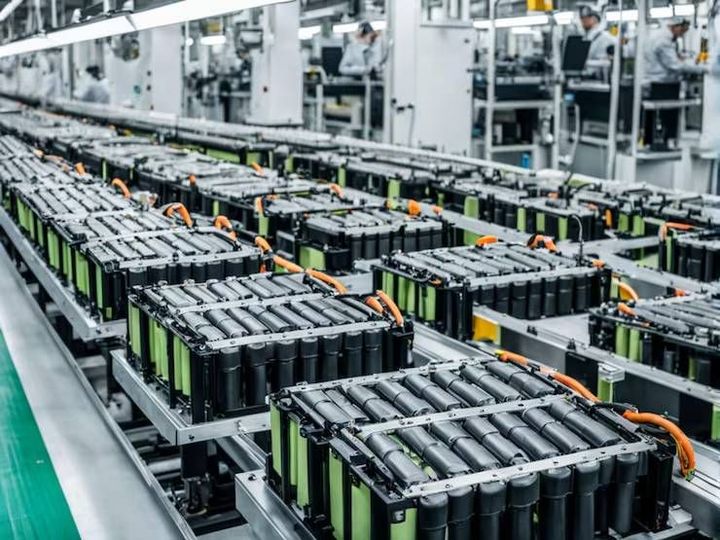
Solid-State Battery Manufacturing Guide: Equipment, Production Methods and Quality Control
Solid-state battery manufacturing involves producing rechargeable batteries that use a solid electrolyte instead of the liquid or gel electrolytes found in many conventional lithium-ion batteries. A solid electrolyte allows lithium ions to move between the battery's electrodes during charging and discharging. The technology has attracted attention for its potential applications in electric vehicles, consumer electronics, aerospace systems, and energy storage.
Context
Solid-state battery manufacturing involves producing rechargeable batteries that use a solid electrolyte instead of the liquid or gel electrolytes found in many conventional lithium-ion batteries. A solid electrolyte allows lithium ions to move between the battery's electrodes during charging and discharging. The technology has attracted attention for its potential applications in electric vehicles, consumer electronics, aerospace systems, and energy storage.
The development of solid-state batteries builds on decades of research into electrochemistry, ceramic materials, polymers, and rechargeable battery systems. Unlike conventional battery production, which often relies on liquid electrolyte filling and wetting processes, solid-state battery production may require precise solid-electrolyte preparation, controlled material interfaces, and specialized pressure or temperature conditions.
A solid-state battery manufacturing guide explains the equipment, production methods, and quality control procedures used to convert raw materials into functional battery cells. The exact process depends on the electrolyte chemistry, electrode design, cell format, and intended application.
Main Components of a Solid-State Battery
A solid-state battery generally contains several connected components. Each component has a specific role in storing and transferring electrical energy.
Cathode: The positive electrode during discharge, typically made from a lithium-containing active material combined with other necessary materials.
Anode: The negative electrode during discharge. Depending on the design, it may use lithium metal, graphite, silicon-based materials, or another suitable structure.
Solid electrolyte: A material that conducts lithium ions while separating the electrodes electronically.
Current collectors: Conductive metal layers that transfer electrons between the electrodes and the external circuit.
Protective and interface layers: Additional materials that can improve contact, reduce unwanted reactions, or support mechanical stability.
Solid electrolytes may be ceramic, sulfide-based, oxide-based, polymer-based, or composite materials. Each family has different requirements for conductivity, moisture control, mechanical strength, and manufacturing conditions.
How Solid-State Battery Production Works
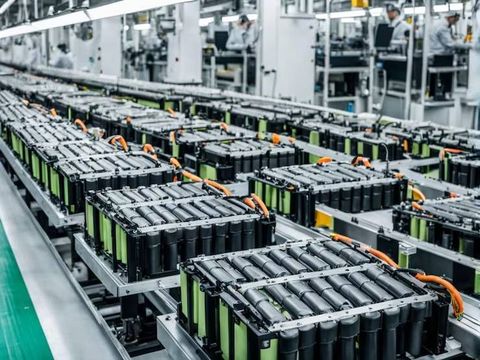
Manufacturing generally involves preparing electrode materials, producing the solid electrolyte, assembling the cell, applying appropriate pressure or heat, and conducting electrical and physical tests. Some designs use thin films, while others use pressed powder layers or coated sheets.
The central challenge is maintaining effective contact between solid materials. Unlike liquid electrolytes, which can flow into small spaces, solid materials may develop gaps or uneven interfaces. These defects can increase resistance, reduce performance, or contribute to cell failure.
Importance
Solid-state battery manufacturing matters because battery technology affects electric transportation, portable electronics, industrial equipment, and stationary energy storage. Researchers and manufacturers are examining solid electrolytes as a way to address selected limitations of existing battery designs, including electrolyte flammability and some restrictions on energy density.
However, a solid electrolyte does not automatically make a battery completely safe or more energy-dense. Performance depends on the chemistry, electrode materials, cell construction, operating conditions, and manufacturing quality. Some solid-state designs also face challenges involving durability, material compatibility, and large-scale production.
Manufacturing Challenges and Practical Requirements
Producing consistent cells requires careful control of materials and process conditions. Common challenges include:
Material purity: Unwanted impurities can affect ionic conductivity and chemical stability.
Moisture sensitivity: Some electrolyte materials, particularly certain sulfide-based compounds, can react with moisture and require controlled handling.
Interface resistance: Poor contact between solid layers can restrict ion movement.
Mechanical stability: Pressure changes, expansion, contraction, or cracking can damage interfaces during cycling.
Production consistency: Variations in coating thickness, layer density, alignment, and assembly can create differences between cells.
Scale-up: A process that works in a laboratory may behave differently on a high-throughput production line.
These challenges affect battery developers, equipment manufacturers, materials suppliers, vehicle producers, and researchers. Reliable manufacturing methods are necessary to evaluate performance across repeated production batches rather than relying only on individual laboratory samples.
Common Equipment Used in Manufacturing
Solid-state battery production uses equipment selected for the specific material system and cell architecture.
| Equipment | Main purpose | Important process control |
|---|---|---|
| Powder mixer | Combines active materials and additives | Mixing uniformity and contamination |
| Ball mill or material grinder | Reduces particle size or mixes powders | Milling time and particle distribution |
| Slurry mixer | Prepares materials for suitable coating processes | Viscosity and dispersion |
| Coating machine | Applies material layers to a substrate | Thickness and surface uniformity |
| Drying oven | Removes solvents when used in the process | Temperature and residual solvent |
| Pellet press or roll press | Densifies powder layers or sheets | Pressure, density, and thickness |
| Glovebox or controlled-atmosphere system | Limits exposure to moisture or oxygen | Atmosphere purity and humidity |
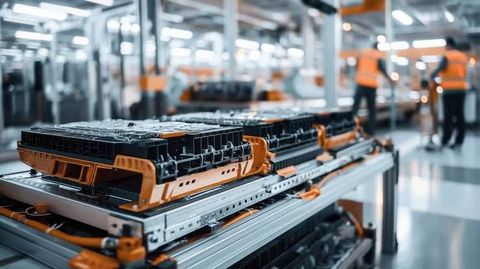
| Cell assembly equipment | Aligns and joins battery components | Alignment, cleanliness, and contact |
| Battery cycler | Measures charging and discharging behavior | Voltage, current, capacity, and temperature |
| Microscopy and analytical instruments | Examine material structure and defects | Resolution, calibration, and repeatability |
Not every production line uses every item. For example, powder pressing may be central to one ceramic-electrolyte process, while another design may rely on coating and lamination equipment.
Recent Updates
From 2024 through 2026, solid-state battery development has continued to focus on material improvement, manufacturing scale-up, pilot production, and the validation of cells under practical operating conditions. Research and industrial development have explored different electrolyte chemistries, thinner layers, improved interfaces, and production techniques that could support larger manufacturing volumes.
Announcements about pilot lines, prototype cells, or planned factories do not necessarily mean that high-volume commercial production has been achieved. Production readiness depends on repeatability, yield, operating life, safety validation, and the ability to manufacture cells consistently.
Advances in Materials and Production Methods
Several research directions are influencing solid-state battery manufacturing:
Sulfide electrolytes: These materials can provide high ionic conductivity but often require careful moisture control and appropriate chemical handling.
Oxide electrolytes: Ceramic materials can provide useful chemical and thermal characteristics, although densification and interface contact can be difficult.
Polymer electrolytes: These may be easier to process into flexible layers, but ionic conductivity can depend strongly on temperature and composition.
Composite electrolytes: Combining materials may help balance conductivity, flexibility, and mechanical strength, although additional interfaces introduce their own challenges.
Lithium-metal anodes: These are being studied for potential energy-density improvements, but controlling lithium growth and maintaining stable interfaces remain important issues.
Manufacturers are also examining dry electrode processing, improved coating control, precision lamination, automated inspection, and digital monitoring. The suitability of these techniques depends on the cell architecture and materials being processed.
Automation and Process Monitoring
Automated equipment can help control layer placement, material quantities, pressing conditions, and cell assembly. Sensors and production software can record temperature, pressure, humidity, thickness, and equipment status throughout manufacturing.
Data analysis can identify process variation and help engineers investigate recurring defects. However, automation does not replace material testing or validation. Measurements must be calibrated, and quality procedures must account for defects that may not be detected by routine production sensors.
Laws or Policies
Solid-state battery manufacturing is shaped by workplace safety requirements, environmental rules, transport regulations, product standards, and government programs supporting battery research and industrial development. The exact requirements depend on the country, manufacturing site, chemical materials, battery application, and stage of production.
Battery Manufacturing Policies in India
In India, battery manufacturing may be affected by national industrial policies, environmental legislation, factory safety requirements, and applicable state-level approvals. The Production Linked Incentive scheme for Advanced Chemistry Cell battery storage has been part of India's effort to develop domestic battery manufacturing capacity. Eligibility, program conditions, and current implementation details depend on the applicable government notifications.
Manufacturing facilities may need to comply with relevant requirements under environmental laws, including rules governing hazardous waste, emissions, and industrial wastewater where applicable. Factories must also follow applicable occupational health and safety requirements for chemical handling, machinery, ventilation, and worker protection.
Safety, Testing, and Transport
Battery cells and packs may be subject to testing requirements before transportation or use. The United Nations Manual of Tests and Criteria includes requirements for lithium batteries under subsection 38.3, which is relevant to transporting applicable lithium battery types. Whether a particular solid-state cell falls within a specific requirement depends on its chemistry, classification, and intended transport conditions.
Standards such as the IEC 62660 series address performance and reliability testing for certain lithium-ion traction battery cells, while other standards may apply to stationary storage, consumer electronics, or complete battery systems. A standard's applicability depends on the product category and relevant regulatory framework.
Manufacturers generally establish procedures for chemical storage, equipment guarding, electrical safety, fire response, waste management, and incident reporting. Regulatory compliance should be assessed against the requirements in force for the specific facility and product.
Tools and Resources
Technical resources help engineers, researchers, students, and manufacturing teams understand solid-state battery production and evaluate its results. The appropriate resource depends on whether the task involves material research, equipment planning, process design, or finished-cell validation.
Simulation and Materials Research Tools
Battery modeling software can help estimate electrochemical behavior, heat generation, and the influence of selected design parameters. Examples of relevant platforms and resources include COMSOL Multiphysics for multiphysics modeling, and the Argonne National Laboratory battery research resources for information on battery materials and performance analysis.
Materials characterization laboratories may use X-ray diffraction to study crystal structures, scanning electron microscopy to examine surfaces and cross-sections, and impedance spectroscopy to investigate electrical resistance and ionic transport. These techniques provide different types of evidence and are often used together.
Production Monitoring and Quality Templates
Manufacturing teams can use process-control charts, equipment maintenance logs, batch records, and inspection checklists to monitor production consistency. A production record may include:
Raw material identity, batch number, and storage conditions.
Mixing, coating, drying, pressing, and assembly parameters.
Electrolyte thickness, layer alignment, and measured density.
Cell voltage, capacity, internal resistance, and temperature during testing.
Inspection results, defects, corrective actions, and traceability information.
Battery Testing and Technical References
Battery cyclers measure charge-discharge behavior under defined conditions, while environmental chambers help evaluate performance across specified temperatures. Mechanical testing equipment can examine compression or other loads relevant to a particular cell design.
Technical information is available through organizations such as the International Electrotechnical Commission, the Bureau of Indian Standards, and the U.S. Department of Energy. Their publications can help readers identify relevant terminology, test methods, and standards, although the applicable document depends on the battery type and intended use.
FAQs
What equipment is used in solid-state battery manufacturing?
Equipment may include powder mixers, grinders, coating machines, presses, controlled-atmosphere systems, cell assembly equipment, battery cyclers, and inspection instruments. The exact equipment depends on the electrolyte material and cell design.
What are the main solid-state battery production methods?
Common approaches include powder mixing and pressing, coating and lamination, thin-film deposition, and controlled thermal processing. Some processes combine several methods to create electrodes, electrolyte layers, and stable interfaces.
How is quality control performed in solid-state battery manufacturing?
Quality control can include raw material analysis, layer-thickness measurements, microscopy, density checks, electrical testing, charge-discharge cycling, and safety evaluation. Results are compared with specifications established for the particular cell design.
What are the main challenges in solid-state battery production?
Major challenges include maintaining stable interfaces, preventing contamination, controlling moisture-sensitive materials, avoiding cracks, and achieving consistent large-scale production. These issues vary by electrolyte chemistry and manufacturing method.
Are solid-state batteries commercially available?
Some products and applications use solid-state or solid-electrolyte battery technologies, but availability varies by chemistry and application. Many all-solid-state designs remain under development or are progressing through pilot-scale manufacturing and validation.
Conclusion
Solid-state battery manufacturing combines material preparation, electrode and electrolyte production, cell assembly, and systematic quality control. Equipment requirements vary with electrolyte chemistry, layer design, and intended application. Recent research has focused on interface stability, manufacturing consistency, automation, and production scale-up, while safety rules and testing standards shape industrial practice. Understanding these factors helps explain both the potential applications and the technical challenges of solid-state battery technology.