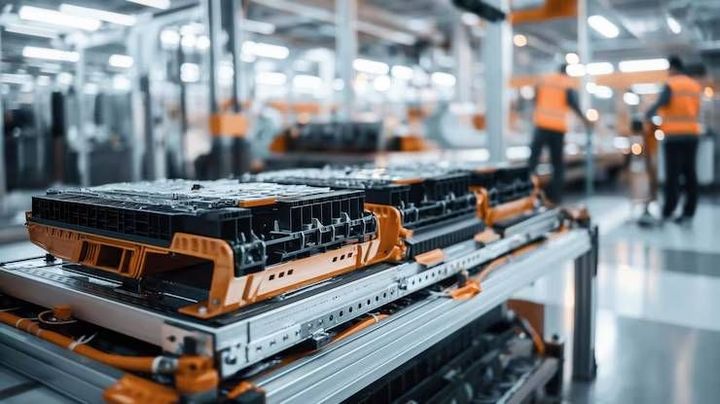
Battery Manufacturing Explained: Production Processes, Materials, Equipment and Quality Control
Battery manufacturing is the industrial process of producing batteries by combining electrochemical materials, metal components, separators, and protective enclosures into a unit that stores and releases electrical energy. Battery manufacturing has developed alongside advances in electricity, portable electronics, transportation, and industrial equipment. Today, production methods support several battery types, including lithium-ion, lead-acid, nickel-based, and emerging solid-state designs.
Context
Battery manufacturing is the industrial process of producing batteries by combining electrochemical materials, metal components, separators, and protective enclosures into a unit that stores and releases electrical energy. Battery manufacturing has developed alongside advances in electricity, portable electronics, transportation, and industrial equipment. Today, production methods support several battery types, including lithium-ion, lead-acid, nickel-based, and emerging solid-state designs.
A battery works through chemical reactions that move ions between two electrodes while electrons travel through an external circuit. The main components usually include a positive electrode called the cathode, a negative electrode called the anode, an electrolyte that allows ions to move, and a separator that prevents direct contact between the electrodes. Battery manufacturing requires careful material preparation, precise assembly, and controlled testing because small production variations can affect performance and safety.
Main Types of Batteries
Different applications require different battery designs. Common types include:
Lithium-ion batteries: Used in electric vehicles, mobile devices, energy storage systems, and portable equipment.
Lead-acid batteries: Common in vehicle starting systems, backup power installations, and certain industrial applications.
Nickel-based batteries: Include nickel-metal hydride and nickel-cadmium designs used in selected transportation, industrial, and portable applications.
Solid-state batteries: Use a solid electrolyte rather than a conventional liquid electrolyte and remain an active area of research and manufacturing development.
Each chemistry has different material requirements, operating characteristics, and production procedures. Manufacturing equipment and quality checks must therefore match the battery design rather than follow one universal process.
Importance
Battery manufacturing matters because batteries support transportation, communication, renewable energy storage, emergency power, and many everyday electronic devices. As electric vehicles and stationary energy storage systems expand, manufacturers face the challenge of producing batteries with consistent capacity, reliable operation, and appropriate safety characteristics.
Production quality also affects how batteries age during use. Variations in electrode thickness, moisture levels, material composition, or assembly alignment can contribute to reduced performance or internal defects. Effective manufacturing controls help identify problems before batteries enter distribution or are installed in larger systems.
Materials Used in Battery Production
The materials depend on the chemistry and intended application. In lithium-ion battery manufacturing, common materials include lithium-containing compounds for the cathode, graphite or other suitable materials for the anode, an electrolyte, a separator, and conductive metal foils.
Other important inputs include binders that hold electrode particles together, conductive additives that support electrical movement, and casing materials that protect the finished cell. Copper and aluminum foils commonly act as current collectors for the anode and cathode, respectively, in many lithium-ion designs.
Material purity and consistency matter throughout production. Contaminants, incorrect proportions, or unsuitable storage conditions may affect the chemical behavior and physical structure of the finished battery.
Battery Manufacturing Equipment
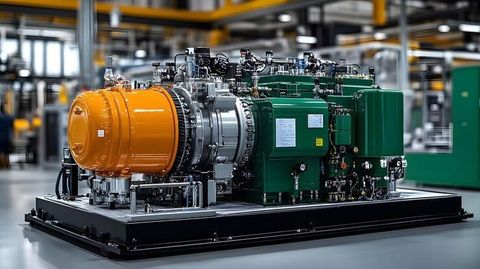
Battery production uses specialized machinery to handle materials, assemble cells, and verify product quality. Typical equipment includes:
Mixing systems: Combine active materials, binders, conductive additives, and solvents where required.
Coating machines: Apply electrode mixtures evenly to metal current collectors.
Drying ovens: Remove solvents or moisture under controlled conditions.
Calendering equipment: Compress electrode coatings to achieve specified thickness and density.
Slitting and cutting machines: Prepare electrode sheets to the dimensions required for assembly.
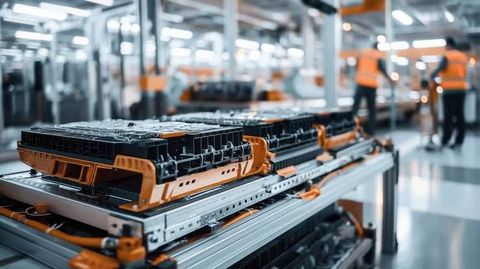
Cell assembly equipment: Stack or wind electrodes and separators, then place the assembly into a cell enclosure.
Filling and sealing systems: Introduce electrolyte where applicable and close the cell under controlled conditions.
Formation and testing equipment: Charge and discharge cells to activate and assess their electrochemical behavior.
Equipment design differs according to battery chemistry, cell format, production volume, and factory layout. Cylindrical, prismatic, and pouch cells, for example, require different enclosure and assembly arrangements.
Recent Updates
Battery manufacturing continues to evolve through improvements in production automation, material efficiency, quality monitoring, and alternative battery chemistries. Developments across 2024–2026 include increased attention to domestic battery supply chains, dry-electrode processing research, advanced recycling methods, and production systems designed to reduce energy and material waste. Adoption differs across manufacturers, and not every developing technique is ready for large-scale commercial production.
Automation and Digital Quality Control
Modern battery factories increasingly use robotic handling, machine vision, automated inspection, and production data systems. Sensors can monitor factors such as temperature, humidity, coating thickness, and equipment operating conditions. These measurements help production teams identify variations and trace defects to particular process stages.
Digital manufacturing systems can also connect production equipment with quality records. When a defect is identified, recorded batch information may help investigators determine whether it originated during material preparation, coating, assembly, or testing. Automated monitoring supports process control, but it does not eliminate the need for equipment maintenance and human oversight.
New Materials and Production Methods
Solid-state batteries are being studied for their potential to change electrolyte design and battery architecture. However, challenges involving material interfaces, manufacturing consistency, durability, and production scale remain important areas of development.
Dry-electrode processing is another area of interest. Some approaches aim to reduce or eliminate the use of liquid solvents during electrode coating, potentially changing factory energy requirements and production layouts. Researchers and manufacturers continue to evaluate process performance, material compatibility, and large-scale feasibility.
Battery recycling is also becoming more important as used batteries and manufacturing scrap create demand for material recovery. Recycling methods may recover metals and other useful materials, although recovery rates, environmental impacts, and economic feasibility depend on battery chemistry and the process used.
Laws or Policies
Battery manufacturing is shaped by rules covering factory safety, chemical handling, environmental protection, product quality, transportation, and waste management. Requirements differ by country, battery chemistry, and intended use. Manufacturers must identify the rules that apply to their facilities and the markets in which their batteries will be used.
Battery Manufacturing Regulations in India
In India, battery production and disposal are affected by environmental legislation and battery-specific rules. The Battery Waste Management Rules, 2022, establish an extended producer responsibility framework for covered batteries. The framework places obligations on relevant producers for environmentally sound management of battery waste, subject to the rules and applicable amendments.
The Bureau of Indian Standards publishes standards for various battery categories and applications. Applicable standards depend on the battery type and intended use, while particular products may also be subject to certification or other regulatory requirements.
Factories must also consider relevant occupational safety, electrical safety, pollution control, and hazardous-material handling requirements. Depending on the operation, permissions and compliance obligations may involve central or state authorities.
Environmental and Product Safety Requirements
Battery factories may need systems for controlling emissions, managing wastewater, storing chemicals, and handling manufacturing waste. Procedures for fire prevention and emergency response are especially important because certain battery materials and electrolytes can create fire or chemical hazards.
Batteries transported internationally may be subject to dangerous-goods rules and testing requirements. Lithium batteries, for example, are covered by transport provisions that include testing requirements under the United Nations framework. The precise requirements depend on the battery, its condition, and the mode of transport.
Tools and Resources
Battery manufacturing uses laboratory instruments, production monitoring systems, engineering software, and regulatory references to support process development and quality assurance. These resources help engineers and production teams evaluate materials, control equipment, and document results.
Production and Testing Tools
Common tools include precision weighing systems, moisture analyzers, thickness gauges, microscopes, environmental chambers, and electrical testing equipment. Battery cyclers measure charge and discharge behavior, while impedance testing can help evaluate selected electrical characteristics.
Manufacturing execution systems can record production stages, material batches, equipment settings, and inspection results. Statistical process control tools help teams examine process variation and identify patterns that may indicate a developing problem.
Technical and Regulatory Resources
The following resources provide information relevant to battery manufacturing:
Bureau of Indian Standards: Publishes Indian standards relevant to batteries and electrical products.
Ministry of Environment, Forest and Climate Change: Provides Indian environmental rules and policy information.
Central Pollution Control Board: Publishes environmental compliance information, including material related to battery waste management.
International Electrotechnical Commission: Develops international standards for electrical and electronic technologies.
United Nations transport recommendations: Provide a framework for the safe transport of dangerous goods, including relevant battery requirements.
Technical documents should be checked for their current edition and applicability before being used in a production process.
Main Quality Control Checks
Battery quality control generally includes several stages:
Incoming material inspection: Checks identity, composition, purity, and condition of raw materials.
Electrode inspection: Measures coating uniformity, thickness, density, and surface defects.
Assembly inspection: Verifies component alignment, separator placement, and enclosure integrity.
Electrical testing: Evaluates voltage, capacity, internal resistance, and charge-discharge behavior as appropriate.
Safety testing: Assesses specified risks under controlled test conditions.
Traceability checks: Connects test results with material batches and production records.
The exact inspection plan depends on battery chemistry, product design, applicable standards, and intended application.
Battery Production Stages at a Glance
| Production stage | Main purpose | Example of a quality check |
|---|---|---|
| Material preparation | Prepare electrode ingredients | Composition and moisture |
| Electrode coating | Apply material to current collectors | Thickness and uniformity |
| Drying and compression | Control moisture and electrode structure | Residual moisture and density |
| Cell assembly | Position electrodes and separator | Alignment and contamination |
| Electrolyte filling and sealing | Complete the cell enclosure | Fill accuracy and seal integrity |
| Formation and aging | Establish and assess cell behavior | Voltage and capacity |
| Final inspection | Confirm specified requirements | Electrical and visual testing |
Not every battery type follows these exact stages. Lead-acid, nickel-based, and solid-state designs use different materials and may require different production and inspection methods.
FAQs
What are the main steps in battery manufacturing?
Typical steps include material preparation, electrode coating, drying, compression, cutting, cell assembly, electrolyte filling where applicable, sealing, formation, and final testing. The sequence varies by battery chemistry and design.
What materials are used in lithium-ion battery manufacturing?
Common materials include cathode compounds, graphite or other anode materials, an electrolyte, a separator, copper and aluminum current collectors, binders, and conductive additives. Exact compositions vary by cell design.
Which equipment is used in battery production?
Equipment may include mixing systems, coating machines, drying ovens, calendering machines, cutting equipment, assembly systems, filling and sealing machines, and electrical test equipment.
How is quality control performed in battery manufacturing?
Quality control involves inspecting raw materials, monitoring electrode dimensions, checking assembly, testing electrical performance, evaluating specified safety requirements, and maintaining production traceability.
Which rules govern battery manufacturing in India?
Relevant requirements may include the Battery Waste Management Rules, 2022, applicable BIS standards, environmental regulations, factory safety requirements, and transport rules. The specific obligations depend on the facility and battery application.
Conclusion
Battery manufacturing combines material science, specialized equipment, controlled assembly, and systematic quality testing. Developments in automation, alternative electrolytes, electrode processing, and recycling are influencing production methods, although their readiness varies. In India, environmental rules, product standards, and factory safety requirements shape how batteries are manufactured and managed after use. Understanding these processes provides a useful foundation for learning how batteries are produced and evaluated.

You May Also Like