AI Factory Robots Explained: Types, Features, Applications, Benefits and Manufacturing Uses
AI factory robots are industrial machines that use artificial intelligence (AI), sensors, software, and automated control systems to perform tasks in manufacturing environments. These systems can help identify objects, inspect products, move materials, and adjust certain operations according to changing conditions. AI factory robots combine traditional industrial robotics with technologies that support perception, data analysis, and decision-making.
Context
AI factory robots are industrial machines that use artificial intelligence (AI), sensors, software, and automated control systems to perform tasks in manufacturing environments. These systems can help identify objects, inspect products, move materials, and adjust certain operations according to changing conditions. AI factory robots combine traditional industrial robotics with technologies that support perception, data analysis, and decision-making.
Industrial robots have been used in manufacturing for decades, particularly in automotive assembly, welding, painting, and material handling. Earlier systems generally followed carefully programmed instructions and repeated specific movements. Modern AI-enabled robots can use camera images, sensor readings, and machine-learning models to interpret their surroundings and respond to some variations in products or working conditions.
How AI Factory Robots Work
An AI factory robot typically combines mechanical equipment, control software, sensors, and computing hardware. Cameras may capture images of objects, while other sensors measure distance, position, pressure, or movement. Software processes this information and determines how the robot should perform a defined task within its operating limits.
A common robotic workflow includes:
Perception: Cameras and sensors collect information about objects and the surrounding workspace.
Interpretation: AI software identifies objects, detects differences, or estimates their positions.
Planning: The control system determines an appropriate movement or task sequence.
Execution: Motors, robotic arms, grippers, or mobile platforms carry out the planned action.
Monitoring: Sensors and control software check the operation for errors or unexpected conditions.
Not every industrial robot uses AI. Conventional robots may follow fixed programs, while AI-enabled systems add capabilities such as visual recognition, adaptive movement, or data-based prediction.
Main Components of an AI Factory Robot
The physical robot is only one part of the system. Cameras, sensors, controllers, communication networks, and manufacturing software can all contribute to its operation. The combination depends on the task, the production environment, and the level of automation required.
Importance
AI factory robots matter because manufacturers must manage product quality, production schedules, equipment reliability, workplace safety, and changing product requirements. Tasks involving repetitive movement, heavy materials, difficult-to-reach areas, or detailed inspection can place physical demands on workers and require consistent operating procedures.
AI-supported automation can help address some of these challenges, although its results depend on equipment design, training data, maintenance, and workplace conditions. Robots may also allow workers to focus on activities involving supervision, problem-solving, process planning, and technical judgment.
Common Types of AI Factory Robots
Different robot designs support different manufacturing tasks. The following table describes several widely used categories and their typical applications.
| Robot type | Main characteristics | Manufacturing applications |
|---|---|---|
| Robotic arms | Multiple joints and programmable movement | Welding, assembly, handling |
| Collaborative robots | Designed for specified shared-workspace applications | Component handling, light assembly |
| Autonomous mobile robots | Navigate factory routes using sensors and software | Material transport, internal logistics |
| Machine vision robots | Use cameras and image-processing systems | Inspection, sorting, object identification |
| AI-assisted inspection robots | Analyze images or sensor measurements | Surface defect detection, quality checks |
| Automated picking robots | Identify and handle selected items | Packaging, parts preparation, order handling |
These categories can overlap. For example, a robotic arm may use machine vision to locate a component, while an autonomous mobile robot may transport materials between production areas.
Benefits and Practical Limitations
AI factory robots can support consistent task execution, reduce some forms of manual handling, and collect information about production processes. Visual inspection systems may identify certain defects, while predictive maintenance systems can analyze equipment data for signs of possible problems.
However, AI does not eliminate every manufacturing difficulty. Systems can struggle with unfamiliar objects, changing lighting, reflective surfaces, sensor errors, or incomplete training data. Integration, maintenance, employee training, cybersecurity, and safety assessments also require planning.
Recent Updates
From 2024 through 2026, industrial automation has continued to develop through advances in machine vision, AI computing, robotics software, and digital manufacturing systems. A notable direction is the integration of AI models with robotic control, allowing selected systems to interpret more complex instructions or handle greater variation in objects and tasks. The maturity and availability of these capabilities differ across applications.
AI Vision and Adaptive Manufacturing
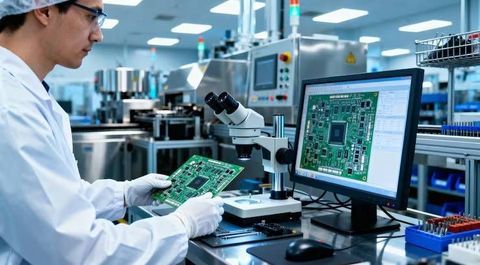
Machine vision systems use cameras and algorithms to locate components, read markings, measure visible features, and identify selected defects. AI-based vision can be useful when objects vary slightly in shape, orientation, or appearance. Its accuracy depends on camera quality, lighting, model design, training examples, and the conditions under which the system operates.
Manufacturers are also exploring robots that can adjust movements using sensor feedback instead of relying entirely on fixed positions. These systems may support flexible assembly, component sorting, and handling tasks where the exact location of an object changes. They still require defined operating boundaries, testing, and suitable safeguards.
Robotics, Digital Twins, and Predictive Maintenance
A digital twin is a computer-based representation of a physical machine, production line, or process. Manufacturers can use digital models to examine operating conditions, simulate selected changes, and study possible equipment behavior before making physical adjustments.
Predictive maintenance uses information such as vibration, temperature, operating cycles, or motor current to identify patterns associated with equipment deterioration. AI may help analyze these patterns, but predictions are not certain and should be evaluated alongside inspections and established maintenance procedures.
Another developing area is the use of AI systems that interpret broader instructions and coordinate several steps within a manufacturing workflow. Such systems are still subject to limitations involving reliability, timing, physical safety, and integration with existing factory equipment.
Laws or Policies
AI factory robots are affected by industrial machinery rules, workplace safety requirements, electrical standards, data-protection obligations, and cybersecurity practices. The applicable requirements depend on the country, the robot's design, its intended use, and whether it operates near workers or handles sensitive production information.
Industrial Robot Safety in India
In India, manufacturers and factory operators must consider applicable occupational safety and factory legislation, including relevant provisions of the Factories Act, 1948, where applicable, and the transition to the Occupational Safety, Health and Working Conditions Code, 2020, according to its commencement and implementation arrangements. State rules and other applicable requirements may also affect factory operations.
Risk assessments should consider robot movement, crushing and trapping hazards, unexpected activation, electrical risks, maintenance procedures, and interaction between people and machines. Physical guards, interlocked access points, emergency stops, presence detection, and controlled operating zones may be appropriate depending on the system's risk assessment and design.
Standards, AI Governance, and Cybersecurity
International standards can help manufacturers evaluate robot safety and system integration. Examples include ISO 10218, which addresses industrial robot safety, and ISO/TS 15066, which provides guidance relevant to collaborative robot applications. Applicable editions, national adoption, and conformity requirements should be checked for each project.
India's national AI initiatives have encouraged the development and adoption of AI technologies, including through the IndiaAI Mission. However, this does not mean every AI factory robot automatically qualifies for government support or receives regulatory approval.
Connected robots may also create cybersecurity risks if unauthorized users gain access to controllers, production networks, or operational data. Network separation, access controls, software updates, activity monitoring, and documented recovery procedures can help manage these risks. Legal obligations depend on the system and the information it processes.
Tools and Resources
Manufacturers can use robotics software, simulation environments, equipment documentation, and technical standards to understand AI factory robots and assess possible applications. The suitable tools depend on whether the task involves robot programming, production planning, machine vision, maintenance, or safety evaluation.
Robotics Programming and Simulation Tools
Platforms such as ROS 2 provide software frameworks for developing robot applications and connecting components such as sensors, controllers, and navigation systems. Simulation tools can help engineers test robot movements and layouts in a virtual environment before deploying changes to physical equipment.
Industrial robot manufacturers also provide programming environments, controller documentation, maintenance guides, and application-specific technical information. These materials help explain equipment limits, supported functions, and installation requirements.
Manufacturing Data and Vision Tools
Machine vision software can process images for inspection, measurement, object recognition, and sorting. Production monitoring platforms collect information about machine cycles, downtime, output, and equipment conditions. When AI is used to analyze this data, manufacturers should consider data quality, system compatibility, and how results are verified.
Useful planning resources include:
Robot application checklists: Record the task, object dimensions, cycle requirements, and environmental conditions.
Safety assessment templates: Document hazards, safeguards, operating modes, and maintenance procedures.
Maintenance logs: Track inspections, faults, component replacements, and downtime.
Simulation models: Examine robot reach, movement paths, and interactions with nearby equipment.
Performance dashboards: Monitor production indicators such as cycle time, defect rates, and equipment availability.
These resources support planning and monitoring, but they do not replace qualified engineering assessments or required safety procedures.
FAQs
What are AI factory robots used for?
AI factory robots can support assembly, welding, inspection, sorting, packaging, and material handling. Their AI capabilities may help them identify objects, interpret sensor data, or respond to selected changes in production conditions.
What are the main types of AI factory robots?
Common types include robotic arms, collaborative robots, autonomous mobile robots, machine vision robots, and automated picking systems. Their capabilities depend on the hardware, software, sensors, and manufacturing task.
How do AI factory robots improve manufacturing?
They can support consistent task execution, detect certain product defects, reduce some manual handling, and help analyze equipment data. Actual results depend on implementation, operating conditions, and ongoing maintenance.
Are AI factory robots safe to work around?
They can be used safely when designed, installed, assessed, and operated with suitable safeguards. Risk assessments, training, maintenance procedures, and controlled access are important, especially when people and robots share a workspace.
What is the difference between AI robots and traditional industrial robots?
Traditional industrial robots commonly execute programmed movements, while AI-enabled robots may also use machine learning, vision, or sensor analysis to handle selected variations. Many manufacturing systems combine conventional robot control with AI functions rather than relying entirely on AI.
Conclusion
AI factory robots combine industrial robotics with technologies that support perception, data analysis, and selected adaptive tasks. Their applications include assembly, inspection, material handling, and production monitoring, with capabilities that vary by system. Effective implementation depends on suitable equipment, reliable data, worker training, cybersecurity, and compliance with relevant safety requirements. These factors shape how AI-enabled robotics can be integrated into modern manufacturing.

You May Also Like