Learn About Royal Gemstone Necklace Designs With Craftsmanship and Styling Tips
Royal gemstone necklace designs are elaborate jewelry styles that combine colored gemstones, precious metals, decorative patterns, and detailed craftsmanship.
The word royal in this context generally describes an ornate visual style associated with formal jewelry, historical court traditions, ceremonial clothing, and richly decorated ornaments. Such necklaces may feature emeralds, rubies, sapphires, pearls, diamonds, garnets, or other colored gemstones.
Gemstone necklaces have been created across many cultures for centuries. Historical jewelry traditions often used locally available stones and metals, while trading networks introduced gemstones from distant regions. Artisans developed techniques for cutting stones, shaping metal, creating decorative motifs, and securing gemstones within intricate settings.
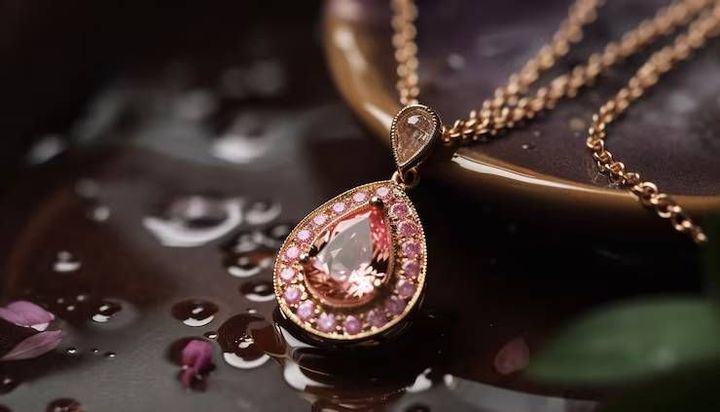
A royal gemstone necklace may contain a central pendant, multiple rows of stones, repeated motifs, graduated gemstones, or combinations of colored and transparent stones. Traditional designs can incorporate floral patterns, geometric forms, symbolic shapes, or architectural details.
Modern royal gemstone necklace designs can preserve these visual ideas while using contemporary proportions and manufacturing methods. Computer-aided design, precision cutting, laser-assisted processes, and improved gemstone identification have added new techniques to established jewelry craftsmanship.
Main Elements of Royal Necklace Designs
A gemstone necklace can be understood through several interconnected elements. The gemstones provide color and visual focus, while the metal framework creates structure and supports the stones.
Common design elements include:
Central gemstones that create a focal area
Repeated gemstones that form symmetrical patterns
Pendants positioned below the main necklace
Metal motifs surrounding individual stones
Chains, links, or flexible sections
Diamond accents around colored gemstones
Decorative borders and connecting elements
Clasps and structural components
The proportions of these elements determine whether a necklace appears delicate, balanced, elaborate, or heavily decorated.
Gemstones Used in Royal Jewelry
Emeralds, rubies, and sapphires are frequently associated with traditional gemstone jewelry. Emeralds provide green color, rubies provide red color, and sapphires are commonly associated with blue, although sapphires can occur in other colors.
Other stones can broaden the palette. Amethyst, garnet, aquamarine, tourmaline, topaz, opal, and pearls can all be incorporated into formal necklace designs.
Gemstone selection involves more than color. Cut, transparency, clarity, hardness, durability, size, and treatment can influence how a stone performs within a particular necklace structure.
Importance
Royal gemstone necklaces are significant because they bring together gemstone knowledge, metalworking, design history, cultural traditions, and contemporary styling. Understanding these elements helps explain why two necklaces with similar colors can have very different structures and visual effects.
The subject is also relevant to jewelry collectors, designers, historians, fashion enthusiasts, and people interested in gemstone craftsmanship. A necklace can function as decorative jewelry while also reflecting particular artistic traditions and manufacturing techniques.
Understanding Gemstone Characteristics
Gemstone characteristics influence both appearance and construction. Color is often the first noticeable feature, but transparency, clarity, cut, hardness, and durability are also important.
The color of a gemstone can result from its chemical composition, trace elements, crystal structure, or treatment. Some gemstones naturally occur in multiple color varieties.
Clarity describes internal characteristics and surface features. Certain inclusions are common in particular gemstone types and can help identify natural stones, although their presence does not automatically establish origin or value.
Cut determines the shape and arrangement of polished surfaces. Faceted gemstones can interact with light through their facets, while cabochon-cut stones have smooth curved surfaces and can produce a softer visual appearance.
Traditional Design Motifs
Royal necklace designs often use repeated decorative motifs to create visual continuity. Floral forms may include leaves, petals, vines, or stylized flowers, while geometric motifs can use circles, squares, arches, and symmetrical lines.
Some traditional pieces use a central pendant surrounded by smaller stones. Others use graduated arrangements in which gemstones become smaller toward the sides of the necklace.
Symmetry is another common feature. Matching gemstones or repeated metal patterns can create balance across the neckline.
Craftsmanship
Creating an elaborate gemstone necklace can involve several specialized stages. Designers first develop the overall structure, followed by gemstone selection, metal preparation, setting, polishing, and final inspection.
Traditional handcrafting can involve engraving, filigree, soldering, stone setting, and metal shaping. Modern production can combine hand techniques with casting, computer-aided design, precision cutting, and specialized equipment.
Stone setting requires careful alignment. Each gemstone must fit its intended setting while allowing the metal to hold it securely without placing unnecessary pressure on the stone.
Recent Updates
From 2024 through 2026, royal gemstone necklace design has continued to combine historical influences with contemporary jewelry aesthetics. Designers have continued exploring mixed gemstone colors, varied metal tones, customizable proportions, and digital design techniques.
Contemporary Interpretations
Modern interpretations of royal necklace designs may use fewer gemstones while retaining elaborate decorative patterns. This approach can preserve the visual language of traditional jewelry without reproducing historical pieces exactly.
Some designs combine traditional gemstone colors with modern geometric shapes. Others use asymmetric arrangements, simplified pendants, or mixed gemstone cuts.
Layered necklace styling has also influenced contemporary jewelry presentation. Several necklaces of different lengths can be combined to create a more complex arrangement, although a heavily decorated royal necklace may already contain substantial visual detail on its own.
Digital Jewelry Design
Computer-aided design allows jewelry makers to construct detailed three-dimensional models before physical production. Designers can examine gemstone placement, metal thickness, pendant proportions, clasp structures, and overall dimensions digitally.
Digital models can also support customized necklace lengths and alternative gemstone arrangements. Manufacturing equipment can then translate suitable digital designs into physical components.
Mixed Gemstone Arrangements
Combining several gemstone colors is another approach used in contemporary jewelry. Blue sapphire can be paired with diamonds, emeralds with diamonds, or rubies with contrasting colored stones.
The visual effect depends on color relationships, stone size, spacing, metal color, and lighting. A controlled palette can create a coordinated appearance, while contrasting colors can create stronger visual separation.
Documentation and Gemstone Identification
Gemstone documentation remains relevant for pieces containing significant or unusual stones. Laboratory reports can identify certain gemstone characteristics and may describe treatments or material classifications.
Documentation terminology varies by gemstone type and laboratory. A report should therefore be interpreted according to the definitions and testing methods used by the issuing organization.
Laws or Policies
Royal gemstone necklaces are influenced by regulations covering gemstone disclosure, precious-metal identification, consumer information, trade documentation, and import or export procedures. Specific rules depend on the jurisdiction and materials involved.
Gemstone Disclosure
Jewelry descriptions should distinguish natural gemstones from laboratory-created, synthetic, imitation, or composite materials where applicable. Treatments may also need to be disclosed according to relevant jewelry standards.
Common gemstone treatments can include heating, filling, dyeing, irradiation, impregnation, or other processes. Not every treatment applies to every gemstone, and terminology needs to reflect the actual material.
Precious-Metal Identification
Gold, platinum, silver, and their alloys can be subject to fineness, hallmarking, or identification requirements. A marking can indicate information about the metal composition when used under the relevant regulatory system.
Because requirements differ between countries, the same necklace may be subject to different documentation or marking requirements in different markets.
Trade and Origin Documentation
International gemstone and jewelry movement can involve customs declarations, material descriptions, and origin documentation. Certain gemstones, precious metals, and other materials may be subject to additional trade controls.
Claims about gemstone origin should be supported by appropriate documentation. Geographic appearance or color alone does not establish a gemstone's origin.
Tools and Resources
Several tools can help readers understand royal gemstone necklace designs and their construction. Gemstone identification references explain characteristics such as hardness, color, transparency, crystal structure, and common treatments.
Jewelry sizing guides can help explain necklace lengths and placement around the neckline. Digital jewelry-design platforms can be used to visualize pendant dimensions, gemstone arrangements, metal structures, and decorative patterns.
Useful resources include:
Gemstone identification guides
Gemstone hardness references
Jewelry measurement charts
Necklace-length guides
Gemstone shape references
Metal purity charts
Jewelry design software
Digital gemstone visualization tools
Laboratory gemstone reports
Jewelry care guides
Setting-style references
Craftsmanship and metalworking references
A simplified comparison of design approaches is shown below:
| Necklace Style | Main Feature | Common Design Character |
|---|---|---|
| Pendant Necklace | Central decorative element | Focused visual arrangement |
| Graduated Necklace | Stones increase toward the center | Balanced progression |
| Multi-Row Necklace | Several gemstone rows | Dense decorative appearance |
| Collar Necklace | Sits closely around the neckline | Structured presentation |
| Choker-Style Design | Shorter neck placement | Strong neckline emphasis |
| Layered Necklace | Multiple lengths | Contemporary combination |
| Statement Necklace | Large or elaborate structure | Strong visual presence |
Styling Royal Gemstone Necklaces
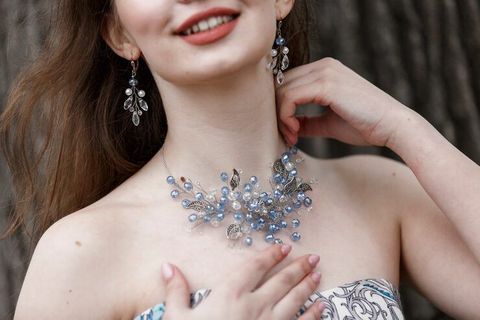
Styling depends on the necklace's size, color, neckline, clothing, and other accessories. A heavily decorated necklace can become the main visual element, while simpler clothing can create clearer contrast around it.
Neckline shape is also relevant. Open necklines can provide visible space around a pendant or central gemstone arrangement. Higher necklines can create a contrasting background for colorful stones.
Color coordination can be approached through either matching or contrast. A necklace containing blue gemstones may coordinate with similar clothing tones, while neutral clothing can provide a contrasting background.
Other jewelry should also be considered. Earrings, bracelets, rings, and hair accessories can either complement the necklace or create competing visual details.
Necklace Proportions
Necklace length affects where the main gemstone arrangement sits. Shorter designs generally sit closer to the neck, while longer designs can extend toward the chest.
Pendant size also changes the visual balance. A large central pendant may require additional space around it, while a necklace composed of smaller repeated stones can create a more continuous pattern.
A useful styling framework is:
Consider neckline shape before selecting necklace length.
Coordinate gemstone colors with clothing or use controlled contrast.
Consider the visual weight of earrings and other jewelry.
Allow sufficient space for a large central pendant.
Match the formality of the necklace with the overall setting.
Care and Storage
Gemstone necklaces require care appropriate to the specific stones and metals used. Hardness does not fully determine durability because toughness, cleavage, treatments, and setting construction can also affect how a gemstone responds to impact.
Some gemstones may be sensitive to heat, chemicals, sudden temperature changes, or ultrasonic cleaning. Cleaning methods should therefore be appropriate for the particular gemstone and treatment.
Separate storage can reduce contact between jewelry pieces. Periodic inspection can also identify loose settings, worn clasps, damaged links, or other structural changes.
FAQs
What are royal gemstone necklace designs?
Royal gemstone necklace designs are elaborate jewelry styles featuring colored gemstones, precious metals, decorative motifs, and detailed settings. They often draw visual inspiration from historical ceremonial and formal jewelry.
Which gemstones are used in royal gemstone necklaces?
Common choices include emeralds, rubies, sapphires, diamonds, pearls, garnets, amethyst, aquamarine, tourmaline, and topaz. The selected stones depend on color, durability, design, and availability.
What craftsmanship is involved in royal gemstone jewelry?
Craftsmanship can include jewelry design, gemstone cutting, metal forming, casting, engraving, soldering, stone setting, polishing, and final inspection. Traditional handwork can be combined with modern digital design and precision manufacturing.
How can royal gemstone necklaces be styled?
Styling can consider necklace length, neckline shape, gemstone colors, clothing tones, and other jewelry. Elaborate necklaces generally create a strong visual focus, so surrounding accessories can be selected according to the desired balance.
How should royal gemstone necklaces be cared for?
Care depends on the gemstones, treatments, metals, and settings used. Appropriate cleaning methods, separate storage, and periodic inspection can help identify structural changes and reduce unnecessary contact or damage.
Conclusion
Royal gemstone necklace designs combine colored gemstones, precious metals, historical motifs, and detailed craftsmanship into elaborate jewelry forms. Gemstone characteristics, setting structures, proportions, and metal choices all influence the final appearance and construction. Recent approaches combine traditional visual styles with digital design, mixed gemstone arrangements, and contemporary styling concepts. Jewelry disclosure, metal identification, trade documentation, and care requirements depend on the materials and jurisdictions involved.