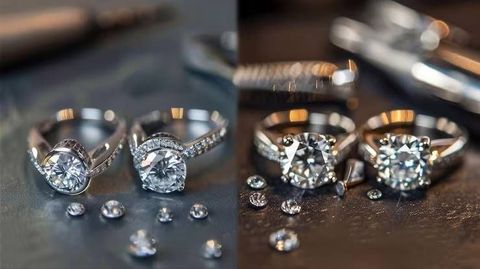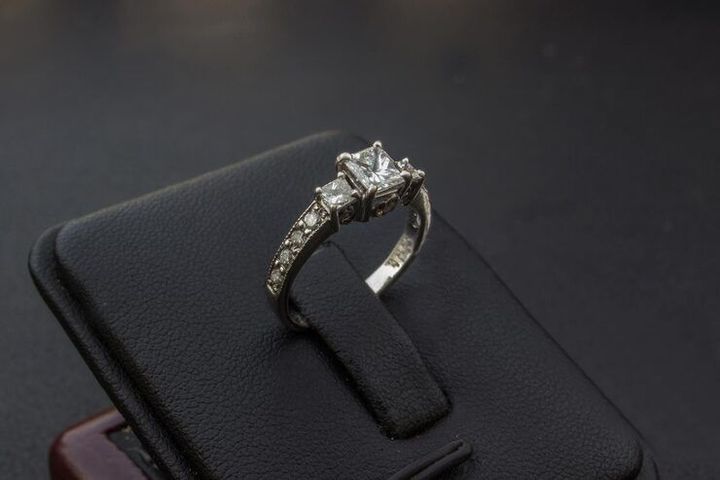
Lab-Grown Diamond Rings Guide With Modern Jewelry Trends and Diamond Buying Insights
Lab-grown diamond rings have become an increasingly recognized part of the modern jewelry industry. These diamonds are created in controlled laboratory environments using advanced technological processes that reproduce the conditions responsible for natural diamond formation.
They have almost the same chemical composition, crystal structure, optical properties, and physical characteristics as diamonds formed beneath the Earth's surface.
Natural diamonds develop over extremely long geological periods under intense pressure and temperature. Lab-grown diamonds, however, are produced through specialized equipment that recreates certain aspects of these natural formation conditions. The resulting stones contain crystalline carbon and can display the brilliance, hardness, and light performance associated with natural diamonds.
How Lab-Grown Diamonds Are Created
Two primary technologies are used in laboratory diamond production:
High Pressure High Temperature (HPHT): This method uses extremely high pressure and temperature to transform a carbon source into a diamond crystal.
Chemical Vapor Deposition (CVD): This process introduces carbon-containing gases into a controlled chamber, allowing carbon atoms to accumulate and form diamond layers.
Both methods produce genuine diamonds rather than diamond imitations. However, their growth conditions can influence crystal characteristics, inclusions, and other identifying features.
Difference Between Lab-Grown and Natural Diamonds
The primary difference between these diamond categories is their origin. Natural diamonds develop through geological processes, while laboratory diamonds are manufactured using controlled technological methods.
| Feature | Lab-Grown Diamonds | Natural Diamonds |
|---|---|---|
| Origin | Controlled laboratory environment | Natural geological formations |
| Composition | Crystalline carbon | Crystalline carbon |
| Hardness | 10 on the Mohs scale | 10 on the Mohs scale |
| Appearance | Diamond brilliance and sparkle | Diamond brilliance and sparkle |
| Formation period | Weeks to months, depending on production | Geological timescales |
| Identification | Specialized gemological testing | Specialized gemological testing |
| Availability | Production-based supply | Mining-based supply |
These similarities make professional identification important when determining a diamond's origin. Standard visual inspection is generally insufficient to distinguish the two categories reliably.
Importance
Lab-grown diamond rings matter today because consumer preferences, jewelry technology, and environmental discussions are influencing the wider diamond market. People exploring engagement rings, wedding jewelry, anniversary gifts, and everyday accessories increasingly encounter laboratory-created diamonds as an alternative to naturally formed stones.
The availability of different production methods also allows manufacturers to develop diamonds in various shapes, sizes, and quality grades. This creates additional choices for jewelry designers and individuals interested in contemporary diamond designs.
Who Is Interested in Lab-Grown Diamond Rings?
Several consumer groups consider these rings for different purposes:
Engagement ring customers: Couples exploring contemporary engagement jewelry may consider laboratory diamonds for their appearance and available specifications.
Wedding jewelry customers: Lab-grown stones are used in wedding bands, matching ring sets, and coordinated jewelry collections.
Fashion jewelry enthusiasts: Modern designs frequently incorporate laboratory diamonds into minimalist and decorative ring styles.
Jewelry collectors: Individuals interested in gemstone technology may examine differences between laboratory-created and natural diamonds.
Environmentally conscious consumers: Some people investigate laboratory production when considering the environmental and social factors associated with diamond origins.
Practical Challenges Addressed by Laboratory Diamonds
Traditional diamond sourcing involves geological exploration, mining operations, processing, transportation, and distribution. Laboratory production introduces a different supply model that does not require extracting the diamond itself from underground deposits.
However, laboratory production also involves electricity, specialized machinery, cooling systems, and industrial materials. Therefore, environmental performance depends on production efficiency, energy sources, and manufacturing practices.
Another important consideration is transparency. Consumers need accurate information about diamond origin, grading, treatments, and certification to understand the characteristics of an individual stone.
Recent Updates
Developments in diamond-growing technology, jewelry design, and consumer awareness have influenced the laboratory diamond industry during recent years. Between 2024 and 2026, the broader market has continued to experience changing production methods, evolving design preferences, and greater attention to gemstone identification.
Advances in Diamond Production
Manufacturers continue to improve HPHT and CVD production processes. Improvements in temperature control, pressure management, gas composition, and crystal monitoring help manufacturers manage diamond growth characteristics.
Production technology also influences the development of larger stones and different diamond colors. However, the final quality depends on crystal formation, clarity, cutting precision, and other measurable characteristics.
Modern Lab-Grown Diamond Ring Designs
Contemporary jewelry collections feature several design directions:
Solitaire rings: A single central diamond creates a simple appearance suitable for engagement and formal jewelry.
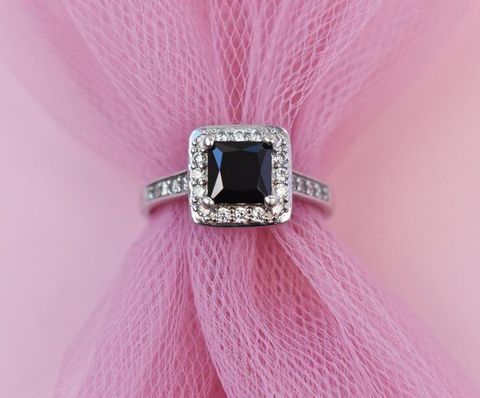
Halo rings: Smaller diamonds surround the central stone, creating additional visual brightness.
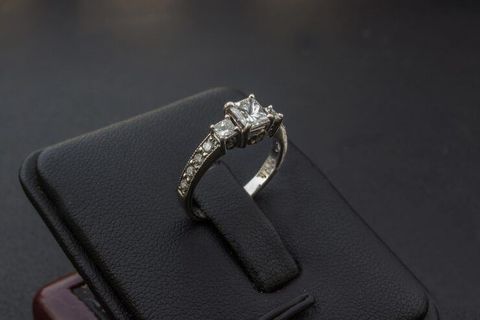
Three-stone rings: Three prominent stones represent a traditional arrangement used in anniversary and engagement jewelry.
Oval diamond rings: Oval-shaped stones create an elongated appearance across the finger.
Emerald-cut rings: Rectangular step-cut diamonds display broad, organized facets.
Hidden halo rings: Smaller diamonds are positioned beneath the central stone for additional decorative detail.
Growing Attention to Diamond Origin
Consumers increasingly examine whether a diamond is laboratory-created or naturally formed. Jewelry manufacturers and gemological laboratories have also emphasized clearer identification practices.
Laser inscriptions, grading reports, and documented production origins help establish transparency. These developments are particularly relevant when diamonds are transferred between manufacturers, retailers, and jewelry owners.
Laws or Policies
The regulation of lab-grown diamond rings involves gemstone identification, consumer protection, product descriptions, manufacturing disclosures, and international trade requirements. Specific rules differ between countries, so the applicable requirements depend on where a diamond is manufactured, imported, distributed, or purchased.
Diamond Identification and Disclosure
A fundamental regulatory consideration is the accurate representation of laboratory-created diamonds. They should not be described in a way that creates confusion about their geological origin.
The terminology used in jewelry descriptions should clearly distinguish laboratory-grown diamonds from natural diamonds. Terms such as laboratory-created and laboratory-grown help communicate the production method.
Important disclosure information can include:
Diamond origin and production method.
Carat weight and gemstone measurements.
Color and clarity grades.
Diamond treatments, where applicable.
Laboratory grading documentation.
Laser inscription details, where available.
Consumer Protection and Trade Requirements
Consumer protection frameworks in many countries address misleading product descriptions and inaccurate claims. Jewelry businesses may also need to follow applicable import documentation, customs classification, hallmarking, and product disclosure requirements.
In India, diamond jewelry is influenced by consumer protection legislation and applicable gemstone disclosure practices. The Bureau of Indian Standards (BIS) administers hallmarking frameworks for specified precious-metal jewelry, although gold hallmarking and diamond-origin certification are separate matters.
Internationally, diamond grading organizations provide identification and grading documentation. However, a grading report is not automatically a government-issued certificate or proof of every environmental and ethical claim associated with production.
Tools and Resources
Several tools help individuals understand laboratory diamonds, evaluate ring specifications, and examine jewelry characteristics. These resources can make technical information easier to interpret.
Diamond Grading Reports
Gemological reports provide information about a diamond's measurable characteristics. Depending on the issuing laboratory, documentation may include:
Carat weight.
Color grade.
Clarity grade.
Cut information.
Measurements and proportions.
Growth method identification.
Laser inscription information.
Recognized gemological laboratories include the Gemological Institute of America (GIA) and the International Gemological Institute (IGI). Their reporting systems and grading terminology may differ.
Diamond 4Cs Evaluation
The 4Cs framework provides a standardized way to understand diamond characteristics.
| Diamond Characteristic | Meaning | What to Examine |
|---|---|---|
| Cut | How the diamond interacts with light | Proportions, symmetry, polish |
| Color | Degree of colorlessness | Visible color and grading |
| Clarity | Presence of internal or external features | Inclusions and blemishes |
| Carat | Diamond weight | Weight expressed in carats |
These characteristics should be considered together because individual grades do not describe every aspect of a diamond's visual appearance.
Ring Size and Design Tools
Digital ring-size calculators help estimate finger measurements using printable guides or measurement instructions. Results can vary depending on measurement accuracy and finger temperature.
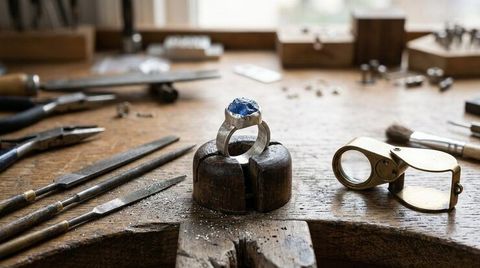
Computer-aided design (CAD) software is another useful resource. Jewelry designers use these platforms to create digital ring models, examine stone placement, and evaluate settings before physical manufacturing begins.
Diamond Comparison Resources
Digital diamond comparison platforms can organize information about different stones. Useful comparison details include:
Diamond shape and dimensions.
Grading laboratory and report number.
Cut proportions and symmetry.
Color and clarity classifications.
Setting material and design.
Production origin and disclosure information.
These details provide a structured understanding of laboratory-grown diamond rings without relying exclusively on appearance or marketing descriptions.
FAQs
Are Lab-Grown Diamond Rings Real Diamonds?
Yes. Lab-grown diamond rings contain diamonds made of crystalline carbon. They have substantially the same chemical composition, crystal structure, and physical properties as natural diamonds, although their origins differ.
How Are Lab-Grown Diamond Rings Different From Natural Diamond Rings?
The main difference is the diamond's origin. Laboratory diamonds are created through HPHT or CVD technology, while natural diamonds form through geological processes beneath the Earth's surface.
Do Lab-Grown Diamonds Have the Same Hardness as Natural Diamonds?
Both categories have a hardness of 10 on the Mohs scale. Their hardness makes them suitable for jewelry applications, although diamond surfaces can still experience chipping under certain impacts.
Can a Lab-Grown Diamond Be Identified Visually?
Reliable identification generally requires specialized gemological equipment. Laboratory diamonds can have visual characteristics similar to natural diamonds, making professional testing and grading documentation important.
Do Lab-Grown Diamond Rings Require Special Maintenance?
They generally require the same basic care as natural diamond rings. Regular cleaning with appropriate methods, careful storage, and periodic inspection of the metal setting can help maintain their appearance and structural condition.
Conclusion
Lab-grown diamond rings represent an important development in modern jewelry manufacturing through HPHT and CVD technologies. Their physical and chemical similarities to natural diamonds have expanded the range of contemporary jewelry designs and gemstone options. Understanding diamond grading, production origins, identification reports, and disclosure requirements helps explain the characteristics of these rings. Technology, transparency, and evolving design preferences continue to shape this segment of the global jewelry industry.