Bearing Grinding Machine Guide: Types, Price & Buying Tips
Every smooth-running motor, turbine, and vehicle relies on bearings shaped to microscopic tolerances. Investing in the right bearing grinding machine is essential for manufacturers looking to boost production speed, reduce scrap rates, and maintain strict quality standards.
In modern industrial manufacturing, achieving near-zero friction requires specialized precision grinding equipment.
Proper surface roughness and roundness directly impact the lifespan and noise level of the final bearing assembly. When workshops upgrade their production lines, selecting heavy-duty bearing manufacturing equipment ensures consistent repeatability across thousands of workpieces. Whether you operate a high-volume automotive plant or a specialized aerospace toolroom, matching the grinder design to your specific part geometry is the foundation of profitable machining.
Core Types of Bearing Grinding Machines
Different bearing geometries require distinct grinding methods to achieve optimal roundness and concentricity.
Internal Grinding Machine for Bore and Raceway Finishing
An internal grinding machine is specifically engineered to finish the inner diameter (ID) and internal raceway grooves of bearing rings. Using a compact, high-RPM spindle, the abrasive wheel enters the bore of a stationary or rotating ring to remove microscopic stock. Modern units frequently utilize shoe centerless tooling or magnetic chucking systems to hold rings securely without distorting thin walls. This setup is indispensable for tapered roller bearings, ball bearing inner rings, and spherical roller bearings that demand exact bore geometry.
Cylindrical Grinding Machine for External Diameters
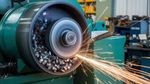
When finishing the outer diameter (OD) or external raceways of inner rings, a cylindrical grinding machine delivers unmatched accuracy.
Centerless Grinding Machine for High-Volume Production
For mass-producing cylindrical rollers, needle rollers, and outer ring diameters, a centerless grinding machine offers the highest throughput.
Key Features to Evaluate Before Buying
Selecting industrial machinery involves balancing upfront capital expenditure against long-term operational efficiency. Evaluating core technical specifications prevents costly bottlenecks down the road.
CNC Automation and In-Process Gauging
Upgrading to a CNC grinding machine transforms manual workshop operations into predictable, automated workflows.
Machine Rigidity and Thermal Stability
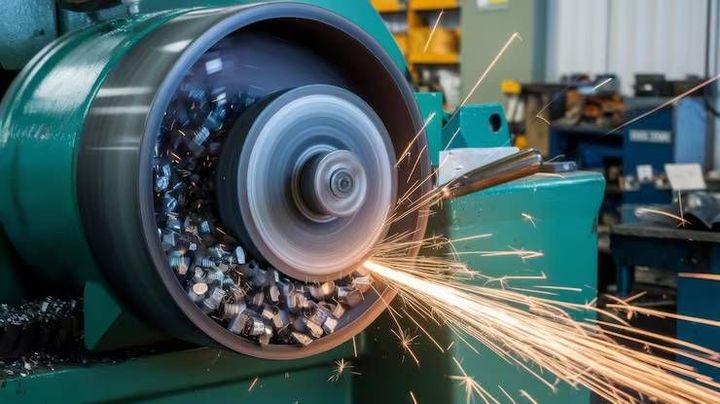
Grinding hardened steel generates substantial heat and vibration, both of which threaten micron-level tolerances. Heavy cast-iron machine beds, coated slideways, and centralized lubrication systems absorb mechanical vibrations during aggressive stock removal. Furthermore, integrated coolant filtration and chiller units prevent thermal expansion in the spindle and workpiece. Buyers should verify spindle motor power, maximum wheel peripheral speed, and structural weight before finalizing any equipment quote.
Factors Influencing Bearing Grinding Machine Cost
Pricing for industrial grinders varies widely based on automation levels, grinding capacity, and controller sophistication. Basic hydraulic or manual internal grinders generally sit at the lower end of the investment spectrum, making them accessible for repair shops and small-batch toolrooms. Conversely, fully automated CNC raceway grinders equipped with gantry loaders, high-frequency spindles, and active gauging represent a major capital investment.
Beyond the initial purchase price, buyers must calculate total cost of ownership. Factor in abrasive wheel consumption, diamond dresser replacements, synthetic coolant maintenance, and three-phase electrical power requirements. Requesting test grinds on your actual bearing rings from reputable industrial machinery suppliers is the smartest way to verify cycle times and surface finish guarantees before signing a purchase order.
Conclusion
Choosing the right bearing grinding machine comes down to matching your production volume and part tolerances with the right mechanical design.
Disclaimer: The information provided in this article is for educational and informational purposes only. Specifications, pricing, and technical capabilities of industrial grinding equipment vary by manufacturer and application requirements. Always consult certified machinery engineers and review official technical documentation before making capital equipment purchases or operating heavy industrial machinery.