Automatic Loading Systems Explained: Working Process, Components, Features, Applications, Uses and Benefits
Automatic loading systems are equipment arrangements designed to move, position, transfer, or load materials with limited manual handling. They are used in factories, warehouses, distribution facilities, manufacturing plants, and other environments where products or raw materials need to move between vehicles, storage areas, production lines, and processing equipment.
An automatic loading system can combine conveyors, sensors, robotic equipment, lifting mechanisms, control software, and safety devices to coordinate these activities.
The basic purpose of an automatic loading system is to create a controlled movement of materials from one point to another. Depending on the application, the system may handle pallets, cartons, containers, bags, components, packaged products, or bulk materials. Modern systems can also exchange information with warehouse management systems, manufacturing software, and automated material-handling equipment.
Context
What Are Automatic Loading Systems?
Automatic loading systems are mechanical and electronic arrangements that automate part or most of a loading process. Traditional loading may involve forklifts, manual positioning, lifting equipment, conveyors, or several workers coordinating the movement of materials. Automation introduces sensors, programmed controls, conveyors, robotic mechanisms, or automated vehicles to perform specific stages.
The concept developed from the broader field of material handling automation. As factories and warehouses became larger and material flows became more complex, businesses needed methods for moving goods consistently between storage, production, and transportation areas.
An automatic loading system does not necessarily mean that every operation is fully automated. Some installations use partial automation, where workers place materials into a defined area and the equipment completes the transfer. Other installations combine automated storage, robotic handling, conveyors, and vehicle-loading equipment into a connected process.
Where Are Automatic Loading Systems Used?
Automatic loading systems can be adapted to different material types and facility layouts. Common environments include:
- Manufacturing plants
- Distribution warehouses
- Automotive facilities
- Food and beverage processing plants
- Packaging operations
- E-commerce warehouses
- Cold-storage facilities
- Ports and logistics terminals
- Agricultural processing facilities
- Industrial production lines
The exact configuration depends on factors such as load dimensions, weight, movement distance, loading frequency, available floor space, and the type of vehicle or equipment receiving the material.
Importance
Why Automated Loading Matters
Loading and unloading activities can involve repeated movement, lifting, positioning, and transportation of materials. Repetitive manual handling may create physical strain and can make material flow dependent on the availability and coordination of workers.
Automatic loading systems address several operational challenges by creating a predefined sequence for material movement. Sensors can detect the position of a load, while controllers can determine when conveyors, lifts, robotic arms, or other mechanisms should operate.
Another important factor is consistency. A programmed loading sequence can follow defined movement parameters, which may help facilities maintain predictable material flow when large quantities of similar loads are handled.
Problems These Systems Address
Automatic loading systems can help address issues such as:
- Repetitive movement of pallets or containers
- Delays caused by manual positioning
- Limited space around loading areas
- Irregular material flow
- Difficult handling of heavy or awkward loads
- Coordination between storage and transportation equipment
- Need for tracking during internal material movement
- Safety risks associated with moving machinery
Automation does not remove the need for human oversight. Workers may still be responsible for monitoring equipment, inspecting loads, managing exceptions, performing maintenance activities, and responding to abnormal conditions.
Main Advantages
The benefits depend on system design and operating conditions. Common advantages include more consistent material movement, reduced repetitive manual handling, improved process visibility, and better coordination between different pieces of equipment.
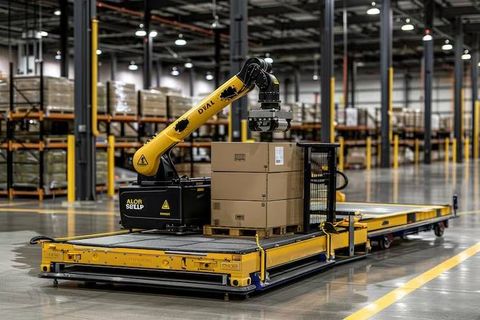
For example, an automated pallet loading arrangement can connect a storage system with conveyors and a vehicle-loading area. Once a pallet reaches a designated position, sensors and controllers can coordinate its movement into the next stage.
Working Process
Step 1: Load Identification
The process normally begins when a pallet, container, carton, or other load reaches an entry point. Sensors, barcode readers, RFID equipment, cameras, or other identification technologies may determine what type of load has arrived.
The information can be used by the control system to select an appropriate movement sequence.
Step 2: Position Detection
Sensors determine whether the load is correctly positioned. Photoelectric sensors, proximity sensors, laser systems, cameras, or other detection devices may be used.
Correct positioning is important because conveyors, robotic arms, lifts, and transfer mechanisms need accurate information before movement begins.
Step 3: Material Transfer
The control system activates the appropriate equipment. Depending on the installation, this could involve conveyors, rollers, pallet shuttles, robotic arms, automated guided vehicles, lifts, telescopic conveyors, or other mechanisms.
The load then moves through a predefined route.
Step 4: Loading
The final loading stage places the material into a truck, trailer, container, production area, storage location, or another designated position. Some systems use telescopic conveyors or robotic equipment to reach deeper into a vehicle or container.
Step 5: Confirmation and Monitoring
Sensors confirm that the loading operation has been completed or that the load has reached the expected position. Software may record information such as movement status, load identification, location, and equipment condition.
If an abnormal condition occurs, the system may stop movement and generate an alert for an operator.
Components
Mechanical Components
The mechanical structure depends on the type of automatic loading system. Common components include:
- Roller conveyors
- Belt conveyors
- Chain conveyors
- Telescopic conveyors
- Lifting platforms
- Transfer units
- Pallet handling equipment
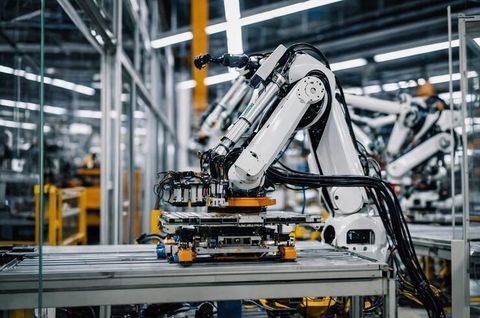
- Robotic arms
- Automated guided vehicles
- Racks and storage structures
Sensors and Control Equipment
Sensors provide information about position, movement, load presence, and operating conditions. Programmable logic controllers, industrial computers, motor controllers, and related control equipment process this information.
Human-machine interfaces allow operators to view equipment status, change permitted operating parameters, and respond to system alerts.
Software and Communication
Modern automatic loading systems may communicate with warehouse management systems, manufacturing execution systems, enterprise resource planning platforms, and fleet-management software.
This connectivity allows material movement information to be shared between different stages of an operation.
Features and System Types
Automatic loading systems vary considerably according to their application. The following table provides a general comparison.
| System Type | Main Function | Typical Load | Common Application |
|---|---|---|---|
| Conveyor Loading | Continuous material movement | Cartons, boxes, pallets | Warehouses |
| Telescopic Conveyor | Extends into vehicles | Cartons, packages | Distribution |
| Robotic Loading | Automated positioning | Cases, containers | Manufacturing |
| Pallet Loading System | Moves palletized loads | Pallets | Factories |
| AGV-Based Loading | Autonomous internal movement | Pallets, containers | Warehouses |
| Dock Loading System | Transfers material through loading areas | Pallets, cartons | Logistics facilities |
Important features can include automated positioning, load detection, programmable movement sequences, emergency stopping, obstacle detection, data logging, and communication with other industrial systems.
Recent Updates
Greater Use of Connected Automation
From 2024 through 2026, industrial automation has increasingly combined physical handling equipment with digital control systems. Automated guided vehicles, autonomous mobile robots, warehouse software, machine vision, and connected sensors are being integrated into broader material-flow systems.
Recent industry research indicates continued development of automated material handling and AGV applications in Indian manufacturing and logistics environments.
More Flexible Navigation
Automated mobile equipment is increasingly using camera-based navigation, laser-based systems, mapping technologies, and software-controlled routing. These approaches can allow equipment to operate in changing environments without relying entirely on fixed physical guidance.
Another development is fleet management, where multiple automated vehicles can be monitored and coordinated through a central software platform.
Integration With Warehouses
Automatic loading is increasingly connected with automated storage and retrieval systems, conveyors, warehouse management software, and robotic picking or sorting equipment. Indian logistics policy has also emphasized digital technologies and integrated logistics information through initiatives such as ULIP and the National Logistics Policy.
Safety and Training Focus
Safety remains an important part of automation development. DGFASLI has continued conducting training related to material handling, lifting equipment, hazard identification, emergency preparedness, and workplace safety.
Laws or Policies
Workplace Safety Requirements in India
In India, automatic loading equipment used in factories and workplaces falls within a wider occupational safety framework. The Occupational Safety, Health and Working Conditions Code, 2020 establishes responsibilities concerning health, safety, and working conditions in covered establishments.
The Occupational Safety, Health and Working Conditions (Central) Rules, 2025 provide rules under the Code and extend across India. The rules were published in the Gazette of India.
Factory and Machinery Safety
Requirements can also depend on the type of facility, machinery, lifting equipment, hazardous materials, and applicable state rules. DGFASLI provides technical guidance and training related to occupational safety, including examination and inspection of lifting machinery and lifting tackles.
For this reason, an automatic loading system should be evaluated according to the machinery involved, workplace layout, load characteristics, electrical systems, guarding arrangements, emergency controls, and applicable central and state requirements.
Regulatory requirements can change, and specific installations may require assessment by qualified professionals familiar with the applicable Indian rules and standards.
Tools and Resources
Equipment Documentation
Manufacturer manuals, equipment drawings, operating instructions, maintenance records, electrical diagrams, and safety documentation are useful resources when understanding an automatic loading system.
Warehouse and Manufacturing Software
Warehouse management systems can help track inventory locations and movement. Manufacturing execution systems can connect material movement with production processes. Fleet-management platforms can coordinate automated vehicles operating within the same facility.
Safety Resources
The Ministry of Labour and Employment and DGFASLI provide information concerning occupational safety and workplace requirements. DGFASLI also publishes training information related to material handling, lifting equipment, hazard identification, and industrial safety.
Planning and Calculation Tools
Facilities may use load-capacity calculations, conveyor-speed calculations, floor-layout drawings, cycle-time analysis, and equipment specifications when designing an automated loading process. These tools help determine whether the proposed system matches the physical and operational requirements of a facility.
FAQs
What is an automatic loading system?
An automatic loading system uses mechanical equipment, sensors, controls, and software to move materials into a defined location with limited manual handling. It can be used for pallets, cartons, containers, and other industrial loads.
How does an automatic loading system work?
The system identifies or detects a load, confirms its position, moves it through a programmed sequence, and places it in the required location. Sensors and controllers monitor the process and can stop equipment when an abnormal condition is detected.
What are the main components of automatic loading systems?
Common components include conveyors, sensors, programmable controllers, motors, lifting mechanisms, robotic equipment, safety devices, communication systems, and software. The exact combination depends on the application.
Where are automatic loading systems used?
Automatic loading systems are used in warehouses, manufacturing plants, distribution facilities, packaging operations, automotive production, food processing, and other environments where materials move repeatedly between defined locations.
Are automatic loading systems covered by workplace safety rules in India?
Yes. Workplace machinery and material-handling activities can fall under occupational safety requirements in India. Applicable rules depend on the establishment, equipment, operation, and state-level requirements. The OSH framework and related rules provide a broader legal structure for workplace safety.
Conclusion
Automatic loading systems combine mechanical handling equipment, sensors, controls, and software to move materials through defined loading processes. They are used across manufacturing, warehousing, logistics, packaging, and other industrial environments. Recent developments have emphasized connected automation, mobile robots, machine vision, fleet coordination, and integration with warehouse software. In India, their use must also be considered alongside applicable workplace safety laws, machinery requirements, and relevant state rules.