Industrial Motor Manufacturer Guide: Manufacturing Methods, Equipment, Quality Standards and Uses
An Industrial Motor Manufacturer Guide explains how electric motors are designed, produced, tested, and used in industrial environments. Industrial motors convert electrical energy into mechanical movement, allowing machines, pumps, fans, conveyors, compressors, and production equipment to operate. Their development is closely connected to advances in electromagnetism and electrical engineering, which made practical electric motors an important part of modern industry.
Context
An Industrial Motor Manufacturer Guide explains how electric motors are designed, produced, tested, and used in industrial environments. Industrial motors convert electrical energy into mechanical movement, allowing machines, pumps, fans, conveyors, compressors, and production equipment to operate. Their development is closely connected to advances in electromagnetism and electrical engineering, which made practical electric motors an important part of modern industry.
An industrial motor manufacturer typically works with electrical components, metal parts, insulation materials, bearings, and precision assembly equipment. Manufacturing methods vary according to motor type, power rating, operating conditions, and intended application. Understanding these processes helps readers recognize how industrial motors are constructed and why quality standards matter.
Types of Industrial Motors
Industrial motors are available in several designs, each suited to different operating requirements.
Induction motors: Commonly used in pumps, fans, compressors, and conveyor systems. They operate through electromagnetic induction and are widely used with alternating-current supplies.
Synchronous motors: Operate at a speed linked to the supply frequency and motor design. Some applications use them where precise speed relationships or power-factor characteristics matter.
Direct-current motors: Use direct current and may be selected for applications requiring particular speed-control characteristics.
Servo motors: Used in systems requiring controlled position, speed, or movement, such as robotics and automated production equipment.
Brushless motors: Use electronic switching instead of mechanical brushes and are found in various industrial and automation applications.
The appropriate motor depends on load requirements, speed, starting conditions, available electrical supply, operating environment, and control equipment.
Importance
Industrial motors are important because they support manufacturing, water movement, ventilation, material handling, and many other activities. Their performance can influence production continuity, energy consumption, equipment reliability, and workplace safety. Motor selection and manufacturing quality therefore matter to equipment manufacturers, factory operators, maintenance teams, and infrastructure planners.
A poorly matched motor may struggle with its intended load, operate inefficiently, or experience excessive heating and vibration. Problems can also arise from incorrect installation, unsuitable electrical supplies, inadequate cooling, or insufficient maintenance. Understanding motor construction and quality testing helps explain how manufacturers and equipment operators address these challenges.
Main Components of an Industrial Motor
Although designs differ, many electric motors share several major components.
Stator: The stationary part that contains magnetic components and, in many designs, electrical windings.
Rotor: The rotating assembly that interacts with the magnetic field to produce movement.
Windings: Conductors arranged to create magnetic fields when current passes through them.
Bearings: Components that support the rotating shaft and help control friction and movement.
Shaft: Transfers mechanical rotation to the connected equipment.
Housing: Protects internal parts and may help dissipate heat.
Insulation system: Separates electrical conductors from other components and helps prevent electrical faults.
The materials, dimensions, and arrangement of these parts depend on the motor's design, operating temperature, electrical characteristics, and mechanical load.
Industrial Motor Manufacturing Process
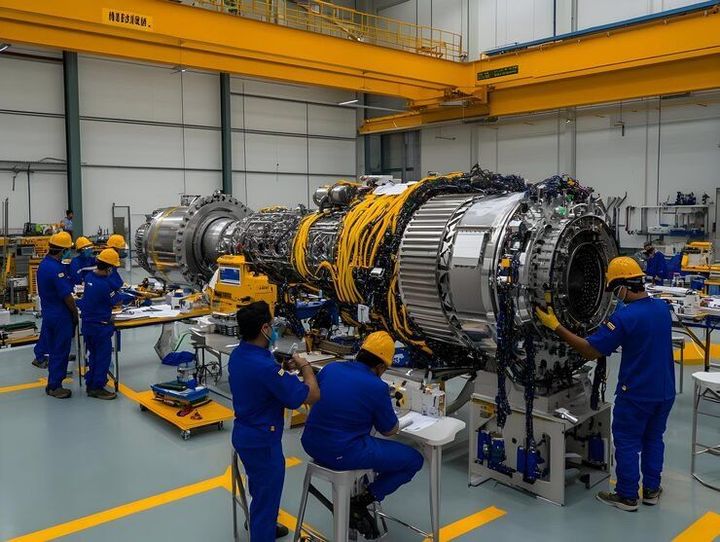
An industrial motor manufacturer generally follows a sequence of engineering, component production, assembly, and testing activities. The exact workflow varies with production volume and motor complexity.
Design and engineering: Engineers define power, voltage, speed, torque, cooling, mounting, and environmental requirements.
Material preparation: Metal laminations, copper or aluminium conductors, insulation materials, shafts, and housings are prepared according to design specifications.
Stator production: Thin electrical steel sheets may be stacked to form the stator core. Windings are inserted or formed, then insulated and secured.
Rotor manufacturing: Rotor components are assembled or produced using methods suited to the selected motor design.
Mechanical assembly: Bearings, shafts, housings, cooling components, and other parts are fitted together with appropriate alignment.
Electrical connections: Windings and terminals are connected according to the motor's electrical design.
Inspection and testing: The completed motor is checked for electrical, mechanical, and operational characteristics before release.
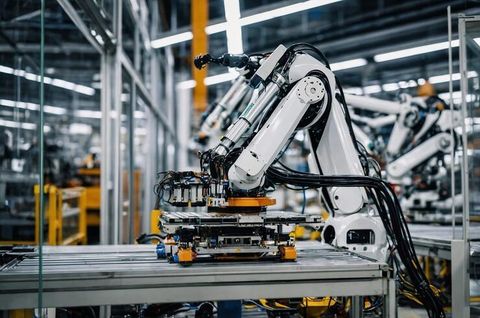
Manufacturers may automate selected stages while retaining manual inspection or assembly for tasks requiring specialized handling.
Manufacturing Equipment and Methods
Motor production uses a combination of metalworking, electrical processing, measurement, and assembly equipment. Common examples include:
Stamping presses: Produce electrical steel laminations used in motor cores.
Winding machines: Arrange insulated conductors into coils.
Insulation processing equipment: Applies or cures insulation materials according to the manufacturing process.
Machining equipment: Shapes shafts, housings, and other mechanical components.
Balancing machines: Detect and help correct rotor imbalance.
Assembly tools: Support controlled fitting, fastening, and bearing installation.
Electrical test instruments: Measure insulation resistance, winding characteristics, and other electrical properties.
Computer-controlled machinery can improve process consistency when correctly configured and maintained. However, production results also depend on material quality, process control, equipment condition, and worker training.
Recent Updates
Industrial motor manufacturing is increasingly influenced by energy efficiency requirements, factory automation, digital monitoring, and improved materials. Developments across 2024–2026 have continued to emphasize reduced energy use, production traceability, condition monitoring, and integration with automated industrial systems. The adoption of these technologies varies according to industry, motor size, and manufacturing investment.
Energy Efficiency and Motor Design
Energy efficiency remains an important consideration because industrial motors may operate for long periods. Design improvements can include optimized magnetic circuits, reduced electrical losses, improved winding arrangements, and better thermal management.
High-efficiency motors may reduce electricity consumption under suitable operating conditions, although actual results depend on the load, operating hours, motor selection, and control system. Variable-frequency drives can adjust motor speed to match certain applications, particularly pumps and fans, when the motor and driven equipment are compatible.
Smart Manufacturing and Predictive Maintenance
Some manufacturers use digital production systems to track component measurements, assembly steps, test results, and production quality. Sensors can also monitor operating temperature, vibration, current, or other indicators during motor use.
Condition-monitoring systems can help maintenance teams identify unusual operating patterns before a failure occurs. Such systems do not detect every possible fault, and readings need to be interpreted alongside equipment specifications, operating conditions, and inspection results.
Laws or Policies
Industrial motor manufacturers must consider electrical safety, energy efficiency, workplace safety, environmental requirements, and applicable product standards. The rules depend on the country, motor type, intended market, installation conditions, and whether the motor forms part of a larger machine.
Industrial Motor Standards in India
In India, the Bureau of Indian Standards (BIS) develops Indian Standards covering a range of electrical and industrial products. The relevant standards for a particular motor depend on its design and application. The IEC 60034 series is an important international reference for rotating electrical machines, covering topics such as ratings, performance, efficiency, and testing.
Manufacturers and purchasers should verify which standards and conformity requirements apply to the specific product. A standard may be voluntary in one situation but required under an applicable regulation, order, contract, or procurement specification in another.
Energy Efficiency and Workplace Safety
India's Bureau of Energy Efficiency (BEE) works on energy-efficiency programs and standards for relevant equipment and sectors. The applicability of a particular motor efficiency requirement depends on the equipment category and current regulatory provisions. Requirements should be checked against official government publications rather than assumed to apply to every industrial motor.
Manufacturing facilities must also follow applicable occupational safety, electrical safety, fire protection, and environmental rules. These may cover machinery guarding, safe electrical work, ventilation, handling of materials, waste management, and employee protection. Requirements vary by facility and jurisdiction.
Tools and Resources
Several technical resources help readers understand industrial motor specifications, manufacturing methods, and quality requirements.
Engineering and Technical Resources
The International Electrotechnical Commission (IEC) publishes international electrotechnical standards, including standards relevant to rotating electrical machines. The Bureau of Indian Standards provides information about Indian Standards, while the Bureau of Energy Efficiency publishes material related to energy efficiency in India.
Manufacturer datasheets and technical manuals can explain rated voltage, power, speed, torque, enclosure protection, insulation class, and permitted operating conditions. These documents are particularly useful when comparing motors intended for different applications.
Motor Selection and Testing Tools
Engineering teams may use motor sizing calculators to estimate required power and torque based on load characteristics. For example, mechanical power for a rotating system can be calculated using torque and angular speed, while electrical calculations depend on the motor type and supply characteristics.
Common testing resources include insulation-resistance testers, winding-resistance meters, vibration analyzers, temperature sensors, and power analyzers. Test procedures and acceptance limits should follow the applicable motor specifications and standards.
Industrial Motor Quality Checklist
A practical motor inspection may consider the following factors:
Confirm rated voltage, power, speed, and frequency.
Check the motor enclosure and mounting arrangement.
Review insulation, grounding, and terminal connections.
Verify bearing condition, shaft alignment, and rotor balance.
Examine temperature rise, vibration, and noise during suitable tests.
Retain inspection records and applicable test certificates.
The required checks vary according to motor design, operating environment, and intended use.
FAQs
What does an industrial motor manufacturer do?
An industrial motor manufacturer designs or produces motors, assembles their components, and conducts inspections or tests. Activities may include engineering, winding, machining, assembly, and performance verification.
What are the main industrial motor manufacturing methods?
Common methods include steel lamination stamping, coil winding, rotor production, precision machining, insulation processing, mechanical assembly, and electrical testing. The exact process depends on the motor design.
Which quality standards apply to industrial motors in India?
Relevant requirements may include applicable Indian Standards issued by BIS and international standards such as the IEC 60034 series. Mandatory requirements depend on the product, its intended use, and current regulations.
Which equipment is used in industrial motor manufacturing?
Production equipment may include stamping presses, winding machines, machining centers, balancing machines, assembly tools, and electrical test instruments. Manufacturers select equipment according to component design and production needs.
Where are industrial motors commonly used?
Industrial motors operate in pumps, fans, compressors, conveyors, machine tools, robotics, and material-handling systems. Their suitability depends on load, speed, environmental conditions, and control requirements.
Conclusion
Industrial motor manufacturing combines electrical engineering, precision mechanical production, component assembly, and quality testing. Motor design and manufacturing methods influence efficiency, reliability, and suitability for different industrial applications. Applicable standards and regulations help define safety, performance, and conformity requirements. Technical documentation, measurement equipment, and systematic inspections support a clearer understanding of motor quality and operation.