Wind Turbine Technology, Automation and Industrial Water Treatment Insights
Wind turbine technology and industrial water treatment may appear to belong to different areas of engineering, but both are important parts of modern infrastructure. Wind turbines convert the kinetic energy of moving air into electrical energy, while industrial water treatment systems help manage water used or generated by manufacturing and other industrial activities.
A wind turbine generally includes blades, a rotor, drivetrain components, a generator, control equipment, sensors, and electrical systems. Modern turbines increasingly use digital monitoring and automated controls to improve operational awareness and respond to changing wind conditions.
Industrial water treatment covers several processes. Depending on the application, these can include filtration, sedimentation, biological treatment, membrane separation, disinfection, ion exchange, and water recycling.
The two fields also share a growing dependence on automation. Sensors can collect information continuously, while control systems can analyze measurements and adjust equipment operation.
This combination of renewable energy technology, industrial automation, and water management is becoming increasingly relevant as industries look for more efficient and resilient infrastructure.
Why These Technologies Matter Today
Energy and water are fundamental to manufacturing, infrastructure, agriculture, data centers, food processing, chemical production, and many other sectors.
Wind power is expanding as part of the broader transition toward renewable electricity. The International Energy Agency reported that global renewable capacity additions reached about 800 GW in 2025. Wind accounted for approximately 20% of those additions, while global annual wind capacity additions increased by nearly 40% compared with 2024.
Water treatment is equally important because industrial processes can generate wastewater containing suspended solids, dissolved substances, oils, chemicals, nutrients, or other contaminants.
Effective treatment can help organizations:
- Manage industrial wastewater more responsibly
- Recover and reuse water where appropriate
- Protect receiving water bodies
- Monitor important treatment parameters
- Reduce unnecessary water consumption
- Improve process reliability
- Support environmental compliance
Automation connects these objectives with real-time monitoring. Temperature, pressure, flow, pH, conductivity, turbidity, dissolved oxygen, and other measurements can be collected through industrial sensors.
How Automation Supports Wind Energy
Automation is used throughout the life cycle of a wind turbine.
Control systems can monitor wind speed, rotor speed, vibration, temperature, electrical output, and other operating conditions. Automated systems can then adjust turbine functions according to predefined control strategies.
Predictive maintenance is another important area. Data from sensors can help identify unusual vibration, temperature changes, or other patterns that may indicate developing equipment problems.
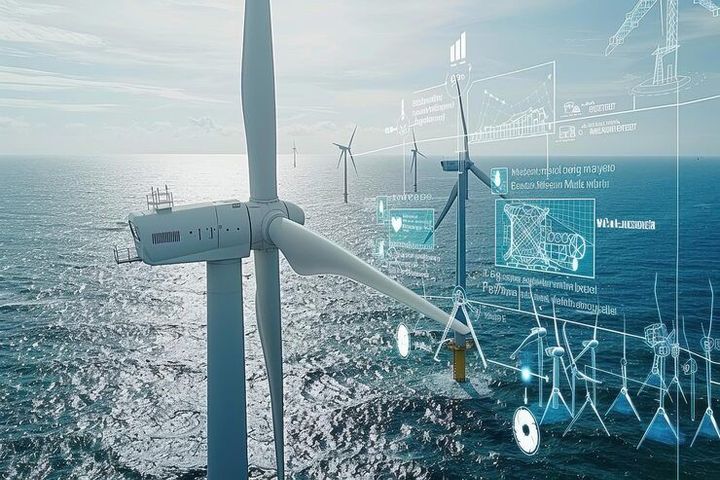
Digital twins are also receiving attention. In April 2026, the European Centre for Medium-Range Weather Forecasts described progress on a digital-twin project for offshore wind that combines weather, wave, turbine, grid, and site information for planning and operational analysis.
How Automation Supports Water Treatment
Industrial water treatment systems can also use automated control.
For example, a treatment plant may continuously monitor:
- pH and conductivity
- Water flow
- Pressure
- Turbidity
- Temperature
- Dissolved oxygen
- Chemical dosing conditions
- Tank levels
- Membrane performance
When measurements move outside defined operating ranges, an automated control system can trigger an adjustment or alert.
This can make treatment operations more consistent and provide useful historical data for analysis.
Recent Developments in Wind and Water Technology
The past year has brought several notable developments across renewable energy and industrial water management.
Wind Power Reached New Installation Records
The IEA reported that around 160 GW of wind capacity was added globally in 2025, representing a major increase from the previous year. India also recorded more than 6 GW of new wind capacity in 2025, roughly double its 2024 additions.
A separate 2026 industry report from the World Wind Energy Association estimated approximately 169 GW of new wind capacity in 2025. Differences between datasets can occur because organizations use different methodologies and reporting coverage.
Digital Twins and AI Are Expanding
Digital twins, machine learning, sensor networks, and large-scale data analysis are becoming increasingly relevant to wind turbine monitoring.
A 2026 research review highlighted artificial intelligence, big data, digital twins, and automated monitoring as important developments for offshore wind turbine operation and maintenance.
These technologies can support condition monitoring, weather analysis, turbine performance assessment, and maintenance planning.
Water Reuse Is Receiving Greater Attention
Water reuse is becoming an important part of water management policy. The European Union's revised Urban Wastewater Treatment Directive, adopted in 2024, specifically promotes the reuse of treated wastewater where appropriate, particularly in water-stressed areas.
For industrial facilities, this broader policy direction increases interest in water recycling, advanced filtration, membrane treatment, and monitoring systems.
Key Technology Trends
| Area | Recent direction |
|---|---|
| Wind turbines | Larger machines and improved digital monitoring |
| Offshore wind | Floating systems and deeper-water development |
| Automation | More sensor-based control and remote monitoring |
| AI | Pattern detection and predictive analysis |
| Digital twins | Simulation of turbines, sites, weather, and grids |
| Water treatment | Greater focus on reuse and resource recovery |
| Membrane systems | Wider use for advanced separation |
| Monitoring | More continuous measurement and data logging |
Laws, Policies, and Regulatory Considerations
Rules vary significantly by country and by the type of facility involved. Industrial operators generally need to consider environmental permits, wastewater discharge limits, water-quality requirements, waste management rules, occupational safety provisions, and local planning requirements.
For wind energy, regulations can include land-use approvals, environmental assessments, wildlife considerations, aviation requirements, grid connection rules, and offshore development frameworks.
Water treatment is particularly affected by discharge regulations. Requirements may specify acceptable levels for parameters such as suspended solids, pH, nutrients, metals, organic pollutants, or other substances.
India: Recent Wastewater Policy Development
India's regulatory framework includes environmental standards and wastewater requirements administered through central and state environmental authorities.
The Indian government published the Liquid Waste Management Rules, 2024 as draft rules, with the Gazette document stating a proposed commencement date of October 1, 2025. The draft framework covers wastewater, sludge, and faecal-sludge management across various local and institutional settings.
Because regulatory requirements can change and implementation can depend on the facility and jurisdiction, organizations should check the current requirements applicable to their location rather than relying on an older summary.
International Considerations
The European Union's revised wastewater framework places stronger emphasis on wastewater treatment, environmental protection, and reuse. It also requires member states to promote appropriate reuse of treated urban wastewater while protecting environmental and human health.
For multinational industrial operations, regulatory planning therefore needs to consider both national requirements and local environmental conditions.
Tools and Resources for Wind and Water Technology
Several categories of tools can help students, engineers, researchers, and facility teams understand these technologies.
Wind Energy Tools
Useful resources include:
- Wind resource assessment calculators
- Turbine performance calculators
- Power-curve analysis tools
- Wind-speed and direction datasets
- Weather forecasting platforms
- Geographic mapping tools
- Energy production estimation spreadsheets
- Digital-twin modelling platforms
Water Treatment Tools
Water-management work can use:
- Water-quality calculators
- Flow-rate calculators
- Hydraulic sizing worksheets
- Membrane performance calculators
- Chemical dosing calculators
- pH calculation tools
- Treatment process diagrams
- Wastewater monitoring templates
- Environmental compliance checklists
Automation and Data Tools
Automation projects commonly use:
- Industrial sensors
- Programmable controllers
- Supervisory monitoring systems
- Data historians
- Industrial dashboards
- Alarm-management systems
- Predictive analytics platforms
- Digital-twin software
- Maintenance data templates
The appropriate tool depends on the process, measurement requirements, regulatory environment, and level of automation.
Frequently Asked Questions
What is wind turbine technology?
Wind turbine technology involves equipment and control systems that convert wind energy into electrical power. Major components include blades, a rotor, generator, drivetrain or direct-drive system, sensors, electrical equipment, and control systems.
How does automation improve wind turbine operation?
Automation allows turbines to continuously monitor operating conditions and respond to changing wind and equipment conditions. It can also support remote monitoring, fault detection, data analysis, and maintenance planning.
What is industrial water treatment?
Industrial water treatment is the controlled processing of water used in or generated by industrial activities. Treatment can remove physical, chemical, or biological contaminants depending on the application.
Why is water reuse becoming more important?
Water reuse can help reduce pressure on freshwater resources where appropriate. It is particularly relevant in water-stressed regions and industries with significant water requirements. Treatment quality and regulatory requirements must be considered before reuse.
What role does AI play in these technologies?
AI can analyze large quantities of sensor and operational data to identify patterns, detect unusual conditions, support forecasting, and improve decision-making. Its usefulness depends on data quality, system design, and appropriate human oversight.
Conclusion
Wind turbine technology, industrial automation, and water treatment are developing alongside wider changes in energy, manufacturing, and environmental management.Wind power is expanding globally, while automation is helping operators collect and analyze more operational data. Digital twins, AI, sensors, and predictive analytics are becoming increasingly relevant, particularly for complex offshore wind installations.