Blow Moulding Machines: Industrial Automation, Technology & Market Trends
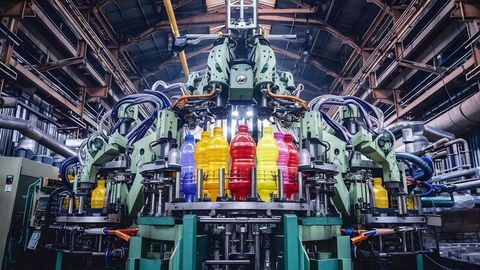
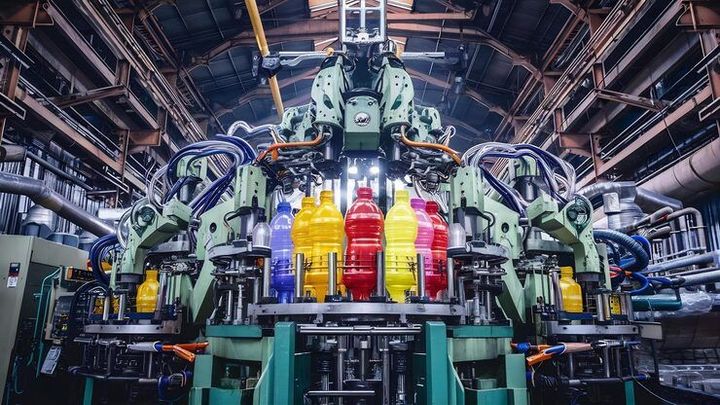
Blow moulding machines are industrial manufacturing systems designed to produce hollow plastic products. The basic process involves heating a polymer material, forming it into a tube or preform, placing it inside a mould, and using air pressure to expand the material against the mould walls.
The technology is widely used for products with internal cavities, including bottles, containers, drums, tanks, automotive components, and selected medical and consumer packaging products.
Blow moulding exists because traditional solid-part manufacturing methods are not always suitable for producing lightweight hollow shapes. The process can create consistent shapes at high production volumes while supporting different designs, sizes, and polymer materials.
Common blow moulding technologies include:
- Extrusion blow moulding
- Injection blow moulding
- Injection stretch blow moulding
- Accumulator-head blow moulding
- Multi-layer blow moulding
The choice depends on the product design, material, required output, wall thickness, and dimensional requirements.
How the Blow Moulding Process Works
Although machine configurations vary, the manufacturing cycle generally follows several stages.
First, plastic resin is prepared and heated until it reaches a suitable processing condition. Depending on the machine, the material may form a parison or an injection-moulded preform.
The hot material is then positioned inside a mould. The mould closes around it, and compressed air expands the plastic against the mould surface.
After cooling, the mould opens and the finished component is removed. Automated trimming, inspection, and handling may follow.
Key machine components can include:
- Extruder or injection unit
- Heating system
- Mould and clamping mechanism
- Air-pressure system
- Cooling circuits
- Servo or hydraulic drives
- Programmable control system
- Material feeding equipment
- Automated inspection equipment
Modern industrial automation allows many of these operations to be coordinated through programmable controls and sensors.
Why Blow Moulding Machines Matter Today
Blow moulding technology has an important role in packaging and manufacturing because many industries require lightweight, durable, and accurately shaped hollow products.
Packaging remains one of the major application areas. Food and beverage containers, personal-care packaging, pharmaceutical containers, and household products can all use blow-moulded components.
The technology also affects industrial sectors such as automotive manufacturing, construction, electronics, and healthcare.
The growing emphasis on lightweight packaging is another important factor. Reducing unnecessary material while maintaining adequate strength can help manufacturers improve material efficiency.
Automation is also changing production environments. Sensors, digital monitoring, programmable logic controllers, servo drives, and automated quality inspection can provide better control over manufacturing parameters.
Recent market research indicates that India's blow moulding sector is expanding, with packaging, healthcare, automotive, and consumer applications contributing to demand. One 2026 market assessment projects India's plastic blow moulding machine market to grow from an estimated USD 187.4 million in 2026 toward USD 281.4 million by 2033.
Key Applications Across Industries
Blow moulding machines are used across several manufacturing categories.
Packaging:
Bottles, containers, jars, drums, and other hollow packaging formats represent major applications.
Healthcare and pharmaceuticals:
The technology can produce selected containers and packaging components where consistent dimensions and controlled manufacturing conditions are important.
Automotive:
Hollow components such as fluid reservoirs, ducts, tanks, and selected vehicle parts can be produced using appropriate blow moulding processes.
Industrial manufacturing:
Larger containers, chemical-resistant vessels, tanks, and other hollow components can require specialized machinery and polymer combinations.
Consumer products:
Household containers, sporting products, personal-care packaging, and other shaped plastic products can also be manufactured through blow moulding.
Technology and Automation Trends in 2026
Blow moulding technology is increasingly connected with broader Industry 4.0 manufacturing practices.
One major trend is the use of servo-driven systems. Servo technology can provide accurate movement control and can support more consistent machine operation.
Digital control systems are another important development. Modern equipment can monitor production parameters such as temperature, pressure, cycle timing, and machine status.
Some systems are increasingly designed for network integration. This allows production information to be collected and analyzed alongside other factory data.
Energy management is also receiving greater attention. Manufacturers are examining heating efficiency, drive systems, compressed-air consumption, and cooling performance when assessing machine operation.
Another development is lightweighting. Advanced process control can help maintain product performance while reducing unnecessary material use.
Multi-layer technology is also relevant for applications requiring specific barrier or material characteristics. Different material layers can be combined to achieve particular performance requirements.
Recent 2026 market research highlights increasing adoption of automated, servo-driven, and network-integrated blow moulding technologies in India.
Recent Market and Industry Developments
The Indian market continues to show interest in blow moulding technology across packaging and industrial applications.
A June 2026 market assessment estimated India's plastic blow moulding machine market at approximately USD 187.4 million for 2026 and projected a 6% compound annual growth rate from 2026 to 2033. Injection stretch technology was identified as the largest technology segment in 2025.
Other 2026 industry analysis points to increasing adoption of Industry 4.0 controls, automation, lightweight containers, and production technologies designed around packaging, pharmaceutical, personal-care, and beverage applications.
The broader Indian plastics industry is also being shaped by digital production controls, recycling requirements, material efficiency, and changing packaging practices. Blow moulding therefore needs to be considered not only as a machine technology but also as part of a larger manufacturing and circular-economy system.
| Technology | Typical Application | Main Characteristic |
|---|---|---|
| Extrusion blow moulding | Containers, drums, tanks | Flexible for hollow shapes |
| Injection blow moulding | Small containers | Controlled preform production |
| Injection stretch blow moulding | PET bottles | Lightweight, oriented containers |
| Multi-layer blow moulding | Barrier packaging | Multiple material layers |
| Accumulator-head systems | Large industrial parts | Suitable for larger products |
Laws and Policies Affecting Blow Moulding in India
Blow moulding machinery itself is generally influenced by the wider rules governing plastics, packaging, waste management, environmental protection, and industrial manufacturing.
India's Plastic Waste Management Rules, 2016 have been amended several times. The Ministry of Environment, Forest and Climate Change lists amendments issued in 2018, 2021, 2022, and 2023, among others.
The Plastic Waste Management Amendment Rules, 2022 introduced Extended Producer Responsibility requirements for plastic packaging. These requirements include targets associated with recycling, reuse of certain rigid packaging, and recycled plastic content.
The 2024 amendment further updated definitions and provisions concerning biodegradable plastics and plastic packaging.
These rules matter to blow moulding because manufacturers producing plastic packaging need to consider material selection, recyclability, packaging design, and applicable waste-management obligations.
Manufacturers and packaging producers should also check applicable Central Pollution Control Board requirements and state-level environmental rules because regulatory implementation can vary by activity and location.
Tools and Resources for Learning and Production Planning
Several types of tools can help users understand or evaluate blow moulding technology.
Process calculators:
Material-volume, weight, cycle-time, and production-capacity calculators can help with basic manufacturing estimates.
CAD and mould-design software:
Computer-aided design tools can be used to develop container geometry, mould concepts, and dimensional layouts.
Simulation software:
Process simulation can help analyze material flow, cooling, wall thickness, and potential manufacturing problems before physical production.
PLC and automation platforms:
Industrial control platforms can help monitor machine sequences, sensors, temperature controls, pressure systems, and production data.
Energy-monitoring tools:
Electrical and compressed-air monitoring equipment can help identify major energy-consuming areas within a production line.
Quality-control templates:
Inspection checklists can track dimensions, weight, wall thickness, appearance, leakage, and other product characteristics.
Regulatory resources:
Government environmental portals, plastic-waste regulations, technical standards, and industry guidance documents are useful for understanding applicable compliance requirements.
Frequently Asked Questions
What are blow moulding machines used for?
Blow moulding machines are primarily used to manufacture hollow plastic products. Common examples include bottles, containers, drums, tanks, and selected automotive or industrial components.
What are the main types of blow moulding?
The main types are extrusion blow moulding, injection blow moulding, and injection stretch blow moulding. Specialized systems such as accumulator-head and multi-layer machines are also used for particular applications.
How does automation improve blow moulding?
Automation can coordinate machine movements, temperature control, pressure, mould operation, material handling, and inspection. Digital monitoring can also provide production data for process analysis.
Which industries use blow moulding technology?
Packaging, food and beverages, pharmaceuticals, healthcare, automotive, consumer products, chemicals, and industrial manufacturing are among the major application areas.
Why are recycling policies important for blow moulding?
Many blow-moulded products become plastic packaging or other plastic products after production. Recycling and EPR policies therefore influence material selection, packaging design, recycled content, collection, and waste-management practices.
Conclusion
Blow moulding machines remain an important part of modern plastic manufacturing because they can produce a wide range of hollow products with controlled shapes and repeatable production cycles.
The technology is evolving through industrial automation, servo-driven equipment, digital monitoring, lightweighting, multi-layer processing, and improved process control. These developments are particularly relevant to packaging, healthcare, automotive, and industrial manufacturing.