Pharmaceutical Manufacturing Machines: Process and Equipment Guide
Pharmaceutical manufacturing machines are specialized systems used to produce medicines in controlled industrial environments. They support different stages of production, including mixing ingredients, preparing formulations, forming tablets, filling capsules, packaging products, and checking quality.
Medicine manufacturing requires greater control than many ordinary industrial processes. Small differences in ingredient quantities, moisture, temperature, pressure, or processing time can affect a product's strength, stability, and consistency. Pharmaceutical equipment helps manufacturers manage these variables and follow documented production procedures.
The equipment used depends on the medicine being produced. Tablets and capsules require different machines from liquid formulations, injectable medicines, creams, and ointments.
Common categories of pharmaceutical manufacturing equipment include:
-
Material preparation equipment: Mills, sifters, and weighing systems.
-
Mixing and blending machines: Equipment that combines active ingredients with other formulation components.
-
Granulation systems: Machines that create granules with suitable properties for further processing.
-
Tablet compression machines: Equipment that forms powders or granules into tablets.
-
Capsule filling machines: Systems that place measured quantities of material into capsules.
-
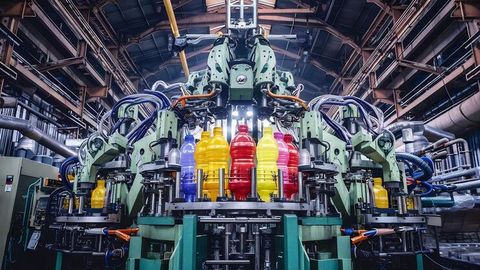
Liquid processing equipment: Mixing tanks, homogenizers, and liquid filling systems.
-
Sterile manufacturing equipment: Specialized systems used in controlled environments for certain injectable and other sterile products.
-
Packaging machines: Equipment that fills, seals, labels, and protects finished products.
Each machine has a specific purpose. Together, these systems form a production line designed around the medicine's formulation, dosage form, and quality requirements.
Importance of Pharmaceutical Manufacturing Equipment
Pharmaceutical manufacturing machines are essential because medicines must meet defined standards for identity, strength, purity, and quality. Equipment helps make production more repeatable and reduces avoidable variation between batches.
Several groups depend on reliable pharmaceutical manufacturing processes, including medicine manufacturers, quality control laboratories, pharmacists, healthcare professionals, reguhlators, and patients.
Consistency and Product Quality
Accurate weighing, controlled mixing, and repeatable processing help ensure that each production batch meets its approved specifications.
For example, a tablet compression machine must maintain suitable tablet weight and physical properties. A filling machine must deliver the intended volume of liquid into each container within established limits.
Production Efficiency and Process Control
Automated equipment can reduce repetitive manual activities and improve coordination between production stages. Sensors and electronic controls can monitor factors such as temperature, mixing speed, pressure, and filling volume.
These systems may also help identify unusual process conditions before they affect a larger portion of a batch. However, automation does not replace trained operators, documented procedures, or quality assurance.
Hygiene and Contamination Prevention
Pharmaceutical facilities must control contamination risks. Equipment design, cleaning procedures, material selection, and environmental controls all contribute to product safety.
Machines may include smooth product-contact surfaces, controlled transfer systems, clean-in-place arrangements, or specialized containment features where appropriate. The required design depends on the product and the risks associated with its ingredients.
Traceability and Documentation
Manufacturers need records showing how a batch was produced and checked. Electronic monitoring and manufacturing records can help track ingredient lots, equipment settings, operator activities, and test results.
Good documentation supports investigations, product recalls, and regulatory inspections when problems arise.
Main Types of Pharmaceutical Manufacturing Machines
Different medicines require different equipment configurations. The following table summarizes common machines and their primary functions.
|
Machine or system |
Main function |
Common application |
|---|---|---|
|
Industrial pharmaceutical mill |
Reduces particle size |
Powder preparation |
|
Sifter |
Separates particles by size |
Raw material processing |
|
Powder blender |
Mixes formulation ingredients |
Tablets and capsules |
|
Granulator |
Produces granules from powders |
Solid dosage production |
|
Fluid bed dryer |
Dries granules using controlled airflow |
Tablet preparation |
|
Tablet press |
Compresses material into tablets |
Oral solid medicines |
|
Capsule filling machine |
Fills capsule shells |
Capsule production |
|
Mixing tank |
Combines liquid ingredients |
Syrups and solutions |
|
Homogenizer |
Helps create uniform mixtures |
Emulsions and suspensions |
|
Filling and sealing machine |
Fills and closes containers |
Liquid and sterile products |
|
Blister packaging machine |
Forms protective product compartments |
Tablets and capsules |
The equipment selection process should consider the formulation, batch size, production environment, cleaning requirements, and applicable regulations.
Understanding the Pharmaceutical Manufacturing Process
Pharmaceutical production follows a defined sequence of activities. The exact process varies according to the medicine and its approved formulation.
Raw Material Preparation
The process begins with the receipt, identification, sampling, and testing of raw materials. Materials are weighed according to approved manufacturing instructions.
Sifters and mills may be used when particle size must be controlled. Accurate weighing systems help prevent incorrect ingredient quantities from entering the production process.
Materials should be stored under appropriate environmental conditions to protect their quality before use.
Mixing and Granulation
In tablet manufacturing, active pharmaceutical ingredients are combined with suitable supporting ingredients. Blending equipment distributes these materials throughout the mixture.
Some formulations require granulation to improve powder flow and compression properties. Granulation can use liquid binders or specialized dry-processing methods.
The chosen process depends on the ingredients' physical properties, moisture sensitivity, and formulation requirements.
Drying and Milling
When wet granulation is used, granules generally require drying to reach a specified moisture level. Fluid bed dryers and other controlled drying systems can support this stage.
Milling may then be used to achieve the required particle-size distribution. Excessive heat, unsuitable moisture levels, or inconsistent particle sizes can affect later processing, so these parameters must be controlled.
Tablet Compression or Capsule Filling
Prepared material is transferred to a tablet press or capsule filling machine.
Tablet presses apply controlled mechanical force to form tablets. Capsule machines measure and place the formulation into capsule shells.
During production, operators monitor important characteristics such as weight, appearance, physical strength, and other product-specific requirements. Testing frequency and acceptance criteria should follow approved procedures.
Liquid and Semisolid Manufacturing
Liquid medicines follow a different production pathway. Ingredients may be dissolved, dispersed, or mixed in suitable processing tanks.
Homogenizers may be used for certain emulsions and suspensions. The formulation may also require filtration or other processing steps, depending on its composition.
Creams and ointments often need specialized mixing equipment to achieve a suitable texture and uniform distribution of ingredients.
Sterile Manufacturing
Some medicines, particularly certain injections and infusions, must be manufactured under sterile conditions. These products may require controlled cleanrooms, sterilization systems, sterile filtration, specialized filling equipment, and environmental monitoring.
Sterile manufacturing is particularly demanding because contamination may not be detectable through ordinary visual inspection. The selected process must be validated to demonstrate that it can consistently achieve the required level of control.
Packaging and Labeling
Finished medicines are placed in suitable packaging, such as blister packs, bottles, tubes, or vials. Packaging equipment helps protect products from moisture, light, physical damage, and contamination where relevant.
Labeling systems apply information such as product identification, batch details, expiry dates, and instructions required by the applicable market.
Packaging checks help prevent mix-ups and support product traceability throughout distribution.
Recent Updates and Technology Trends
Pharmaceutical manufacturing continues to develop through automation, digital monitoring, improved process understanding, and more flexible production systems. The importance of these technologies depends on the product, facility, and regulatory environment.
Continuous Manufacturing
Traditional pharmaceutical production often processes materials in separate batches. Continuous manufacturing moves materials through connected processing stages over a defined period.
This approach can support consistent process monitoring and reduce some delays between production stages. However, it requires suitable process controls, equipment integration, and regulatory assessment.
Digital Monitoring and Data Analysis
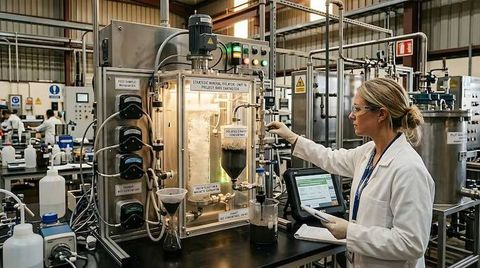
Manufacturers increasingly use sensors, electronic batch records, and process analytical technology to monitor production conditions.
These systems can help teams identify changes in material behavior, detect unusual equipment performance, and review production history. Reliable data management is essential because electronic records used for regulated activities must remain accurate, complete, and protected from unauthorized changes.
Robotics and Automated Material Handling
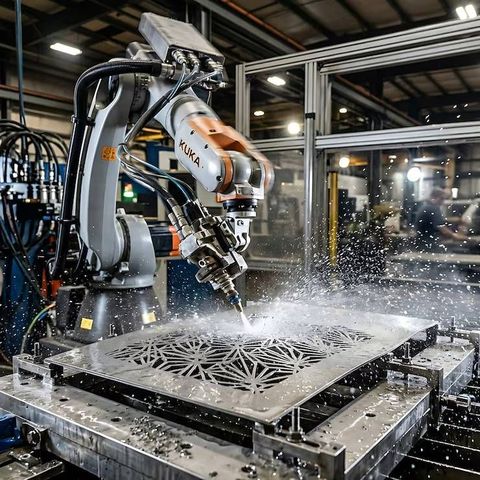
Robotic systems can support material transfer, packaging, inspection, and other repetitive activities. Automated handling may reduce direct human contact with certain products and improve movement through controlled production areas.
Robots still require appropriate safety measures, validated operating procedures, and maintenance.
Flexible and Modular Production
Modular equipment can help facilities adapt production arrangements for different products or batch sizes. Flexible systems may be useful when product portfolios change, but equipment changeovers, cleaning, and process validation remain important considerations.
These trends represent ongoing industry developments rather than a guarantee that every pharmaceutical facility uses the same technologies.
Laws, Policies, and Regulatory Requirements
Pharmaceutical manufacturing machines must support compliance with applicable manufacturing regulations. Requirements differ by country and depend on the medicine, manufacturing activity, and intended market.
Good Manufacturing Practices
Good Manufacturing Practices (GMP) establish principles for maintaining consistent product quality. They cover equipment suitability, cleaning, maintenance, staff training, production records, quality control, and contamination prevention.
Important equipment-related expectations include:
-
Machines must be suitable for their intended purpose.
-
Equipment should be cleaned and maintained according to written procedures.
-
Critical instruments should be calibrated where necessary.
-
Manufacturing processes and computerized systems should be validated or qualified as applicable.
-
Equipment failures and production deviations should be documented and investigated.
-
Records must support the traceability of materials and finished batches.
Pharmaceutical Regulations in India
In India, pharmaceutical manufacturing is regulated under the Drugs and Cosmetics Act, 1940, and the Drugs Rules, 1945, along with applicable amendments and regulatory requirements.
The Central Drugs Standard Control Organisation (CDSCO) and state licensing authorities have roles in pharmaceutical regulation, depending on the product and activity.
Schedule M of the Drugs Rules addresses Good Manufacturing Practices and requirements for pharmaceutical manufacturing premises and quality systems. Revised Schedule M requirements were notified in December 2023, with implementation timelines that included phased extensions for eligible manufacturers.
Manufacturers must determine which requirements and deadlines apply to their facilities rather than assuming that one timeline covers every situation.
International Quality Frameworks
Other relevant frameworks include:
-
World Health Organization GMP guidance: Provides internationally used principles for pharmaceutical manufacturing quality.
-
United States FDA regulations: Include requirements for current Good Manufacturing Practice for applicable drug manufacturing activities.
-
European Union GMP guidance: Establishes manufacturing and quality expectations for medicines within its regulatory framework.
-
Data integrity requirements: Support accurate, complete, and reliable production and laboratory records.
Regulatory compliance is not achieved through equipment selection alone. It requires suitable facilities, qualified equipment, trained personnel, validated processes, reliable documentation, and an effective pharmaceutical quality system.
Tools and Resources for Pharmaceutical Equipment Planning
Manufacturers and students can use several types of general tools to understand equipment requirements and organize production activities.
Equipment qualification checklist
A checklist can help document installation, operating conditions, maintenance requirements, and qualification activities. It should identify the equipment's intended use and the checks needed before routine production.
Process flow diagrams
Flow diagrams show the movement of materials through weighing, mixing, processing, inspection, and packaging. They help identify possible bottlenecks, contamination risks, and points where quality checks are required.
Preventive maintenance schedules
Maintenance schedules organize inspections, replacement of worn components, calibration activities, and equipment servicing. These records help teams monitor equipment condition and reduce unexpected interruptions.
Cleaning and changeover records
Cleaning documentation records the equipment cleaned, the procedure used, the responsible personnel, and the required verification. Changeover procedures are particularly important when different products are manufactured on shared equipment.
Production data analysis tools
Spreadsheets and statistical process monitoring tools can help teams review batch measurements, detect variation, and identify patterns. Their use in regulated decisions must follow appropriate data integrity and validation requirements.
Training and regulatory learning materials
General pharmaceutical engineering textbooks, GMP guidance documents, equipment manuals, and formal quality training materials help operators and engineers understand manufacturing principles and regulatory expectations.
These resources should support approved procedures rather than replace them.
Frequently Asked Questions
What are pharmaceutical manufacturing machines?
Pharmaceutical manufacturing machines are specialized devices used to prepare, process, inspect, and package medicines. Examples include blenders, granulators, tablet presses, capsule fillers, liquid mixing tanks, and packaging systems.
Which machines are used to manufacture tablets?
Common equipment includes weighing systems, mills, sifters, blenders, granulators, dryers, tablet presses, dedusting equipment, and inspection systems. The exact combination depends on the formulation and manufacturing method.
Why is equipment qualification important in pharmaceutical manufacturing?
Equipment qualification provides documented evidence that a machine is installed correctly and can operate as intended. It helps establish confidence that equipment is suitable for its designated manufacturing process.
What is the difference between GMP and equipment validation?
GMP is a broader framework covering pharmaceutical manufacturing quality, personnel, facilities, equipment, documentation, and procedures. Equipment qualification evaluates whether equipment is suitable for its intended use, while process validation provides evidence that a manufacturing process can consistently produce results meeting established requirements.
How is automation changing pharmaceutical manufacturing?
Automation supports repeatable operations, process monitoring, material handling, and electronic recordkeeping. It can improve process visibility, but manufacturers still need trained staff, suitable controls, maintenance, and regulatory compliance.
Conclusion
Pharmaceutical manufacturing machines form the foundation of modern medicine production. From raw material preparation and tablet compression to sterile filling and packaging, each system performs a defined role in maintaining product quality and process consistency.