Industrial Slotting Machines: Complete Guide to Modern Manufacturing
Industrial slotting machines are machine tools designed to remove material from a workpiece through a reciprocating cutting action. They are commonly used to produce internal keyways, slots, grooves, and other shaped surfaces that may be difficult to manufacture with conventional rotary cutting equipment.
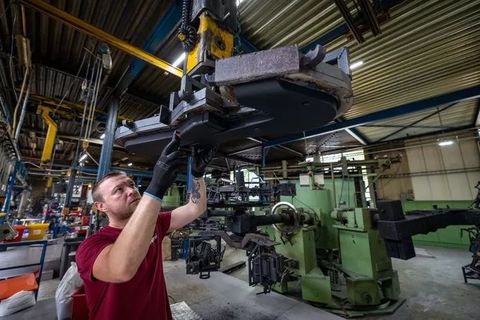
A typical slotting machine uses a vertically moving ram fitted with a cutting tool. The tool travels downward to remove material and then returns upward during the non-cutting stroke. The workpiece remains securely positioned on a table while controlled movements allow the operator or automated system to create the required shape.
Slotting technology has existed for many decades, but its role remains relevant because certain internal machining operations require controlled linear cutting rather than continuous rotary motion.
Modern industrial slotting machines may incorporate improved drive mechanisms, digital controls, programmable movement, automatic lubrication, and measurement systems. These developments help manufacturers achieve more consistent machining results while reducing unnecessary manual intervention.
The machines are particularly useful when a component contains an internal feature that requires precise alignment with its external geometry.
How a Slotting Machine Works
The operating principle is relatively straightforward. A cutting tool moves vertically against a workpiece and removes a small amount of material during each cutting stroke.
The basic machining sequence generally includes:
- Securing the workpiece firmly on the machine table
- Selecting an appropriate cutting tool
- Setting the required cutting depth
- Aligning the workpiece with the tool
- Establishing the stroke length
- Adjusting feed movement
- Performing repeated cutting strokes
- Measuring the finished feature
The cutting tool normally removes material during its downward movement. During the return stroke, the tool moves away from the cutting surface before the next machining cycle.
Depending on the machine design, the table can move longitudinally, transversely, or rotationally. This allows the equipment to produce different geometries and machining patterns.
Main Types of Industrial Slotting Machines
Slotting machines can be classified according to their construction, drive system, control method, and intended application.
Standard Vertical Slotting Machines
These machines use a vertically reciprocating ram and are widely associated with internal keyways and grooves. Their relatively simple construction makes them suitable for many conventional machining applications.
Heavy-Duty Slotting Machines
Heavy-duty models are designed for larger components and demanding industrial environments. They generally have stronger frames, larger tables, and higher machining capacity.
Precision Slotting Machines
Precision-oriented equipment focuses on dimensional control and repeatable machining. These machines can be used where close tolerances and accurate positioning are important.
CNC Slotting Machines
Computer numerical control allows machining movements to be programmed digitally. CNC technology can improve repeatability and make complex machining sequences easier to manage.
Special-Purpose Slotting Systems
Some systems are developed for particular component geometries or production requirements. Their configuration can include specialized tooling, workholding arrangements, and automated measurement features.
Key Components and Their Functions
Understanding the major components makes it easier to understand how these machines operate.
Machine Frame
The frame provides structural support and helps maintain stability during machining. A rigid structure can reduce unwanted vibration.
Ram
The ram carries the cutting tool and moves in a reciprocating direction. Its stroke length and movement characteristics influence the machining process.
Tool Head
The tool head holds the cutting tool in the required position. Depending on the machine, it may allow adjustments for machining depth and tool alignment.
Work Table
The work table supports the component. Controlled table movement allows the cutting tool to reach different areas of the workpiece.
Drive Mechanism
The drive system converts motor power into the reciprocating movement required by the ram.
Feed Mechanism
The feed mechanism controls how the workpiece or table advances between cutting strokes.
Control System
Modern machines may use digital controllers, programmable logic controllers, sensors, or CNC systems to coordinate machining movements.
Why Slotting Machines Remain Important
Slotting machines continue to have a place in modern manufacturing because some internal machining operations are difficult to complete efficiently with conventional equipment.
They are commonly associated with components used in:
- Mechanical power transmission
- Industrial machinery
- Automotive components
- Gear assemblies
- Pump and valve equipment
- Machine-tool components
- Heavy engineering
- Agricultural machinery
- General metalworking
Internal keyways are one of the most recognized applications. A keyway allows a shaft and hub to transmit rotational force through a mechanical key.
Slotting machines can also produce internal grooves, splines in certain configurations, square openings, and other shaped internal surfaces.
For manufacturers, the technology is relevant because component geometry often determines which machining method is most appropriate.
Materials Commonly Machined
Industrial slotting machines can work with various engineering materials when the machine, tool, cutting parameters, and workholding arrangement are properly selected.
Typical materials include:
- Carbon steel
- Alloy steel
- Stainless steel
- Cast iron
- Aluminum alloys
- Copper alloys
- Engineering materials used for industrial components
The cutting tool must be selected according to the material and machining requirement. Tool geometry, hardness, cutting speed, feed rate, and lubrication can all influence the resulting surface.
Recent Developments in Slotting Technology
Manufacturing technology has increasingly focused on automation, digital monitoring, energy efficiency, and process consistency.
During 2025 and into 2026, broader machine-tool development has continued moving toward connected equipment, digitally controlled production, and greater use of data for monitoring manufacturing processes.
Several developments are particularly relevant to slotting applications.
Digital Machine Controls
Digital interfaces can make machine setup and parameter management easier. Operators can monitor selected machining conditions and adjust programmed movements where supported.
CNC Integration
CNC control can improve repeatability for components manufactured in multiple production cycles. Digital programs can also reduce dependence on repeated manual positioning.
Condition Monitoring
Sensors can monitor machine conditions such as vibration, temperature, load, or operating status. Such information can help identify abnormal operating conditions before they develop into larger production problems.
Improved Cutting Tools
Modern cutting-tool development continues to focus on longer tool life, heat resistance, wear resistance, and consistent material removal.
Smart Manufacturing Integration
Industrial equipment is increasingly connected with manufacturing data systems. Production information can be collected for analysis, maintenance planning, and process improvement.
These developments do not eliminate the importance of machine fundamentals. Correct tooling, alignment, workholding, machine rigidity, and operator knowledge remain essential.
Safety and Regulatory Considerations
Industrial slotting machines contain moving components and cutting tools, so safe operation is an important part of manufacturing practice.
Rules differ between countries and industrial sectors, but common workplace safety principles include:
- Use appropriate machine guarding
- Secure the workpiece before machining
- Keep hands away from moving components
- Use suitable personal protective equipment
- Inspect cutting tools before operation
- Follow established machine operating procedures
- Maintain appropriate housekeeping around the machine
- Disconnect power before certain maintenance activities
- Provide suitable operator training
- Follow applicable workplace machinery regulations
In India, industrial workplaces can be affected by occupational safety requirements under national and state-level frameworks. The Occupational Safety, Health and Working Conditions Code, 2020 provides a broader legal framework for workplace safety, although its practical application depends on applicable rules and implementation requirements.
Manufacturers operating in other countries should follow their local occupational safety, machinery, electrical, and environmental requirements.
Tools and Resources for Slotting Applications
Several general tools can help engineers, operators, students, and manufacturing planners understand or manage slotting operations.
Useful resources include:
- Machining parameter calculators
- Cutting-speed and feed-rate calculators
- Engineering drawing software
- CAD modeling platforms
- CAM programming tools
- Digital measuring instruments
- Vernier calipers and micrometers
- Bore gauges
- Tool-condition inspection equipment
- Preventive-maintenance checklists
- Machine safety checklists
- Engineering material reference charts
- Technical machining handbooks
- Manufacturing training resources
CAD and CAM systems can be particularly useful when the component geometry is complex. Measurement equipment is also important because the final feature needs to be checked against the engineering drawing or specified dimensional requirements.
Slotting Machines and Modern Manufacturing
Modern manufacturing often combines multiple machining technologies rather than relying on one machine type for every operation.
A production environment may use turning, milling, drilling, grinding, broaching, shaping, and slotting equipment depending on the geometry of the component.
Slotting machines remain useful when a linear reciprocating cutting action is technically appropriate. Their continued relevance is therefore connected to component design rather than simply machine age.
The growing use of CNC controls and digital manufacturing systems can also place traditional machining processes within more connected production environments.
Frequently Asked Questions
What is an industrial slotting machine used for?
An industrial slotting machine is mainly used to create internal slots, keyways, grooves, and selected shaped surfaces. It is particularly useful for internal features that require a reciprocating cutting action.
What is the difference between slotting and milling?
Slotting generally uses a reciprocating cutting movement, while milling normally uses a rotating cutting tool. The most appropriate process depends on the component geometry, material, tolerance, and production requirements.
Can slotting machines be CNC controlled?
Yes. CNC slotting machines can use programmable digital controls to manage machining movements. CNC technology can improve repeatability and support more complex machining sequences.
Which materials can be machined using slotting equipment?
Depending on machine capacity and tooling, slotting equipment can machine materials such as steel, stainless steel, cast iron, aluminum alloys, and various engineering materials.
Are slotting machines still relevant in automated factories?
Yes. Automation does not make every conventional machining process unnecessary. Slotting remains relevant for particular internal geometries, while digital controls, sensors, and production-management systems can integrate the process into modern manufacturing environments.
Conclusion
Industrial slotting machines remain an important machine-tool category for producing internal keyways, slots, grooves, and other shaped surfaces. Their basic reciprocating cutting principle has remained consistent, while machine construction, tooling, digital controls, and monitoring technologies have continued to develop.