Wholesale Certified Loose Diamonds Explained With Certification, Clarity, and Cut Details
Wholesale certified loose diamonds are individual diamonds that are graded by an independent gemological laboratory and traded separately from finished jewelry. The term “wholesale” describes the trade context, while “loose diamond” means the stone has not yet been mounted in a ring, necklace, bracelet, or other setting.
Diamond grading developed to create a consistent way of describing qualities that can otherwise be difficult to judge by appearance alone. Modern reports commonly document the 4Cs: carat weight, color, clarity, and cut. Depending on the laboratory and diamond type, a report may also identify measurements, proportions, polish, symmetry, fluorescence, inscriptions, treatments, and whether the diamond is natural or laboratory-grown.
For people examining wholesale certified loose diamonds, the report is an important reference because two stones with similar size can have different grading characteristics. A laboratory report does not create the diamond’s physical properties; it records the laboratory’s assessment of those properties under defined grading procedures.
What “Certified” Means
The word “certified” is widely used in the diamond trade, but many laboratories formally issue a grading report rather than a legal certificate. The document connects a particular diamond with a set of grading observations and an identifying report number.
A report may contain:
- Carat weight and precise measurements
- Color and clarity grades
- Cut grade where applicable
- Polish and symmetry
- Fluorescence characteristics
- Proportion diagrams
- Clarity plotting
- Treatment or growth information
- Laser inscription information when applicable
The exact information depends on the laboratory, report type, diamond size, and whether the stone is natural or laboratory-grown.
Natural and Laboratory-Grown Diamonds
Natural diamonds form through geological processes, while laboratory-grown diamonds are produced through controlled technological processes. Laboratory-grown diamonds can have similar chemical, physical, and optical characteristics to natural diamonds, which is why specialized laboratory identification is important.
Wholesale certified loose diamonds should therefore be clearly identified according to their origin. A grading report for a laboratory-grown diamond should not be interpreted as evidence that the stone was mined.
Importance
Wholesale certified loose diamonds matter because the physical appearance of a diamond does not reveal every grading characteristic. A stone can appear bright and attractive while having differences in clarity, proportions, fluorescence, or other measurable properties.
A documented grading report creates a common reference point for participants across the diamond supply chain. This can include manufacturers, wholesalers, retailers, jewelry designers, appraisers, and consumers researching loose stones.
Understanding the 4Cs
The 4Cs provide a foundation for understanding diamond quality.
Carat weight measures mass rather than visual size. One carat equals 0.2 grams, and diamonds with the same carat weight can have different face-up dimensions because their proportions and shapes differ.
Color describes how much body color is visible in a diamond within the grading system used by the laboratory. For many colorless-to-near-colorless diamonds, grades are represented by letters progressing from D downward. Fancy-colored diamonds use different descriptive approaches.
Clarity evaluates internal characteristics called inclusions and surface characteristics called blemishes. Their size, location, number, and visibility can affect the assigned clarity grade.
Cut relates to how a diamond has been fashioned and how its proportions, symmetry, and finish influence its interaction with light. Cut grading is particularly associated with round brilliant diamonds, although laboratories may provide proportion information for other shapes without assigning the same cut-grade scale.
Why Clarity Requires Careful Reading
Clarity is not simply a measure of whether a diamond looks clean to the unaided eye. Laboratory graders examine the stone under controlled conditions and use magnification to identify characteristics.
Common clarity characteristics can include crystals, clouds, feathers, pinpoints, cavities, and other features. A clarity plot may indicate the approximate position and type of characteristics observed during grading.
A higher clarity grade does not automatically describe every visual characteristic that matters. Shape, size, color, position of inclusions, and overall appearance can also influence how a diamond looks.
Understanding Cut and Proportions
Cut involves more than the outline of a diamond. Proportions determine how light travels through the stone, while symmetry and polish describe aspects of its finishing and facet alignment.
A grading report can include measurements such as table percentage, depth percentage, crown information, pavilion information, girdle description, and other proportion details. These figures can help explain why diamonds of similar carat weight may have noticeably different appearances.
A simplified comparison is shown below:
| Diamond Factor | What It Describes | Why It Matters |
|---|---|---|
| Carat Weight | Diamond mass | Indicates weight, not exact visual size |
| Color | Degree of body color | Helps describe appearance |
| Clarity | Internal and surface characteristics | Documents observable features under grading conditions |
| Cut | Faceting and proportions | Relates to light performance |
| Polish | Surface finish | Describes finishing quality |
| Symmetry | Facet alignment | Helps describe geometric precision |
| Fluorescence | Reaction under ultraviolet light | Adds another identifying characteristic |
Recent Updates
The diamond sector has experienced continued changes in laboratory-grown diamond identification, reporting, and documentation. Research published in recent years has examined improvements in growth technology, identification methods, and the increasing variety of laboratory-grown stones submitted for examination. GIA research has noted developments involving both chemical vapor deposition and high-pressure, high-temperature growth methods.
One significant recent development concerns how some laboratories describe laboratory-grown diamonds. GIA announced a revised approach for D-to-Z laboratory-grown diamonds in which descriptive categories such as “Premium” and “Standard” are used instead of the traditional natural-diamond color and clarity nomenclature. The revised assessment considers characteristics including color, clarity, and cut.
This distinction is important when comparing reports issued at different times. A natural diamond report and a laboratory-grown diamond quality assessment may use different terminology even when both documents describe measurable characteristics.
Digital reporting and report verification have also become increasingly relevant. Laboratories may provide digital documents, report numbers, laser inscriptions, or electronic verification systems that help connect a physical diamond with its laboratory record. These developments make documentation an increasingly important part of loose-diamond identification.
Laws or Policies
Diamond-related rules vary by jurisdiction, so wholesale certified loose diamonds can be affected by several layers of regulation. These may cover truthful product descriptions, disclosure of laboratory-grown origin, gemstone treatments, weight representations, trade documentation, and the movement of rough diamonds across international borders.
In jurisdictions with consumer-protection rules for jewelry advertising, material characteristics must generally be represented accurately. For example, the U.S. Federal Trade Commission Jewelry Guides address descriptions of diamonds, laboratory-created diamonds, treatments, weight, quality, and other material information. They state that laboratory-created diamonds should be clearly identified as laboratory-grown or laboratory-created rather than being represented as mined diamonds.
International rough-diamond trade can also involve separate controls. The Kimberley Process is associated with certification requirements for participating jurisdictions concerning rough diamonds and aims to prevent trade in conflict diamonds. These rules concern rough diamonds rather than replacing the grading report used to describe a polished loose diamond.
For wholesale transactions, documentation should therefore distinguish between origin information, grading information, treatment disclosures, and trade documentation. These are separate concepts even when they appear together in commercial records.
Tools and Resources
Several tools can help readers understand wholesale certified loose diamonds without relying only on visual inspection.
Diamond Grading Reports
A laboratory grading report provides the core technical information. Readers can compare the report number, carat weight, measurements, color, clarity, cut information, polish, symmetry, fluorescence, and other stated characteristics.
Report Verification Systems
Many gemological laboratories provide report-verification tools. These systems allow a report number to be checked against laboratory records and can help confirm that the document corresponds with the stated diamond.
4C Comparison Tables
A simple 4C table can help organize multiple diamonds according to carat weight, color, clarity, and cut. Additional columns can include measurements, fluorescence, polish, symmetry, and laboratory identification.
Diamond Proportion Calculators
Proportion calculators can help explain relationships between measurements such as table percentage, depth percentage, crown dimensions, and pavilion dimensions. They are educational tools rather than substitutes for laboratory grading.
Loupe and Microscope Examination
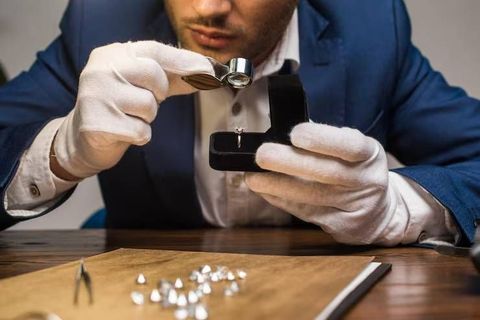
A jeweler’s loupe or gemological microscope can reveal inclusions, inscriptions, facet details, and other physical characteristics. Professional examination can be useful when the physical stone needs to be compared with its documentation.
FAQs
What are wholesale certified loose diamonds?
Wholesale certified loose diamonds are individual diamonds traded in a wholesale context and accompanied by documentation from a gemological laboratory. The report records characteristics such as carat weight, color, clarity, and other grading information.
Does a diamond certificate prove that a diamond is natural?
Not necessarily. The report must be checked for the diamond’s origin. Natural diamonds and laboratory-grown diamonds can both receive laboratory documentation, but their origin should be explicitly identified.
How is clarity graded in certified loose diamonds?
Clarity is assessed by examining inclusions and blemishes under controlled grading conditions. Their characteristics, location, size, and visibility contribute to the assigned clarity grade.
Why does cut matter for loose diamonds?
Cut describes aspects of faceting, proportions, symmetry, and finishing that influence how a diamond interacts with light. A report can provide important proportion and finish information for comparing loose diamonds.
Can a laboratory-grown diamond have a grading report?
Yes. Gemological laboratories examine and identify laboratory-grown diamonds, and report formats can differ from those used for natural diamonds. Recent changes in laboratory-grown diamond reporting demonstrate why the exact report type and terminology should be read carefully.
Conclusion
Wholesale certified loose diamonds combine physical diamond characteristics with documented laboratory grading information. The 4Cs provide a basic framework, while measurements, clarity characteristics, proportions, polish, symmetry, fluorescence, and origin add further detail. Recent developments in laboratory-grown diamond identification have also made careful reading of report terminology increasingly important. Regulatory requirements can vary by jurisdiction, particularly concerning origin disclosures, treatments, advertising descriptions, and rough-diamond trade documentation.