Water Filtering Machine Plant Guide: Types, Working Process, Technology & Application
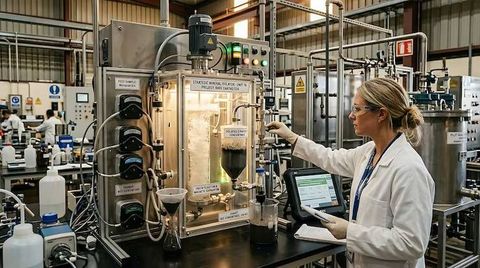
A water filtering machine plant is a system designed to remove unwanted physical, chemical, and biological substances from water. Depending on the water source and intended application, a plant may use one filtration method or several treatment stages working together.
Water can contain suspended particles, sediment, dissolved minerals, microorganisms, organic compounds, and other contaminants. The treatment process is therefore selected according to the quality of incoming water and the required quality of treated water.
A typical water filtration plant can include several stages:
- Raw-water collection and screening
- Sediment or multimedia filtration
- Activated carbon filtration
- Cartridge or membrane filtration
- Disinfection
- Treated-water storage
- Monitoring and quality control
The term "water filtering machine" can describe individual equipment as well as integrated treatment systems. Larger plants combine multiple machines into a coordinated process.
The basic objective is to improve water quality in a controlled and measurable way. Different technologies are appropriate for drinking water, industrial process water, wastewater reuse, laboratory applications, agriculture, and other uses.
Importance: Why Water Filtration Technology Matters
Reliable water treatment has become increasingly important because water quality can vary significantly between locations and sources. Municipal supplies, groundwater, surface water, and industrial sources may each require different treatment approaches.
Water filtration technology helps address several practical challenges. Suspended solids can interfere with downstream equipment, while certain dissolved substances can affect taste, scaling, corrosion, or industrial processes.
For industrial facilities, water quality can influence equipment performance and production processes. Boilers, cooling systems, manufacturing equipment, and high-purity applications may require water with specific characteristics.
Important benefits of appropriate filtration include:
- Reduction of suspended particles
- Improved clarity and appearance
- Reduction of selected microorganisms
- Protection of downstream equipment
- Control of unwanted tastes and odors
- Reduction of certain dissolved contaminants
- Better consistency of treated-water quality
Water filtration plants also support resource management. Advanced treatment technologies can make it possible to reuse appropriately treated water in selected industrial and non-potable applications.
The correct system depends on the source-water analysis rather than simply selecting the most advanced technology. A technically complex system is not automatically appropriate for every application.
Recent Updates: Water Filtration Technology Trends
During 2025 and 2026, water treatment technology has continued moving toward greater automation, improved monitoring, energy efficiency, and more targeted contaminant removal.
One important trend is the increased use of digital monitoring. Sensors can continuously track parameters such as pressure, flow, turbidity, conductivity, pH, and other indicators. These measurements can help operators identify changes in water quality and equipment performance.
Membrane technologies have also continued to develop. Reverse osmosis, ultrafiltration, nanofiltration, and microfiltration are used for different separation requirements. Their selection depends on factors such as contaminant characteristics, water chemistry, pressure requirements, and recovery targets.
Another development is the wider use of automation and data analysis. Modern plants can combine sensors, programmable controllers, alarms, and dashboards to monitor treatment stages.
Key trends include:
| Technology trend | Main purpose |
|---|---|
| Smart sensors | Continuous water-quality monitoring |
| Automated controls | More consistent process operation |
| Membrane filtration | Separation of fine particles and dissolved substances |
| Energy optimization | Reduction of unnecessary energy consumption |
| Water reuse systems | Recovery of appropriately treated water |
| Remote monitoring | Access to operational data from connected systems |
PFAS and other persistent contaminants have also received significant attention in water-quality discussions. Treatment requirements vary according to the contaminant, local regulations, and the intended use of the water.
Laws and Policies: Water Treatment Requirements
Water filtration plants are affected by regulations concerning water quality, environmental protection, wastewater discharge, occupational safety, and equipment operation. Requirements differ considerably between countries and even between local jurisdictions.
For drinking-water applications, authorities generally establish limits for microbiological, chemical, and physical parameters. Treatment operators may need to conduct regular testing to demonstrate compliance.
In India, drinking-water quality is associated with national standards and regulatory frameworks, while environmental authorities regulate areas such as wastewater discharge and pollution control. Industrial plants may also need to follow applicable consent, monitoring, and environmental requirements.
For projects in other countries, operators should examine the relevant national and local framework before selecting equipment. Important areas to check include:
- Raw-water quality requirements
- Drinking-water standards where applicable
- Permitted wastewater discharge limits
- Chemical handling requirements
- Worker and equipment safety rules
- Environmental approval requirements
- Water reuse regulations
- Testing and recordkeeping obligations
Regulatory compliance should be evaluated for the specific location and application. A filtration system designed for industrial process water should not automatically be considered suitable for drinking water.
Tools and Resources: Planning and Monitoring a Filtration Plant
Several general tools can help engineers, plant operators, students, and facility managers understand and evaluate water filtration systems.
A water-quality testing kit can provide measurements for parameters such as pH, turbidity, conductivity, hardness, and selected chemical indicators. Laboratory testing is generally necessary when detailed contaminant identification is required.
A flow-rate calculator can help estimate the volume of water that must pass through the treatment system during a particular operating period.
A membrane sizing calculator can assist with preliminary evaluation of membrane area, flow, and operating conditions. Final equipment selection requires more detailed engineering information.
A pressure-drop monitoring system can indicate when filters are becoming restricted. Increasing pressure differences across a filter can indicate accumulated material and the need for appropriate maintenance.
Other useful resources include:
- Water-quality analysis worksheets
- Treatment-process flow diagrams
- Equipment maintenance checklists
- Filter replacement records
- Water-balance calculators
- Regulatory compliance checklists
- Laboratory testing procedures
- Operator training manuals
- Pump and pipe sizing calculators
- Preventive-maintenance templates
A basic process-flow diagram is particularly useful because it shows how raw water moves through each treatment stage. It can also identify sampling points and monitoring locations.
Types of Water Filtering Machines
Different filtration technologies are designed for different contaminants and operating conditions.
Multimedia Filters
These systems commonly use layers of filtration media to capture suspended solids. They are often used as a preliminary or intermediate treatment stage.
Activated Carbon Filters
Activated carbon can reduce certain organic compounds, tastes, odors, and chlorine-related substances. Performance depends on the water chemistry and the type of carbon used.
Cartridge Filters
Cartridge filters provide fine physical filtration and are commonly installed before sensitive equipment or membrane systems.
Microfiltration
Microfiltration uses membrane barriers to remove relatively large microorganisms and suspended particles. It is often used as part of a broader treatment process.
Ultrafiltration
Ultrafiltration provides finer separation than conventional filtration and can remove many suspended materials and larger biological contaminants.
Nanofiltration
Nanofiltration membranes can separate certain dissolved substances and are positioned between ultrafiltration and reverse osmosis in terms of separation capability.
Reverse Osmosis
Reverse osmosis uses pressure to force water through a semipermeable membrane. It can remove a broad range of dissolved salts and other contaminants, depending on the membrane and operating conditions.
Ultraviolet Disinfection
UV systems use ultraviolet radiation to inactivate microorganisms. They do not function as a conventional particle filter, so upstream water quality can be important for effective operation.
Working Process: How a Water Filtering Plant Operates
A filtration plant normally begins with an assessment of the raw-water source. Water testing helps determine which treatment stages are appropriate.
The process may then follow a sequence such as:
- Pre-treatment: Larger debris and suspended material are reduced.
- Primary filtration: Multimedia or similar filters capture remaining particles.
- Carbon treatment: Selected organic compounds, tastes, and odors may be reduced.
- Fine filtration: Cartridge or membrane filtration provides additional separation.
- Advanced treatment: Reverse osmosis or another specialized process may be used when required.
- Disinfection: UV, ozone, or an appropriate chemical process may be applied.
- Storage and distribution: Treated water is stored and delivered for its intended application.
- Monitoring: Water quality and system performance are checked at suitable points.
Not every plant needs all these stages. Treatment should be designed around measured water quality and the required output specification.
Applications of Water Filtering Machine Plants
Water filtration systems are used across many sectors.
Common applications include:
- Municipal and community water treatment
- Industrial process-water preparation
- Food and beverage production
- Pharmaceutical manufacturing
- Electronics and semiconductor production
- Boiler-feed water preparation
- Cooling-water treatment
- Laboratory water preparation
- Hospitality facilities
- Agriculture and irrigation
- Wastewater treatment and reuse
- Residential and commercial water treatment
High-purity industrial applications generally require more controlled treatment than ordinary filtration because even small quantities of certain contaminants can affect sensitive processes.
FAQs About Water Filtering Machine Plants
What is a water filtering machine plant?
It is an integrated system that uses one or more treatment technologies to reduce contaminants and improve water quality for a defined application.
Which filtration technology is the best?
There is no single best technology for every situation. The appropriate method depends on raw-water quality, target contaminants, required water quality, flow rate, and applicable regulations.
Is reverse osmosis suitable for every water source?
No. Reverse osmosis can be highly effective for many dissolved contaminants, but pretreatment, membrane selection, water chemistry, pressure, and concentrate management must be considered.
How often should filters be replaced or cleaned?
The interval depends on water quality, filtration technology, operating hours, pressure drop, flow performance, and manufacturer specifications. Monitoring is more reliable than using one universal schedule.
Can filtered water always be used as drinking water?
No. Water intended for drinking must meet the applicable drinking-water requirements, including relevant microbiological and chemical standards. Filtration alone does not automatically make water potable.
Conclusion
Water filtering machine plants combine different technologies to address specific water-quality requirements. Conventional filters can remove suspended material, while carbon, membrane, and disinfection technologies address different classes of contaminants.