Smart Factory Solutions Overview: IoT, AI, Automation, Data Analytics and Connected Manufacturing
Smart factory solutions refer to technologies and practices that connect machines, production systems, software, people, and operational data within a manufacturing environment. The concept has developed from industrial automation, computer-based production control, industrial networking, and the broader movement toward connected manufacturing.
Context
A traditional automated factory may use programmable machines to perform specific production tasks. A smart factory extends this approach by connecting equipment and collecting operational data that can be analyzed and used to support production decisions. Technologies such as the Internet of Things (IoT), artificial intelligence (AI), industrial automation, cloud computing, edge computing, and data analytics can work together within this environment.
The purpose of connected manufacturing is not simply to place more technology on a factory floor. The underlying objective is to create better visibility into production activities and allow information to move between relevant systems. Depending on the factory, this can involve monitoring equipment conditions, tracking production data, managing energy consumption, identifying process variations, or coordinating different stages of manufacturing.
Main components of a smart factory
A smart factory can contain several connected layers. Sensors collect information from equipment, industrial networks transfer data, software organizes information, and analytics tools help interpret it. Automation systems can then use defined rules or analytical results to support particular production activities.
| Technology | Main role in connected manufacturing |
|---|---|
| Industrial IoT | Connects equipment, sensors, and production assets |
| AI | Identifies patterns and supports selected analytical tasks |
| Automation | Controls or coordinates defined production processes |
| Data analytics | Converts operational data into useful information |
| Edge computing | Processes selected data closer to equipment |
| Cloud computing | Provides centralized computing and data capabilities |
| Industrial networks | Connect machines, controllers, and software |
| Digital twins | Represent physical assets or processes digitally |
These components do not necessarily need to be deployed together. A factory may begin with equipment monitoring and gradually introduce additional systems as its operational requirements develop.
Importance
Smart factory solutions matter because modern manufacturing involves large amounts of operational information. Production equipment can generate data about temperature, pressure, speed, vibration, energy consumption, cycle time, quality measurements, and machine status.
When this information remains isolated within individual machines or systems, it can be difficult to understand relationships between different production activities. Connected manufacturing creates a framework in which relevant information can be collected and viewed across different parts of an operation.
Supporting production visibility
IoT sensors can provide information about equipment and production conditions at regular intervals. This information can help operators understand whether equipment is operating within defined parameters and identify changes that may require investigation.
Data analytics can then organize historical and current information. Instead of reviewing individual measurements separately, analysts can examine patterns, trends, and relationships across production records.
Connecting automation systems
Industrial automation has traditionally focused on controlling machines and processes. Smart manufacturing adds communication between automation equipment, information systems, production planning platforms, and other digital components.
This can create connections between the physical production environment and software systems. For example, production information may move from a machine controller to a manufacturing execution system, where it can be combined with information from other production activities.
Supporting equipment maintenance
Connected equipment can provide condition-related information such as vibration, temperature, operating hours, or pressure. Analytical systems can examine these measurements for changes from established operating patterns.
This does not mean that a software system can always determine why equipment has changed. Human inspection, engineering analysis, maintenance records, and manufacturer documentation can remain important when investigating equipment conditions.
Improving data coordination
Manufacturing environments often contain information from many sources. These can include programmable logic controllers, sensors, quality systems, enterprise software, production databases, and maintenance records.
A connected architecture can help organize these sources so that information can be exchanged in defined formats. Data standards, access controls, and clear ownership of information become increasingly important as connectivity expands.
Recent Updates
From 2024 through 2026, smart factory development has increasingly focused on combining established industrial automation with AI, industrial IoT, edge computing, cybersecurity, and more structured data architectures.
One important trend is the movement of AI applications closer to production environments. Instead of sending every piece of information to a remote computing environment, edge systems can process selected information near the equipment. This can reduce unnecessary data transfers and support applications where rapid processing is useful.
AI and industrial data
AI is increasingly being investigated for applications such as anomaly detection, visual inspection, production analysis, forecasting, and process optimization. Its usefulness depends heavily on the quality, consistency, and context of the underlying data.
Manufacturers are also paying greater attention to how industrial data is structured. Poorly organized data can make analytics difficult even when large quantities of information are available.
Digital twins and simulation
Digital twins are another area of development. A digital twin can represent a physical machine, production line, facility, or process using digital information. Depending on its design, it may combine historical data, current operating information, engineering models, or simulation capabilities.
The level of detail varies significantly between implementations. A digital representation does not necessarily reproduce every physical characteristic of a real production environment.
Industrial cybersecurity
As factories become more connected, cybersecurity has become an important part of smart manufacturing architecture. Industrial control systems that were once isolated may now communicate with enterprise networks, remote systems, cloud platforms, or external applications.
Security planning therefore increasingly considers network segmentation, identity management, software updates, access controls, monitoring, and incident response. International frameworks such as the NIST Cybersecurity Framework and the IEC 62443 family provide references for managing cybersecurity in different environments.
Laws or Policies
Smart factory systems can be affected by several types of rules, depending on the country, industry, equipment, and information being processed. These may include data protection requirements, cybersecurity rules, workplace safety requirements, environmental regulations, industrial equipment standards, and sector-specific obligations.
The legal requirements are not identical for every factory. A manufacturing facility handling ordinary machine-performance data may have different obligations from an operation processing personal information or operating equipment subject to specialized safety requirements.
Data and privacy considerations
IoT systems can sometimes collect information about workers as well as machines. Examples may include access records, workstation activity, location information, or other operational identifiers. Where personal information is involved, applicable data-protection requirements may affect how information is collected, stored, accessed, and retained.
Factories therefore need to distinguish machine data from information that can identify individuals. The applicable requirements depend on the jurisdiction and the specific type of information involved.
Industrial standards
Technical standards can also influence smart factory architecture. Standards and frameworks may address industrial communication, cybersecurity, functional safety, data exchange, automation, and equipment interoperability.
These standards are not automatically laws. Their relevance depends on the applicable regulatory framework, contracts, industry requirements, and technical architecture.
For international projects, organizations may need to consider requirements from multiple jurisdictions rather than assuming that one regulatory framework applies everywhere.
Tools and Resources
A range of technical resources can help explain and implement concepts related to smart factories.
IoT platforms and industrial protocols
Industrial IoT platforms can collect and organize information from sensors and connected equipment. Common industrial communication technologies include OPC UA, MQTT, Modbus, and industrial Ethernet technologies.
The appropriate communication method depends on factors such as equipment compatibility, network architecture, security requirements, latency, and the type of information being exchanged.
Data analytics tools
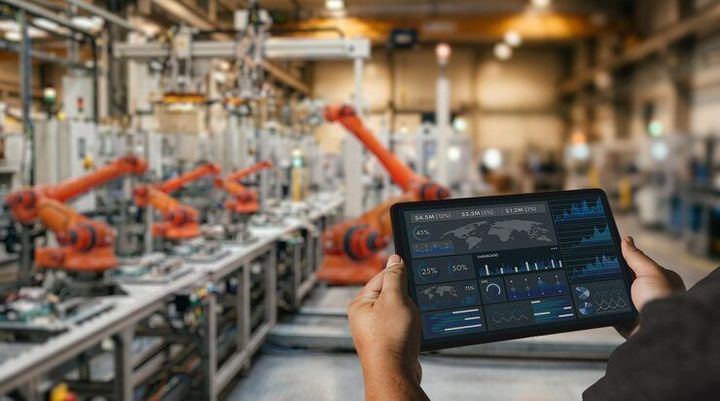
Analytics platforms can process production records and display information through dashboards, reports, statistical analysis, and visualization. Common analytical activities include trend analysis, anomaly detection, process comparison, and production monitoring.
The quality of the output depends on the underlying data. Missing values, inconsistent measurement units, incorrect timestamps, and poorly defined data sources can affect analytical results.
Digital twin and simulation tools
Digital twin platforms and industrial simulation software can represent production assets or processes digitally. These tools can be used for process modeling, equipment analysis, layout studies, and selected planning activities.
Their accuracy depends on the quality of the models and data used to represent the physical system.
Reference frameworks
Organizations can also use established technical references when designing connected manufacturing systems. Examples include the NIST Cybersecurity Framework for cybersecurity planning, IEC 62443 for industrial automation and control-system security, and industrial interoperability standards such as OPC UA.
FAQs
What are smart factory solutions?
Smart factory solutions combine connected equipment, IoT, automation, data analytics, software, and related technologies to collect and use manufacturing information. The exact architecture differs according to the production environment.
How does IoT support a smart factory?
Industrial IoT connects sensors, machines, controllers, and other assets so that operational information can be collected and exchanged. This can support equipment monitoring, production visibility, analytics, and other manufacturing activities.
How is AI used in connected manufacturing?
AI can be applied to tasks such as anomaly detection, image-based inspection, pattern analysis, forecasting, and process-related analysis. Its results depend on the quality of the data, the model, and the specific application.
What is the role of data analytics in smart manufacturing?
Data analytics organizes and examines production information to identify trends, relationships, variations, and unusual patterns. It can help transform raw machine and production records into information that people can interpret.
Are smart factories fully automated?
No. A smart factory does not necessarily operate without people. Human operators, engineers, technicians, managers, and other specialists can remain involved in production, maintenance, quality activities, system supervision, and decision-making.
Conclusion
Smart factory solutions connect manufacturing equipment, automation systems, data, software, and analytical technologies within a coordinated digital environment. IoT, AI, automation, data analytics, edge computing, and digital twins can each serve different functions in connected manufacturing. Recent developments have increased attention to AI-enabled analysis, industrial cybersecurity, interoperability, and data quality. The design of a smart factory depends on its production processes, existing equipment, information requirements, technical architecture, and applicable regulatory environment.