LED Light Manufacturing Overview: Components, Production, Equipment and Applications
LED light manufacturing involves producing lighting products that use light-emitting diodes as their primary light source. The process combines semiconductor-based light sources with electronic drivers, circuit boards, heat-management parts, optical components, housings, and electrical connections to create complete lighting products.
Context
LED technology developed from early semiconductor light-emitting devices into a major lighting technology used in residential, commercial, industrial, automotive, outdoor, display, and specialized applications. Unlike conventional lamps that create light through heated filaments or gas discharge, LEDs produce light when electrical current passes through a semiconductor material.
An LED lighting product can range from a small indicator lamp to a complete luminaire containing multiple LED modules and electronic controls. Manufacturing therefore varies considerably according to the intended application, power level, shape, optical requirements, and operating environment.
Main components of LED lights
A typical LED lighting product contains several interconnected parts. The exact design varies, but common components include:
- LED chips or LED packages that generate light
- Printed circuit boards that provide electrical connections
- LED drivers that regulate electrical power
- Heat sinks or other thermal-management structures
- Optical lenses or diffusers that control light distribution
- Housings that protect internal components
- Connectors, wires, terminals, and mounting parts
The driver is particularly important because LEDs generally require controlled electrical conditions. Thermal management is also significant because excessive heat can affect LED performance and the operating characteristics of surrounding electronic components.
LED light manufacturing process
LED light manufacturing can involve several stages, from component preparation to final inspection. Depending on the product, some components may be manufactured separately and assembled into the finished lighting unit.
A general production sequence may include:
- Preparing LED modules and electronic components.
- Mounting electronic components onto a printed circuit board.
- Applying soldering processes to establish electrical connections.
- Attaching the LED module to a suitable thermal structure.
- Installing the driver and electrical connections.
- Fitting lenses, diffusers, reflectors, or other optical components.
- Enclosing the assembly in its housing.
- Performing electrical, optical, mechanical, and functional testing.
- Completing labeling, documentation, and packaging.
Importance
LED light manufacturing matters because lighting is required across homes, workplaces, factories, transportation infrastructure, public areas, commercial buildings, and specialized environments. The manufacturing process determines how effectively electrical, optical, thermal, and mechanical elements work together.
For manufacturers, engineers, installers, and general users, understanding the production process helps explain why LED products can differ in construction and operating characteristics even when they appear visually similar.
Manufacturing challenges
LED products require coordination between several engineering areas. Electrical design affects power regulation, thermal design affects heat dissipation, and optical design affects how light is distributed.
Common manufacturing considerations include:
- Maintaining consistent electrical connections
- Managing heat generated during operation
- Controlling component placement
- Maintaining optical alignment
- Protecting electronics from moisture and contaminants where required
- Checking electrical insulation and mechanical strength
- Maintaining consistent light output and colour characteristics
Testing is therefore an important part of production. Depending on the product category, manufacturers may examine electrical performance, luminous output, colour characteristics, thermal behaviour, mechanical strength, electromagnetic compatibility, and other properties.
LED lighting product categories
LED manufacturing covers a wide range of products.
| Product category | Typical construction | Common applications |
|---|---|---|
| LED bulbs | LED module, driver, diffuser, housing | Residential and general indoor lighting |
| LED tubes | Linear LED module, driver, enclosure | Offices, facilities, commercial areas |
| LED panels | LED modules, optical layers, frame | Indoor ceiling lighting |
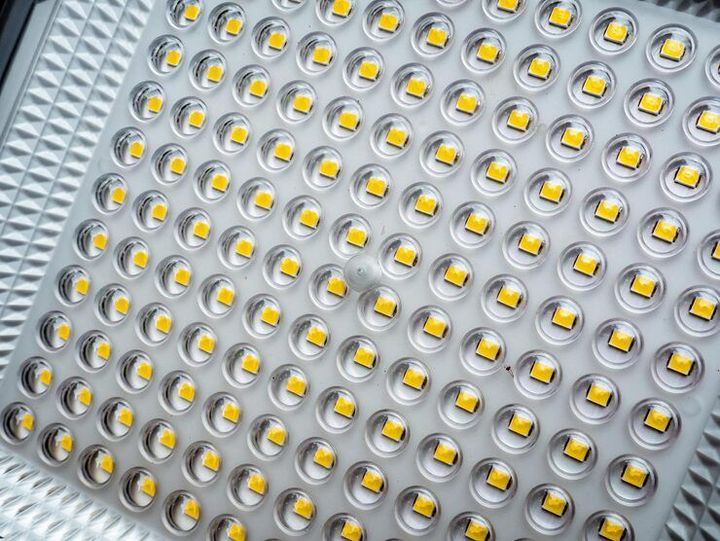
| LED floodlights | LED array, driver, heat sink, optical cover | Outdoor and area lighting |
| LED street lights | LED modules, driver, housing, optics | Roads and public areas |
| LED industrial lights | High-output LED modules and thermal structures | Factories and warehouses |
| LED strips | Flexible or rigid LED circuit assembly | Decorative and accent lighting |
| Specialty luminaires | Application-specific LED and optical systems | Horticulture, healthcare, transport, and other settings |
Recent Updates
LED light manufacturing has increasingly moved toward connected controls, improved thermal design, modular construction, and more sophisticated optical systems. Smart lighting can incorporate sensors, wireless communication, automated controls, and programmable operating characteristics.
Another development is greater attention to human and environmental considerations in lighting design. The revised National Lighting Code of India, published as SP 72:2025, reflects the broader transition toward LED and solid-state lighting while addressing smart connected systems, renewable-powered lighting, human-centric lighting, horticultural applications, sustainability, and light-related environmental considerations.
Improvements in LED components
LED modules and electronic drivers continue to develop alongside improvements in semiconductor materials, circuit design, thermal structures, and optical components. Manufacturers can select different LED packages, colour characteristics, beam patterns, and control systems according to the intended application.
Testing requirements are also becoming more detailed in several areas. Current BIS laboratory information shows updated standards covering LED modules, self-ballasted LED lamps, and different luminaire categories during 2025 and 2026.
Smart and connected lighting
Connected LED lighting can integrate sensors and control systems into conventional lighting infrastructure. Depending on the application, these systems can adjust illumination according to occupancy, schedules, daylight conditions, or programmed settings.
This development is changing LED light manufacturing because products may now require additional communication hardware, control interfaces, sensors, firmware, and compatibility testing alongside the traditional lighting components.
Laws or Policies
LED light manufacturing is influenced by electrical safety rules, product standards, energy-efficiency requirements, electromagnetic compatibility requirements, environmental regulations, and labeling provisions. The exact requirements depend on the country, product category, intended application, and regulatory classification.
International standards are commonly used as technical references for evaluating LED lamps, modules, drivers, and luminaires. Standards can address areas such as electrical safety, mechanical strength, thermal behaviour, optical performance, electromagnetic characteristics, and endurance.
In India, the Bureau of Indian Standards maintains standards covering several LED product categories. Current BIS records include revised requirements for self-ballasted LED lamps under IS 16102, LED modules under IS 16103, and multiple luminaire categories under the IS 10322 series.
The revised National Lighting Code also brings together information relating to LED technology, drivers and controls, luminaires, lighting measurements, energy efficiency, indoor and outdoor lighting, emergency lighting, sustainability, and specialized applications.
Manufacturers operating in any jurisdiction need to identify the rules that apply to their particular product rather than assuming that one standard covers every type of LED lighting equipment.
Tools and Resources
Several technical resources can support understanding, design, testing, and production planning for LED lighting.
LED design and calculation tools
Lighting-design software can model illumination levels, beam distribution, mounting arrangements, and room or outdoor-area characteristics. Electrical calculation tools can also help engineers evaluate current, voltage, power factor, circuit loading, and driver requirements.
Photometric equipment
Manufacturing and testing facilities may use integrating spheres, goniophotometers, spectroradiometers, power analyzers, thermal measurement equipment, and electrical safety testers. These instruments help measure characteristics such as luminous flux, colour properties, electrical input, light distribution, and temperature.
Production equipment
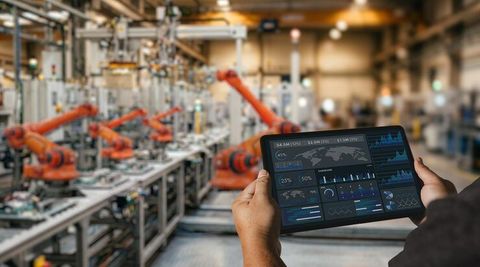
Equipment used in LED light manufacturing varies according to the production scale and product design. Common equipment includes:
- Surface-mount technology machines for electronic component placement
- Soldering and reflow equipment
- PCB inspection systems
- LED module assembly equipment
- Driver assembly and testing equipment
- Thermal-interface application equipment
- Optical assembly equipment
- Electrical safety testing equipment
- Automated or semi-automated functional testing systems
Standards and technical databases
Standards organizations and regulatory authorities provide technical documents, conformity information, laboratory records, and product requirements. The BIS laboratory database, for example, contains current information on testing scopes associated with LED lamps, modules, drivers, and luminaires.
Technical documentation from component manufacturers can also provide information about LED electrical characteristics, thermal limits, optical properties, recommended operating conditions, and driver compatibility.
FAQs
What are the main components used in LED light manufacturing?
The main components generally include LED chips or packages, printed circuit boards, LED drivers, thermal-management parts, optical components, housings, connectors, and electrical wiring. Product designs vary according to the intended application.
How does LED light manufacturing work?
LED light manufacturing usually involves electronic component placement, LED module assembly, soldering, thermal attachment, driver installation, optical assembly, housing construction, and final testing. The exact sequence depends on the lighting product.
What equipment is used for LED light manufacturing?
Common equipment includes surface-mount machines, soldering and reflow systems, inspection equipment, assembly tools, electrical testers, photometric instruments, and thermal measurement equipment. Larger production facilities may use automated handling and testing systems.
Where are LED lights commonly used?
LED lighting is used in homes, offices, factories, warehouses, streets, vehicles, commercial buildings, public infrastructure, displays, horticulture, and specialized environments. Product construction varies according to the lighting conditions and environmental requirements.
What standards apply to LED light manufacturing?
Applicable standards depend on the product and jurisdiction. They can cover electrical safety, LED modules, lamps, luminaires, drivers, electromagnetic characteristics, photobiological considerations, energy performance, and labeling. Manufacturers must determine which requirements apply to their particular product and market.
Conclusion
LED light manufacturing combines semiconductor light sources with electronic, thermal, optical, and mechanical components. Production can range from relatively simple assembly of LED modules and housings to highly automated manufacturing involving circuit assembly, optical testing, and specialized inspection equipment. Recent developments include connected lighting, improved LED modules, advanced controls, and broader lighting-design guidance. Applicable standards and regulatory requirements vary according to product type and jurisdiction, making technical specifications and conformity requirements important parts of the manufacturing process.