Robotic Sorting Equipment Guide With Automated Material Handling Insights
Robotic sorting equipment is an automated industrial system designed to identify, separate, and direct materials into specific categories or destinations.
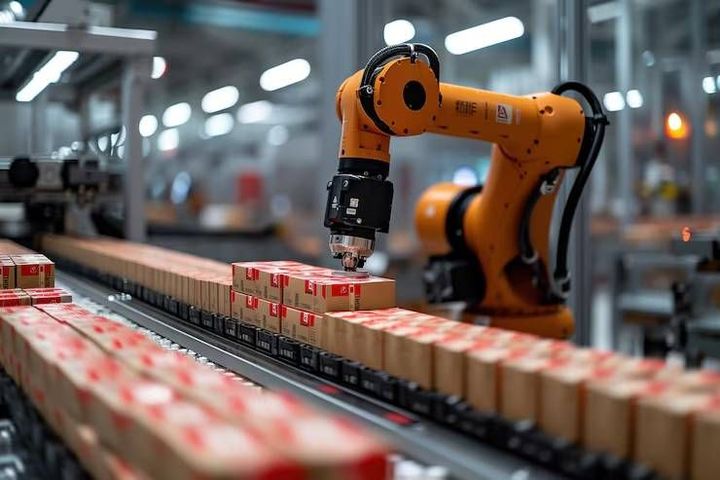
It combines robotic arms, conveyor systems, sensors, cameras, control software, and material handling mechanisms to organize products or objects with limited manual intervention.
These systems developed from the wider growth of industrial automation, which introduced machines to perform repetitive production and handling activities. As manufacturing, warehousing, recycling, and distribution operations became more complex, automated sorting equipment evolved to manage different materials, product sizes, shapes, and movement patterns.
Robotic sorting equipment is now used in environments where items must be recognized and routed according to defined characteristics. Depending on the application, a system may sort packages by destination, separate recyclable materials, organize manufactured components, or direct products toward inspection and packaging stations.
Main Components of Automated Sorting Systems
A robotic sorting installation typically contains several connected components. Each part contributes to identifying materials, determining their destination, and moving them safely through the production or handling process.
Robotic arms or sorting mechanisms move items between designated positions.
Sensors and machine vision systems detect characteristics such as shape, color, dimensions, labels, and object position.
Conveyor belts transport materials through inspection and sorting areas.
Control software coordinates equipment movement and sorting decisions.
Grippers, suction tools, or mechanical attachments handle different object types.
Safety equipment, including guards and emergency stops, helps protect workers around moving machinery.
The specific configuration depends on the material being handled, the available workspace, operating speed, and required sorting accuracy.
Common Types of Robotic Sorting Equipment
Different sorting technologies support different industrial requirements.
| Equipment type | Primary function | Common application |
|---|---|---|
| Robotic arm sorter | Picks and places individual items | Manufacturing and packaging |
| Vision-guided sorter | Identifies objects using cameras and software | Warehousing and quality inspection |
| Conveyor sorting system | Directs items toward separate destinations | Distribution facilities |
| Delta robot sorter | Performs rapid picking and placement | Food packaging and lightweight products |
| Automated recycling sorter | Separates materials by detected characteristics | Waste processing and recycling |
| Autonomous mobile robot | Transports containers or materials between locations | Warehouses and production areas |
These categories can overlap. For example, a conveyor sorting system may use vision technology and robotic arms to identify and redirect packages.
Importance
Why Automated Material Handling Matters
Modern industrial operations often process large quantities of components, parcels, containers, and recyclable materials. Sorting these items manually can require repeated movements, consistent attention, and considerable coordination between workers and production equipment.
Automated material handling helps organize these activities by combining identification, movement, and routing within a coordinated process. It can reduce repetitive manual handling and support more consistent workflows when equipment is properly configured and maintained.
However, automation does not remove every operational challenge. Systems still require supervision, maintenance, suitable material presentation, and procedures for dealing with damaged items or sorting errors.
Industries That Use Robotic Sorting Equipment
Robotic sorting technology supports several sectors.
Manufacturing: Separates components according to dimensions, product type, or inspection results.
Warehousing: Routes parcels, cartons, and individual products toward designated storage or dispatch areas.
Food processing: Handles suitable packaged products and selected food items under appropriate hygiene controls.
Recycling: Separates materials such as plastics, metals, paper, and other recoverable items.
Pharmaceuticals: Organizes eligible packaged products and supports controlled handling processes.
Electronics: Sorts components and products according to identification or inspection requirements.
Each industry has different requirements for cleanliness, traceability, material protection, and operating conditions. Equipment suitable for cardboard packages, for instance, may not be appropriate for fragile electronic components without changes to its gripping and handling arrangements.
Operational Challenges Addressed by Robotic Sorting
Robotic sorting equipment can help address several common problems. Repetitive sorting tasks may contribute to worker fatigue, while inconsistent item presentation can create delays and routing mistakes. Manual handling may also expose workers to awkward lifting movements or repeated physical actions.
Automation can support more predictable material flow, but its effectiveness depends on the entire system rather than the robot alone. Poorly arranged conveyors, unclear item identification, unreliable sensors, or frequent equipment stoppages can limit overall performance.
Recent Updates
Developments in Robotics and Machine Vision
Between 2024 and 2026, industrial automation continued moving toward more adaptable robotics, improved machine vision, and software-assisted decision-making. These developments are relevant to robotic sorting because facilities increasingly handle varied products instead of a single standardized item.
Machine vision can help systems recognize object positions, labels, shapes, and visual differences. Artificial intelligence can support classification in suitable applications, although performance depends on training data, lighting conditions, camera quality, and the similarity between items.
Modern systems may also use improved gripping technology to handle objects with different surfaces and dimensions. Nevertheless, irregular, transparent, reflective, or overlapping objects can remain difficult to identify and pick reliably.
Integration With Warehouse and Factory Systems
Another development is the closer integration of robotic sorting equipment with warehouse management systems, manufacturing execution systems, and inventory tracking platforms.
This integration allows sorting instructions to be coordinated with inventory records, order information, production schedules, and destination assignments. Depending on the installation, operators may monitor equipment status, identify recurring errors, and review throughput information from a central interface.
Predictive maintenance is also receiving attention. Sensors can provide information about vibration, temperature, operating cycles, or other equipment conditions, helping maintenance teams identify potential problems before they interrupt production. Such systems support maintenance decisions but cannot eliminate unexpected failures.
Flexible Automation and System Design
Industrial facilities increasingly consider modular equipment and reconfigurable layouts when planning automated material handling. A modular system can make it easier to change sorting lanes, adjust conveyor arrangements, or integrate additional equipment when operational requirements change.
The practical value of flexibility depends on compatibility with existing machinery, software, building layouts, and safety arrangements. System upgrades may still require engineering changes, testing, and production downtime.
Laws or Policies
Machinery Safety and Risk Assessment
Robotic sorting equipment must be designed, installed, and operated with appropriate attention to machinery safety. Applicable requirements depend on the country, industry, equipment type, and location of the installation.
Relevant international technical standards include ISO 10218 for industrial robot safety and ISO 12100 for machinery risk assessment and risk reduction. These standards provide frameworks for identifying hazards and developing protective measures, but the applicable legal requirements must be checked separately for each jurisdiction.
Typical safety considerations include:
Physical guarding around hazardous movement.
Interlocked access doors where required.
Emergency stop devices in appropriate locations.
Safe procedures for cleaning, maintenance, and fault recovery.
Training for operators and maintenance personnel.
Risk assessment covering the complete integrated system.
A robot that is safe when operating independently may introduce additional hazards when connected to conveyors, grippers, sensors, or other machinery.
Electrical Safety and Workplace Requirements
Automated sorting installations also involve electrical systems, control panels, moving equipment, and potentially pneumatic or hydraulic components. Applicable electrical safety rules and workplace requirements should be considered during installation, commissioning, and ongoing operation.
In India, the relevant framework may include applicable factory safety requirements, electrical rules, and occupational health and safety provisions. Specific obligations depend on the facility and the regulations in force.
Data and Environmental Considerations
Vision-guided systems may capture images of products, labels, or surrounding work areas. Facilities should assess whether collected information contains personal or commercially sensitive data and apply appropriate access controls and retention practices.
Sorting systems used in recycling and waste processing may also operate under environmental requirements concerning material separation, waste handling, and disposal. These obligations depend on the facility's activities and the materials being processed.
Tools and Resources
Equipment Selection and Planning Tools
Selecting robotic sorting equipment requires an assessment of the actual materials and workflow. Technical planning tools can help compare equipment configurations before installation.
Useful resources include:
Throughput calculators for estimating items processed per hour.
Robot reach and payload calculators for checking movement limits.
Conveyor layout tools for planning item flow and transfer points.
Machine vision evaluation tools for testing recognition performance.
Risk assessment templates for documenting machinery hazards.
Maintenance logs for recording inspections, faults, and component replacement.
These tools provide planning support, but their results should be checked against real operating conditions and equipment specifications.
Key Performance Indicators
Performance indicators help operators evaluate how well robotic sorting equipment functions within a wider material handling system.
| Indicator | Meaning | Operational purpose |
|---|---|---|
| Throughput | Items processed during a defined period | Measures handling capacity |
| Sorting accuracy | Proportion of items routed correctly | Evaluates classification and routing |
| Mis-sort rate | Proportion of items sent to the wrong destination | Identifies sorting problems |
| Equipment availability | Share of scheduled time equipment is ready to operate | Tracks interruptions |
| Cycle time | Time required to complete a handling cycle | Evaluates process speed |
| Maintenance frequency | Number or frequency of maintenance events | Helps assess reliability |
Measurements should use consistent definitions. For example, throughput figures may refer to items entering a system or items successfully sorted, which are not necessarily the same.
Integration and Maintenance Resources
System integrators, equipment manufacturers, engineering teams, and industrial automation specialists can help assess compatibility between robots, conveyors, sensors, and control software. Documentation should explain operating limits, approved configurations, maintenance intervals, and fault-recovery procedures.
Before implementation, facilities generally need to examine material characteristics, peak operating volumes, available floor space, future product changes, and the consequences of equipment downtime. Pilot testing with representative materials can reveal handling problems that may not appear in a theoretical layout.
FAQs
What is robotic sorting equipment used for?
Robotic sorting equipment identifies, separates, and routes materials according to characteristics such as size, shape, label, destination, or material type. It is used in manufacturing, warehousing, packaging, recycling, and other material handling operations.
How does automated material handling work?
Automated material handling uses equipment such as conveyors, robots, sensors, and control software to move materials between processing stages. Systems coordinate item identification, movement, routing, and monitoring according to programmed instructions.
What factors affect robotic sorting accuracy?
Accuracy depends on sensor quality, lighting, item presentation, object variation, gripping equipment, software configuration, and maintenance. Overlapping items, damaged labels, and irregular shapes may increase sorting errors.
Which industries use robotic sorting systems?
Manufacturing, logistics, warehousing, food processing, electronics, pharmaceuticals, and recycling facilities use different forms of robotic sorting. Equipment selection depends on the material, required handling conditions, and operational objectives.
What safety measures are important for robotic sorting equipment?
Important measures include machinery risk assessment, suitable guarding, emergency stops, access controls, operator training, and safe maintenance procedures. The final arrangement should account for the complete integrated system and applicable local requirements.
Conclusion
Robotic sorting equipment combines robotics, sensors, conveyors, and control software to organize materials across manufacturing, warehousing, recycling, and related industries. Advances in machine vision, artificial intelligence, and system integration are expanding the range of sorting tasks that automation can support. Effective implementation depends on material characteristics, system compatibility, performance monitoring, maintenance, and appropriate safety controls. Applicable technical standards and local regulations remain important considerations throughout equipment selection, installation, and operation.