Robotic Welding Cells Information With Industrial Robots, Safety Systems, and Technical Insights
Robotic welding cells are specialized industrial workspaces designed to perform welding operations through automated robotic equipment.
These systems combine industrial robots, welding machines, positioning equipment, sensors, protective enclosures, and control software to complete metal joining processes with limited manual intervention. They are commonly used in automotive manufacturing, heavy machinery production, metal fabrication, aerospace components, and other industrial applications.
The development of robotic welding cells comes from the growing need for consistent manufacturing processes and improved production control. Traditional welding methods depend heavily on manual operations, which can involve variations in welding speed, positioning, heat application, and joint quality. Industrial automation introduced programmable machines that could perform repetitive welding movements with greater consistency.
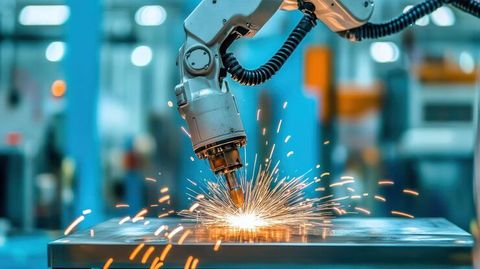
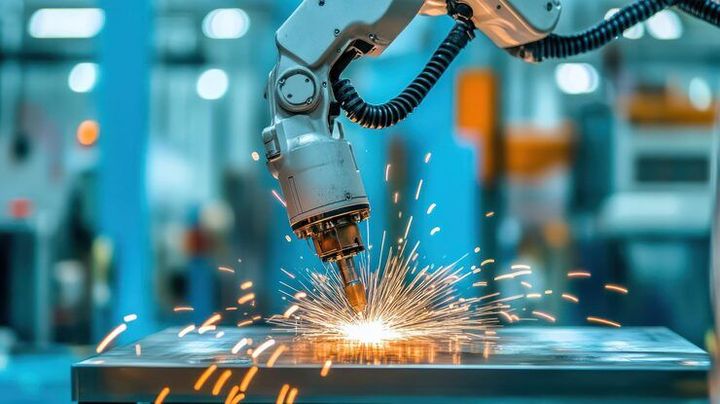
Modern robotic welding cells generally use articulated robotic arms equipped with welding torches or specialized welding tools. These robots follow programmed paths to join metal components through processes such as MIG welding, MAG welding, TIG welding, and spot welding. Their configurations depend on the materials, component dimensions, production requirements, and welding techniques involved.
Main Components of Robotic Welding Cells
A robotic welding cell contains several interconnected components that support automated operations.
Industrial welding robot: Performs programmed movements and guides the welding torch along predetermined paths.
Welding power source: Supplies the electrical energy required for the selected welding process.
Welding torch: Directs the welding arc toward the metal joint.
Positioning equipment: Holds or rotates workpieces to maintain suitable welding angles.
Sensors and cameras: Detect component positions, joint locations, and certain process variations.
Control system: Coordinates robot movements, welding parameters, and operating sequences.
Safety enclosure: Separates the automated welding area from surrounding workplace activities.
Each component contributes to the overall operation. Their integration allows manufacturers to coordinate material positioning, welding movements, and inspection activities within a controlled production environment.
Common Types of Robotic Welding Systems
Different welding applications require different robotic configurations. The selection depends on the component design, material thickness, joint geometry, and manufacturing process.
Welding system | Main application | Typical characteristics |
|---|---|---|
MIG robotic welding | Metal fabrication | Uses continuously supplied wire electrodes |
MAG robotic welding | Steel manufacturing | Uses active shielding gases |
TIG robotic welding | Precision metal joining | Uses a non-consumable tungsten electrode |
Spot welding robots | Automotive body assembly | Joins overlapping metal sheets |
Laser welding robots | Precision manufacturing | Uses concentrated laser energy |
Collaborative welding systems | Selected fabrication tasks | Designed for controlled human-robot interaction |
These systems are configured according to production requirements. For example, spot welding robots are frequently integrated into automotive assembly processes, while MIG welding robots are commonly used for structural metal fabrication.
Importance
Robotic welding cells play an important role in modern manufacturing because many industries require repeatable joining processes, controlled production environments, and consistent component quality. Automated welding can reduce variations associated with repetitive manual movements and help manufacturers coordinate multiple production stages.
The technology also addresses workplace challenges associated with welding activities. Traditional welding can expose workers to intense light, heat, fumes, sparks, and repetitive physical movements. Properly designed robotic welding cells can separate operators from direct welding activities through protective enclosures and automated handling systems.
Industries Using Robotic Welding Cells
Several manufacturing sectors depend on robotic welding technology for different production requirements.
Automotive manufacturing: Robots join vehicle frames, body panels, exhaust components, and structural assemblies.
Construction equipment: Automated welding supports the fabrication of heavy equipment frames, buckets, and structural parts.
Aerospace manufacturing: Specialized robotic systems perform selected precision welding operations on compatible components.
Agricultural machinery: Robots join metal frames, equipment structures, and mechanical assemblies.
Metal fabrication: Automated welding cells process brackets, cabinets, pipes, and fabricated metal structures.
Shipbuilding: Robotic welding systems support selected panel fabrication and structural joining activities.
The technology is particularly relevant when manufacturers repeatedly produce components with similar dimensions and welding requirements.
Production Quality and Operational Efficiency
Welding quality depends on several technical factors, including heat input, welding speed, torch angle, wire feed rate, and material preparation. Robotic systems can maintain programmed movements and operating parameters, helping reduce certain variations between production cycles.
However, automation does not eliminate every quality issue. Incorrect programming, poor component alignment, unsuitable welding parameters, and equipment maintenance problems can still affect finished welds.
Robotic welding cells also help organize production activities. Multiple robots, positioning devices, and material-handling equipment can operate through coordinated control systems, depending on the cell configuration.
Recent Updates
Developments in robotic welding cells are increasingly focused on artificial intelligence, machine vision, digital monitoring, flexible automation, and improved safety technologies. These developments reflect the wider movement toward connected manufacturing environments.
AI and Machine Vision Integration
Machine vision systems use cameras and image-processing software to identify component positions, welding joints, and certain surface conditions. These technologies can help robots adjust their movements when workpieces are not positioned exactly as expected.
Artificial intelligence is also being explored for welding parameter analysis, defect detection, and production monitoring. However, its effectiveness depends on sensor quality, training data, process conditions, and system configuration.
Collaborative Robotic Welding
Collaborative robots, commonly called cobots, are designed for selected applications involving interaction between people and robotic equipment. In welding environments, they may support smaller production tasks, including repetitive component joining.
Welding remains a hazardous process, so collaborative equipment does not automatically eliminate the need for protective separation. Arc radiation, hot materials, fumes, and other hazards require appropriate controls.
Digital Monitoring and Predictive Maintenance
Modern robotic welding systems increasingly incorporate connected sensors and monitoring software. These tools collect information about operating conditions, equipment performance, welding cycles, and maintenance requirements.
Predictive maintenance systems analyze equipment information to identify unusual operating patterns that may indicate developing mechanical or electrical problems. This approach can support maintenance planning and reduce unexpected interruptions when implemented appropriately.
Flexible Manufacturing Systems
Manufacturers are increasingly considering robotic welding cells that can accommodate different component designs and production requirements. Modular fixtures, programmable robot paths, and adjustable positioning equipment help support changes between production batches.
Technology development | Main purpose | Industrial application |
|---|---|---|
AI-assisted monitoring | Analyze process information | Weld quality monitoring |
Machine vision | Identify component positions | Automated joint tracking |
Collaborative robots | Support selected shared workspaces | Small-scale fabrication |
Digital monitoring | Record operating conditions | Production analysis |
Modular fixtures | Accommodate different components | Flexible manufacturing |
Simulation software | Test robot movements virtually | Cell planning |
These developments are gradually changing how manufacturers design, operate, and maintain automated welding environments.
Laws or Policies
Robotic welding cells are influenced by workplace safety requirements, industrial machinery standards, electrical safety provisions, and environmental controls. The applicable rules depend on the country, industry, equipment configuration, and intended application.
Since no specific target country has been identified, the following section explains internationally relevant frameworks and general regulatory considerations.
Industrial Robot Safety Standards
ISO 10218 provides internationally recognized safety requirements for industrial robots and robotic applications. Its provisions address areas such as robot design, integration, risk assessment, and protective measures.
ISO/TS 15066 provides additional guidance for collaborative robot applications. It addresses safety considerations when humans and collaborative robots operate in shared work environments.
Manufacturers and system integrators need to consider the applicable editions and national adoption of these standards when designing robotic welding cells.
Welding Workplace Safety
Welding environments require controls for several occupational hazards.
Important safety considerations include:
Arc radiation: Welding curtains, suitable protective screens, and appropriate eye protection help control exposure.
Welding fumes: Local exhaust ventilation and suitable respiratory protection address airborne contaminants.
Electrical hazards: Proper grounding, insulation, and electrical equipment maintenance reduce electrical risks.
Fire hazards: Fire-resistant barriers and appropriate fire prevention arrangements help control sparks and hot materials.
Mechanical hazards: Safety guards, interlocked access doors, and emergency stops help reduce robot-related risks.
Environmental and Workplace Regulations
Environmental rules may cover welding emissions, ventilation, waste handling, and industrial energy consumption. Workplace regulations may also establish requirements for operator training, equipment inspections, and hazard assessments.
In countries with established machinery safety frameworks, manufacturers and facility operators must identify the relevant legal requirements before installing or modifying automated welding equipment.
Tools and Resources
Robotic welding cells require several technical tools and digital resources for planning, programming, operation, and maintenance. These resources help engineers evaluate production layouts, configure robot movements, and monitor welding performance.
Robot Simulation Software
Simulation platforms allow engineers to create virtual representations of robotic welding cells. They can evaluate robot reach, torch positioning, cycle sequences, collision risks, and workspace layouts before physical installation.
Common software environments include industrial robot programming and simulation platforms associated with major automation manufacturers.
Welding Parameter Calculators
Welding calculators help estimate technical parameters associated with different welding processes. Depending on the tool, users may evaluate:
Welding current and voltage.
Wire feed speed.
Travel speed.
Heat input.
Material thickness.
Shielding gas requirements.
These calculations provide reference information. Actual parameters must be validated for the specific material, joint design, and welding procedure.
Robot Programming and Monitoring Platforms
Robot programming platforms allow technicians to define movement paths, welding sequences, operating positions, and production instructions. Monitoring platforms collect information about robot activity, production cycles, and equipment conditions.
Examples of industrial automation platforms include:
ABB RobotStudio for robotic simulation and programming.
FANUC ROBOGUIDE for robot application simulation.
KUKA.Sim for robotic cell planning and simulation.
Yaskawa MotoSim for robot programming and offline simulation.
Siemens automation software for broader manufacturing integration.
Inspection and Quality Control Equipment
Weld inspection tools help assess the condition of completed joints. Depending on the application, these may include visual inspection equipment, ultrasonic testing systems, radiographic inspection equipment, and dimensional measurement tools.
The inspection method depends on component specifications, material characteristics, joint requirements, and applicable quality standards.
FAQs
What are robotic welding cells used for?
Robotic welding cells are used to automate metal joining operations in industries such as automotive manufacturing, construction equipment production, aerospace, shipbuilding, and general metal fabrication.
How do industrial robots improve welding consistency?
Industrial robots follow programmed movements and welding parameters. This helps maintain repeatable torch positioning, travel speed, and welding sequences across similar components.
What safety systems are required in robotic welding cells?
Common safety systems include protective enclosures, interlocked access doors, emergency stop controls, welding screens, ventilation equipment, and robot safety monitoring systems.
What is the difference between MIG and TIG robotic welding?
MIG welding uses a continuously fed consumable wire electrode, while TIG welding uses a non-consumable tungsten electrode. MIG is commonly applied to production welding, whereas TIG is used for applications requiring controlled, precise welding.
Can AI be integrated into robotic welding systems?
Yes. AI technologies can support weld monitoring, defect identification, process analysis, and predictive maintenance. Their capabilities depend on the available data, sensors, software, and production environment.
Conclusion
Robotic welding cells combine industrial robots, welding equipment, sensors, positioning systems, and safety controls to automate metal joining processes. Their applications extend across automotive manufacturing, heavy machinery, aerospace, and general fabrication. Recent developments involving artificial intelligence, machine vision, digital monitoring, and flexible automation are expanding their technical capabilities. Safety standards, workplace regulations, equipment configuration, and quality inspection remain important considerations in their industrial implementation.